We’re sending a new crew to the International Space Station!
Watch with us as the four members of NASA’s SpaceX Crew-11 mission launch to the station from NASA’s Kennedy Space Center in Florida. Liftoff is targeted for 12:09 p.m. EDT (1609 UTC) on Thursday, July 31.
SpaceX’s Dragon spacecraft will carry NASA astronauts Zena Cardman and Mike Fincke, JAXA (Japan Aerospace Exploration Agency) astronaut Kimiya Yui, and Roscosmos cosmonaut Oleg Platonov to the orbiting laboratory for a science mission. This is the 11th crew rotation mission and the 12th human spaceflight mission for NASA to the space station supported by the Dragon spacecraft since 2020 as part of the agency’s Commercial Crew Program.
Crew-11 is scheduled to arrive at the station on Saturday, Aug. 2. After a brief handover period, NASA astronauts Anne McClain and Nichole Ayers, along with JAXA (Japan Aerospace Exploration Agency) astronaut Takuya Onishi and Roscosmos cosmonaut Kirill Peskov, will depart the station for a splashdown off the coast of California.
Join NASA and ISRO (the Indian Space Research Organisation) for the launch of our most advanced Earth-observing radar satellite, which will provide 3D views of land and ice surfaces in unprecedented detail.
The spacecraft is scheduled to launch at 8:10 a.m. EDT (1210 UTC) on Wednesday, July 30, aboard an ISRO Geosynchronous Launch Vehicle Mark II rocket from the Satish Dhawan Space Centre on India’s southeastern coast.
From orbit, the NISAR (NASA-ISRO Synthetic Aperture Radar) satellite will enable scientists to measure small shifts in Earth’s glaciers, volcanoes, forests, and other land and ice surfaces – all down to a fraction of an inch. This data will help communities prepare for natural hazards like landslides and earthquakes, plus respond to them more effectively. With NISAR’s global view, researchers will better understand what’s changing, where, and why.
NISAR’s radar will measure surfaces by transmitting a specific microwave signal to Earth and then detecting characteristics of the return signal. The instrument can “see” through clouds and light rain, both day and night, and will scan a given spot twice every 12 days.
Watch with us as the four members of NASA’s SpaceX Crew-10 mission launch to the space station from Launch Complex 39A at NASA’s Kennedy Space Center in Florida.
Liftoff is targeted for 7:03 p.m. EDT (2303 UTC) on Friday, March 14. Wednesday’s launch attempt was scrubbed due to a hydraulic system issue with a ground support clamp arm.
SpaceX’s Dragon spacecraft will carry NASA astronauts Anne McClain, commander; and Nichole Ayers, pilot; along with mission specialists JAXA (Japan Aerospace Exploration Agency) astronaut Takuya Onishi, and Roscosmos cosmonaut Kirill Peskov to the orbiting laboratory for a long-duration science mission. This is the 10th crew rotation mission and the 11th human spaceflight mission for NASA to the space station supported by the Dragon spacecraft since 2020 as part of the agency’s Commercial Crew Program.
Following the launch of Crew-10, NASA astronauts Nick Hague, Suni Williams, and Butch Wilmore, along with Roscosmos cosmonaut Aleksandr Gorbunov, will depart the station for a splashdown off the coast of Florida.
Watch with us as the four members of NASA’s SpaceX Crew-10 mission launch to the space station from Launch Complex 39A at NASA’s Kennedy Space Center in Florida. Liftoff is targeted for 7:48 p.m. EDT (2348 UTC) on Wednesday, March 12.
SpaceX’s Dragon spacecraft will carry NASA astronauts Anne McClain, commander; and Nichole Ayers, pilot; along with mission specialists JAXA (Japan Aerospace Exploration Agency) astronaut Takuya Onishi, and Roscosmos cosmonaut Kirill Peskov to the orbiting laboratory for a long-duration science mission. This is the 10th crew rotation mission and the 11th human spaceflight mission for NASA to the space station supported by the Dragon spacecraft since 2020 as part of the agency’s Commercial Crew Program.
Following the launch of Crew-10, NASA astronauts Nick Hague, Suni Williams, and Butch Wilmore, along with Roscosmos cosmonaut Aleksandr Gorbunov, will depart the station for a splashdown off the coast of Florida.
Watch Intuitive Machines’ Nova-C Moon lander and NASA’s Lunar Trailblazer lift off on a SpaceX Falcon 9 rocket from NASA’s Kennedy Space Center in Florida. IM-2 is scheduled to launch at 7:16 p.m. EST (0016 UTC Feb. 27).
The lander, named Athena, will carry NASA science and technology to the Moon’s surface. Athena will orbit the Moon for approximately three days before landing at Mons Mouton, a lunar plateau near the Moon’s South Pole.
The NASA tech aboard the lander will demonstrate resource utilization on the Moon by measuring the possible presence of volatiles or gases from lunar soil and give future spacecraft a permanent reference point on the lunar surface.
Launching as a rideshare with the IM-2 delivery, NASA’s Lunar Trailblazer spacecraft also will begin its journey to lunar orbit, where it will map the distribution of the different forms of water on the Moon.
This is Intuitive Machines’ second launch to the Moon as part of NASA’s Commercial Lunar Payload Services (CLPS) initiative. To learn more about CLPS, visit https://go.nasa.gov/3RFR0A5.
The third Copernicus Sentinel-1 satellite, Sentinel-1C, has launched aboard a Vega-C rocket, flight VV25, from Europe’s Spaceport in French Guiana. The rocket lifted off on 5 December 2024 at 22:20 CET (18:20 local time).
Sentinel-1C extends the legacy of its predecessors, delivering high-resolution radar imagery to monitor Earth’s changing environment, supporting a diverse range of applications and advance scientific research. Additionally, Sentinel-1C introduces new capabilities for detecting and monitoring maritime traffic.
The launch also marks Vega-C’s ‘return to flight’, a key step in restoring Europe’s independent access to space. Vega-C is the evolution of the Vega family of rockets and delivers increased performance, greater payload volume and improved competitiveness.
Credits: ESA/CNES/Arianespace
★ Subscribe: http://bit.ly/ESAsubscribe and click twice on the bell button to receive our notifications.
We are Europe’s gateway to space. Our mission is to shape the development of Europe’s space capability and ensure that investment in space continues to deliver benefits to the citizens of Europe and the world. Check out https://www.esa.int/ to get up to speed on everything space related.
Proba-3 lifted off on its PSLV-XL rocket from Satish Dhawan Space Centre in Sriharikota, India, on Thursday, 5 December, at 11:34 CET (10:34 GMT, 16:04 local time). The mission was launched using this Indian launcher because it needed to be placed in a highly elliptical orbit extending more than 60 500 km from the ground.
After integration and testing was completed at Redwire Space in Belgium, Proba-3 was transported to India to be prepared for launch. The latest member of ESA’s family of in-orbit demonstration missions, Proba-3 is in fact two spacecraft being launched together, which will separate in orbit to begin performing precise formation flying, precise to a single millimetre, about the thickness of an average fingernail. To prove their performance, Proba-3 has been devoted to an ambitious scientific goal. The pair will line up precisely with the Sun 150 m apart so that one casts a precisely controlled shadow onto the other.
By blocking out the fiery disc of the Sun, Proba-3’s ‘Occulter’ spacecraft will mimic a terrestrial total solar eclipse, to open up views of the Sun’s faint surrounding atmosphere, or ‘corona’, which is a million times fainter than its parent star. Proba-3’s second ‘Coronagraph’ spacecraft hosts the optical instrument that will observe the solar corona. If Proba-3’s initial commissioning phase goes to plan then the spacecraft pair will be separated early in the new year to begin their individual check-outs. The operational phase of the mission, including the first observations of the corona through active formation flying, should begin in about four months.
Proba-3 was led for ESA by Sener in Spain, overseeing a consortium of 14 ESA Member States and Canada including Airbus Defence and Space in Spain manufacturing the spacecraft and Redwire Space in Belgium responsible for the spacecraft avionics, assembly and operations. CSL in Belgium produced Proba-3’s ASPIICS coronagraph Spacebel in Belgium developed the onboard and ground segment software with GMV responsible for the formation flying system and flight dynamics.
Credits: ESA/ISRO – NSIL
★ Subscribe: http://bit.ly/ESAsubscribe and click twice on the bell button to receive our notifications.
We are Europe’s gateway to space. Our mission is to shape the development of Europe’s space capability and ensure that investment in space continues to deliver benefits to the citizens of Europe and the world. Check out https://www.esa.int/ to get up to speed on everything space related.
ESA’s Hera mission lifted off on a SpaceX Falcon 9 from Cape Canaveral Space Force Station in Florida, USA, on 7 October at 10:52 local time (16:52 CEST, 14:52 UTC).
Hera is ESA’s first planetary defence mission. It will fly to a unique target among the 1.3 million asteroids in our Solar System – the only body to have had its orbit shifted by human action – to solve lingering unknowns associated with its deflection.
Hera will carry out the first detailed survey of a ‘binary’ – or double-body – asteroid, 65803 Didymos, which is orbited by a smaller body, Dimorphos. Hera’s main focus will be Dimorphos, whose orbit around the main body was previously altered by NASA’s kinetic-impacting DART spacecraft.
By sharpening scientific understanding of this ‘kinetic impact’ technique of asteroid deflection, Hera should turn the experiment into a well-understood and repeatable technique for protecting Earth from an asteroid on a collision course.
————————————————— 📸 ESA – S. Corvaja Copyright: ESA/SpaceX —————————————————
★ Subscribe: http://bit.ly/ESAsubscribe and click twice on the bell button to receive our notifications.
We are Europe’s gateway to space. Our mission is to shape the development of Europe’s space capability and ensure that investment in space continues to deliver benefits to the citizens of Europe and the world. Check out https://www.esa.int/ to get up to speed on everything space related.
Hera, ESA’s first planetary defence mission, is headed to space.
Hera will fly to a unique target among the 1.3 million known asteroids of our Solar System – the first body to have had its orbit shifted by human action – to probe lingering unknowns related to its deflection.
————————————————— Credits: ESA/SpaceX ————————————————— Chapters: 00:00 Start of ESA WebTV programme – live from ESA’s European Space Operations Centre in Darmstadt, Germany 18:30 SpaceX live broadcast begins 36:15 Hera lift-off 1:53:00 – Hera separates from Falcon 9 launcher: End of SpaceX live broadcast, ESA WebTV programme continues 1:57:20 Acquisition of the first signals from the Hera spacecraft 2:13:26 End of ESA WebTV programme
★ Subscribe: http://bit.ly/ESAsubscribe and click twice on the bell button to receive our notifications.
We are Europe’s gateway to space. Our mission is to shape the development of Europe’s space capability and ensure that investment in space continues to deliver benefits to the citizens of Europe and the world. Check out https://www.esa.int/ to get up to speed on everything space related.
ESA’s Jupiter Icy Moons Explorer (Juice), is on an epic eight-year journey to Jupiter. This first episode of ‘The journey of Juice’ tells the story of Juice’s first months in space, from its launch on 14 April 2023 to its lunar-Earth gravity assist (LEGA for short) in August 2024. This flyby was not only the first double gravity assist manoeuvre of its kind, it was also a perfect opportunity to test out the spacecraft’s cameras and science instruments.
In this episode, Juice’s Mission Manager Nicolas Altobelli explains how the spacecraft will become the first ever human-made machine to orbit a moon of another planet, in this case Jupiter’s largest moon Ganymede.
You’ll also hear from Claire Vallat and Marc Costa at the European Space Astronomy Centre (ESAC) near Madrid, Spain. Juice will perform incredibly complex measurements once it reaches Jupiter, and the Science Operations team at ESAC is making sure we get the most out of every instrument.
Meanwhile, the Flight Control team at the European Space Operations Centre (ESOC) in Darmstadt, Germany, makes sure Juice is and stays on the right path. This episode shows what happened ‘behind the scenes’ before and during the lunar-Earth flyby, and stars Ignacio Tanco, Angela Dietz and members of the Juice Flight Control team as they do what they do best.
Finally, we highlight the ESA tracking station network (Estrack), another crucial component for Juice. Maintenance and Operations Engineer Belén Goméz gives a tour of the facility at Cebreros.
Following the very successful lunar-Earth flyby, Juice is now on its way to planet Venus for its next flyby. On 31 August 2025, this flyby will give Juice its second gravity boost. Tune back in next year for episode two of this series!
This series follows on from ‘The making of Juice’ series, which covered the planning, testing and launch of this once-in-a-generation mission.
Credit: ESA/Lightcurve Films, original music by William Zeitler
Acknowledgments: Direction, main camera, sound, editing, post-production: Maarten Roos. Camera at Cebreros during LEGA: Mikel Larequi. LEGA timelapse: Mark McCaughrean and Simeon Schmauß. Special thanks to Marc Costa (ESA – ESAC) and Jorge Fauste (ESA – Estrack)
★ Subscribe: http://bit.ly/ESAsubscribe and click twice on the bell button to receive our notifications.
We are Europe’s gateway to space. Our mission is to shape the development of Europe’s space capability and ensure that investment in space continues to deliver benefits to the citizens of Europe and the world. Check out https://www.esa.int/ to get up to speed on everything space related.
Watch the launch of NASA’s SpaceX #Crew9, the first human spaceflight mission to launch from Space Launch Complex 40 at Cape Canaveral Space Force Station in Florida. Liftoff on Saturday, Sept. 28 is set for 1:17 p.m. EDT (1717 UTC).
The Dragon spacecraft will carry NASA astronaut Nick Hague and Roscosmos cosmonaut Aleksandr Gorbunov to the International Space Station for a science mission of approximately five months. This will be Hague’s second mission to the orbiting laboratory, and Gorbunov’s first spaceflight.
Hague and Gorbunov will fly to the space station as commander and mission specialist, respectively. NASA astronauts Butch Wilmore and Suni Williams, who launched aboard the Starliner spacecraft in June, will fly home with Hague and Gorbunov in February 2025.
NASA is set to launch the Europa Clipper spacecraft to explore Europa, an ocean moon orbiting Jupiter.
Europa Clipper’s launch period opens on Thursday, Oct. 10, 2024. Liftoff on Oct. 10, 2024 is slated for 12:31 p.m. EDT (1631 UTC). The spacecraft, the largest NASA has ever built for a planetary mission, will launch on a SpaceX Falcon Heavy rocket from Launch Complex 39A at NASA’s Kennedy Space Center in Florida.
Europa is one of the most promising places in our solar system to find an environment suitable for life beyond Earth. Evidence suggests that the ocean beneath Europa’s icy surface could contain the ingredients for life — water, the right chemistry, and energy. While Europa Clipper is not a life-detection mission, it will answer key questions about the moon’s potential habitability.
Europe’s new rocket Ariane 6 will take off from Europe’s Spaceport in French Guiana, near the equator, and far from populated areas.
Why did Europe choose a spaceport on the other side of the world? The main reason is the lack of space. There are hardly any places in Europe where rockets can be launched and fly over unpopulated areas during its initial launch phase. We also need a large area to build the launch pad and operations.
Europe’s Spaceport is also very close to the equator. As our Earth spins itself, you can get an extra boost if you launch where Earth is widest… at the equator.
📹 ESA – European Space Agency 📸 ESA – European Space Agency
ESA’s EarthCARE mission is ready for lift-off! EarthCARE is a groundbreaking satellite mission designed to unravel the mysteries of Earth’s clouds and aerosols. EarthCARE will shed light on the role that clouds and aerosols play in heating and cooling Earth’s atmosphere – contributing to our better understanding of climate change. During our live coverage, we’ll hear from mission scientists and spacecraft operators, then follow the launch on a SpaceX Falcon 9 from California, expected at 00:20 CEST. Live from ESA’s spacecraft operations centre in Germany, we take you into the main control room around 01:12 CEST for the satellite’s acquisition of signal – EarthCARE’s first sign of life from space.
Credits: ESA/SpaceX
Timestaps of the video: 00:00 – 38:24 – Start of ESA WebTV Programme – Live from the European Space Operations Centre 38:25 – 50:44 – SpaceX live broadcast begins 50:45 – 1:01:40 – Lift-off 1:01:41 – 1:06:35 – Spacecraft deployment 1:06:36 – 1:40:40 – Stay tuned 1:40:41 – 1:44:50 – ESA WebTV Programme – Live from the European Space Operations Centre 1:44:51 – 1:55:00 – Acquisition of signal
★ Subscribe: http://bit.ly/ESAsubscribe and click twice on the bell button to receive our notifications.
We are Europe’s gateway to space. Our mission is to shape the development of Europe’s space capability and ensure that investment in space continues to deliver benefits to the citizens of Europe and the world. Check out https://www.esa.int/ to get up to speed on everything space related.
A new target launch date for our Boeing Crew Flight Test, making progress on major hardware for Gateway, and presidential honors for helping to advance NASA’s mission … a few of the stories to tell you about – This Week at NASA!
Video Producer: Andre Valentine Video Editor: Haley Reed Narrator: Emanuel Cooper Music: Universal Production Music
The March 21 launch of the crewed Soyuz-25 spacecraft to the International Space Station with NASA astronaut Tracy C. Dyson, Roscosmos cosmonaut Oleg Novitskiy, and spaceflight participant Marina Vasilevskaya of Belarus was scrubbed, and rescheduled for Saturday, March 23. Learn more: https://go.nasa.gov/3IMDTZy
Astronaut Tracy C. Dyson, a spaceflight veteran who has logged over 188 days in orbit, is set to launch on her next mission to the International Space Station.
Dyson, cosmonaut Oleg Novitskiy, and spaceflight participant Marina Vasilevskaya of Belarus is set to lift off at 9:21 a.m. EDT (1321 UTC) from the Baikonur Cosmodrome in Kazakhstan aboard their Soyuz MS-25 spacecraft. This will be Dyson’s third spaceflight.
After a two-orbit, three-hour journey, the Soyuz will arrive at the International Space Station’s Prichal module for a scheduled docking at 12:39 p.m. EDT (1639 UTC). Dyson is scheduled to spend six months aboard the station, conducting research to help us learn how to live in space while making life better back on Earth.
Watch live with us as a crew of four launch on NASA’s SpaceX Crew-8 mission to the International Space Station. Liftoff is targeted at 10:53 p.m. EST (0353 UTC), Sunday, March 3.
The launch attempt March 2 was postponed due to unfavorable conditions in the flight path of the SpaceX Falcon 9 rocket and Dragon spacecraft.
The crew will lift off in their SpaceX Dragon spacecraft, powered by a Falcon 9 rocket, from Launch Complex 39A at NASA’s Kennedy Space Center in Florida. Members include: • NASA astronaut Matthew Dominick, commander • NASA astronaut Michael Barratt, pilot • NASA astronaut Jeanette Epps, mission specialist • Roscosmos cosmonaut Aleksandr Grebenkin, mission specialist
Over 200 science experiments and technology demonstrations will take place during Crew-8’s mission of approximately six months in space. Experiments will include using stem cells to create organoid models to study degenerative diseases, studying the effects of microgravity and UV radiation on plants at a cellular level, and testing whether wearing pressure cuffs on the legs could prevent fluid shifts and reduce health problems in astronauts. Learn more about the mission and science at: https://www.nasa.gov/missions/station/commercial-crew/what-you-need-to-know-about-nasas-spacex-crew-8-mission/
Watch live with us as a crew of four launch on NASA’s SpaceX Crew-8 mission to the International Space Station. Liftoff is targeted at 11:16 p.m. EST (0416 UTC), Saturday, March 2.
Teams selected the new launch opportunity due to unfavorable weather conditions forecast for Friday, March 1, in offshore areas along the flight path of the Dragon spacecraft.
The crew will lift off in their SpaceX Dragon spacecraft, powered by a Falcon 9 rocket, from Launch Complex 39A at NASA’s Kennedy Space Center in Florida. Members include: • NASA astronaut Matthew Dominick, commander • NASA astronaut Michael Barratt, pilot • NASA astronaut Jeanette Epps, mission specialist • Roscosmos cosmonaut Aleksandr Grebenkin, mission specialist
Over 200 science experiments and technology demonstrations will take place during Crew-8’s mission of approximately six months in space. Experiments will include using stem cells to create organoid models to study degenerative diseases, studying the effects of microgravity and UV radiation on plants at a cellular level, and testing whether wearing pressure cuffs on the legs could prevent fluid shifts and reduce health problems in astronauts. Learn more about the mission and science at: https://www.nasa.gov/missions/station/commercial-crew/what-you-need-to-know-about-nasas-spacex-crew-8-mission/
Watch Intuitive Machines’ Nova-C lunar lander lift off from NASA’s Kennedy Space Center in Florida on a SpaceX Falcon 9 rocket. Intuitive Machines and SpaceX are now targeting 1:05 a.m. EST (0605 UTC) Thursday, Feb. 15, 2024, for launch. The NASA payloads aboard the lander aim to help us learn more about terrain and communications near the lunar South Pole.
For more information about our Commercial Lunar Payload Services initiative, visit: https://go.nasa.gov/3RFR0A5
Our Plankton, Aerosol, Cloud ocean Ecosystem (PACE) mission will study what makes Earth so different from every other planet we study: life itself.
Three-quarters of our home planet is covered by water, and PACE’s advanced instruments will provide new ways to measure the distributions of microscopic algae known as phytoplankton near the ocean’s surface. Those observations will enhance our understanding of the crucial exchange of CO2 between the ocean and atmosphere.
At the same time, PACE will help reveal how aerosols – microscopic particles in the atmosphere – and clouds control the amount of the Sun’s energy that is absorbed by Earth. Novel uses of PACE data will benefit our economy and society, and will extend and expand NASA’s long-term observations of our living planet.
PACE is scheduled to lift off at 1:33 a.m. EST (0633 UTC) Thursday, Feb. 8, on a SpaceX Falcon 9 rocket from Space Launch Complex 40 at Cape Canaveral Space Force Station in Florida. NASA’s live launch coverage begins at 12:45 a.m. EST (0545 UTC).
Northrop Grumman’s 20th cargo resupply mission launches to the International Space Station, powered by a SpaceX Falcon 9 rocket. Liftoff on Tuesday, Jan. 30 is set for 12:07 p.m. EST (1707 UTC). The Cygnus capsule carries over 8,200 pounds (3,700 kg) of cargo, including space station hardware, crew supplies, and research that can only be done in microgravity. Science and technology experiments aboard include a robotic surgery tech demonstration, and tests of a 3D metal printer, semiconductor manufacturing, and thermal protection systems for re-entry.
ESA project astronaut Marcus Wandt launched together with the rest of the Axiom-3 crew at 23:11 CET on 17 January 2024, from launch pad 39A, NASA’s Kennedy Space Center, Florida, USA.
Marcus will start his Muninn mission when he enters the International Space Station on Saturday 20 January, where he will spend up to 14 days conducting science and testing technology that can one day help people on Earth.
Follow Marcus’s journey on the Muninn website, check our launch kit and connect with him on his Instagram and X accounts.
We are Europe’s gateway to space. Our mission is to shape the development of Europe’s space capability and ensure that investment in space continues to deliver benefits to the citizens of Europe and the world. Check out https://www.esa.int/ to get up to speed on everything space related.
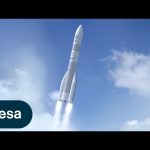
Animation of the first launch of the Ariane 6 rocket with two boosters.
Ariane 6 is an all-new design, created to succeed Ariane 5 as Europe’s heavy-lift launch system. With Ariane 6’s upper stage and its reignitable Vinci engine, Europe’s launch capability will be tailored to the needs of multiple payloads, for example to orbit satellite constellations. This autonomous capability to reach Earth orbit and deep space supports Europe’s navigation, Earth observation, scientific and security programmes. Ongoing development of Europe’s space transportation capabilities is made possible by the sustained dedication of thousands of talented people working in ESA’s 22 Member States.
At over 60 metres tall, Ariane 6 will weigh almost 900 tonnes when launched with a full payload – roughly equivalent to one and a half Airbus A380 passenger aircraft.
Vinci, the upper stage engine of Ariane 6 fed by liquid hydrogen and oxygen, can be stopped and restarted multiple times – to place satellites into different orbits and then de-orbit the upper stage, so it is not left behind as hazardous debris in space.
For the development of Ariane 6, ESA is working with an industrial network of several hundred companies in 13 European countries, led by prime contractor ArianeGroup.
France’s space agency, CNES, is preparing the Ariane 6 launch facilities at Europe’s Spaceport in French Guiana.
Credits: ESA – European Space Agency
★ Subscribe: http://bit.ly/ESAsubscribe and click twice on the bell button to receive our notifications.
We are Europe’s gateway to space. Our mission is to shape the development of Europe’s space capability and ensure that investment in space continues to deliver benefits to the citizens of Europe and the world. Check out https://www.esa.int/ to get up to speed on everything space related.
Watch live as Ireland goes to space, for the first time, with the launch of EIRSAT-1. Built by students at @universitycollegedublin under the guidance of ESA’s Education Office, EIRSAT-1 is a 2-unit CubeSat carrying three experiments, including a novel gamma ray detector that will study some of the most luminous explosions in the universe. Irish broadcaster Rick O’Shea, with guests from ESA and the EIRSAT-1 team, will take viewers through the mission’s development and major launch milestones including liftoff, separation and acquisition of signal, from outside the EIRSAT-1 Mission Control Room in Dublin. Níl aon satailít mar do shatailít féin! [There’s no satellite like your own satellite!]
We are Europe’s gateway to space. Our mission is to shape the development of Europe’s space capability and ensure that investment in space continues to deliver benefits to the citizens of Europe and the world. Check out https://www.esa.int/ to get up to speed on everything space related.
Train today, perform tomorrow. On September 20, 2023 the Artemis II astronauts practiced some of the pre-launch procedures they’ll perfect before their slated 2024 launch to the Moon. NASA Astronauts Reid Wiseman, Victor Glover, Christina Koch along with Canadian Space Agency astronaut Jeremy Hansen awoke at their crew quarters at NASA’s Kennedy Space Center and put on test versions of the Orion Crew Survival System spacesuits they will wear on launch day. They then departed to Launch Pad 39B in NASA’s new crew transportation fleet. Upon arrival at the pad, the crew headed onto the mobile launcher and proceeded up the tower to the white room inside the crew access arm. There was no Orion spacecraft or Space Launch System rocket on the pad today, but on launch day this is where the crew will take their final Earth-bound steps prior to their journey around the Moon. Credit: NASA
Watch live with us as a crew of four launch on NASA’s SpaceX #Crew7 mission to the International Space Station. Liftoff is targeted at 3:49 a.m. EDT (0749 UTC), Fri., Aug. 25. Commander Jasmin Moghbeli of NASA, pilot Andreas Mogensen of the European Space Agency, and mission specialists Satoshi Furukaw of the Japan Aerospace Exploration Agency and Konstantin Borisov of Roscosmos will launch on their SpaceX Dragon spacecraft, powered by a Falcon 9 rocket, from Launch Complex 39A at NASA’s Kennedy Space Center in Florida.
Over 200 science experiments and technology demonstrations will take place during Crew-7’s mission of approximately six months in space. Experiments will include the collection of microbial samples from the exterior of the space station, the first study of human response to different spaceflight durations, and an investigation of the physiological aspects of astronauts’ sleep. Learn more about the mission and science at: https://www.nasa.gov/feature/what-you-need-to-know-about-nasa-s-spacex-crew-7-mission/
Watch live as medical studies, a new water dispenser, artwork from students around the world, and other research and supplies lift off for the International Space Station on Northrop Grumman’s next rocket launch from NASA’s Wallops Flight Facility at Wallops Island, Virginia.
The mission’s uncrewed Cygnus spacecraft (named S.S. Laurel Clark) is scheduled to blast off atop an Antares rocket no earlier than Tuesday, Aug. 1, 2023, at 8:31 p.m. EST (0031 Aug. 2 UTC), docking with the ISS on Friday, Aug. 4.
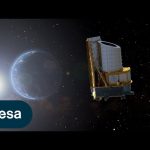
If you think its only possible be held in orbit around a central body of mass – say a planet or a star – you’d be wrong. It is in fact possible to orbit around an invisible point, an oasis of forces, infinitesimal in size. ESA’s Euclid mission was launched on 1 July 2023 to uncover the secrets of the dark universe. Its destination? Like many astronomy missions before it, Lagrange point 2.
‘L2’ is an ideal location for astronomy missions because they can keep the Sun, Earth and Moon behind them at all times, so they don’t interfere with observations, while at the same time getting a clear view of deep space and pointing an antenna back to Earth to remain in close communication. The permanent sunlight on Euclid at L2 also keeps the telescope thermally stable, allowing for the extremely high stability required for the instrument’s long exposure observations. Euclid’s orbit around Lagrange point 2 is big. In terms of distance, the ‘radius’ of Euclid’s orbit varies from about 400 000 kilometres at its closest to the centre, and up to 800 000 kilometres at its furthest. By the time Euclid has completed one full revolution around L2, the Moon will have circled the Earth six times.
The reason for this large orbit is that it is almost free, in terms of fuel, to get there. The better the accuracy of the rocket that launches a mission into such a large halo orbit around L2, the less fuel that’s needed to perform correction manoeuvres – and Euclid only required a tiny correction manoeuvre after its near-perfect launch on a Space X Falcon 9.
This animation, created using “Gaia Sky”, shows Euclid’s path from Earth to this unique and useful position in space. Located about 1.5 million kilometres from Earth in the opposite direction from the Sun, the second Lagrange point (or Libration point) is about four times further away than our Moon.
Euclid will spend about a month getting to ‘L2’ followed by a planned six years in orbit, from where it will study the mysterious nature of dark matter and dark energy, that make up 95% of our Universe, but about which very little is known.
Credits: ESA/Gaia/DPAC, CC BY-SA 3.0 IGO
★ Subscribe: http://bit.ly/ESAsubscribe and click twice on the bell button to receive our notifications.
We are Europe’s gateway to space. Our mission is to shape the development of Europe’s space capability and ensure that investment in space continues to deliver benefits to the citizens of Europe and the world. Check out https://www.esa.int/ to get up to speed on everything space related.
The Ariane 5 launch vehicle liftoff for flight VA261 from Europe’s Spaceport in French Guiana on 5 July at 23:00 BST (6 July at 00:00 CEST). Flight VA261 carried two payloads into space – the German space agency DLR’s experimental communications satellite Heinrich Hertz and the French communications satellite Syracuse 4b. The flight was the 117th and final mission for Ariane 5, a series which began in 1996.
Credits: ESA/CNES/Arianespace
★ Subscribe: http://bit.ly/ESAsubscribe and click twice on the bell button to receive our notifications.
We are Europe’s gateway to space. Our mission is to shape the development of Europe’s space capability and ensure that investment in space continues to deliver benefits to the citizens of Europe and the world. Check out https://www.esa.int/ to get up to speed on everything space related.
NASA and Rocket Lab will launch two small satellites to join two already in orbit for NASA’s TROPICS (Time-Resolved Observations of Precipitation structure and storm Intensity with a Constellation of Smallsats) mission. Liftoff on an Electron rocket is targeted for no earlier than 11:30 p.m. EDT Thursday, May 25 (0330 UTC Friday, May 26) from Rocket Lab’s Launch Complex-1 in Māhia, New Zealand.
The TROPICS mission will study the formation and development of tropical cyclones, making observations of temperature, precipitation, water vapor, and cloud ice more often than what is possible with current weather satellites.
Launch of NASA’s Time-Resolved Observations of Precipitation structure and storm Intensity with a Constellation of Smallsats (TROPICS) mission is now targeted for 9 p.m. EDT, Sunday, May 7 (0100 UTC, Monday May 8) from Rocket Lab’s Launch Complex-1 in Māhia, New Zealand.
NASA and Rocket Lab will launch two CubeSats into orbit for the TROPICS (Time-Resolved Observations of Precipitation structure and storm Intensity with a Constellation of Smallsats) mission.
TROPICS is a constellation of four identical CubeSats designed to observe tropical cyclones from low Earth orbit, making observations more frequently than current weather tracking satellites. A second launch from Rocket Lab will carry two additional CubeSats, with exact launch times contingent on the date and time of the first launch.
We’re going to Jupiter – and three of its moons! The Juice spacecraft is now securely fastened to an Ariane 5 rocket and ready for launch. Juice, for Jupiter Icy Moons Explorer, will explore Jupiter’s complex environment in depth after an eight-year journey.
– Liftoff: 29:45 – Juice launch separation: 57:40 – Acquisition of signal: 1:20:45 – Solar Array deployment: 1:48:30
★ Subscribe: http://bit.ly/ESAsubscribe and click twice on the bell button to receive our notifications.
We are Europe’s gateway to space. Our mission is to shape the development of Europe’s space capability and ensure that investment in space continues to deliver benefits to the citizens of Europe and the world. Check out https://www.esa.int/ to get up to speed on everything space related.
NASA’s Tropospheric Emissions: Monitoring of Pollution (TEMPO) instrument is the first space-based instrument to monitor major air pollutants hourly in high spatial resolution. Launch atop a SpaceX Falcon 9 rocket is targeted for no earlier than 12:30 a.m. EDT (0430 UTC) Friday, April 7 from Cape Canaveral Space Force Station. There is a two-hour launch window.
TEMPO, a partnership between NASA and the Smithsonian Astrophysical Observatory, is a payload on the satellite Intelsat 40E. It was built by Ball Aerospace and integrated onto Intelsat 40E by Maxar.
On Nov. 16, 2022, NASA made history with the launch of our Space Launch System (SLS) rocket and Orion spacecraft – our newest transportation system that will return humans to the Moon. Relive the powerful moment SLS rumbled away from Earth, beginning Orion’s three-week test flight around the Moon, and watch as we document Orion’s splashdown in the Pacific Ocean, closing the first chapter in America’s next deep space exploration story.
Writer: Danielle Sempsrott Editor: Francisco Martin Producers: John Sackman, Michael Justice & Madison Tuttle Music courtesy of Gothic Storm Music Credit: NASA
Our #Crew6 mission to the International Space Station is targeted for liftoff at 12:34 a.m. EST (0534 UTC) on Thursday, March 2, 2023, from Launch Complex 39A at NASA’s Kennedy Space Center in Florida. The Feb. 27 launch attempt was scrubbed so mission teams could investigate a ground systems issue. NASA astronauts Stephen Bowen and Warren “Woody” Hoburg, as well as UAE (United Arab Emirates) astronaut Sultan Alneyadi and Roscosmos cosmonaut Andrey Fedyaev, will launch aboard their Dragon Endeavour spacecraft atop a SpaceX Falcon 9 rocket.
This will be the fourth trip to space for Bowen, the Crew-6 mission commander, and the first space launch for the rest of the crew. They’ll spend approximately six months on the station, helping us learn how to live in space while conducting research to make life better back on Earth. Learn more about the mission, its crew, and some of the science they’ll be working on at https://go.nasa.gov/3jclMmJ.
Following launch and ascent, NASA coverage of agency’s Crew-6 flight to the space station will temporarily switch to a streaming, audio-only feed accessible via YouTube, between ascent and the beginning of rendezvous operations. Viewers can continue to listen to real-time audio between Crew-6 and flight controllers at NASA’s Mission Audio stream (https://www.youtube.com/live/3slokO2g1v0), which also includes conversations with astronauts aboard the space station and a live video feed from the orbiting laboratory.
Update: The Feb. 27 launch attempt was scrubbed so mission teams could investigate an issue preventing data from confirming a full load of the ignition source for the Falcon 9 rocket’s first stage Merlin engines. The next possible launch attempt is targeted for Thursday, March 2, at 12:34 a.m. EST (0534 UTC). More details: https://blogs.nasa.gov/crew-6/
Our #Crew6 mission to the International Space Station is targeted for liftoff at 1:45 a.m. EST (0645 UTC) on Monday, Feb. 27, 2023, from Launch Complex 39A at NASA’s Kennedy Space Center in Florida.
NASA astronauts Stephen Bowen and Warren “Woody” Hoburg, as well as UAE (United Arab Emirates) astronaut Sultan Alneyadi and Roscosmos cosmonaut Andrey Fedyaev, will launch aboard their Dragon Endeavour spacecraft atop a SpaceX Falcon 9 rocket. Visit our Crew-6 blog for the latest mission updates: https://blogs.nasa.gov/crew-6/
This will be the fourth trip to space for Bowen, the Crew-6 mission commander, and the first space launch for the rest of the crew. They’ll spend approximately six months on the station, helping us learn how to live in space while conducting research to make life better back on Earth. Learn more about the mission, its crew, and some of the science they’ll be working on at https://go.nasa.gov/3jclMmJ.
Following launch and ascent, NASA coverage of agency’s Crew-6 flight to the space station will temporarily switch to a streaming, audio-only feed accessible via YouTube, between ascent and the beginning of rendezvous operations. Viewers can continue to listen to real-time audio between Crew-6 and flight controllers at NASA’s Mission Audio stream (https://www.youtube.com/live/3slokO2g1v0), which also includes conversations with astronauts aboard the space station and a live video feed from the orbiting laboratory. Full coverage on NASA TV will resume at 12:45 p.m. EST (1745 UTC) on Feb. 27.
Credit: NASA Thumbnail credit: NASA/Aubrey Gemignani
On Nov. 16, 2022, the Orion spacecraft launched aboard the Space Launch System (SLS) rocket from NASA’s Kennedy Space Center and embarked on the #Artemis I mission to the Moon and back. Orion orbited the Moon, getting as close as 79 miles to the lunar surface, and successfully splashed back down to Earth 25.5 days later on Dec. 11.
Four RS-25 engines and two five-segment solid rocket boosters provided more than 8.8 million pounds of thrust for SLS during liftoff and flight. Thanks in part to development of a new RS-25 engine controller that checks engine health 50 times per second, engineers were able to collect more than 100 measurements on pressures, temperatures, flows, speeds, and vibrations on the four RS-25 engines that helped power Artemis I. The preliminary post-flight data indicates that all SLS systems performed exceptionally and that the designs are ready to support a crewed flight on Artemis II.
The Artemis II mission will bring us closer to establishing a sustained human presence on the lunar surface and landing the first woman and first person of color on the Moon.
This video was captured from the Launch Pad 39B perimeter and was used by engineers to monitor and track the rocket during flight.
Video credit: NASA Music credit: Universal Production Music
Watch with NASA as we launch an international mission to understand the Earth’s water like never before.
SWOT, the Surface Water and Ocean Topography mission, will survey nearly all water on the Earth’s surface for the first time. Tracking how water levels rise and fall over time, SWOT will study ocean features at ten times the resolution of current technologies and measure more than a million lakes and rivers around the globe.
The observations we make with SWOT will help scientists improve flood forecasts, build better models for monitoring droughts, and make more precise predictions for rising sea levels. SWOT is a collaborative effort by NASA and the French space agency Centre National d’Etudes Spatiales (CNES), with contributions from the Canadian Space Agency (CSA) and the UK Space Agency.
SWOT is scheduled to lift off at 6:46 a.m. EST (1146 UTC) Friday, Dec. 16 on a SpaceX Falcon 9 rocket from Vandenberg Space Force Base in California. NASA’s live launch coverage begins at 6 a.m. (1100 UTC).
The animation shows the full launch sequence and timeline for the first Meteosat Third Generation Imager (MTG-I1) satellite. MTG-I1 launches on an Ariane 5 rocket from Europe’s Spaceport in Kourou, French Guiana.
MTG-I is the first of six satellites that form the full MTG system, which will provide critical data for weather forecasting over the next 20 years. In full operations, the mission will comprise two MTG-I satellites and one MTG Sounding (MTG-S) satellites working in tandem.
The MTG-I satellites carry two completely new instruments, a Flexible Combined Imager and Europe’s first Lightning Imager, to deliver high-quality data for better weather forecasting.
Credits: ESA/Mlabspace
★ Subscribe: http://bit.ly/ESAsubscribe and click twice on the bell button to receive our notifications.
We are Europe’s gateway to space. Our mission is to shape the development of Europe’s space capability and ensure that investment in space continues to deliver benefits to the citizens of Europe and the world. Check out https://www.esa.int/ to get up to speed on everything space related.
Cameras on NASA’s Space Launch System (SLS) rocket and Orion spacecraft give us amazing views of our adventure around the Moon. See up close views of the Moon from external cameras as well as the view from inside the capsule.
Orion is the only spacecraft capable of carrying humans from Earth on Artemis missions to deep space and bringing them back to Earth from the vicinity of the Moon. More than just a crew module, Orion has a launch abort system to keep astronauts safe if an emergency happens during launch, and a European-built service module that is the powerhouse that fuels and propels Orion and keeps astronauts alive with water, oxygen, power, and temperature control, as well as a heat shield that can handle high-speed returns from deep space. SLS is the most powerful rocket in the world and the only rocket capable of launching Orion with astronauts and their supplies on Artemis missions to the Moon.
Orion launched on the SLS rocket from Launch Pad 39B at NASA’s Kennedy Space Center in Florida Wednesday, Nov. 16, 2022. Artemis I is an uncrewed flight test of our SLS rocket, Orion spacecraft, and exploration ground systems for future Artemis missions—which will provide the foundation to send humans to the lunar surface, develop a long-term presence on and around the Moon, and pave the way for humanity to set foot on Mars.