Tag: Launch Vehicle (Rocket Function)

  • iriss Soyuz TMA-18M timelapse (4K)

    iriss Soyuz TMA-18M timelapse (4K)

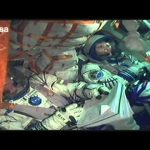
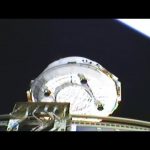
    This timelapse video shows the Soyuz TMA-18M spacecraft moving from its integration facility to it launch pad in Baikonur Cosmodrome and the launch on 2 September 2015 with commander Sergei Volkov, ESA astronaut Andreas Mogensen and Aidyn Aimbetov to the International Space Station.

    Andreas became Denmark’s first astronaut when he left our planet on his 10-day ‘iriss’ mission. ESA used the mission to test new technologies and conduct a series of scientific experiments.

    Andreas returned to Earth with Soyuz spacecraft commander Gennady Padalka and Kazakh cosmonaut Aidyn Aimbetov on 12 September.

    Follow Andreas via http://andreasmogensen.esa.int

    Credit: Directed by Stephane Corvaja – ESA and edited by Manuel Pedoussaut – Zetapress ; Music by Hubrid TMA-18
  • iriss mission liftoff

    iriss mission liftoff

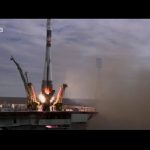
    ESA astronaut Andreas Mogensen, commander Sergei Volkov and Aidyn Aimbetov were launched into space this morning 2 September at 04:37:43 GMT (06:37:43 CEST) from Baikonur cosmodrome, Kazakhstan.

    The launch marks the start of ESA’s 10-day ‘iriss’ mission that will focus on testing new technologies and ways of running complex space missions.

    The astronaut’s Soyuz TMA-18M spacecraft was pushed into Earth orbit as planned accelerating 50 km/h on every second for the first nine minutes of their launch.

    The spacecraft separated from the Soyuz launcher at 04:46 GMT (06:46 CEST)

  • Ariane 5 flight VA225 liftoff

    Ariane 5 flight VA225 liftoff

    On 20 August 2015, Ariane 5 flight VA225 lifted off from Europe’s Spaceport in French Guiana and delivered two telecom satellites, Eutelsat-8 West B and Intelsat-34, into their planned orbits.

    Credit: Arianespace

  • Copernicus: Sentinel services

    Copernicus: Sentinel services

    On 23 June 2015 at 01:52 GMT (03:52 CEST 23 June; 22:52 local time 22 June) Sentinel-2A will launch from Europe’s Spaceport in French Guiana on top of a Vega.

    This satellite will be the second Sentinel for the Copernicus Programme. Copernicus is the most ambitious Earth observation programme to date. It will provide accurate, timely and easily accessible information to improve the management of the environment, understand and mitigate the effects of climate change and ensure civil security.

    This initiative is headed by the European Commission (EC) in partnership with the European Space Agency (ESA). ESA coordinates the delivery of data and is developing a new family of satellites, the Sentinels, specifically for the operational needs of Copernicus. The EC, acting on behalf of the European Union, is responsible for the overall initiative, setting requirements and managing the services. These services fall into six main categories: land management, the marine environment, atmosphere, emergency response, security and climate change.

    This video shows a good example of these services with GeoVille, based in Austria, which is playing a key role in Copernicus services for land applications, related to both land cover production as well as downstream services in the spatial planning domain.

  • Replay of Vega liftoff VV04 with IXV

    Replay of Vega liftoff VV04 with IXV

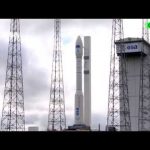
    Replay of the liftoff of Vega VV04 with ESA’s Intermediate eXperimental Vehicle, IXV, launched from Kourou, French Guiana on 11 February 2015.

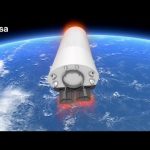
    IXV was launched 340 km into space atop a Vega rocket, VV04, from Kourou in French Guiana on 11 February 2015. After separation from Vega, IXV coasted to 412 km before beginning a punishing glide back through the atmosphere. During its autonomous flight, IXV tested the latest technologies and critical systems to extend Europe’s capability for space exploration.

    More about IXV: http://www.esa.int/Our_Activities/Launchers/IXV
    Connect with IXV on Twitter: twitter.com/esa_ixv

    Credits: ESA/Arianespace

  • IXV ready for liftoff

    IXV ready for liftoff

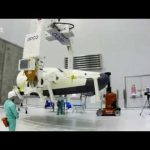
    This time-lapse video shows IXV’s preparation, fairing encapsulation, transfer to the Vega mobile gantry and upper composite integration on the Vega launcher, at Europe’s Spaceport in Kourou, French Guiana, in January 2015. IXV will be launched 340 km into space on top of a Vega rocket, flight VV04, climbing to 412 km before beginning a long glide back through the atmosphere. During the flight, IXV will test the latest technologies and critical systems to help guide the design of future spaceplanes.

    More about IXV:
    http://www.esa.int/ixv

    Credit/Copyrights
    Directed by Stephane Corvaja, ESA
    Edited by Manuel Pedoussaut, Zetapress
    Music: Hubrid-The Deep

  • IXV: mastering atmospheric reentry

    IXV: mastering atmospheric reentry

    Soon, IXV, Europe’s Intermediate Experimental Vehicle, will be launched into space on a Vega launcher from Europe’s spaceport in Kourou, French Guiana. A short but crucial mission to advance Europe’s ambition to return autonomously from space.

    More about IXV:
    http://www.esa.int/Our_Activities/Launchers/IXV

  • ESA Ministerial Conference: Launchers

    ESA Ministerial Conference: Launchers

    Ministers in charge of space activities within the 20 ESA Member States and Canada will meet in Luxembourg on 2 December to take key decisions, in particular on Europe’s Launcher Programmes and the new Ariane 6 design should then be unveiled, a next generation launcher being required for an increasingly competitive market.

    This video covers why it is important for Europe to have independent access to space and maintain its leadership in the world’s commercial satellite launch market.

    If final approval on its development is given at the forthcoming Ministerial, Ariane 6 will launch from Kourou at the start of the next decade.

  • Futura launch replay

    Futura launch replay

    The Soyuz TMA-15M spacecraft was launched from Baikonur cosmodrome in Kazakhstan at 21:01 GMT/22:01 CET on 23 November 2014 with ESA astronaut Samantha Cristoforetti and her crewmates to the weightless research centre where they will live and work for five months.

    With Samantha are Russian Soyuz commander Anton Shkaplerov and NASA astronaut Terry Virts. All three are part of the Station’s Expedition 42/43 crew.

    On this mission, Samantha is flying as an ESA astronaut for Italy’s ASI space agency under a special agreement between ASI and NASA. Her mission is called the Futura mission.

  • ATV-5 separation from Ariane 5

    ATV-5 separation from Ariane 5

    These images were taken by cameras on the Ariane 5 launcher that rocketed skywards on 29 July 2014 with Europe’s last cargo vessel to visit the International Space Station, ATV-5.

    The video shows the separation of ATV Georges Lemaîtres and its Ariane 5.

    From then on, it was a self-sufficient spacecraft heading towards the Space Station. The video also shows Ariane’s last stage manoeuvring out of the way.

    ATV-5 is carrying almost 6.6 tonnes of supplies to the International Space Station, including a record amount of dry cargo – 2682 kg.

  • Onboard camera view: launch and separation of Sentinel-1A

    Onboard camera view: launch and separation of Sentinel-1A

    Cameras mounted on the Soyuz Fregat upper stage that sent Sentinel-1A into space on 3 April 2014 captured this superb footage. It shows liftoff, the various stages in the rocket’s ascent and the Sentinel-1A satellite being released from the Fregat upper stage to start its life in orbit around Earth.

    The 2.3 tonne satellite lifted off on a Soyuz rocket from Europe’s Spaceport in Kourou, French Guiana at 21:02 GMT (23:02 CEST). The first stage separated 118 sec later, followed by the fairing (209 sec), stage 2 (287 sec) and the upper assembly (526 sec). After a 617 sec burn, the Fregat upper stage delivered Sentinel into a Sun-synchronous orbit at 693 km altitude. The satellite separated from the upper stage 23 min 24 sec after liftoff.

    Sentinel-1 is the first in the family of satellites for Europe’s Copernicus programme. It carries an advanced radar to scan Earth’s surface in all weather conditions and regardless of whether it is day or night. This new mission will be used to care for many aspects of our environment, from detecting and tracking oil spills and mapping sea ice to monitoring movement in land surfaces and mapping changes in the way land is used.