Tag: lava

  • Homemade Lava Lamp???

    Homemade Lava Lamp???

    What’s Steve doing now? ► https://linktr.ee/stevespangler
    For business inquiries, contact +1-855-228-8780 or steve@stevespangler.com

    This channel provides STEM ideas for classroom teachers and educators.

    Follow Steve’s Daily Posts on…
    INSTAGRAM ► https://www.instagram.com/stevespangler/
    FACEBOOK ► https://www.facebook.com/stevespangler
    TIKTOK ► https://www.tiktok.com/@stevespangler

    Other Channels…
    The Spangler Effect ► https://www.youtube.com/user/TheSpanglerEffect
    Spangler Science TV ► https://www.youtube.com/user/SpanglerScienceTV

    Watch Steve’s syndicated television series ► https://bit.ly/2KaO0fT
    Purchase Steve Spangler’s books at
    https://stevespangler.com/easy-science-experiments-stem-challenges-books/

    Steve Spangler is a bestselling author, STEM educator and Emmy award-winning television personality with more than 2,100 television appearances to his credit. Steve appeared as a regular guest on the Ellen DeGeneres Show from 2007-2022 (27 appearances).

    Learn more about Steve at https://stevespangler.com

    The SICK Science® series was created by Steve Spangler in 2008. For licensing inquiries, contact +1-855-228-8780 or steve@stevespangler.com

    © 2006 – 2025 Steve Spangler, Inc. All Rights Reserved.

  • Make A Lava Lamp in a Wine Glass???

    Make A Lava Lamp in a Wine Glass???

    What’s Steve doing now? ► https://linktr.ee/stevespangler
    For business inquiries, contact +1-855-228-8780 or steve@stevespangler.com

    This channel provides STEM ideas for classroom teachers and educators.

    Follow Steve’s Daily Posts on…
    INSTAGRAM ► https://www.instagram.com/stevespangler/
    FACEBOOK ► https://www.facebook.com/stevespangler
    TIKTOK ► https://www.tiktok.com/@stevespangler

    Other Channels…
    The Spangler Effect ► https://www.youtube.com/user/TheSpanglerEffect
    Spangler Science TV ► https://www.youtube.com/user/SpanglerScienceTV

    Watch Steve’s syndicated television series ► https://bit.ly/2KaO0fT
    Purchase Steve Spangler’s books at
    https://stevespangler.com/easy-science-experiments-stem-challenges-books/

    Steve Spangler is a bestselling author, STEM educator and Emmy award-winning television personality with more than 2,100 television appearances to his credit. Steve appeared as a regular guest on the Ellen DeGeneres Show from 2007-2022 (27 appearances).

    Learn more about Steve at https://stevespangler.com

    The SICK Science® series was created by Steve Spangler in 2008. For licensing inquiries, contact +1-855-228-8780 or steve@stevespangler.com

    © 2006 – 2025 Steve Spangler, Inc. All Rights Reserved.
  • NASA’s Juno Spacecraft Flies Past Io and Jupiter, With Music by Vangelis

    NASA’s Juno Spacecraft Flies Past Io and Jupiter, With Music by Vangelis

    On May 16, 2023, NASA’s Juno spacecraft flew past Jupiter’s volcanic moon Io, and then the gas giant soon after. Io is the most volcanically active body in the solar system. Slightly larger than Earth’s moon, Io is a world in constant torment. Not only is the biggest planet in the solar system forever pulling at it gravitationally, but so are its Galilean siblings – Europa and the biggest moon in the solar system, Ganymede. The result is that Io is continuously stretched and squeezed, actions linked to the creation of the lava seen erupting from its many volcanoes.

    This rendering provides a “starship captain” point of view of the flyby, using images from JunoCam. For both targets, Io and Jupiter, raw JunoCam images were reprojected into views similar to the perspective of a consumer camera. The Io flyby and the Jupiter approach movie were rendered separately and composed into a synchronous split-screen video.

    Launched on Aug. 5, 2011, Juno embarked on a 5-year journey to Jupiter. Its mission: to probe beneath the planet’s dense clouds and answer questions about the origin and evolution of Jupiter, our solar system, and giant planets in general across the cosmos. Juno arrived at the gas giant on July 4, 2016, after a 1.7-billion-mile journey, and settled into a 53-day polar orbit stretching from just above Jupiter’s cloud tops to the outer reaches of the Jovian magnetosphere. Now in its extended mission, NASA’s most distant planetary orbiter continues doing flybys of Jupiter and its moons.

    Visit http://www.nasa.gov/juno & http://missionjuno.swri.edu to learn more.

    Animation: Koji Kuramura and Gerald Eichstädt
    Music: Vangelis
    Producer: Scott J. Bolton
    Credit: NASA/JPL-Caltech/SwRI/MSSS

  • 13 volcanoes seen from space

    13 volcanoes seen from space

    Have you ever wondered what a volcano looks like from space? Today, we’re counting down our picks of the most impressive volcanoes around the world – captured by satellites. Our countdown includes Mount Fuji, Mount Mayon and Mount Vesuvius.

    Are there any volcanoes we missed on our list? Let us know in the comments below.

    00:00 – Intro

    00:38 – Mount Fuji

    01:27 – Mount St. Helens

    02:14 – Mauna Loa

    02:52 – Fagradalsfjall

    03:33 – Kamchatka Peninsula

    04:13 – Mount Vesuvius

    05:15 – Volcán de Fuego

    06:17 – Mount Mayon

    07:04 – Emi Koussi

    07:57 – Cumbre Vieja

    08:47 – Mount Taranaki

    09:40 – Galapagos Islands

    10:20 – Anak Krakatoa

    “Correction:” 2:17 – This footage does not show Mauna Loa but shows the Diamond Head, Hawaii.

    “Correction:” 5:39 – This part of the image does not show the lava flow from the Volcán de Fuego

    Credits: ESA

    ★ Subscribe: http://bit.ly/ESAsubscribe and click twice on the bell button to receive our notifications.

    Check out our full video catalog: http://bit.ly/SpaceInVideos
    Follow us on Twitter: http://bit.ly/ESAonTwitter
    On Facebook: http://bit.ly/ESAonFacebook
    On Instagram: http://bit.ly/ESAonInstagram
    On LinkedIn: https://bit.ly/ESAonLinkedIn
    On Pinterest: https://bit.ly/ESAonPinterest
    On Flickr: http://bit.ly/ESAonFlickr

    We are Europe’s gateway to space. Our mission is to shape the development of Europe’s space capability and ensure that investment in space continues to deliver benefits to the citizens of Europe and the world. Check out https://www.esa.int/ to get up to speed on everything space related.

    Copyright information about our videos is available here: https://www.esa.int/ESA_Multimedia/Terms_and_Conditions

    #ESA
    #Volcano
    #EarthFromSpace

  • Bubbling Lava Lamp – Sick Science! #081

    Bubbling Lava Lamp – Sick Science! #081

    Read the full experiment at http://www.stevespanglerscience.com/experiment/bubbling-lava-lamp Lava lamps hold a special place in pop culture history, but there is a lot of science that we can learn from them, too. With the Bubbling Lava Lamp, you’ll learn how to make a homemade, kid-safe lava lamp using materials right in your home. With a soda bottle, oil and water, and a secret ingredient that makes the whole thing fizz, bubble, and erupt, you’ll have a colorful concoction you will love.

    Want more experiments like this? Check out http://www.stevespanglerscience.com/product/fire-bubbles-exploding-toothpaste-book

    Sick Science™ is a trademark of Steve Spangler, inc.

    © 2012 Steve Spangler Science all rights reserved

  • Lava tube fly-through

    Lava tube fly-through

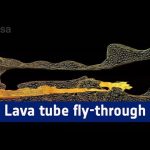
    The “Cueva de los Verdes” lava tube in Lanzarote, Spain, is one of the world’s largest volcanic cave complexes with a total length of about 8 km.

    Geology experts from ESA’s Pangaea-X campaign mapped most of the lava tube system as part of a project supported by local authorities Cabildo of Lanzarote and the University of Padova, Italy. The data was acquired in November 2017 by Leica Geosystems.

    The map comes alive in great detail in 3D, helping institutions to protect the subterranean environment. The map also provides scientific data to study the origins of the tube and its peculiar formations.

    Pangaea-X is a test campaign that brings together geology, high-tech survey equipment and space exploration. Learn more about the science and technology behind this campaign visiting http://blogs.esa.int/pangaea