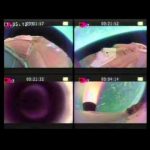
NASA’s Low Density Supersonic Decelerator (LDSD) launched on Monday, June 8th from the U.S. Navy’s Pacific Missile Range Facility on Kauai, Hawaii. The saucer-shaped vehicle was used to test new technologies that will help NASA land heavier payloads than current technology will allow on the surface of planets including Mars. The test vehicle was carried by balloon to about 120,000 feet. After release, an engine took the vehicle to 180,000 feet, where the tests occurred in the thin atmosphere to simulate Mars’ atmosphere. This flight test was the second of three planned for the project. The LDSD mission is designed to test entry and descent technology in the form of a donut-shaped airbag and a supersonic parachute that can be deployed while the vehicle is traveling several times the speed of sound.
Tag: LDSD
-
One-year mission underway on This Week @NASA
A few days after his one-year mission to study the effects of long duration spaceflight on the human body began aboard the International Space Station, Expedition 43 Flight Engineer Scott Kelly was congratulated by NASA Administrator Charlie Bolden from Washington DC. Also on the call – Kelly’s twin brother and former astronaut Mark. The pair will be studied during the mission as part of a science investigation. White House science advisor John Holdren also joined the call and echoed the importance of the mission. Kelly and Russian cosmonaut Mikhail Kornienko will conduct the one-year research mission through March 2016. Also, Super typhoon seen from space, Asteroid mission milestone, LDSD spin test and Sniffing the history of the Martian atmosphere!
-
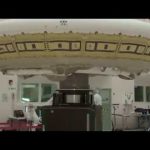
NASA conducts spin test on15-foot-wide saucer-shaped Low-Density Supersonic Decelerator (LDSD)
NASA’s Low-Density Supersonic Decelerator (LDSD) project will be flying a rocket-powered, saucer-shaped test vehicle into near-space from the Navy’s Pacific Missile Range Facility this June from Kauai, Hawaii. To prepare for the flight, a “spin” test was conducted from the gallery above a clean room at NASA’s Jet Propulsion Laboratory in Pasadena, California, where this near-space experimental test vehicle is being prepared for shipment to Hawaii. During the broadcast, the 15-foot-wide, 7,000-pound vehicle underwent a “spin-table” test. The LDSD crosscutting demonstration mission will test breakthrough technologies that will enable large payloads to be safely landed on the surface of Mars, or other planetary bodies with atmospheres, including Earth.