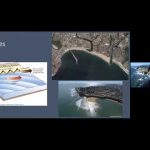
Explore the impacts that the ocean, weather, and tectonic activity have on our ever-changing coastline.
About the series: Join the Geology Gents, Gavin and Graham, for weekly conversations about rocks live on Facebook. Each week we’ll explore a different geologic topic, from Santa Cruz formations to tips for being a more effective rockhound. Graham Edwards and Gavin Piccione are PhD candidates in geochronology with the Department of Earth and Planetary Sciences at UC Santa Cruz.
Submit your questions ahead of time on Facebook or by emailing events@santacruzmuseum.org, or during the program live on Facebook. Feel free to include pictures of rocks you’d like identified! Pro-tip: the better the picture, the better the ID.
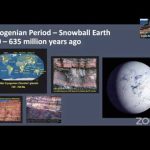
One of the greatest challenges for most people when it comes to understanding geology is the concept of time. When our lives are measured in minutes, hours, and days, what does 3-7 million years even mean? Or 4 billion years? Explore the conventions of geologic time during this week’s installment.
About the series: Join the Geology Gents, Gavin and Graham, for weekly conversations about rocks live on Facebook. Each week we’ll explore a different geologic topic, from Santa Cruz formations to tips for being a more effective rockhound. Graham Edwards and Gavin Piccione are PhD candidates in geochronology with the Department of Earth and Planetary Sciences at UC Santa Cruz.
Submit your questions ahead of time on Facebook or by emailing events@santacruzmuseum.org, or during the program live on Facebook. Feel free to include pictures of rocks you’d like identified! Pro-tip: the better the picture, the better the ID.
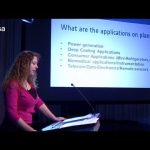
How are space technologies such as earth observation, satellite communications, and navigation systems being applied to our greatest global challenges like climate change, deforestation and disaster resilience? Find out more in this Space Bites talk by David Taverner, Senior Director at Caribou Space.
David Taverner’s career has focused on using space, mobile, internet and renewable energy technology to address challenges in developing countries. Caribou Space works with governments, space agencies, development agencies and private companies – to use space technology for positive impact on society, economy and environment. David supports the UK Space Agency International Partnership Programme, a £150 million fund to use space technology to benefit developing countries. David has also supported ESA’s Earth Observation for Sustainable Development programme, helping define its future strategy and plan.
Space Bites is a series of lectures about space exploration promoted by the ESA Directorate of Human and Robotic Exploration in order to increase the awareness of the importance of space exploration.
Due to Covid-19 restrictions, the lecture was hosted online via video conference.
★ Subscribe: http://bit.ly/ESAsubscribe and click twice on the bell button to receive our notifications.
We are Europe’s gateway to space. Our mission is to shape the development of Europe’s space capability and ensure that investment in space continues to deliver benefits to the citizens of Europe and the world. Check out https://www.esa.int/ to get up to speed on everything space related.
Lecture from Anastasiia Prytuliak, European Space Agency postdoctoral research fellow in the Institute Laue Langevin and European Radiation Synchrotron Facility in Grenoble, France about a project called “ThermoMag”, which is devoted to the research and development of energy-harvesting thermoelectric materials.
“ThermoMag” is a project co-funded by the 7th Framework Programme of the European Commission, coordinated by the European Space Agency.