Meet Esther, our System Engineer currently working on the Proba-3 mission.
Proba-3 is scheduled to liftoff on Wednesday, 4 December, at 11:38 CET from the Satish Dhawan Space Centre in India, Proba-3 will use two satellites to create the perfect conditions for observing the Sun’s corona.
One satellite features a telescope, kept in the centre of the shadow cast by the other satellite around 150 m away, thanks to an occulter disc. Maintaining the correct position in the shadow requires a precise formation flying capability, down to a single millimetre of precision.
Meet Ian Carnelli, project manager for Hera, our planetary defense mission that will very soon be launched into space.
Hera will be, along with NASA’s DART spacecraft, humankind’s first probe to rendezvous with a binary asteroid system, a little understood class making up around 15% of all known asteroids.
Astronaut training consists of three main phases: basic training, pre-assignment training and increment training.
On the 22nd April, our astronaut candidates will have completed their basic training.
They will receive their certification at our European Astronaut Centre in Cologne, Germany, officially becoming fully fledged astronauts eligible for spaceflight.
After their graduation, the astronauts will proceed to the next phases of pre-assignment and mission-specific training, where they’ll learn specific skills for their future missions to the International Space Station and beyond!
📸 ESA – European Space Agency 📹 ESA – European Space Agency
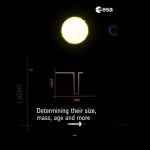
More than 5000 exoplanets have been discovered to date, but what do they look like? ESA’s dedicated exoplanet missions Cheops, Plato and Ariel are on a quest to find out. Cheops will focus its search on mini-Neptunes, planets with sizes between Earth and Neptune, on short orbits around their stars. Cheops will find out how large these planets are, and may detect whether the planets have clouds. Plato will look at all kinds of exoplanets and determine their sizes and ages. Plato’s instruments are so sensitive it may discover the first Earth-like planet on an Earth-like orbit. Finally, Ariel will look at the atmospheres of exoplanets using the technique of transmission spectroscopy and discover what they are made of. Together these missions will discover what exoplanets and their systems look like and they will also reveal how special our own Solar System is.
We are Europe’s gateway to space. Our mission is to shape the development of Europe’s space capability and ensure that investment in space continues to deliver benefits to the citizens of Europe and the world. Check out https://www.esa.int/ to get up to speed on everything space related.
What’s it like landing on Mars? Tough! But every time we land, we learn more.
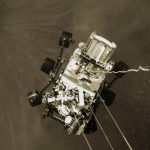
When our Perseverance Mars rover descended toward the Red Planet, it was decked out with temperature and pressure sensors that collected critical data about entry and landing conditions. NASA engineer Alex Scammell tells us more.
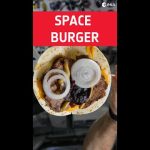
Here’s the space burger recipe of ESA astronaut Thomas Pesquet: “Tortillas, rehydrated beef patty, fresh onion from a cargo vehicle, a slice of lettuce (grown on the International Space Station for a scientific experiment: don’t tell), and various sauces. It tasted like heaven, and flew like an angel”
We are Europe’s gateway to space. Our mission is to shape the development of Europe’s space capability and ensure that investment in space continues to deliver benefits to the citizens of Europe and the world. Check out https://www.esa.int/ to get up to speed on everything space related.
NASA’s Perseverance Mars Rover safely touched down on the Red Planet on Feb. 18. So what will the robotic scientist “see” on her descent and what will she do next? Join mission experts for update about the rover – the biggest, heaviest, cleanest, and most sophisticated six-wheeled robot ever launched into space – including imagery it captured and its mission to explore Mars.
A special “out of this world” episode of #AskNASA.
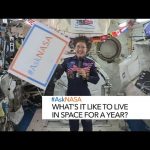
During her record-setting mission NASA astronaut Christina Koch answers key questions about her stay in space. Highlighting her contributions and scientific achievements while aboard the International Space Station.
Including her help to develop medicine in microgravity and collect data needed for longer missions.
Conducting the longest single spaceflight by any woman, Christina gives great insight into questions related to future missions to the Moon with the Artemis missions and future exploration of Mars.
Comment with your #AskNASA question and subscribe to learn more from our experts!
Astronauts on the International Space Station get food that’s chosen for nutritional value and specially prepared and packaged to be accessible on orbit. Could the same food feed the needs of people stuck on planet Earth? We conducted an experiment to find out how well two regular people could get by eating only astronaut food for a full week—a week that included a holiday weekend feast, just to up the difficulty factor. Could they resist the lure of their favorite foods? Take a look at how they fared…
A flame goes out inside of an upside down jar and, like magic, the jar is stuck to a plate. You might think that the jar has sucked right to the plate, but we’ll explain why this trick is actually a result of pushing!
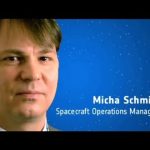
Micha Schmidt is a Spacecraft Operations Manager at ESA. In this video he talks about his involvement in the Herschel project and the many phases of development that exist in all ESA projects. Micha also talks about his fascination for space as a boy and what a great experience it has been to live in various European countries whilst working for ESA.
You should, like, like Steve Spangler’s Facebook page at http://www.facebook.com/stevespangler If you want a behind the scenes look at the crazy things that go on at the Steve Spangler office, the heads up on new exciting products, or if you just like cool science experiments, you should like Steve Spangler’s Facebook page!
About Steve Spangler Science…
Steve Spangler is a celebrity teacher, science toy designer, speaker, author and an Emmy award-winning television personality. Spangler is probably best known for his Mentos and Diet Coke geyser experiment that went viral in 2005 and prompted more than 1,000 related YouTube videos. Spangler is the founder of www.SteveSpanglerScience.com, a Denver-based company specializing in the creation of science toys, classroom science demonstrations, teacher resources and home for Spangler’s popular science experiment archive and video collection. Spangler is a frequent guest on the Ellen DeGeneres Show where he takes classroom science experiments to the extreme. Check out his pool filled with 2,500 boxes of cornstarch!
On the education side, Spangler started his career as a science teacher in the Cherry Creek School district for 12 years. Today, Steve travels extensively training teachers in ways to make learning more engaging and fun. His hands-on science boot camps and summer institutes for teachers inspire and teach teachers how to prepare a new generation for an ever-changing work force. Over the last 15 years, he has also made more than 500 television appearances as an authority on hands-on science and inquiry-based learning.
On the business side, Spangler is the founder and CEO of Steve Spangler Science, a Denver-based company specializing in the creation of educational toys and kits and hands-on science training services for teachers. The companys unique business strategies and viral creations have been featured in the Wall Street Journal, Inc. Magazine, Wired and TIME Magazine where online readers voted Steve Spangler #18 in the Top 100 Most Influential People of the Year for 2006 (what were they thinking?). You’ll find more than 140 Spangler created products available online at SteveSpanglerScience.com and distributed to toy stores and mass-market retailers worldwide.
Spangler joined NBC affiliate 9News in 2001 as the science education specialist. His weekly experiments and science segments are designed to teach viewers creative ways to make learning fun. His now famous Mentos Geyser experiment, turning 2-liter bottles of soda into erupting fountains, became an Internet sensation in September 2005 when thousands of people started posting their own Mentos explosions on YouTube.com.
As founder of SteveSpanglerScience.com, Spangler and his design team have developed more than 140 educational toys and science-related products featured by mass-market retailers like Target, Wal-Mart, Toys R’ Us, Discovery Channel Stores and over 1,400 independent specialty toy stores. His educational science catalog and on-line business offers more than a thousand science toys and unique learning resources. Recently, Spangler has been featured in the Wall Street Journal, Inc. Magazine, WIRED, the History Channel, Food Network and TIME Magazine where on-line readers voted Steve Spangler #18 in the Top 100 Most Influential People of the Year for 2006.
His recent appearances on the Ellen DeGeneres Show have taught viewers how to blow up their food, shock their friends, create mountains of foam, play on a bed of nails, vanish in a cloud of smoke and how to turn 2,500 boxes of cornstarch and a garden hose into a swimming pool of fun.