European Space Agency astronaut Samantha Cristoforetti shared this video on social media with the caption: How do you cross a module in space? 🙃
📹 ESA – S. Cristoforetti
#ESA #Floating #MissionMinerva
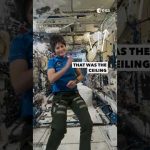
European Space Agency astronaut Samantha Cristoforetti shared this video on social media with the caption: How do you cross a module in space? 🙃
📹 ESA – S. Cristoforetti
#ESA #Floating #MissionMinerva
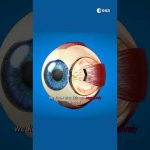
There is no point in sending human explorers on long voyages around the solar system if they arrive at their destination in poor physical shape. Long stays in zero gravity are not good for the human body.
We already know that astronauts lose bone mass at around 1% for every month they are in space; muscles – including heart muscles – atrophy despite hours of exercise; and there are a host of other problems.
🎥 ESA – European Space Agency
#ESA
#Astronaut
#InternationalSpaceStation
Humans are adaptable beings. Wear glasses that turn your view of the world upside-down and within two weeks your brain will have adapted to the topsy-turvy world.
Researchers suspect that astronauts’ brains adapt to living in weightlessness by using previously untapped links between neurons. As the astronauts learn to float around in their spacecraft, left–right and up–down become second nature as these neuronal connections are activated.
To confirm this theory, up to 16 astronauts will be put through advanced Magnetic Resonance Imaging (MRI) scanners before and after their flights to study any changes in their brain structure. A control group on ground will undergo the same scans for further comparison.
The research is providing scientists on Earth clues where to look in the brains of people who suffer from disorders based on previous traumatic experiences such as vertigo.
🎥 ESA – European Space Agency
#ESA
#Astronaut
#InternationalSpaceStation
Like every other living creature we know of, humans evolved at the bottom of a gravity well. We take the Earth’s tug for granted, and so do our bodies. So it’s not surprising that our bodies behave oddly in orbit. What is surprising is that humans turn out to adapt remarkably well to zero-g (more precisely, microgravity).
🎥 ESA – European Space Agency
#ESA
#Astronaut
#InternationalSpaceStation
The European Space Agency (ESA) is currently training five astronaut candidates for future missions to the International Space Station and beyond. Their training programme consists of three phases: The first phase is basic training, which covers medical exams, fitness assessments, and space programmes and systems. The second phase, the pre-assignment training, is advanced training in specific areas such as systems training, vehicle training, robotics and EVA-training. The third phase is mission-specific training, which is tailored to the tasks and experiments that astronauts will perform during their mission. ESA’s astronaut training programme also includes training for exploration of the lunar surface, as astronauts will need to apply their skills and knowledge to new challenges in future space missions beyond Earth orbit.
★ Subscribe: http://bit.ly/ESAsubscribe and click twice on the bell button to receive our notifications.
Check out our full video catalog: http://bit.ly/SpaceInVideos
Follow us on Twitter: http://bit.ly/ESAonTwitter
On Facebook: http://bit.ly/ESAonFacebook
On Instagram: http://bit.ly/ESAonInstagram
On LinkedIn: https://bit.ly/ESAonLinkedIn
On Pinterest: https://bit.ly/ESAonPinterest
On Flickr: http://bit.ly/ESAonFlickr
We are Europe’s gateway to space. Our mission is to shape the development of Europe’s space capability and ensure that investment in space continues to deliver benefits to the citizens of Europe and the world. Check out https://www.esa.int/ to get up to speed on everything space related.
Copyright information about our videos is available here: https://www.esa.int/ESA_Multimedia/Terms_and_Conditions
#ESA
#Training
#Astronaut
Our alien friend Paxi went to visit American astronaut Christina Koch on board the International Space Station. Christina talks about the importance of teachers and shares a story about her favourite teacher at school.
Follow Paxi: https://www.esa.int/kids/en/home
★ Subscribe: http://bit.ly/ESAsubscribe and click twice on the bell button to receive our notifications.
Check out our full video catalog: http://bit.ly/SpaceInVideos
Follow us on Twitter: http://bit.ly/ESAonTwitter
On Facebook: http://bit.ly/ESAonFacebook
On Instagram: http://bit.ly/ESAonInstagram
On Flickr: http://bit.ly/ESAonFlickr
We are Europe’s gateway to space. Our mission is to shape the development of Europe’s space capability and ensure that investment in space continues to deliver benefits to the citizens of Europe and the world. Check out http://www.esa.int/ESA to get up to speed on everything space related.
Copyright information about our videos is available here: http://www.esa.int/spaceinvideos/Terms_and_Conditions
#ESAKids
#ISS
#InspirationalTeachers
Our alien friend Paxi went to visit American astronaut Anne McClain on board the International Space Station. Anne explains some of the mental challenges of being an astronaut on the ISS.
★ Subscribe: http://bit.ly/ESAsubscribe and click twice on the bell button to receive our notifications.
Check out our full video catalog: http://bit.ly/SpaceInVideos
Follow us on Twitter: http://bit.ly/ESAonTwitter
On Facebook: http://bit.ly/ESAonFacebook
On Instagram: http://bit.ly/ESAonInstagram
On Flickr: http://bit.ly/ESAonFlickr
We are Europe’s gateway to space. Our mission is to shape the development of Europe’s space capability and ensure that investment in space continues to deliver benefits to the citizens of Europe and the world. Check out http://www.esa.int/ESA to get up to speed on everything space related.
Copyright information about our videos is available here: http://www.esa.int/spaceinvideos/Terms_and_Conditions
#ESAKids
#ISS
#LifeInSpace
Over the last two decades, space agencies have created more comfortable conditions on the International Space Station, but we need to explore the concept of ‘living in space’ much further if humans are to ever live and work on another world, such as the Moon or Mars.
ESA’s Discovery and Preparation Programme works to prepare ESA for the future of space exploration. As part of this programme, ESA has worked with academic and industrial partners on a huge number of studies that lay the groundwork for living in space.
The technology that exists today could easily take us to the Moon and beyond, but it is studies like those carried out under the Discovery and Preparation Programme that will make a trip resourceful, sustainable and productive.
★ Subscribe: http://bit.ly/ESAsubscribe and click twice on the bell button to receive our notifications.
Check out our full video catalog: http://bit.ly/SpaceInVideos
Follow ESA on Twitter: http://bit.ly/ESAonTwitter
On Facebook: http://bit.ly/ESAonFacebook
On Instagram: http://bit.ly/ESAonInstagram
On Flickr: http://bit.ly/ESAonFlickr
ESA is Europe’s gateway to space. Our mission is to shape the development of Europe’s space capability and ensure that investment in space continues to deliver benefits to the citizens of Europe and the world. Check out http://www.esa.int/ESA to get up to speed on everything space related.
Copyright information about our videos is available here: http://www.esa.int/spaceinvideos/Terms_and_Conditions
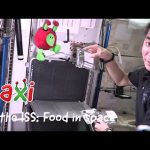
Our alien friend Paxi, ESA Education’s mascot, went to visit Japanese astronaut Kimiya Yui on board the International Space Station. Kimiya shows Paxi what it’s like to prepare and eat food in weightlessness, an important part of the day when living on the ISS.
#ESA
#Paxi
#InternationalSpaceStation