
Tag: lune

  • Paxi explore la Lune !

    Paxi explore la Lune !

    Rejoignez Paxi pour un voyage vers la Lune.

    Dans cette vidéo, destinée aux enfants de 6 à 12 ans, Paxi étudie ce dont nous avons besoin pour vivre sur la Lune.

    ★ Subscribe: http://bit.ly/ESAsubscribe and click twice on the bell button to receive our notifications.

    Check out our full video catalog: http://bit.ly/SpaceInVideos
    Follow ESA on Twitter: http://bit.ly/ESAonTwitter
    On Facebook: http://bit.ly/ESAonFacebook
    On Instagram: http://bit.ly/ESAonInstagram
    On Flickr: http://bit.ly/ESAonFlickr

    ESA is Europe’s gateway to space. Our mission is to shape the development of Europe’s space capability and ensure that investment in space continues to deliver benefits to the citizens of Europe and the world. Check out http://www.esa.int/ESA to get up to speed on everything space related.

    Copyright information about our videos is available here: http://www.esa.int/spaceinvideos/Terms_and_Conditions
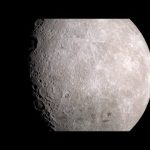

  • Clair de Lune 4K Version – Moon Images from NASA’s Lunar Reconnaissance Orbiter

    Clair de Lune 4K Version – Moon Images from NASA’s Lunar Reconnaissance Orbiter

    This visualization uses a digital 3D model of the Moon built from global elevation maps and image mosaics by NASA’s Lunar Reconnaissance Orbiter mission. It was created to accompany a performance of Claude Debussy’s Clair de Lune by the National Symphony Orchestra Pops, led by conductor Emil de Cou, at the Kennedy Center for the Performing Arts in Washington, DC, on June 1 and 2, 2018, as part of a celebration of NASA’s 60th anniversary.

    Clair de Lune (moonlight in French) was published in 1905, as the third of four movements in the composer’s Suite Bergamasque, and unlike the other parts of this work, Clair is quiet, contemplative, and slightly melancholy, evoking the feeling of a solitary walk through a moonlit garden.

    The visuals were composed like a nature documentary, with clean cuts and a mostly stationary virtual camera. The viewer follows the Sun throughout a lunar day, seeing sunrises and then sunsets over prominent features on the Moon. The sprawling ray system surrounding Copernicus crater, for example, is revealed beneath receding shadows at sunrise and later slips back into darkness as night encroaches.

    This video is public domain and along with other supporting visualizations can be downloaded from the Scientific Visualization Studio at: http://svs.gsfc.nasa.gov/4655

    Credit: NASA’s Scientific Visualization Studio

    If you liked this video, subscribe to the NASA Goddard YouTube channel: http://www.youtube.com/NASAExplorer

    Visualization Credits
    Ernie Wright (USRA)
    Lead Visualizer and Editor

    Laurence Schuler (ADNET Systems Inc.)
    Technical Support

    Ian Jones (ADNET Systems Inc.)
    Technical Support

    Wade Sisler (NASA/GSFC)
    Producer

    Noah Petro (NASA/GSFC)
    Scientist

  • ESA’s space ferry: The Automated Transfer Vehicle

    ESA’s space ferry: The Automated Transfer Vehicle

    The International Space Station (ISS) depends on regular deliveries of equipment, food, air and water for its crews. Since the arrival of the first Automated Transfer Vehicle in April 2008, it has become one of the Stations indispensable supply ships.