Tag: made

  • A dragon made of clouds is singing to Earth

    A dragon made of clouds is singing to Earth

    What if satellite cloud data could become music? Meet Hakuryu — a dragon born as the European Space Agency’s EarthCARE satellite, singing a song of peace for our planet.

    EarthCARE is the European Space Agency’s most advanced Earth Explorer launched to date, equipped with instruments that help us understand clouds and aerosols in new and unprecedented ways.

    It is a collaboration between ESA and the Japanese Aerospace Exploration Agency, JAXA, who designed and developed the satellite’s Cloud Profiling Radar (CPR) instrument. JAXA called EarthCARE Hakuryu, which is Japanese for White Dragon.

    Hakuryu now lends its name to the title of a groundbreaking immersive installation that creates an audiovisual story from EarthCARE cloud and aerosol data in a way that has never been seen or heard before.

    Through data sonification, Hakuryu transforms over thirty types of data into immersive soundscapes and music. Clouds become choirs as Hakuryu sings to Earth, with voices from notable public, scientific and ESA figures joined by those needing care most – people from the frontline of climate change, displacement and conflict.

    Adding to this, data from atmospheric elements such as rain, snow, dust and smoke are rendered as rich environmental sonic textures. Simultaneously the same data is transformed into clouds, creating a vibrant trail behind an animated white dragon. Viewers slowly fly with Hakuryu, in a beautiful representation of Earth as it moves from day into night on its journey around the sun.

    The film you see here comprises one entire EarthCARE orbit around our planet. It is running live all week at ESA’s Living Planet Symposium in Vienna, from 23 to 27 June 2025, as an immersive installation. Following its debut, Hakuryu will travel the world in a variety of ways soon to be revealed.

    More about EarthCARE: https://esa.int/earthcare

    More about the EarthCARE DISC: https://earth.esa.int/eogateway/activities/earthcare-disc

    Visit the artist’s website: https://www.jamieperera.com/

    Credits:
    Artist: Jamie Perera

    Visual programming: Tekja (Jacopo Hirschstein)

    Sonification programmer: N3xtcoder (Jonathan Moore) & Adrian Lewis

    ESA development & production: Bjoern Frommknecht, Peter Bickerton, Shannon Mason and the EarthCARE Data, Innovation and Science Cluster (DISC)

    Installation production: Lorenza Versace

    Additional audio development: Danny Bright

    ★ Subscribe: http://bit.ly/ESAsubscribe and click twice on the bell button to receive our notifications.

    Check out our full video catalog: http://bit.ly/SpaceInVideos
    Follow us on Twitter: http://bit.ly/ESAonTwitter
    On Facebook: http://bit.ly/ESAonFacebook
    On Instagram: http://bit.ly/ESAonInstagram
    On LinkedIn: https://bit.ly/ESAonLinkedIn
    On Pinterest: https://bit.ly/ESAonPinterest
    On Flickr: http://bit.ly/ESAonFlickr

    We are Europe’s gateway to space. Our mission is to shape the development of Europe’s space capability and ensure that investment in space continues to deliver benefits to the citizens of Europe and the world. Check out https://www.esa.int/ to get up to speed on everything space related.

    Copyright information about our videos is available here: https://www.esa.int/ESA_Multimedia/Terms_and_Conditions

  • How Are We Made of Star Stuff? We Asked a NASA Expert

    How Are We Made of Star Stuff? We Asked a NASA Expert

    How are we made of star stuff? Nearly all the elements in your body were forged in ancient stars long before Earth, the Sun or our galaxy even existed. When those stars exploded, they sent their material out into space, scattering elements like carbon, oxygen and iron across the universe. Billions of years later, those same ingredients came together to form everything we know — including you.

    A NASA scientist explains how we really are made of star stuff and how telescopes like Hubble and Webb help us trace our cosmic origins.

    Explore more: https://science.nasa.gov/universe/stars/

    Producers: Scott Bednar, Pedro Cota, Jessie Wilde
    Editor: James Lucas

    Credit: NASA

  • Gaia just made an unexpected discovery 🪐

    Gaia just made an unexpected discovery 🪐

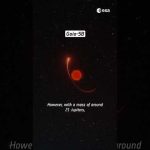
    Using data from the European Space Agency’s Gaia mission, scientists have found a huge exoplanet and a brown dwarf. This is the first time a planet has been uniquely discovered by Gaia’s ability to sense the gravitational tug or ‘wobble’ the planet induces on a star. Both the planet and brown dwarf are orbiting low-mass stars, a scenario thought to be extremely rare.

    📹 ESA – European Space Agency
    📸 ESA/Gaia/DPAC/M. Marcussen

    #ESA #Gaia #SpaceDiscovery

  • @NickUhas made a supersized Mentos Geyser Tube! get your own at  https://amzn.to/4g777kA

    @NickUhas made a supersized Mentos Geyser Tube! get your own at https://amzn.to/4g777kA

    What’s Steve doing now? ► https://linktr.ee/stevespangler

    Other Channels…

    The Spangler Effect ► https://www.youtube.com/user/TheSpanglerEffect
    Spangler Science TV ► https://www.youtube.com/user/SpanglerScienceTV

    Follow Steve’s Daily Posts on…

    INSTAGRAM ► https://www.instagram.com/stevespangler/
    FACEBOOK ► https://www.facebook.com/stevespangler
    TIKTOK ► https://www.tiktok.com/@stevespangler

    Steve Spangler is a bestselling author, STEM educator and Emmy award-winning television personality with more than 2,100 television appearances to his credit. Steve appeared as a regular guest on the Ellen DeGeneres Show from 2007-2022. Learn more about Steve at https://stevespangler.com/about-steve-spangler/

    Watch Steve’s syndicated television series ► https://bit.ly/2KaO0fT

    The SICK Science® series was created by Steve Spangler.

    © 2024 Steve Spangler, Inc. All Rights Reserved.

  • How we made history by landing on a comet?

    How we made history by landing on a comet?

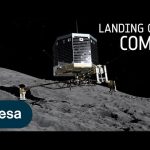
    On 12 November 2014, after a ten-year journey through the Solar System and over 500 million kilometres from home, Rosetta’s lander Philae made space exploration history by touching down on a comet for the first time. On the occasion of the tenth anniversary of this extraordinary feat, we celebrate by taking a look back over the mission’s highlights.

    Rosetta was an ESA mission with contributions from its Member States and NASA. It studied Comet 67P/Churyumov-Gerasimenko for over two years, including delivering lander Philae to the comet’s surface. Philae was provided by a consortium led by DLR, MPS, CNES and ASI.

    Credits: ESA – European Space Agency

    ★ Subscribe: http://bit.ly/ESAsubscribe and click twice on the bell button to receive our notifications.

    Check out our full video catalog: http://bit.ly/SpaceInVideos
    Follow us on Twitter: http://bit.ly/ESAonTwitter
    On Facebook: http://bit.ly/ESAonFacebook
    On Instagram: http://bit.ly/ESAonInstagram
    On LinkedIn: https://bit.ly/ESAonLinkedIn
    On Pinterest: https://bit.ly/ESAonPinterest
    On Flickr: http://bit.ly/ESAonFlickr

    We are Europe’s gateway to space. Our mission is to shape the development of Europe’s space capability and ensure that investment in space continues to deliver benefits to the citizens of Europe and the world. Check out https://www.esa.int/ to get up to speed on everything space related.

    Copyright information about our videos is available here: https://www.esa.int/ESA_Multimedia/Terms_and_Conditions

    #ESA #Comet #RosettaMission

  • They Made it: NASA Shares Update Following #LaunchAmerica Arrival at the International Space Station

    They Made it: NASA Shares Update Following #LaunchAmerica Arrival at the International Space Station

    After launching from American soil in the commercially built and operated SpaceX Dragon Endeavour spacecraft, astronauts Bob Behnken and Doug Hurley have officially joined the International Space Station crew today – making history in the process.

    Join NASA Administrator Jim Bridenstine, alongside other agency officials for a #LaunchAmerica update.