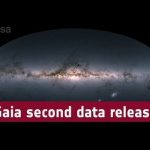
Launched in December 2013, ESA’s Gaia satellite has been scanning the sky to perform the most precise stellar census of our Milky Way galaxy, observing more than one billion stars and measuring their positions, distances and motions to unprecedented accuracy.
The second Gaia data release, published in April, has provided scientists with extraordinary data to investigate the formation and evolution of stars in the Galaxy and beyond, giving rise to hundreds of scientific studies that are revolutionising our view of the cosmos.
More info: http://bit.ly/GaiaScience
Credits: ESA / CNES / Arianespace; ESA / Gaia / DPAC; Gaia Sky / S. Jordan / T. Sagristà; Koppelman, Villalobos and Helmi;
Marchetti et al. 2018; NASA / ESA / Hubble; ESO, M. Kornmesser, L. Calçada
★ Subscribe: http://bit.ly/ESAsubscribe and click twice on the bell button to receive our notifications.
Check out our full video catalog: http://bit.ly/SpaceInVideos
Follow ESA on Twitter: http://bit.ly/ESAonTwitter
On Facebook: http://bit.ly/ESAonFacebook
On Instagram: http://bit.ly/ESAonInstagram
On Flickr: http://bit.ly/ESAonFlickr
ESA is Europe’s gateway to space. Our mission is to shape the development of Europe’s space capability and ensure that investment in space continues to deliver benefits to the citizens of Europe and the world. Check out http://www.esa.int/ESA to get up to speed on everything space related.
Copyright information about our videos is available here: http://www.esa.int/spaceinvideos/Terms_and_Conditions