Tag: Mars (Planet)

  • Drilling into Mars | ExoMars Rosalind Franklin mission (episode 3)

    Drilling into Mars | ExoMars Rosalind Franklin mission (episode 3)

    The ExoMars Rosalind Franklin rover will drill deeper than any other mission has ever attempted on the Red Planet.

    The third episode in the series shows how the rover will extract, collect and analyse martian samples in a high-fidelity simulation.

    Rosalind Franklin will be the first rover to reach a depth of up to two metres deep below the surface, acquiring samples that have been protected from harsh surface radiation and extreme temperatures.

    The drill system combines multiple precission mechanisms in an intricate automated sequence. It uses three extension rods that connect tor form a two-metre “drill string”.

    As the rover drills, it will simultaneously investigate the borehole using infrared spectroscopy to study mineral composition.

    The ExoMars Rosalind Franklin mission is part of Europe’s ambitious exploration journey to search for past and present signs of life on Mars.

    Credits: ESA – European Space Agency
    Production: Mlabspace for ESA
    3D animation: ESA/Mlabspace
    Music composed by Valentin Joudrier

    ★ Subscribe: http://bit.ly/ESAsubscribe and click twice on the bell button to receive our notifications.

    Check out our full video catalog: http://bit.ly/SpaceInVideos
    Follow us on Twitter: http://bit.ly/ESAonTwitter
    On Facebook: http://bit.ly/ESAonFacebook
    On Instagram: http://bit.ly/ESAonInstagram
    On LinkedIn: https://bit.ly/ESAonLinkedIn
    On Pinterest: https://bit.ly/ESAonPinterest
    On Flickr: http://bit.ly/ESAonFlickr

    We are Europe’s gateway to space. Our mission is to shape the development of Europe’s space capability and ensure that investment in space continues to deliver benefits to the citizens of Europe and the world. Check out https://www.esa.int/ to get up to speed on everything space related.

    Copyright information about our videos is available here: https://www.esa.int/ESA_Multimedia/Terms_and_Conditions

    #ESA #ExoMars #Mars
  • Below the surface | ExoMars Rosalind Franklin mission

    Below the surface | ExoMars Rosalind Franklin mission

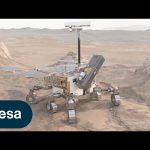
    Watch the second episode of the ExoMars Rosalind Franklin rover mission – Europe’s ambitious exploration journey to search for past and present signs of life on Mars.

    This episode starts with Rosalind searching for traces of life below the martian surface using a ground penetrating radar and a set of cameras.

    The rover will dig, collect, and investigate the chemical composition of material collected by a drill. Rosalind Franklin will be the first rover to reach a depth of up to two metres deep below the surface, acquiring samples that have been protected from surface radiation and extreme temperatures.

    Rosalind Franklin uses the WISDOM radar to help scientists on Earth decide where to drill. Besides identifying the most promising targets for sampling, WISDOM will help the rover avoid potential hazards, such as the presence of buried rocks that could damage the drill.
    The scientific eyes of the rover are set on the Panoramic Camera suite known as PanCam. The Close-UP Imager (CLUPI) sits on the side of the drill box, a camera designed to acquire high-resolution, colour, close-up images of outcrops, rocks and soils. PanCam and CLUPI will help scientists find the most promising spots to drill. These instruments can also investigate very fine outcrop details and image drill samples before they are sent into the rover’s laboratory.
    After the rover retracts its drill, the sample is in a special chamber at the tip. Under the reduced martian gravity (38% of Earth’s), the material drops onto a special “hand” that the rover can extend to the front to collect drill samples.
    The mission will serve to demonstrate key technologies that Europe needs to master for future planetary exploration missions.

    The ExoMars rover series show the rover and martian landscapes as true to reality as possible for a simulation.

    Check ESA’s ExoMars website and our frequently asked questions for the latest updates.

    Credits: ESA – European Space
    Production: Mlabspace for ESA
    3D animation: ESA/Mlabspace
    Video footage: ESA/NASA, Shutterstock
    Music composed by Valentin Joudrier

    ★ Subscribe: http://bit.ly/ESAsubscribe and click twice on the bell button to receive our notifications.

    Check out our full video catalog: http://bit.ly/SpaceInVideos
    Follow us on Twitter: http://bit.ly/ESAonTwitter
    On Facebook: http://bit.ly/ESAonFacebook
    On Instagram: http://bit.ly/ESAonInstagram
    On LinkedIn: https://bit.ly/ESAonLinkedIn
    On Pinterest: https://bit.ly/ESAonPinterest
    On Flickr: http://bit.ly/ESAonFlickr

    We are Europe’s gateway to space. Our mission is to shape the development of Europe’s space capability and ensure that investment in space continues to deliver benefits to the citizens of Europe and the world. Check out https://www.esa.int/ to get up to speed on everything space related.

    Copyright information about our videos is available here: https://www.esa.int/ESA_Multimedia/Terms_and_Conditions

    #ESA #ExoMars #Mars
  • Scouting the Red Planet with ExoMars

    Scouting the Red Planet with ExoMars

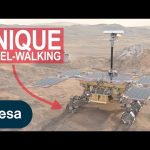
    Watch the first episode of the ExoMars Rosalind Franklin rover mission – Europe’s ambitious exploration journey to search for past and present signs of life on Mars.

    This episode starts after a successful descent and landing on the Red Planet in 2030.

    Rovers on Mars have previously been caught in loose soils, and turning the wheels dug them deeper, just like a car stuck in sand. To avoid this, Rosalind Franklin has a unique wheel-walking locomotion mode to overcome difficult terrains, as well as autonomous navigation software.

    A major goal of the mission is to understand the geological context and identify minerals formed in the presence of water that could be good targets for drilling into and collecting samples for analysis.

    The scientific eyes of the rover are set atop the mast on the Panoramic Camera suite, known as PanCam. From its vantage point about two metres above the ground, PanCam cameras come into play to get a whole picture of the site with high resolution imaging.

    Enfys, meaning rainbow in Welsh, is an infrared spectrometer to study mineral composition. Enfys and PanCam work in synergy. PanCam is used to obtain colour, visual information of what lies around the rover. Enfys’ job is to inform scientists what the minerals are.

    Rosalind Franklin will be the first rover to reach a depth of up to two metres deep below the surface, acquiring samples that have been protected from surface radiation and extreme temperatures.

    The mission will serve to demonstrate key technologies that Europe needs to master for future planetary exploration missions.

    This episode shows the spacecraft, the rover and martian landscapes are as true to reality as possible for a simulation.

    Check ESA’s ExoMars website and our frequently asked questions for the latest updates.

    Credits:
    Production: Mlabspace for ESA

    3D animation: ESA/Mlabspace

    Video footage: ESA/NASA, Shutterstock

    Music composed by Valentin Joudrier

    ★ Subscribe: http://bit.ly/ESAsubscribe and click twice on the bell button to receive our notifications.

    Check out our full video catalog: http://bit.ly/SpaceInVideos
    Follow us on Twitter: http://bit.ly/ESAonTwitter
    On Facebook: http://bit.ly/ESAonFacebook
    On Instagram: http://bit.ly/ESAonInstagram
    On LinkedIn: https://bit.ly/ESAonLinkedIn
    On Pinterest: https://bit.ly/ESAonPinterest
    On Flickr: http://bit.ly/ESAonFlickr

    We are Europe’s gateway to space. Our mission is to shape the development of Europe’s space capability and ensure that investment in space continues to deliver benefits to the citizens of Europe and the world. Check out https://www.esa.int/ to get up to speed on everything space related.

    Copyright information about our videos is available here: https://www.esa.int/ESA_Multimedia/Terms_and_Conditions

    #ESA #ExoMars #Mars
  • A mission for the Rosalind Franklin rover

    A mission for the Rosalind Franklin rover

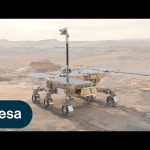
    Trailer of the ExoMars Rosalind Franklin mission.

    In 2028, ESA will launch its most ambitious exploration mission to search for past and present signs of life on Mars.

    Enjoy the ExoMars Rosalind Franklin mission in minute detail – everything down to the colour and size of the wires, sticky tape and scratches. The spacecraft, the rover and martian landscapes are as true to reality as possible for a simulation. The visuals show the spacecraft structural engineering with a faithful robotic appearance. The martian landscape has been simulated with meticulous realism.

    The story begins with the rover exploring the surface of the Red Planet. There is science to be done. Join the adventure.

    This trailer provides a first taste for the most accurate animation series made so far of a Mars mission.

    ESA’s Rosalind Franklin rover has unique scientific potential to search for evidence of past life on Mars thanks to its drill and scientific instruments. It will be the first rover to reach a depth of up to two metres deep below the surface, acquiring samples that have been protected from surface radiation and extreme temperatures. The drill will retrieve soils from ancient parts of Mars and analyse them in situ with its onboard laboratory.

    The mission will also serve to demonstrate key technologies that Europe needs to master for future planetary exploration missions. This includes the capability to land safely on a planet, to move autonomously on the surface, and to perform drilling and sample processing and analysis automatically. The rover will use novel driving techniques including wheel-walking to overcome difficult terrains, as well as autonomous navigation software.

    Check ESA’s ExoMars website [https://www.esa.int/Science_Exploration/Human_and_Robotic_Exploration/Exploration/ExoMars] and our frequently asked questions [https://www.esa.int/Science_Exploration/Human_and_Robotic_Exploration/Exploration/ExoMars/FAQ_The_rebirth_of_ESA_s_ExoMars_Rosalind_Franklin_mission] for the latest updates.

    Credits: ESA/Mlabspace

    ★ Subscribe: http://bit.ly/ESAsubscribe and click twice on the bell button to receive our notifications.

    Check out our full video catalog: http://bit.ly/SpaceInVideos
    Follow us on Twitter: http://bit.ly/ESAonTwitter
    On Facebook: http://bit.ly/ESAonFacebook
    On Instagram: http://bit.ly/ESAonInstagram
    On LinkedIn: https://bit.ly/ESAonLinkedIn
    On Pinterest: https://bit.ly/ESAonPinterest
    On Flickr: http://bit.ly/ESAonFlickr

    We are Europe’s gateway to space. Our mission is to shape the development of Europe’s space capability and ensure that investment in space continues to deliver benefits to the citizens of Europe and the world. Check out https://www.esa.int/ to get up to speed on everything space related.

    Copyright information about our videos is available here: https://www.esa.int/ESA_Multimedia/Terms_and_Conditions

    #ESA
    #Mars
    #Rover

  • ExoMars | Back on track for the Red Planet

    ExoMars | Back on track for the Red Planet

    A year has passed since the launch of the ESA’s Rosalind Franklin rover mission was put on hold, but the work has not stopped for the ExoMars teams in Europe.

    In this programme, the ESA Web TV crew travel back to Turin, Italy to talk to the teams and watch as new tests are being conducted with the rover’s Earth twin Amalia while the real rover remains carefully stored in an ultra-clean room.

    The 15-minute special programme gives an update on what happened since the mission was cancelled in 2022 because of the Russian invasion of Ukraine, the plan ahead, the new challenges, the latest deep drilling test and the stringent planetary protection measures in place.

    ESA’s Rosalind Franklin rover has unique drilling capabilities and an on-board science laboratory unrivalled by any other mission in development. Its twin rover Amalia was back on its wheels and drilled down 1.7 metres into a martian-like ground in Italy – about 25 times deeper than any other rover has ever attempted on Mars. The rover also collected samples for analysis under the watchful eye of European science teams.

    ESA, together with international and industrial partners, is reshaping the ExoMars Rosalind Franklin Mission with new European elements, including a lander, and a target date of 2028 for the trip to Mars.

    The newly shaped Rosalind Franklin Mission will recover one of the original objectives of ExoMars – to create an independent European capability to access the surface of Mars with a sophisticated robotic payload.

    More information: https://www.esa.int/ExoMars

    Credits: ESA

    ★ Subscribe: http://bit.ly/ESAsubscribe and click twice on the bell button to receive our notifications.

    Check out our full video catalog: http://bit.ly/SpaceInVideos
    Follow us on Twitter: http://bit.ly/ESAonTwitter
    On Facebook: http://bit.ly/ESAonFacebook
    On Instagram: http://bit.ly/ESAonInstagram
    On LinkedIn: https://bit.ly/ESAonLinkedIn
    On Pinterest: https://bit.ly/ESAonPinterest
    On Flickr: http://bit.ly/ESAonFlickr

    We are Europe’s gateway to space. Our mission is to shape the development of Europe’s space capability and ensure that investment in space continues to deliver benefits to the citizens of Europe and the world. Check out https://www.esa.int/ to get up to speed on everything space related.

    Copyright information about our videos is available here: https://www.esa.int/ESA_Multimedia/Terms_and_Conditions

    #ESA
    #Mars
    #Space

  • Mars seen from space

    Mars seen from space

    Full-orbit movies produced from Visual Monitoring Camera (VMC) images acquired as part of ESA’s #VMCSchools campaign. This clip includes images acquired by ESA’s Mars Express on 25 and 26 May 2015.

    For the complete list of submitted school projects, access ESA’s Mars Express blog via http://wp.me/p2E5wN-lj

    Credit: ESA/Mars Express/VMC – CC BY-SA IGO 3.0

  • Flight over Atlantis Chaos

    Flight over Atlantis Chaos

    Explore the Atlantis Chaos region of Mars, in the Red Planet’s southern hemisphere. The video showcases a myriad of features that reflect a rich geological history. The tour takes in rugged cliffs and impact craters, alongside parts of ancient shallow, eroded basins. See smooth plains scarred with wrinkled ridges, scarps and fracture lines that point to influence from tectonic activity. Marvel at ‘chaotic’ terrain – hundreds of small peaks and flat-topped hills that are thought to result from the slow erosion of a once-continuous solid plateau. This entire region may once have played host to vast volumes of water – look out for the evidence in the form of channels carved into steep-sided walls.

    Read more about this region here: http://www.esa.int/spaceinvideos/Images/2015/07/Ancient_Atlantis

    Credits: ESA/DLR/FU Berlin (CC BY-SA 3.0 IGA)

  • ExoMars

    ExoMars

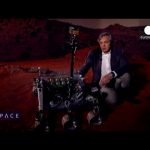
    The ExoMars spacecraft is almost complete. A joint mission between ESA and Roscosmos, it begins with the launch of the ExoMars orbiter in 2016 and carries an aerodynamically designed capsule containing a robotic lander.

    Getting to Mars, landing there safely and searching for life is a huge scientific and technical challenge. ExoMars 2016 will send back information about the Martian atmosphere and the lander’s findings. These will inform the second part of the mission, in 2018, when a European rover will drill into the Martian surface, up to two metres down. The rover will be trying to detect traces of organic molecules that indicate the presence of past or present life on Mars.

    This video includes interviews with Jorge Vago, ExoMars Project Scientist, ESA and Pietro Baglioni, ExoMars Rover Manager, ESA. It shows ExoMars 2016 nearing construction in its clean room at Thales Alenia Space in France and a prototype ExoMars rover in the ExoMars test yard at ESA’s ESTEC facility in the Netherlands.

  • ESA Euronews: Mars mystery – ExoMars mission

    ESA Euronews: Mars mystery – ExoMars mission

    The ExoMars 2016 mission will try to answer one of the toughest and most intriguing questions in our Solar System: is there, or has there ever been, life on Mars?

    Getting to Mars, landing there safely, and then beginning the search for life is a huge scientific and technical challenge for the large team behind ExoMars, a joint ESA and Roscosmos project to search for life on Mars. It is the world’s biggest ever mission to the red planet.The ExoMars mission could reveal if there is, or has ever been, life on Mars by the end of the decade.

    More about ExoMars: http://exploration.esa.int/mars/

    This video is also available in the following languages:
    Italian: https://www.youtube.com/watch?v=1upALskwxD8
    Greek: https://www.youtube.com/watch?v=zfk3oC1Gios
    French: https://www.youtube.com/watch?v=p8ZSihhWImg
    Hungarian: https://www.youtube.com/watch?v=j0be4f-PPNk
    Portuguese: https://www.youtube.com/watch?v=X50TMG0vSnU
    German: https://www.youtube.com/watch?v=1wTsARN4Di8
    Spanish: https://www.youtube.com/watch?v=6ExT47YH_kU

  • ESA Euronews: ExoMars – L’esplorazione di Marte

    ESA Euronews: ExoMars – L’esplorazione di Marte

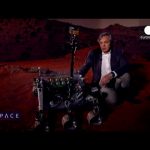
    Maurizio Capuano e Richard Bessudo fanno il conto alla rovescia per il lancio di una delle più grandi missioni al mondo sul Pianeta Rosso. Fanno parte del team di ExoMars, un progetto congiunto di ESA e di Roscosmos che intende cercare segni di vita su Marte. La prima astronave è quasi pronta.

    Maurizio Capuano, manager del programma ExoMars 2016, ThalesAleniaSpace: “Questo è Exomars 2016 che l’anno prossimo arriverà sul pianeta rosso. La parte bassa si metterà in orbita marziana aprendo i suoi pannelli solari per prendere l’energia dal sole, la parte superiore è il cosiddetto lander che atterrerà direttamente sulla superficie marziana completamente autonomo”.

    ExoMars è composto da due missioni, che saranno lanciate rispettivamente nel 2016 e nel 2018. Al ThalesAleniaSpace nel sud della Francia, la navicella spaziale è sottoposta a un rigoroso programma di test, visto che le finestre di lancio non sono frequenti, come spiega Richard Bessudo, manager del programma ExoMars Trace Gas Orbiter. “Per andare su Marte occorre ottenere le condizioni favorevoli di congiunzione tra Terra e Marte. Tenuto conto delle orbite dei due pianeti, le congiunzioni favorevoli si riproducono soltanto ogni 26 mesi”.

    Una volta su Marte, l’astronave si separa in due parti. Il satellite resta in orbita e il lander si dirige sulla superficie. L’ESA spera che questa capsula porterà a termine il primo atterraggio controllato europeo su Marte.

  • Flying over Becquerel crater

    Flying over Becquerel crater

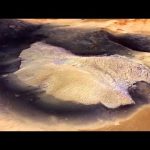
    Becquerel crater is 167 km in diameter and lies in the Arabia Terra region on Mars, on the boundary between the southern highlands and northern lowlands. This movie shows the location of Becquerel crater on Mars and then provides a flyover of a mound of layered, sulphate-bearing deposits on the crater floor, thought to have formed under the influence of water. The darker material surrounding the mound is wind-blown dust from a source to the north, and provides evidence for effects of wind in eroding the sedimentary deposits.

    The movie was made from a mosaic of four individual images acquired by the High Resolution Stereo Camera on ESA’s Mars Express during orbits 3253/1, 5332, 5350 and 5368. The image is centred at about 22ºN / 352ºE. The average ground resolution is about 17 m per pixel.

    To download the raw images and dtms in GIS-ready formats, please follow this direct link to Becquerel crater on the HRSC mapserver: http://maps.planet.fu-berlin.de/?zoom=7&lat=21.12671&lon=-8.38806&layers=B0TFFFTTT

    Credit: ESA/DLR/FU Berlin, CC BY-SA 3.0 IGO

    Copyright Notice:
    This work is licenced under the Creative Commons Attribution-ShareAlike 3.0 IGO (CC BY-SA 3.0 IGO) licence. The user is allowed to reproduce, distribute, adapt, translate and publicly perform this publication, without explicit permission, provided that the content is accompanied by an acknowledgement that the source is credited as ‘ESA/DLR/FU Berlin’, a direct link to the licence text is provided and that it is clearly indicated if changes were made to the original content. Adaptation/translation/derivatives must be distributed under the same licence terms as this publication. To view a copy of this license, please visit http://creativecommons.org/licenses/by-sa/3.0/igo/

  • ESA Euronews: Rockets, Mars and Europe’s future in space

    ESA Euronews: Rockets, Mars and Europe’s future in space

    In the afterglow of the Rosetta mission’s success in landing on a comet, the member states of ESA met in Luxembourg in early December to look forward to future challenges. Among the priorities is the development and construction of the new rocket, Ariane 6, which is seen as essential to maintaining Europe’s lead in the launcher market. Then there’s the ExoMars mission to further explore the ‘Red Planet’ and look for signs of life. But it’s not just about probes – ESA’s manned spaceflight programme also has momentum, with new astronauts currently in training and due to fly in 2015 and 2016. So, as the agency marks a half century of Europe’s space sector, it’s onwards and upwards for the next 50 years.

    This video is also available in the following languages:
    French: http://youtu.be/eq32fl5H0m8
    German: http://youtu.be/hBLpzhgAmtU
    Hungarian: http://youtu.be/4Snqq5VXGyg
    Italian: http://youtu.be/If6JOY9mBy4
    Greek: http://youtu.be/MyPvRhylA6M
    Portuguese: http://youtu.be/wUzDxKetGWk
    Spanish: http://youtu.be/15EAFYXl3N0

  • Aquarius maps soil moisture on This Week @NASA

    Aquarius maps soil moisture on This Week @NASA

    Data from NASA’s Aquarius instrument has helped researchers create worldwide maps of soil moisture, showing how the wetness of the land fluctuates with the seasons and weather phenomena. Soil moisture, the water contained within soil particles, is an important player in Earth’s water cycle. When it launched in June 2011, the primary science objective of the Aquarius mission was to study the salt content of ocean surface waters. But investigators have since developed a method to retrieve soil moisture data from the instrument’s microwave radiometer. Also, SLS Core Preliminary Design Review, JWST update and Dry ice gullies on Mars.

  • Dropship offers safe landings for Mars rovers

    Dropship offers safe landings for Mars rovers

    The dramatic conclusion to ESA’s latest StarTiger project: a ‘dropship’ quadcopter steers itself to lower a rover gently onto a safe patch of the rocky martian surface. StarTiger’s Dropter project was tasked with developing and demonstrating a European precision-landing capability for Mars and other targets.

    Starting from scratch for the eight-month project, the Dropter team was challenged to produce vision-based navigation and hazard detection and avoidance for the dropship. It has to identify a safe landing site and height before winching down its passenger rover on a set of cables. Flight testing took place at Airbus Defence and Space’s Trauen test site in northern Germany.

    Read more: http://www.esa.int/Our_Activities/Technology/Dropship_offers_safe_landings_for_Mars_rovers

    Credit:
    Deutsches Forschungszentrum für Künstliche Intelligenz, DFKI
    Spin.Works
    Poznañ University of Technology/Institute of Control and Information Engineering, IAII
    Airbus Defence & Space