Tag: Medical Science

  • Muscle stimulation to enhance astronaut health

    Muscle stimulation to enhance astronaut health

    Space exploration presents unique health challenges for astronauts due to lack of gravity, isolation, and radiation exposure. ESA’s SciSpacE activities aim to comprehend these effects and their implications for human well-being during extended missions.

    ESA collaborates with researchers to conduct experiments in microgravity and analogue environments, shedding light on the consequences of space stressors. One critical concern is muscle and bone atrophy. Despite daily exercise routines, astronauts face deterioration. ESA is investigating electrical stimulation as a potential countermeasure, with tests planned on board the International Space Station.

    The “Muscle Stimulation” experiment is a centrepiece of this research. By applying controlled electric currents to leg muscles, the study aims to enhance muscle mass, strength, and recovery. Complementary assessments, including MRI scans, microcirculation analysis, and blood samples, will provide a comprehensive understanding of the efficacy.

    Addressing these challenges could yield benefits on Earth too. The insights gained could translate to better healthcare for diverse populations, from the elderly to clinical patients and athletes.

    ESA’s dedication to advancing space exploration while safeguarding astronauts’ physical health underscores its commitment to a sustainable and thriving space programme. Through research and innovative solutions, humanity edges closer to conquering the challenges of extended spaceflight and improving life on our home planet.

    Credits: ESA – European Space Agency

    ★ Subscribe: http://bit.ly/ESAsubscribe and click twice on the bell button to receive our notifications.

    Check out our full video catalog: http://bit.ly/SpaceInVideos
    Follow us on Twitter: http://bit.ly/ESAonTwitter
    On Facebook: http://bit.ly/ESAonFacebook
    On Instagram: http://bit.ly/ESAonInstagram
    On LinkedIn: https://bit.ly/ESAonLinkedIn
    On Pinterest: https://bit.ly/ESAonPinterest
    On Flickr: http://bit.ly/ESAonFlickr

    We are Europe’s gateway to space. Our mission is to shape the development of Europe’s space capability and ensure that investment in space continues to deliver benefits to the citizens of Europe and the world. Check out https://www.esa.int/ to get up to speed on everything space related.

    Copyright information about our videos is available here: https://www.esa.int/ESA_Multimedia/Terms_and_Conditions

    #ESA
    #Astronauts
    #MuscleStimulation
  • Space medicine: staying fit in space

    Space medicine: staying fit in space

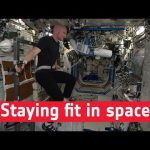
    Astronauts work out for around 90 minutes a day onboard the International Space Station to combat the muscle and bone weakening effects of microgravity. But exercise is just as important for mental and physical health on Earth.

    Our exercise team lead Nora Petersen explains how exercise specialists work with our astronauts to prepare them for a mission, some of the most important exercises on board and what happens upon an astronaut’s return to get them back in pre-flight shape.

    The United Nations World Health Organization marks World Health Day on 7 April every year. The third Sustainable Development Goal underlines the right to health:Ensure healthy lives and promote well-being for all at all ages. On-orbit research, space technology and space applications can help improve health on Earth by monitoring our environment, helping track disease, improving diagnostics, and working on new medicines among other things. The UN is also focusing particularly this year on universal health coverage.

    ★ Subscribe: http://bit.ly/ESAsubscribe and click twice on the bell button to receive our notifications.

    Check out our full video catalog: http://bit.ly/SpaceInVideos
    Follow us on Twitter: http://bit.ly/ESAonTwitter
    On Facebook: http://bit.ly/ESAonFacebook
    On Instagram: http://bit.ly/ESAonInstagram
    On Flickr: http://bit.ly/ESAonFlickr

    We are Europe’s gateway to space. Our mission is to shape the development of Europe’s space capability and ensure that investment in space continues to deliver benefits to the citizens of Europe and the world. Check out http://www.esa.int/ESA to get up to speed on everything space related.

    Copyright information about our videos is available here: http://www.esa.int/spaceinvideos/Terms_and_Conditions

    #ESA
    #HealthForAll
    #space19plus

  • Space medicine: staying healthy in space

    Space medicine: staying healthy in space

    Managing the health of astronauts orbiting Earth at 28 000 km/h is a challenge, but how will we equip astronauts to stay healthy and deal with any medical emergencies during missions to the Moon or Mars?

    Our flight surgeon Sergi Vaquer Araujo discusses how space medicine experts instill astronauts with the skills and knowledge needed to stay healthy on the International Space Station today, as we investigate new technologies that could benefit people on Earth.

    The United Nations World Health Organization marks World Health Day on 7 April every year. The third Sustainable Development Goal underlines the right to health:Ensure healthy lives and promote well-being for all at all ages. On-orbit research, space technology and space applications can help improve health on Earth by monitoring our environment, helping track disease, improving diagnostics, and working on new medicines among other things. The UN is also focusing particularly this year on universal health coverage.

    ★ Subscribe: http://bit.ly/ESAsubscribe and click twice on the bell button to receive our notifications.

    Check out our full video catalog: http://bit.ly/SpaceInVideos
    Follow us on Twitter: http://bit.ly/ESAonTwitter
    On Facebook: http://bit.ly/ESAonFacebook
    On Instagram: http://bit.ly/ESAonInstagram
    On Flickr: http://bit.ly/ESAonFlickr

    We are Europe’s gateway to space. Our mission is to shape the development of Europe’s space capability and ensure that investment in space continues to deliver benefits to the citizens of Europe and the world. Check out http://www.esa.int/ESA to get up to speed on everything space related.

    Copyright information about our videos is available here: http://www.esa.int/spaceinvideos/Terms_and_Conditions

    #ESA
    #HealthForAll
    #space19plus

  • Artificial Intelligence and Cerebral Palsy | Hugues Bersini | DMCN

    Artificial Intelligence and Cerebral Palsy | Hugues Bersini | DMCN

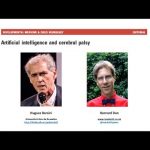
    In this podcast, Bernard Dan speaks to Professor Hugues Bersini of Université Libre de Bruxelles. They discuss Bernard’s editorial in the September 2018 issue of Developmental Medicine & Child Neurology: ‘Artificial intelligence and cerebral palsy’.

    The editorial is available here: https://onlinelibrary.wiley.com/doi/10.1111/dmcn.13942

    Subscribe to our channel for more:
    https://bit.ly/2ONCYiC
    ___

    Listen to all our episodes:
    https://bit.ly/2yPFgTC
    ___

    DMCN Journal:
    Developmental Medicine & Child Neurology (DMCN) has defined the field of paediatric neurology and childhood-onset neurodisability for over 60 years. DMCN disseminates the latest clinical research results globally to enhance the care and improve the lives of disabled children and their families.

    DMCN Journal – https://onlinelibrary.wiley.com/journal/14698749
    ___

    Mac Keith Press:
    We exist to improve the care of disabled children by extending the knowledge and understanding of developmental medicine and paediatric neurology. We publish the journal DMCN and books in related subject areas. These are of interest to researchers, health professionals, clinicians, therapists, parents and all involved in the care of children and young people with neurodevelopmental conditions.

    Mac Keith Press – http://www.mackeith.co.uk
    ___

    Find us on Twitter!
    @mackeithpress – https://twitter.com/mackeithpress

  • ESA Euronews: Az űrhajósoknak is fáj a háta

    ESA Euronews: Az űrhajósoknak is fáj a háta

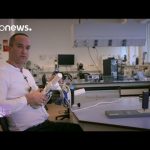
    Az űrorvostudomány eredményei segíthetnek a földi betegségekben szenvedőknek is. Ami jó a Nemzetközi Űrállomáson, az segíthet a Newcastle-i nyugdíjasokon is.

    Az űrhajósoknak földöntúli munkájuk van. A hajnalt és a naplementét naponta 16-szor látják, és az űrben töltött hetek és hónapok alatt a testük kívül-belül átalakul. Izmaik és csontjaik tömegükből veszítenek, és egészségi állapotuk is megváltozik. Így az asztronauták testüket is a tudomány szolgálatába állítják.

    A nemzetközi űrállomáson zajló kutatások nem csak abban segítenek, hogy jobban megismerjük az emberi testet, hanem abban is, hogy olyan hétköznapi problémákra találjunk új megoldást, mint például a hátfájás. A Space márciusi adásában az űrmedicináról lesz szó.