The AI-powered innovation transforming space medicine. Astronauts can now perform expert-level ultrasounds without Earth-based guidance—keeping them healthy on deep-space missions while paving the way for smarter, more accessible healthcare on Earth.
The future of exploration starts here!
📸 ESA/NASA – Alexander Gerst 📹 ESA – European Space Agency
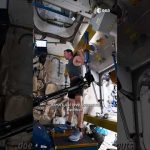
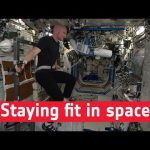
Astronauts work out for around 90 minutes a day onboard the International Space Station to combat the muscle and bone weakening effects of microgravity. But exercise is just as important for mental and physical health on Earth.
Our exercise team lead Nora Petersen explains how exercise specialists work with our astronauts to prepare them for a mission, some of the most important exercises on board and what happens upon an astronaut’s return to get them back in pre-flight shape.
The United Nations World Health Organization marks World Health Day on 7 April every year. The third Sustainable Development Goal underlines the right to health:Ensure healthy lives and promote well-being for all at all ages. On-orbit research, space technology and space applications can help improve health on Earth by monitoring our environment, helping track disease, improving diagnostics, and working on new medicines among other things. The UN is also focusing particularly this year on universal health coverage.
★ Subscribe: http://bit.ly/ESAsubscribe and click twice on the bell button to receive our notifications.
We are Europe’s gateway to space. Our mission is to shape the development of Europe’s space capability and ensure that investment in space continues to deliver benefits to the citizens of Europe and the world. Check out http://www.esa.int/ESA to get up to speed on everything space related.
Managing the health of astronauts orbiting Earth at 28 000 km/h is a challenge, but how will we equip astronauts to stay healthy and deal with any medical emergencies during missions to the Moon or Mars?
Our flight surgeon Sergi Vaquer Araujo discusses how space medicine experts instill astronauts with the skills and knowledge needed to stay healthy on the International Space Station today, as we investigate new technologies that could benefit people on Earth.
The United Nations World Health Organization marks World Health Day on 7 April every year. The third Sustainable Development Goal underlines the right to health:Ensure healthy lives and promote well-being for all at all ages. On-orbit research, space technology and space applications can help improve health on Earth by monitoring our environment, helping track disease, improving diagnostics, and working on new medicines among other things. The UN is also focusing particularly this year on universal health coverage.
★ Subscribe: http://bit.ly/ESAsubscribe and click twice on the bell button to receive our notifications.
We are Europe’s gateway to space. Our mission is to shape the development of Europe’s space capability and ensure that investment in space continues to deliver benefits to the citizens of Europe and the world. Check out http://www.esa.int/ESA to get up to speed on everything space related.
Motivated by the urge to help one of his own, Senthil kumar a man of great intellect took it upon
himself to find the solution to a problem that stared right at the face of mankind.
Senthil Kumar M hailing from Madurai, Tamil Nadu, India, has a great passion for innovating
through technology to solve real-life problems.
His vision is to build technology-enabled self-sustaining communities. He actively engages in
community empowerment and education initiatives especially among girls through
‘MetooMentor’ – an NPO that mentors young women to innovate through technology.
The ingenious device developed by him monitors and tracks the vitals of pregnant women living
in the remote villages of India, transmitting the collected data over the cloud to the nearest health
center by incorporating AI and DEEP LEARNING algorithms.
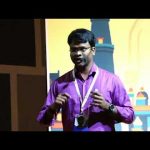
Watch him speaking about the experiences and challenges he encountered throughout his
journey!! Senthil Kumar M hailing from Madurai has a great passion for innovating through technology to solve real-life problems. He worked in fields like a wireless network, defence, maternal healthcare, and safety solutions and filed nearly 10 patents for the same. He began his career as an engineer in – Samsung | Qualcomm, but he quit his job to found two tech startups, GeoMeo and JioVio, in urban infrastructure and healthcare sector respectively. His vision is to build technology-enabled self-sustaining communities. He believes that we can achieve this only by bridging the digital divide in the society and by empowering the powerless/vulnerable.He actively engages in community empowerment and education initiatives especially among girls through ‘MetooMentor’ – an NPO that mentors young women to innovate through technology.With a handful of dedicated volunteers, He reached over 1000 girls in Madurai.He has been honoured as the top 5 Technology Explorers in India by Nasscom. This talk was given at a TEDx event using the TED conference format but independently organized by a local community. Learn more at https://www.ted.com/tedx
Az űrorvostudomány eredményei segíthetnek a földi betegségekben szenvedőknek is. Ami jó a Nemzetközi Űrállomáson, az segíthet a Newcastle-i nyugdíjasokon is.
Az űrhajósoknak földöntúli munkájuk van. A hajnalt és a naplementét naponta 16-szor látják, és az űrben töltött hetek és hónapok alatt a testük kívül-belül átalakul. Izmaik és csontjaik tömegükből veszítenek, és egészségi állapotuk is megváltozik. Így az asztronauták testüket is a tudomány szolgálatába állítják.
A nemzetközi űrállomáson zajló kutatások nem csak abban segítenek, hogy jobban megismerjük az emberi testet, hanem abban is, hogy olyan hétköznapi problémákra találjunk új megoldást, mint például a hátfájás. A Space márciusi adásában az űrmedicináról lesz szó.

![Artificial Intelligence News – Toddler Robots Help Solve How Children Learn☑️[Computer and Math]](https://video.kidibot.ro/wp-content/uploads/2019/12/923/artificial-intelligence-news-toddler-robots-help-solve-how-children-learnefb88fcomputer-and-math-150x150.jpg)