NASA’s new deputy administrator Col. Pam Melroy shares her vision for NASA’s future.
One of only two women to command a space shuttle, Melroy logged more than 38 days in space. She served as pilot on two flights, STS-92 in 2000 and STS-112 in 2002, and was the mission commander on STS-120 in 2007. All three of her missions were assembly missions to build the International Space Station.
After graduating from United States Air Force Test Pilot School, Melroy logged more than 6,000 flight hours in more than 50 different aircraft. She is a veteran of Operation Desert Shield/Desert Storm and Operation Just Cause, with more than 200 combat and combat support hours.
After serving more than two decades in the Air Force and as a NASA astronaut, Melroy took on a number of leadership roles, including at Lockheed Martin, the Federal Aviation Administration, the Defense Advanced Research Projects Agency, Nova Systems Pty, Australia, and as an advisor to the Australian Space Agency. She also served as an independent consultant and a member of the National Space Council’s Users Advisory Group.
Producer/Editor: Lacey Young Music: Universal Production Music
NASA’s new administrator Sen. Bill Nelson shares his vision for NASA’s future.
Nelson has an extensive history of working with NASA and has been integral to the agency’s current successes. Prior to his nomination, was a member-at-large on NASA’s advisory council. From 2001 to 2019, Nelson represented Florida in the U.S. Senate, where he served as ranking member of the Committee on Commerce, Science and Transportation and led its Subcommittee on Science and Space.
Previously, Nelson represented Florida’s 9th and 11th districts in the U.S. House of Representatives. While chair of the House space subcommittee, Nelson flew aboard the space shuttle Columbia as a payload specialist on the STS-61C mission in 1986. The mission also included Bolden, as pilot.
It has been one year since the United States began its battle against the COVID-19 pandemic.
This year has been tough and has changed the way all of us live. And yet despite extraordinary circumstances, NASA still accomplished extraordinary things.
Aboard the International Space Station, NASA Astronauts Mike Hopkins and Victor Glover have a message for all of us: Take care of each other and we’ll get through this together.
Astronauts Chris Cassidy, Doug Hurley and Bob Behnken commemorate Independence Day in the United States. They explain the history of the American flag that was flown on the first and last space shuttle missions, which Doug and Bob will carry back to Earth when they return home aboard the SpaceX Crew Dragon Endeavour spacecraft.
For the latest on the International Space Station: www.nasa.gov/station
ESA astronaut Alexander Gerst recorded a message in German to his future grandchildren from the International Space Station’s Cupola observatory during his Horizons mission in 2018. Although this message is addressed to his descendants, it applies to all of us. Everyone should contribute to the protection and improvement of this planet we call home.
Alexander’s message is as follows:
Dear grandchildren,
You have not been born yet, and I do not know if I will ever meet you, so I’ve decided to record this message for you.
I’m on the International Space Station in the Cupola Observation Module gazing down at your beautiful planet. And although I’ve now almost spent a year of my life in space and looked at Earth every single day, I just can’t get enough of this view.
I know it probably sounds strange to you, but at the time the Space Station was built and was up here in orbit, not everyone was able to travel into space and see the Earth from a distance. Before me, only around 500 people had the chance. At this very moment, there are 7 billion people living down there on Earth and only three of them live in space. And when I look down at the planet, I think I need to apologise to you.
Right now, it looks like we – my generation – are not going to leave this planet in its best condition for you. Of course, in retrospect many people will say they weren’t aware of what we were doing. But in reality, we humans know that right now we’re polluting the planet with carbon dioxide, we’re making the climate reach tipping point, we’re clearing forests, we’re polluting the oceans with garbage, we’re consuming the limited resources far too quickly, and we’re waging mostly pointless wars.
And every one of us has to take a good look at themselves and think about where this is leading. I very much hope for our own sake that we can still get our act together and improve a few things. And I hope that we won’t be remembered by you as the generation who selfishly and ruthlessly destroyed your livelihood.
I’m sure you understand these things much better than my generation. And who knows, maybe we’ll learn something new, such as: taking a step always helps; this fragile spaceship called Earth is much smaller than most people can imagine; how fragile the Earth’s biosphere is and how limited its resources are; that it’s worth getting along with your neighbours; that dreams are more valuable than money and you have to give them a chance; that boys and girls can do things equally well, but that every one of you has one thing that he or she can do much better than all the others; that the simple explanations are often wrong and that one’s own point of view is always incomplete; that the future is more important than the past; that one should never fully grow up; and that opportunities only come along once. You have to take a risk for things that are worth it, and any day during which you discovered something new – one where you gazed beyond your horizon – is a good day.
I wish I could look into the future through your eyes, into your world and how you see it. Unfortunately, that is not possible and therefore the only thing that remains for me is to try to make your future the best one I can possibly imagine.
International Space Station – Commander of Expedition 57 – Alexander Gerst – 25 November 2018 – 400 km above the Earth’s surface
——————————
Follow Alexander and review his #Horizons mission on social media via http://bit.ly/AlexanderGerstESA and on http://bit.ly/HorizonsBlogESA
——————————
★ Subscribe: http://bit.ly/ESAsubscribe and click twice on the bell button to receive our notifications.
ESA is Europe’s gateway to space. Our mission is to shape the development of Europe’s space capability and ensure that investment in space continues to deliver benefits to the citizens of Europe and the world. Check out http://www.esa.int/ESA to get up to speed on everything space related.
NASA Administrator Jim Bridenstine’s message to the NASA workforce on the agency’s accomplishments over six incredible decades, and future plans including missions to the Moon and on to Mars. For more, visit: https://www.nasa.gov/60
Italian ESA astronaut Samantha Cristoforetti, speaking from the European Astronaut Centre near Cologne in Germany, has a message of thanks to all those who’ve entered our Lunar 3D printing competition so far. A new lunar analogue test facility, called Luna for short, is currently being set up at EAC to test the technologies and techniques needed for any future Moon base – with 3D printing high on the list. And a team ESA’s technical centre in Noordwijk, the Netherlands, is overseeing a project to research in detail how 3D printing could be used in such a Moon base. We’re also interested in the human factor: what would you 3D print to make the Moon feel like home? That’s why we’re crowdsourcing your ideas through this competition. The closing date is 23 September 2018.
ESA is Europe’s gateway to space. Our mission is to shape the development of Europe’s space capability and ensure that investment in space continues to deliver benefits to the citizens of Europe and the world. Check out http://www.esa.int/ESA to get up to speed on everything space related.
Message from British ESA astronaut Tim Peake aboard the International Space Station to Her Majesty Queen Elizabeth II of the United Kingdom of Great Britain and Northern Ireland, 31 December 2015.
Tim Peake is spending six months in space to run experiments for scientists on Earth and maintain humanity’s research station 400 km above our planet.
William Shatner, known to millions around the world as Capt. James T. Kirk from the original Star Trek series, sent this message to ESA’s Rosetta team today to wish them good luck for tomorrow’s Philae landing.
Russian ISS commander, cosmonaut Maxim Suraev, NASA astronaut Reid Wiseman and ESA astronaut Alexander Gerst send a peace message from space. They remind us that the International Space Station serves as a shining example of how people can live and work together for the benefit of all humankind. It’s the hallmark of international cooperation – a milestone in human history.
On Tuesday, 23 July, the Alan Parsons Live Project played at the Foro Italico in Rome. Alan dedicated his classic song Eye in the Sky to ESA astronaut Luca Parmitano and recorded a video message that was sent to International Space Station. Eye in the Sky is one of Luca’s favourite songs, and on viewing this message, Luca said, “Fantastico!”
Luca Parmitano is the sixth Italian astronaut in space, but he was the first to really go ‘into space’ and leave the the protective shell of his spacecraft, when he made two spacewalks a few weeks ago during his Volare mission.
Video copyright: ESA/Alan Parsons Music
Sirius/Eye in the Sky written by: A. Parsons/E. Woolfson
Music excerpts, courtesy Alan Parsons Music
Video produced by ESA/M. Civita
NASA Television shares this inspiring production by Italian videomaker, Giacomo Sardelli, about the International Space Station, its inhabitants, and its role in space exploration. Sardelli writes of the video, “I’m not the first one to use NASA’s pictures taken from the International Space Station to craft a Timelapse video. You can find many of them on the Internet, that’s where my inspiration came from. What I wanted to do, though, was to look beyond the intrinsic beauty of those pictures, and use them to tell a story and share the messages sent by the astronauts who worked on the station in the last 11 years.”
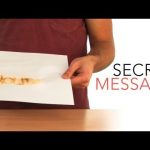
Learn more at http://www.stevespanglerscience.com/experiment/secret-message-heat-friction-ink Give that special someone a note that requires the heat of a romantic candle to decode the message. You won’t believe what the ink in this pen will do. Your message can appear or vanish on command… and most people don’t even know that the ink works this way.
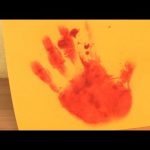
The term goldenrod is typically used to describe a color of paper – golden yellow. However, our goldenrod paper contains a special dye that turns bright red when exposed to solutions that are basic, like ammonia water or washing soda. We’ll show you how to use this special color-changing paper to develop a hidden message and make dripping, bleeding paper… complete with your own handprint marked in “blood.” It’s a great acid/base lesson for the Halloween season.
At one time or another, we’ve all had secrets. Secret handshakes, secret knocks, or secret crushes have probably been a part of everyone’s lives. What if you could write a secret invisible message that could only be revealed through magic? Well, we’re not going to suggest something magical and not teach you how it’s possible. This experiment may seem like magic, but it’s really just some “hot” science.
Check out this and other cool science experiments at http://www.stevespanglerscience.com/experiments/ Plumbers use Teflon Tape to form a water-tight seal and prevent leaking on pipes. Turns out, this plumbers tool is also a pretty cool example of a polymer that gets lots of use in everyday situations.
About Steve Spangler Science…
Steve Spangler is a celebrity teacher, science toy designer, speaker, author and an Emmy award-winning television personality. Spangler is probably best known for his Mentos and Diet Coke geyser experiment that went viral in 2005 and prompted more than 1,000 related YouTube videos. Spangler is the founder of www.SteveSpanglerScience.com, a Denver-based company specializing in the creation of science toys, classroom science demonstrations, teacher resources and home for Spangler’s popular science experiment archive and video collection. Spangler is a frequent guest on the Ellen DeGeneres Show where he takes classroom science experiments to the extreme. Check out his pool filled with 2,500 boxes of cornstarch!
On the education side, Spangler started his career as a science teacher in the Cherry Creek School district for 12 years. Today, Steve travels extensively training teachers in ways to make learning more engaging and fun. His hands-on science boot camps and summer institutes for teachers inspire and teach teachers how to prepare a new generation for an ever-changing work force. Over the last 15 years, he has also made more than 500 television appearances as an authority on hands-on science and inquiry-based learning.
On the business side, Spangler is the founder and CEO of Steve Spangler Science, a Denver-based company specializing in the creation of educational toys and kits and hands-on science training services for teachers. The companys unique business strategies and viral creations have been featured in the Wall Street Journal, Inc. Magazine, Wired and TIME Magazine where online readers voted Steve Spangler #18 in the Top 100 Most Influential People of the Year for 2006 (what were they thinking?). You’ll find more than 140 Spangler created products available online at SteveSpanglerScience.com and distributed to toy stores and mass-market retailers worldwide.
Spangler joined NBC affiliate 9News in 2001 as the science education specialist. His weekly experiments and science segments are designed to teach viewers creative ways to make learning fun. His now famous Mentos Geyser experiment, turning 2-liter bottles of soda into erupting fountains, became an Internet sensation in September 2005 when thousands of people started posting their own Mentos explosions on YouTube.com.
As founder of SteveSpanglerScience.com, Spangler and his design team have developed more than 140 educational toys and science-related products featured by mass-market retailers like Target, Wal-Mart, Toys R’ Us, Discovery Channel Stores and over 1,400 independent specialty toy stores. His educational science catalog and on-line business offers more than a thousand science toys and unique learning resources. Recently, Spangler has been featured in the Wall Street Journal, Inc. Magazine, WIRED, the History Channel, Food Network and TIME Magazine where on-line readers voted Steve Spangler #18 in the Top 100 Most Influential People of the Year for 2006.
His recent appearances on the Ellen DeGeneres Show have taught viewers how to blow up their food, shock their friends, create mountains of foam, play on a bed of nails, vanish in a cloud of smoke and how to turn 2,500 boxes of cornstarch and a garden hose into a swimming pool of fun.
![Nachricht an meine Enkelkinder [with Closed Captions]](https://video.kidibot.ro/wp-content/uploads/2020/03/6507/nachricht-an-meine-enkelkinder-with-closed-captions-150x150.jpg)