Tag: messenger

  • NASA Celebrates MESSENGER Mission Prior to Surface Impact on Planet Mercury

    NASA Celebrates MESSENGER Mission Prior to Surface Impact on Planet Mercury

    NASA held a panel discussion media on Thursday, April 16, to share scientific findings and technical accomplishments of the agency’s MErcury Surface, Space ENvironment, GEochemistry, and Ranging (MESSENGER) spacecraft.

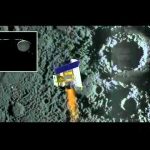
    After more than 10 years in space, the highly successful mission will come to an end when it is expected to collide into planet Mercury at a speed of more than 8,750 miles per hour (3.91 km/sec) near the end of this month.

    Launched in August 2004, MESSENGER traveled 4.9 billion miles (7.9 billion kilometers) – a journey that included 15 trips around the sun and flybys of Earth once, Venus twice, and Mercury three times – before it was inserted into orbit around its target planet in March 2011. The spacecraft’s cameras and other sophisticated, high-technology instruments have collected unprecedented images and made other observations. Mission managers are preparing to impact Mercury’ surface in the next couple weeks.

    Participants featured were:

    · James Green, director, Planetary Science Division, NASA Headquarters, Washington
    · Sean Solomon, MESSENGER principal investigator; director, Columbia University’s Lamont-Doherty Earth Observatory, Palisades, New York
    · Helene Winters, MESSENGER project manager, Johns Hopkins University Applied Physics Laboratory, Laurel, Maryland
    · Daniel O’Shaughnessy, MESSENGER systems engineer, Johns Hopkins University Applied Physics Laboratory, Laurel, Maryland

  • NASA’s MESSENGER Delivers New Pix, Data from Mercury

    NASA’s MESSENGER Delivers New Pix, Data from Mercury

    NASA reveals new images and science findings from the first spacecraft to orbit Mercury. The MErcury Surface, Space ENvironment, GEochemistry, and Ranging, or MESSENGER spacecraft conducted more than a dozen laps through the inner solar system for six years prior to achieving the historic orbit insertion on March 17.

  • NASA’S MESSENGER Spacecraft Begins Historic Orbit of Mercury

    NASA’S MESSENGER Spacecraft Begins Historic Orbit of Mercury

    NASA’s MErcury Surface, Space ENvironment, Geochemistry, and Ranging, or MESSENGER spacecraft successfully achieved orbit around Mercury at approximately 9 p.m. EDT Thursday. This marks the first time a spacecraft has accomplished this engineering and scientific milestone at our solar system’s innermost planet. Shown is reaction in MESSENGER mission control at the Johns Hopkins University Applied Physics Laboratory in Laurel, Md., as engineers received telemetry data confirming orbit insertion, plus animated depiction of the event. Among other goals, MESSENGER is expected to detect whether ice exists at Mercury’s poles.

  • NASA’s MESSENGER to Become First Spacecraft to Orbit Mercury

    NASA’s MESSENGER to Become First Spacecraft to Orbit Mercury

    After more than a dozen laps through the inner solar system, NASA’s MESSENGER spacecraft will move into orbit around Mercury on March 17, 2011. The durable spacecraft — carrying seven science instruments and fortified against the blistering environs near the sun — will be the first to orbit the innermost planet. At 8:45 p.m. EDT, MESSENGER — having pointed its largest thruster very close to the direction of travel — will fire that thruster for nearly 14 minutes, with other thrusters firing for an additional minute, slowing the spacecraft by 862 meters per second (1,929 mph). The orbit insertion will place the spacecraft into a 12 hour orbit about Mercury with a 200 kilometer (124 mile) minimum altitude. At the time of orbit insertion, MESSENGER will be 46.14 million kilometers (28.67 million miles) from the sun and 155.06 million kilometers (96.35 million miles) from Earth. MESSENGER has been on a 6.6 year mission to become the first spacecraft to orbit Mercury. The spacecraft followed a path through the inner solar system, including one flyby of Earth, two flybys of Venus, and three flybys of Mercury. This impressive journey is returning the first new spacecraft data from Mercury since the Mariner 10 mission over 30 years ago.