
Tag: meteorite

  • An astronaut’s perspective on searching meteorites in Antarctica

    An astronaut’s perspective on searching meteorites in Antarctica

    In late 2019, ESA astronaut and geophysicist Alexander Gerst travelled to one of the harshest environments on Earth to learn more about our solar system, and to gather operational knowledge for missions to planetary surfaces such as the Moon. Travel with him to Antarctica and discover the many secrets held by meteorites in this documentary from the ice.

    Since its inception in 1976, the US-led Antarctic Search for Meteorites (ANSMET) has recovered more than 22,000 specimens. These are rocks that fell from space, originating from several sources in our solar system, including the Moon and Mars. After each field season the newly recovered specimens are shipped (still frozen and sterile) to the Antarctic Meteorite laboratory at NASA’s Johnson Space Center in Houston, Texas. There they are thawed, dried, carefully examined, and shipped to planetary scientists world-wide. These rock fragments enable scientists to look beyond our planet, and Earth’s orbit, into the depths of space.

    As a member of the 2019-2020 crew, Alexander gained and shared knowledge with his team mates and followed in the footsteps of great Antarctic explorers before him, spending weeks in a remote field camp, only a few hundred kilometres from the South Pole. The team recovered 346 meteorites during this season. His mission also shared many similarities with what astronauts will encounter when flying to the Lunar South Pole in the not-so-distant future – making it another valuable step in preparing for what might lie ahead.

    Find out more about ANSMET over on the blog https://caslabs.case.edu/ansmet/category/19-20/

    ★ Subscribe: http://bit.ly/ESAsubscribe and click twice on the bell button to receive our notifications.

    Check out our full video catalog: http://bit.ly/SpaceInVideos
    Follow us on Twitter: http://bit.ly/ESAonTwitter
    On Facebook: http://bit.ly/ESAonFacebook
    On Instagram: http://bit.ly/ESAonInstagram
    On Flickr: http://bit.ly/ESAonFlickr

    We are Europe’s gateway to space. Our mission is to shape the development of Europe’s space capability and ensure that investment in space continues to deliver benefits to the citizens of Europe and the world. Check out https://www.esa.int/ to get up to speed on everything space related.

    Copyright information about our videos is available here: https://www.esa.int/ESA_Multimedia/Terms_and_Conditions

  • A meteoroid as seen from the Space Station… make a wish!

    A meteoroid as seen from the Space Station… make a wish!

    A series of night-time photos were taken by ESA astronaut Paolo Nespoli on 5 November around 22:33 GMT, here shown in a time-lapse with a 1-second interval, while the Space Station was flying from the southern Atlantic Ocean over to Kazakhstan.

    Paolo was lucky enough to capture a fast fireball falling to Earth over the Atlantic Ocean, off the South Africa west coast — look closely between 00:07 and 00:08 seconds at upper right in this video.

    A fireball is basically a very bright meteoroid — a small bit of natural “space rock” — entering Earth’s atmosphere and burning brighter than the background stars. This particular meteoroid was moving much faster than typical, with an estimated speed of around 40 km/s, according to experts working on near-Earth objects (NEOs) in ESA’s Space Situational Awareness Programme.

    “This speed is actually quite fast for meteoroids, which typically enter the atmosphere at around 20 km/s,” says Rüdiger Jehn, SSA NEO segment co-manager.

    ESA astronaut Paolo Nespoli in currently working and living on board the International Space Station as part of the Italian Space Agency’s long-duration VITA mission.

    Follow the VITA mission: http://blogs.esa.int/VITAmission/
    Connect with Paolo via http://paolonespoli.esa.int

  • A Meteorite Hit My House – Cool Science Experiment

    A Meteorite Hit My House – Cool Science Experiment

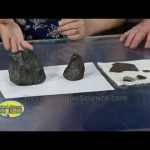
    Check out this and other cool science experiments at http://www.stevespanglerscience.com/experiments/ It’s likely that hundreds, maybe even thousands of meteorites have hit your house… thankfully, these tiny particles don’t do any damage. Watch the video to see a fun way to collect potential meteorites from your home and test to see if they are the real thing.

    About Steve Spangler Science…

    Steve Spangler is a celebrity teacher, science toy designer, speaker, author and an Emmy award-winning television personality. Spangler is probably best known for his Mentos and Diet Coke geyser experiment that went viral in 2005 and prompted more than 1,000 related YouTube videos. Spangler is the founder of www.SteveSpanglerScience.com, a Denver-based company specializing in the creation of science toys, classroom science demonstrations, teacher resources and home for Spangler’s popular science experiment archive and video collection. Spangler is a frequent guest on the Ellen DeGeneres Show where he takes classroom science experiments to the extreme. Check out his pool filled with 2,500 boxes of cornstarch!

    Cool Science Toys – http://www.SteveSpanglerScience.com
    Sign up for the Experiment of the Week – http://www.stevespanglerscience.com/experiment-of-the-week
    Watch Spangler’s Science Videos – http://www.stevespanglerscience.com/video/
    Attend a Spangler Hands-on Science Workshop for Teachers – http://www.stevespanglerscience.com/teacher_training/
    Visit Spangler’s YouTube Channel – http://www.youtube.com/stevespanglerscience

    Join the conversation on Steve Spangler’s blog – http://www.SteveSpangler.com

    Additional Information:

    On the education side, Spangler started his career as a science teacher in the Cherry Creek School district for 12 years. Today, Steve travels extensively training teachers in ways to make learning more engaging and fun. His hands-on science boot camps and summer institutes for teachers inspire and teach teachers how to prepare a new generation for an ever-changing work force. Over the last 15 years, he has also made more than 500 television appearances as an authority on hands-on science and inquiry-based learning.

    On the business side, Spangler is the founder and CEO of Steve Spangler Science, a Denver-based company specializing in the creation of educational toys and kits and hands-on science training services for teachers. The companys unique business strategies and viral creations have been featured in the Wall Street Journal, Inc. Magazine, Wired and TIME Magazine where online readers voted Steve Spangler #18 in the Top 100 Most Influential People of the Year for 2006 (what were they thinking?). You’ll find more than 140 Spangler created products available online at SteveSpanglerScience.com and distributed to toy stores and mass-market retailers worldwide.

    Spangler joined NBC affiliate 9News in 2001 as the science education specialist. His weekly experiments and science segments are designed to teach viewers creative ways to make learning fun. His now famous Mentos Geyser experiment, turning 2-liter bottles of soda into erupting fountains, became an Internet sensation in September 2005 when thousands of people started posting their own Mentos explosions on YouTube.com.

    As founder of SteveSpanglerScience.com, Spangler and his design team have developed more than 140 educational toys and science-related products featured by mass-market retailers like Target, Wal-Mart, Toys R’ Us, Discovery Channel Stores and over 1,400 independent specialty toy stores. His educational science catalog and on-line business offers more than a thousand science toys and unique learning resources. Recently, Spangler has been featured in the Wall Street Journal, Inc. Magazine, WIRED, the History Channel, Food Network and TIME Magazine where on-line readers voted Steve Spangler #18 in the Top 100 Most Influential People of the Year for 2006.

    His recent appearances on the Ellen DeGeneres Show have taught viewers how to blow up their food, shock their friends, create mountains of foam, play on a bed of nails, vanish in a cloud of smoke and how to turn 2,500 boxes of cornstarch and a garden hose into a swimming pool of fun.