Tag: Milky Way (Galaxy)

  • Gaia: Rewriting the story of the Milky Way

    Gaia: Rewriting the story of the Milky Way

    For over a decade, ESA’s Gaia mission has mapped our galaxy with stunning precision—rewriting the story of the Milky Way. As its mission enters a new phase, we look back at its most groundbreaking discoveries.

    Credit: ESA – European Space Agency

    Chapters:
    00:23 – Mapping the Milky Way and beyond
    00:58 – Structure of the Milky Way
    01:40 – Galactic family tree
    02:27 – Mapping star-forming regions
    03:00 – Ancient star streams
    03:19 – Cosmic encounters
    04:07 – Black holes and hidden giants

    ★ Subscribe: http://bit.ly/ESAsubscribe and click twice on the bell button to receive our notifications.

    Check out our full video catalog: http://bit.ly/SpaceInVideos
    Follow us on Twitter: http://bit.ly/ESAonTwitter
    On Facebook: http://bit.ly/ESAonFacebook
    On Instagram: http://bit.ly/ESAonInstagram
    On LinkedIn: https://bit.ly/ESAonLinkedIn
    On Pinterest: https://bit.ly/ESAonPinterest
    On Flickr: http://bit.ly/ESAonFlickr

    We are Europe’s gateway to space. Our mission is to shape the development of Europe’s space capability and ensure that investment in space continues to deliver benefits to the citizens of Europe and the world. Check out https://www.esa.int/ to get up to speed on everything space related.

    Copyright information about our videos is available here: https://www.esa.int/ESA_Multimedia/Terms_and_Conditions

  • Inside Gaia’s billion-pixel camera

    Inside Gaia’s billion-pixel camera

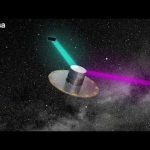
    ESA’s Gaia mission will produce an unprecedented 3D map of our Galaxy by mapping, with exquisite precision, the position and motion of a billion stars. The key to this is the billion-pixel camera at the heart of its dual telescope. This animation illustrates how the camera works.

    See http://sci.esa.int/gaia/53281-inside-gaias-billion-pixel-camera/ for a more detailed description.

    Credits: ESA

  • Gaia… mapping one billion stars

    Gaia… mapping one billion stars

    Gaia is ESA’s billion-star surveyor, designed to provide a precise 3D map of our Milky Way galaxy in order to understand its composition, formation and evolution.

  • Guide to our Galaxy

    Guide to our Galaxy

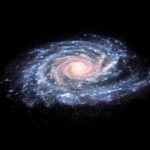
    This virtual journey shows the different components that make up our home galaxy, the Milky Way, which contains about a hundred billion stars.

    It starts at the black hole at the centre of the Milky Way and with the stars that orbit around it, before zooming out through the central Galactic Bulge, which hosts about ten billion stars.

    The journey continues through a younger population of stars in the stellar disc, home to most of the Milky Way’s stars, and which is embedded in a slightly larger gaseous disc. Stars in the disc are arranged in a spiral arm pattern and orbit the centre of the Galaxy.

    The discs and bulge are embedded in the stellar halo, a spherical structure that consists of a large number of globular clusters — the oldest population of stars in the Galaxy — as well as many isolated stars. An even larger halo of invisible dark matter is inferred by its gravitational effect on the motions of stars in the Galaxy.

    Looking at a face-on view of the Galaxy we see the position of our Sun, located at a distance of about 26 000 light-years from the Galactic Centre.

    Finally, the extent of the stellar survey conducted by ESA’s Hipparcos mission is shown, which surveyed more than 100 000 stars up to 300 light-years away from the Sun. In comparison, ESA’s Gaia survey will study one billion stars out to 30 000 light-years away.

  • Gaia technology

    Gaia technology

    Our Galaxy the Milky Way is made up of a hundred billion stars. To truly understand its evolution we need to know exactly where we stand in this mass of constantly moving and changing celestial objects. To do this, astrometry, the science of measuring the position, distance and movement of stars around us, is just about to take a giant leap forward with the launch of ESA’s new space telescope, Gaia. Gaia will make it possible to measure a billion stars of our Milky Way.

  • ESA Euronews: Mapping the Milky Way

    ESA Euronews: Mapping the Milky Way

    It has spawned a host of songs from crooners to alternative rock bands. One of the best loved chocolate bars in the United Kingdom is named after it. Yet how much to we really know about the Milky Way and just how important is it?

    We could be close to many answers about the galaxy thanks to a new satellite named Gaia, being launched by the European Space Agency.

    “One fundamental step to understand our universe is to understand our closer universe, which is the galaxy,” explained Guiseppe Sarri who is the project manager of ESA’s Gaia project.

    Gaia will scan the sky with powerful new eyes, mapping the Milky Way in unprecedented detail. It will help produce a detailed 3D image of the galaxy, something which has never been done before.

  • ESA Euronews: Mapear a Via Láctea

    ESA Euronews: Mapear a Via Láctea

    Olhando para o céu durante a noite é possível ver milhares de estrelas. Mas muito para além das visíveis existem milhões de outras escondidas na escuridão. Mais fracas, mais distantes, e profundamente misteriosas.

    Podemos estar perto de as descobrir graças a um novo satélite denominado Gaia, que está a ser lançado pela Agência Espacial Europeia.

    “Um passo fundamental para compreender o universo é entender o nosso universo mais próximo, a galáxia”, explicou Guiseppe Sarri, gestor do projeto Gaia da Agência Espacial Europeia.

    O Gaia vai conseguir ver o céu com uns poderosos novos olhos e criar um mapa detalhado da galáxia em 3D. Algo nunca antes visto na astronomia.

    Os astrónomos estão entusiasmados já que o satélite promete uma revolução. Vai observar, mapear e medir mil milhões de estrelas no total.

    Para isso o satélite vai transportar a maior câmera digital que alguma vez voou para o espaço. Como Guiseppe Sarri salientou: “Estamos a falar de estrelas que são 400 mil vezes mais fracas do que as que podemos ver a olho nu.”

    O grande número de dados recolhidos na missão deve ajudar os astrónomos a resolver alguns dos maiores quebra-cabeças no universo. Tais como a forma exata da nossa galáxia e os mistérios da matéria negra – a força oculta que molda o universo. O mapa da Via Láctea do satélite Gaia vai deixar o universo um pouco menos misterioso, mas nem por isso menos belo.

  • ESA Euronews: Mission Gaia : la Voie lactée bientôt cartographiée

    ESA Euronews: Mission Gaia : la Voie lactée bientôt cartographiée

    Les milliards d’étoiles de notre Voie lactée forment un labyrinthe dont nous avons du mal à appréhender l’étendue. Pour faire progresser les connaissances sur notre galaxie, l’Agence spatiale européenne mène la mission Gaia, du nom d’un satellite capable de scanner le ciel avec une précision extraordinaire, au moins mille fois supérieure à celle des observations depuis le sol.

    L’engin construit par Astrium à Toulouse et lancé depuis Kourou en Guyane française va réaliser une première en astronomie en établissant une carte 3D détaillée de la Voie lactée : il calculera la position relative, la trajectoire et la vitesse d’un milliard d’étoiles. Ce qui correspond à 1% de l’ensemble des étoiles peuplant notre galaxie.

    Pour l’aider dans ses observations, Gaia dispose de la plus grande caméra numérique jamais conçue pour une mission spatiale et comme point de référence, du plus grand téléscope de l’observatoire du Pic du Midi dans les Pyrénées.

    Grâce à cette mission, les astronomes espèrent résoudre de grandes énigmes, notamment établir avec exactitude, la structure en spirale de la Voie lactée et trouver la trace de la matière noire, cette force invisible qui façonne notre univers.