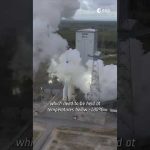
Europe’s new rocket Ariane 6 will soon be launched from Europe’s Spaceport in French Guiana. But how does it get off the launch pad?
Ignited first at liftoff is the Vulcain 2.1, the rocket motor for the cryogenic main stage. The engine sits at the bottom end of Ariane 6 and fires for up to 8 minutes to help the rocket reach space! The boosters ignite 7 seconds after the Vulcain for liftoff thrust.
Europe’s new rocket Ariane 6 is set to launch soon. 🚀
On its first flight to space, Ariane 6 is offering a ride to miniature satellites, known as CubeSats.
ISTSat from Portugal, and ³Cat-4 from Spain, are two of Ariane 6’s passengers.
Both satellites were developed by students participating in our Fly Your Satellite! programme, one of the several hands-on programmes for university students offered by ESA Education.
ISTSat is the first Portuguese CubeSat built by students. It will track aircraft from space using a smaller, lower power Automatic Dependent Surveillance Broadcast system, which is the technology that enables websites like Flight Radar.
³Cat-4 from the Technical University of Catalonia combines a radiometer, a reflectometer and an Automatic Identification System into one payload that will perform Earth Observation experiments.
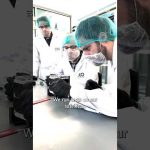
The students visited Exolaunch’s Berlin headquarters to perform the integration of their satellites, where they installed ISTSat-1 and ³Cat-4 into their deployer.
There’s a key milestone in the development of a satellite: integration. 🛰✅
🎓 Join ISTSat-1 and ³Cat-4 #student teams as they integrate their satellites with the deployer in preparation for launch this summer!
🚀 This exciting experience is part of our Fly Your Satellite! programme, which gives tertiary education students the chance to design, build, test and launch a #satellite.