After the successful Artemis I uncrewed flight around the Moon in 2022, Artemis II is the next step in our journey from the Moon to Mars. This mission will be the Artemis program’s first crewed mission, with four astronauts flying around the Moon in 10 days. This flight will confirm the systems and hardware necessary for human deep space travel. Artemis II is scheduled for no later than April 2026.
In this news conference, leaders in the Artemis program will discuss the mission and answer questions from the media. The participants include: – Lakiesha Hawkins, acting deputy associate administrator, Exploration Systems Development Mission Directorate, NASA Headquarters – Charlie Blackwell-Thompson, Artemis launch director, NASA’s Kennedy Space Center – Judd Frieling, lead Artemis II ascent flight director, NASA Johnson – Jeff Radigan, lead Artemis II flight director, NASA Johnson – Rick Henfling, lead Artemis II entry flight director, NASA Johnson – Daniel Florez, test director, Exploration Ground Systems, NASA Kennedy
Four crew members are preparing to launch to the International Space Station as part of NASA’s SpaceX Crew-11 mission to perform research, technology demonstrations, and maintenance activities aboard the orbiting laboratory.
NASA astronauts Zena Cardman and Mike Fincke, JAXA (Japan Aerospace Exploration Agency) astronaut Kimiya Yui, and Roscosmos cosmonaut Oleg Platonov will lift off no earlier than 12:09 p.m. EDT (1609 UTC) on Thursday, July 31, from Launch Complex 39A at NASA’s Kennedy Space Center in Florida.
Tune in on Tuesday, 15 July, from 09:30 BST (10:30 CEST), to watch ESA project astronaut Sławosz Uznański-Wiśniewski and crew splash down off the coast of California, USA at 10:31 BST (11:31 CEST).
During the Ignis mission, Sławosz conducted 13 experiments proposed by Polish companies and institutions and developed in collaboration with ESA, along with three additional ESA-led experiments. These covered a broad range of areas including human research, materials science, biology, biotechnology and technology demonstrations.
Ax-4 marks the second commercial human spaceflight mission for an ESA project astronaut. Sponsored by the Polish government and supported by ESA, the Polish Ministry of Economic Development and Technology (MRiT) and the Polish Space Agency (POLSA), the mission featured an ambitious programme of technological and scientific research.
We are Europe’s gateway to space. Our mission is to shape the development of Europe’s space capability and ensure that investment in space continues to deliver benefits to the citizens of Europe and the world. Check out https://www.esa.int/ to get up to speed on everything space related.
Tune in on Monday, 14 July, from 11:45 BST (12:45 CEST), to watch ESA project astronaut Sławosz Uznański-Wiśniewski depart from the International Space Station, bringing the Ignis mission to a close after nearly three weeks in orbit.
During the Ignis mission, Sławosz conducted 13 experiments proposed by Polish companies and institutions and developed in collaboration with ESA, along with three additional ESA-led experiments. These covered a broad range of areas including human research, materials science, biology, biotechnology and technology demonstrations.
Ax-4 marks the second commercial human spaceflight mission for an ESA project astronaut. Sponsored by the Polish government and supported by ESA, the Polish Ministry of Economic Development and Technology (MRiT) and the Polish Space Agency (POLSA), the mission featured an ambitious programme of technological and scientific research.
We are Europe’s gateway to space. Our mission is to shape the development of Europe’s space capability and ensure that investment in space continues to deliver benefits to the citizens of Europe and the world. Check out https://www.esa.int/ to get up to speed on everything space related.
Watch as the Axiom Mission 4 crew – Peggy Whitson, former NASA astronaut and director of human spaceflight at Axiom Space, ISRO (Indian Space Research Organisation) astronaut Shubhanshu Shukla, ESA (European Space Agency) project astronaut Sławosz Uznański-Wiśniewski of Poland, and HUNOR (Hungarian to Orbit) astronaut Tibor Kapu of Hungary – begin final preparations for their return to Earth aboard the SpaceX Dragon spacecraft, currently targeted for Monday, July 14.
After the four-member astronaut crew enters the SpaceX Dragon spacecraft, the hatch will close at 4:55 a.m. EDT (0855 UTC). The spacecraft is scheduled to undock at 7:05 a.m. EDT (1105 UTC).
Watch Axiom Mission 4 begin the journey home from the International Space Station. Peggy Whitson, former NASA astronaut and director of human spaceflight at Axiom Space, ISRO (Indian Space Research Organisation) astronaut Shubhanshu Shukla, ESA (European Space Agency) project astronaut Sławosz Uznański-Wiśniewski of Poland, and HUNOR (Hungarian to Orbit) astronaut Tibor Kapu of Hungary return to Earth aboard their SpaceX Dragon spacecraft. Undocking is scheduled at 7:05 a.m. EDT (1105 UTC).
Following the successful launch of Axiom Mission 4 from NASA’s Kennedy Space Center on Wednesday, June 25, its four crew members are arriving at the International Space Station.
Ax-4 is scheduled to dock with the station at 6:30 a.m. EDT (1030 UTC) on Thursday, June 26; arrival coverage will continue as the Ax-4 crew enters the station and makes welcome remarks. During their two-week stay aboard the orbiting laboratory, the crew of Ax-4 will engage in science, outreach, and commercial activities.
Peggy Whitson, former NASA astronaut and director of human spaceflight at Axiom Space, is commanding the mission, with ISRO (Indian Space Research Organisation) astronaut Shubhanshu Shukla serving as pilot. The two mission specialists are ESA (European Space Agency) project astronaut Sławosz Uznański-Wiśniewski of Poland and Tibor Kapu of Hungary. This mission is sending the first ISRO astronaut to the station as part of a joint effort between NASA and the Indian space agency. Ax-4 is also carrying the first astronauts from Poland and Hungary to stay aboard the space station.
Axiom Mission 4, set to lift off at 2:31 a.m. EDT (0631 UTC) on Wednesday, June 25, is Axiom’s fourth private astronaut mission to the International Space Station. Ax-4 is launching from NASA’s Kennedy Space Center aboard SpaceX’s Dragon spacecraft.
During their two-week stay aboard the orbiting laboratory, the crew of Ax-4 will engage in science, outreach, and commercial activities.
Peggy Whitson, former NASA astronaut and director of human spaceflight at Axiom Space, will command the mission, while ISRO (Indian Space Research Organisation) astronaut Shubhanshu Shukla will serve as pilot. The two mission specialists are ESA (European Space Agency) project astronaut Sławosz Uznański-Wiśniewski of Poland and Tibor Kapu of Hungary. This mission will send the first ISRO astronaut to the station as part of a joint effort between NASA and the Indian space agency. Ax-4 will also carry the first astronauts from Poland and Hungary to stay aboard the space station.
Launch coverage is led by Axiom Space, with support from NASA and SpaceX; NASA’s primary mission responsibilities begin during Dragon’s approach to the International Space Station, the start of Ax-4 integrated operations. Learn more about NASA’s role in Ax-4 and how we’re working with our industry partners to open low Earth orbit to more people, more science, and more opportunities: https://go.nasa.gov/4mRkpGj
Song: ‘Apache’ by Kevin Graham Content ID: WXGBDH0A08QGK9CG
Song: ‘Majestic Skies’ by Strength To Last Content ID: VINOM8MWVMC8LB7X
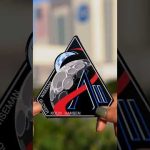
The Artemis II mission will embark on its journey around the Moon early 2026 with four astronauts onboard. Now we’ve got the mission patch to mark the occasion.
NASA’s SpaceX Crew-9 mission with astronauts Nick Hague, Butch Wilmore, and Suni Williams, and Roscosmos cosmonaut Aleksandr Gorbunov, is preparing to return to Earth following their science mission aboard the International Space Station.
Hague, Williams, and Wilmore completed more than 900 hours of research between over 150 unique scientific experiments and technology demonstrations during their stay aboard the orbiting laboratory.
ESA’s Hera mission lifted off on a SpaceX Falcon 9 from Cape Canaveral Space Force Station in Florida, USA, on 7 October at 10:52 local time (16:52 CEST, 14:52 UTC).
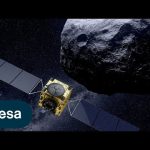
Hera is ESA’s first planetary defence mission. It will fly to a unique target among the 1.3 million asteroids in our Solar System – the only body to have had its orbit shifted by human action – to solve lingering unknowns associated with its deflection.
Hera will carry out the first detailed survey of a ‘binary’ – or double-body – asteroid, 65803 Didymos, which is orbited by a smaller body, Dimorphos. Hera’s main focus will be Dimorphos, whose orbit around the main body was previously altered by NASA’s kinetic-impacting DART spacecraft.
By sharpening scientific understanding of this ‘kinetic impact’ technique of asteroid deflection, Hera should turn the experiment into a well-understood and repeatable technique for protecting Earth from an asteroid on a collision course.
————————————————— 📸 ESA – S. Corvaja Copyright: ESA/SpaceX —————————————————
★ Subscribe: http://bit.ly/ESAsubscribe and click twice on the bell button to receive our notifications.
We are Europe’s gateway to space. Our mission is to shape the development of Europe’s space capability and ensure that investment in space continues to deliver benefits to the citizens of Europe and the world. Check out https://www.esa.int/ to get up to speed on everything space related.
Hera, ESA’s first planetary defence mission, is headed to space.
Hera will fly to a unique target among the 1.3 million known asteroids of our Solar System – the first body to have had its orbit shifted by human action – to probe lingering unknowns related to its deflection.
————————————————— Credits: ESA/SpaceX ————————————————— Chapters: 00:00 Start of ESA WebTV programme – live from ESA’s European Space Operations Centre in Darmstadt, Germany 18:30 SpaceX live broadcast begins 36:15 Hera lift-off 1:53:00 – Hera separates from Falcon 9 launcher: End of SpaceX live broadcast, ESA WebTV programme continues 1:57:20 Acquisition of the first signals from the Hera spacecraft 2:13:26 End of ESA WebTV programme
★ Subscribe: http://bit.ly/ESAsubscribe and click twice on the bell button to receive our notifications.
We are Europe’s gateway to space. Our mission is to shape the development of Europe’s space capability and ensure that investment in space continues to deliver benefits to the citizens of Europe and the world. Check out https://www.esa.int/ to get up to speed on everything space related.
Meet Ian Carnelli, project manager for Hera, our planetary defense mission that will very soon be launched into space.
Hera will be, along with NASA’s DART spacecraft, humankind’s first probe to rendezvous with a binary asteroid system, a little understood class making up around 15% of all known asteroids.
Our solar system has a number of worlds with water, but is Earth the only one with the right environment to support life? That’s the question NASA’s Europa Clipper aims to answer.
Europa Clipper is the first mission dedicated to studying Jupiter’s moon Europa, which scientists believe has a salty ocean under its icy shell. While not designed to detect life, the spacecraft is equipped with nine science instruments and a gravity experiment, which will all help determine whether this moon could be habitable. Europa Clipper will orbit Jupiter and make 49 flybys of Europa, taking detailed measurements and high-resolution pictures.
Europa Clipper is set to launch in October 2024 from NASA’s Kennedy Space Center in Florida, arriving at Jupiter in 2030. Watch it lift off live: https://plus.nasa.gov
In its latest test of readiness for space, ESA’s Hera spacecraft for planetary defence is being operated for around three weeks in hard vacuum, while being subjected to the same temperature profiles it will experience during its journey to the Didymos binary asteroid system.
The 1.6 × 1.6 × 1.7 m spacecraft was slid inside the 4.5-m diameter, 11.8-m long Phenix thermal vacuum chamber at ESA’s ESTEC Test Centre in the Netherlands.
“You’re always a bit nervous when your baby gets moved about,” remarks Ian Carnelli, overseeing Hera for ESA. “Right now it’s being shut into a dark airless box for weeks on end, but we have confidence it will perform well.”
Hera can be seen receded into the rectangular ‘thermal tent’ within Phenix. The six copper walls of this internal box can be heated up to 100°C or cooled via piped liquid nitrogen down to –190°C, all independently from each other.
Then, after the main door of the stainless steel Phenix chamber was slid shut, the air within the chamber was pumped out during a lengthy 20 hours process down to approximately one billionth of outside atmospheric pressure. This will allow the Hera team from ESA, European Test Services operating the Test Centre and Hera manufacturer OHB to test the spacecraft’s thermal behaviour as the temperature changes around it.
Space is a place where it is possible to be hot and cold at the same time if one part of your spacecraft is in sunlight and another is in shade. And because there is no air, there is no conduction or convection to lose heat from your spacecraft. Instead thermal experts employ insulation and radiators to keep the body of a spacecraft within carefully chosen temperature limits. In general spacecraft electronics – just like their human makers – work best at room temperature.
“We already have detailed models of the spacecraft’s thermal behaviour, and this spacecraft-level thermal vacuum test lets us correlate these models with reality,” explains Hera’s Product Assurance and Safety manager, Heli Greus.
“More than 400 thermal sensors have been placed in and around Hera to give us precise knowledge of what is going on, and the test is being supervised on a 24/7 basis in case anything anomalous occurs. The spacecraft is now being put through a series of ‘cold plateaus’ and ‘hot plateaus’ representative of its mission, which will allow us to test the thermal limits of each specific unit aboard.”
Hera is Europe’s contribution to an international planetary defence experiment. Following the DART mission’s impact with the Dimorphos asteroid in 2022 – modifying its orbit and sending a plume of debris thousands of kilometres out into space – Hera will return to Dimorphos to perform a close-up survey of the crater left by DART. The mission will also measure Dimorphos’ mass and make-up, along with that of the larger Didymos asteroid that Dimorphos orbits around. Hera is due for launch in October 2024.
The ESTEC Test Centre in the Netherlands is the largest facility of its kind in Europe, providing a complete suite of equipment for all aspects of satellite testing under a single roof.
The upcoming Copernicus Radar Observation System for Europe in L-band (ROSE-L) will provide continuous day-and-night all-weather monitoring of Earth’s land, oceans and ice, and offer frequent images at a high spatial resolution.
ROSE-L will carry an active phased array synthetic aperture radar instrument. The radar antenna will be the largest planar antenna ever built measuring an impressive 40 sq m – roughly the size of 10 ping-pong tables.
ROSE-L will deliver essential information on forests and land cover, leading to improved monitoring of the terrestrial carbon cycle and carbon accounting.
The mission will also greatly extend our ability to monitor minute surface displacements and helping detect geohazards. It will automatically map surface soil moisture conditions and monitor sea and land ice – greatly helping climate change research and mitigation.
ROSE-L is one of six Copernicus Sentinel Expansion missions that ESA is developing on behalf of the EU. The missions will expand the current capabilities of the Copernicus Space Component – the world’s biggest supplier of Earth observation data.
This video features interviews with Malcolm Davidson, ROSE-L Mission Scientist, Nico Gebert, ROSE-L Payload Manager and Gianluigi Di Cosimo, ROSE-L Project Manager.
Credits: ESA – European Space Agency
★ Subscribe: http://bit.ly/ESAsubscribe and click twice on the bell button to receive our notifications.
We are Europe’s gateway to space. Our mission is to shape the development of Europe’s space capability and ensure that investment in space continues to deliver benefits to the citizens of Europe and the world. Check out https://www.esa.int/ to get up to speed on everything space related.
Tracking ice lost from the world’s glaciers, ice sheets and frozen land shows that Earth is losing ice at an accelerating rate. Monitoring the cryosphere is crucial for assessing, predicting and adapting to climate change.
The Copernicus Polar Ice and Snow Topography Altimeter (CRISTAL) mission will provide a full picture of the changes taking place in some of the most inhospitable regions of the world. It will carry – for the first time – a dual-frequency radar altimeter, and microwave radiometer, that will measure and monitor sea-ice thickness, overlying snow depth and ice-sheet elevations.
These data will support maritime operations in the polar oceans and contribute to a better understanding of climate processes. CRISTAL will also support applications related to coastal and inland waters, as well as providing observations of ocean topography.
CRISTAL is one of six Copernicus Sentinel Expansion missions that ESA is developing on behalf of the EU. The missions will expand the current capabilities of the Copernicus Space Component – the world’s biggest supplier of Earth observation data.
This video features interviews with Kristof Gantois, CRISTAL Project Manager and Paolo Cipollini, CRISTAL Mission Scientist.
Credits: ESA – European Space Agency
★ Subscribe: http://bit.ly/ESAsubscribe and click twice on the bell button to receive our notifications.
We are Europe’s gateway to space. Our mission is to shape the development of Europe’s space capability and ensure that investment in space continues to deliver benefits to the citizens of Europe and the world. Check out https://www.esa.int/ to get up to speed on everything space related.
A commercial mission heads to the Moon with NASA science, our Artemis II crew conducts some preflight training, and a major milestone for a planetary science mission … a few of the stories to tell you about – This Week at NASA!
Link to download this video: https://images.nasa.gov/details/NHQ_2024_0216_A%20Commercial%20Mission%20Heads%20to%20the%20Moon%20With%20NASA%20Science%20on%20This%20Week%20@NASA%20%E2%80%93%20February%2016,%202024
Video Producer: Andre Valentine Video Editor: Andre Valentine Narrator: Emanuel Cooper Music: Universal Production Music Credit: NASA
After almost 20 days on the International Space Station, ESA project astronaut Marcus Wandt is coming home.
The trip back to Earth will take the Axiom Mission 3 crew around 47 hours. Marcus will serve as a mission specialist during the journey, sharing the ride with Walter Villadei from Italy, Alper Gezeravcı from Türkiye and Michael López-Alegría, a dual US-Spanish citizen.
After a series of burns to lower its orbit, the spacecraft will enter Earth’s atmosphere and deploy its parachutes for a water-landing. Marcus and crew are expected to splash down off the coast of Florida, USA, on 9 February 2024 at 13:30 GMT/14:30 CET. This will mark the end of Marcus’s mission, called Muninn.
We are Europe’s gateway to space. Our mission is to shape the development of Europe’s space capability and ensure that investment in space continues to deliver benefits to the citizens of Europe and the world. Check out https://www.esa.int/ to get up to speed on everything space related.
Our Plankton, Aerosol, Cloud ocean Ecosystem (PACE) mission will study what makes Earth so different from every other planet we study: life itself.
Three-quarters of our home planet is covered by water, and PACE’s advanced instruments will provide new ways to measure the distributions of microscopic algae known as phytoplankton near the ocean’s surface. Those observations will enhance our understanding of the crucial exchange of CO2 between the ocean and atmosphere.
At the same time, PACE will help reveal how aerosols – microscopic particles in the atmosphere – and clouds control the amount of the Sun’s energy that is absorbed by Earth. Novel uses of PACE data will benefit our economy and society, and will extend and expand NASA’s long-term observations of our living planet.
PACE is scheduled to lift off at 1:33 a.m. EST (0633 UTC) Thursday, Feb. 8, on a SpaceX Falcon 9 rocket from Space Launch Complex 40 at Cape Canaveral Space Force Station in Florida. NASA’s live launch coverage begins at 12:45 a.m. EST (0545 UTC).
After almost 20 days on the International Space Station, ESA project astronaut Marcus Wandt is coming home.
The trip back to Earth will take the Axiom Mission 3 crew around 47 hours. Marcus will serve as a mission specialist during the journey, sharing the ride with Walter Villadei from Italy, Alper Gezeravcı from Türkiye and Michael López-Alegría, a dual US-Spanish citizen.
We are Europe’s gateway to space. Our mission is to shape the development of Europe’s space capability and ensure that investment in space continues to deliver benefits to the citizens of Europe and the world. Check out https://www.esa.int/ to get up to speed on everything space related.
A commercial resupply mission to the space station, preparing to make a delivery to the Moon, and monitoring our changing Earth from space … a few of the stories to tell you about – This Week at NASA!
Link to download this video: https://images.nasa.gov/details/A%20Commercial%20Resupply%20Mission%20to%20the%20Space%20Station%20on%20This%20Week%20@NASA%20%E2%80%93%20February%202,%202024
Video Producer: Andre Valentine Video Editor: Andre Valentine Narrator: Emanuel Cooper Music: Universal Production Music Credit: NASA
Watch as Marcus Wandt and his crewmates arrived to the Space Station around 36 hours after liftoff.
Marcus is the first of a new generation of European astronauts to fly on a commercial human spaceflight opportunity with Axiom Space. His mission is supported by ESA and the Swedish National Space Agency (SNSA). Marcus’s mission is called Muninn.
During his two-week mission, Marcus will devote much of his time to scientific activities and technology demonstrations that could shape the way we live and work on Earth. In total, he will run around 20 experiments.
Marcus Wandt was selected in November 2022 as a member of the ESA astronaut reserve after a year-long selection process. The 2022 ESA recruitment campaign received over 22 5000 applications from across its Member States.
Timestaps of the video: 00:00:00 – 01:55:44 – Pre-Docking programme 01:55:45 – 03:14:29 – Complete docking to the Space Station 03:14:30 – 03:16:00 – Hatching opening 03:16:01 – 03:37:24 – Axiom 3 Mission crew entering the Space Station 03:37:25 – 03:49:00 – Welcoming ceremony
Follow Marcus’s journey on the Muninn website, check our launch kit and connect with him on his Instagram and X accounts.
We are Europe’s gateway to space. Our mission is to shape the development of Europe’s space capability and ensure that investment in space continues to deliver benefits to the citizens of Europe and the world. Check out https://www.esa.int/ to get up to speed on everything space related.
ESA project astronaut Marcus Wandt launched together with the rest of the Axiom-3 crew at 23:11 CET on 17 January 2024, from launch pad 39A, NASA’s Kennedy Space Center, Florida, USA.
Marcus will start his Muninn mission when he enters the International Space Station on Saturday 20 January, where he will spend up to 14 days conducting science and testing technology that can one day help people on Earth.
Follow Marcus’s journey on the Muninn website, check our launch kit and connect with him on his Instagram and X accounts.
We are Europe’s gateway to space. Our mission is to shape the development of Europe’s space capability and ensure that investment in space continues to deliver benefits to the citizens of Europe and the world. Check out https://www.esa.int/ to get up to speed on everything space related.
Axiom Mission 3, set to lift off at 4:49 p.m. EST (2149 UTC) on Thursday, Jan. 18, is Axiom’s third private astronaut mission to the International Space Station. Ax-3 is launching from NASA’s Kennedy Space Center aboard SpaceX’s Dragon Freedom spacecraft.
During their two-week stay aboard the orbiting laboratory, the crew of Ax-3—commander Michael López-Alegría, pilot Walter Villadei of Italy, mission specialist Alper Gezeravcı of Turkey, and ESA (European Space Agency) project astronaut Marcus Wandt of Sweden—will engage in technology demonstrations, student outreach, and experiments ranging from medical research to materials science.
Launch coverage is led by Axiom Space, with support from NASA and SpaceX; NASA’s primary mission responsibilities begin during Freedom’s approach to the International Space Station, the start of Ax-3 integrated operations. Learn more about NASA’s role in Ax-3 and how we’re working with our industry partners to open low Earth orbit to more people, more science, and more opportunities: https://go.nasa.gov/3Se0bsN
Stream highlights: 2:10 — Meet the Ax-3 Crew 30:04 — Ax-3 Crew Training 34:14 — Ax-3 Science & Research 48:42 — Interview with NASA Administrator Bill Nelson 1:03:48 — Liftoff! 1:16:04 — Dragon flies free
The launch of ESA project astronaut Marcus Wandt to the International Space Station on Axiom Mission 3 (Ax-3). Marcus’s mission is called Muninn.
A SpaceX Falcon 9 rocket will lift off from launch pad 39A at NASA’s Kennedy Space Center in Florida, USA, on 18 January 2024. Marcus will fly as a mission specialist on the Dragon spacecraft. The other Axiom 3 crew members are Walter Villadei from Italy and Alper Gezeravcı from Türkiye. They will fly under the command of Michael López-Alegría, representing both USA and Spain as a dual-citizen.
Marcus is the first of a new generation of European astronauts to fly on a commercial human spaceflight opportunity with Axiom Space. His mission is supported by ESA and the Swedish National Space Agency (SNSA).
During his two-week mission, Marcus will devote much of his time to scientific activities and technology demonstrations that could shape the way we live and work on Earth. In total, he will run around 20 experiments.
Marcus Wandt was selected in November 2022 as a member of the ESA astronaut reserve after a year-long selection process. The 2022 ESA recruitment campaign received over 22 5000 applications from across its Member States.
Timestaps of the video: 00:00:00 – 02:10:44 – Pre-Launch programme 02:10:45 – 02:35:38 – Liftoff
Follow Marcus’s journey on the Muninn website, check our launch kit and connect with him on his Instagram and X accounts.
We are Europe’s gateway to space. Our mission is to shape the development of Europe’s space capability and ensure that investment in space continues to deliver benefits to the citizens of Europe and the world. Check out https://www.esa.int/ to get up to speed on everything space related.
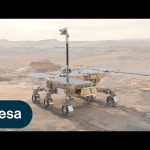
In 2028, ESA will launch its most ambitious exploration mission to search for past and present signs of life on Mars.
Enjoy the ExoMars Rosalind Franklin mission in minute detail – everything down to the colour and size of the wires, sticky tape and scratches. The spacecraft, the rover and martian landscapes are as true to reality as possible for a simulation. The visuals show the spacecraft structural engineering with a faithful robotic appearance. The martian landscape has been simulated with meticulous realism.
The story begins with the rover exploring the surface of the Red Planet. There is science to be done. Join the adventure.
This trailer provides a first taste for the most accurate animation series made so far of a Mars mission.
ESA’s Rosalind Franklin rover has unique scientific potential to search for evidence of past life on Mars thanks to its drill and scientific instruments. It will be the first rover to reach a depth of up to two metres deep below the surface, acquiring samples that have been protected from surface radiation and extreme temperatures. The drill will retrieve soils from ancient parts of Mars and analyse them in situ with its onboard laboratory.
The mission will also serve to demonstrate key technologies that Europe needs to master for future planetary exploration missions. This includes the capability to land safely on a planet, to move autonomously on the surface, and to perform drilling and sample processing and analysis automatically. The rover will use novel driving techniques including wheel-walking to overcome difficult terrains, as well as autonomous navigation software.
We are Europe’s gateway to space. Our mission is to shape the development of Europe’s space capability and ensure that investment in space continues to deliver benefits to the citizens of Europe and the world. Check out https://www.esa.int/ to get up to speed on everything space related.
At some point, statistically speaking, a large asteroid will impact Earth. Whether that’s tomorrow, in ten years, or a problem for our descendants, ESA is getting prepared.
As part of the world’s first test of asteroid deflection, ESA’s Hera mission will perform a detailed post-impact survey of Dimorphos – the 160-metre asteroid struck, and successfully deflected, by NASA’s DART spacecraft.
Hera will soon study the aftermath. Launching in October 2024, Hera will turn this grand-scale experiment into a well-understood and hopefully repeatable planetary defence technique.
But before Hera and its two CubeSats fly, they’re rigorously tested at ESA’s ESTEC test centre in Noordwijk, the Netherlands. From the force and noise of the rocket take-off to the sustained vacuum and temperature extremes of deep space, all aspects of Hera’s functioning are checked before they begin their journey, alone in space.
Credits: ESA – European Space Agency
★ Subscribe: http://bit.ly/ESAsubscribe and click twice on the bell button to receive our notifications.
We are Europe’s gateway to space. Our mission is to shape the development of Europe’s space capability and ensure that investment in space continues to deliver benefits to the citizens of Europe and the world. Check out https://www.esa.int/ to get up to speed on everything space related.
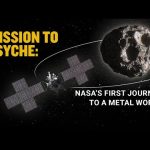
There are millions of asteroids in our solar system, so why is NASA going to the asteroid Psyche? Scientists think this particular asteroid, which orbits the Sun between Mars and Jupiter, could be part of the metal-rich interior of a planetesimal, a building block of the rocky planets in our solar system. Visiting Psyche and studying it up close could help us understand how planets like Mercury, Venus, Earth, and Mars came to be.
Join us on the journey to the first metal-rich asteroid humankind has ever visited. The Psyche mission is set to launch as early as Oct. 12, 2023. Watch live launch commentary at https://www.youtube.com/nasa.
Our SpaceX Crew-6 mission safely returns to Earth, the tech demo hitching a ride on our Psyche spacecraft, and studying ancient life on Earth to better understand Mars … a few of the stories to tell you about – This Week at NASA!
Link to download this video: https://images.nasa.gov/details/Our%20SpaceX%20Crew-6%20Mission%20Safely%20Returns%20to%20Earth%20on%20This%20Week%20@NASA%20%E2%80%93%20September%208,%202023
Video Producer: Andre Valentine Video Editor: Andre Valentine Narrator: Andre Valentine Music: Universal Production Music Credit: NASA
NASA astronauts Stephen Bowen and Woody Hoburg, UAE astronaut Sultan Alneyadi, and cosmonaut Andrey Fedyaev—the four members of NASA’s SpaceX Crew-6 mission—are scheduled to splash down off the coast of Florida at 12:17 a.m. EDT (0417 UTC) on Monday, Sept. 4, concluding their six-month stay in low Earth orbit.
Join NASA and SpaceX for live coverage of Crew-6 and their Dragon Endeavour spacecraft from reentry through recovery. While aboard the International Space Station, Crew-6 contributed to a number of studies to help us learn how to live in space while making life better back on Earth: https://go.nasa.gov/3OOOR3l
Huginn, ESA astronaut Andreas Mogensen’s second mission to the International Space Station, is now under way. Together with Crew-7, the ESA astronaut was launched on the Crew Dragon spacecraft Endurance on 26 August 2023, at 08:27 BST (09:27 CEST).
Alongside him are NASA’s Jasmin Moghbeli, Satoshi Furukawa from JAXA, and Konstantin Borisov from Roscosmos. The crew will spend approximately six months on the Space Station, 420 km above Earth.
This isn’t Andreas’s first journey into space. In 2015, he participated in the 10-day ‘iriss’ mission. However, Huginn marks his first launch from NASA’s Kennedy Space Center in Florida, USA, and his first flight with a Crew Dragon.
Watch the replay of pivotal moments such as the crew’s arrival at the Kennedy Space Center on 20 August, liftoff, as well as Andreas piloting Crew Dragon on its 11th crewed flight.
The journey also included a special passenger, who served as microgravity indicators. After approximately 30 hours, the Crew Dragon approached and docked with the Space Station, where Andreas and his colleagues were greeted by the resident astronauts.
We are Europe’s gateway to space. Our mission is to shape the development of Europe’s space capability and ensure that investment in space continues to deliver benefits to the citizens of Europe and the world. Check out https://www.esa.int/ to get up to speed on everything space related.
An international crew is preparing to launch to the International Space Station aboard NASA’s SpaceX Crew-7 mission.
NASA astronaut Jasmin Moghbeli, ESA (European Space Agency) astronaut Andreas Mogensen, JAXA (Japan Aerospace Exploration Agency) astronaut Satoshi Furukawa, and cosmonaut Konstantin Borisov of Roscosmos will perform research technology demonstrations, science experiments, and maintenance activities aboard the microgravity laboratory.
Crew-7 is targeted to launch no earlier than 3:27 a.m. EDT Saturday, Aug. 26 from Launch Complex 39A at Kennedy. As part of the agency’s Commercial Crew Program, Crew-7 marks the eighth human spaceflight mission supported by a SpaceX Dragon spacecraft and the seventh crew rotation mission to the space station since 2020 for NASA.
A commercial resupply mission heads to the space station, a key piece of hardware for a future Moon mission is on the move, and another spacecraft gets ready to spread its wings in deep space … a few of the stories to tell you about – This Week at NASA!
Link to download this video: https://images.nasa.gov/details/A%20Commercial%20Resupply%20Mission%20Heads%20to%20the%20Space%20Station%20on%20This%20Week%20@NASA%20%E2%80%93%20August%204,%202023
Video Producer: Andre Valentine Video Editor: Andre Valentine Narrator: Andre Valentine Music: Universal Production Music Credit: NASA
On May 16, 2023, NASA’s Juno spacecraft flew past Jupiter’s volcanic moon Io, and then the gas giant soon after. Io is the most volcanically active body in the solar system. Slightly larger than Earth’s moon, Io is a world in constant torment. Not only is the biggest planet in the solar system forever pulling at it gravitationally, but so are its Galilean siblings – Europa and the biggest moon in the solar system, Ganymede. The result is that Io is continuously stretched and squeezed, actions linked to the creation of the lava seen erupting from its many volcanoes.
This rendering provides a “starship captain” point of view of the flyby, using images from JunoCam. For both targets, Io and Jupiter, raw JunoCam images were reprojected into views similar to the perspective of a consumer camera. The Io flyby and the Jupiter approach movie were rendered separately and composed into a synchronous split-screen video.
Launched on Aug. 5, 2011, Juno embarked on a 5-year journey to Jupiter. Its mission: to probe beneath the planet’s dense clouds and answer questions about the origin and evolution of Jupiter, our solar system, and giant planets in general across the cosmos. Juno arrived at the gas giant on July 4, 2016, after a 1.7-billion-mile journey, and settled into a 53-day polar orbit stretching from just above Jupiter’s cloud tops to the outer reaches of the Jovian magnetosphere. Now in its extended mission, NASA’s most distant planetary orbiter continues doing flybys of Jupiter and its moons.
Join the journey as NASA’s Psyche mission team prepares for a targeted Oct. 5, 2023, launch to explore a unique metallic asteroid orbiting the sun between Mars and Jupiter. The asteroid, likely made largely of nickel-iron metal mixed with rock, could contain metal from the core of a planetesimal (the building block of an early rocky planet) and may offer a unique window into the violent history of collisions and accretion that created the terrestrial planets like Earth. Arizona State University leads the Psyche mission.
JPL, which is managed by Caltech for NASA, is responsible for the mission’s overall management, system engineering, integration and test, and mission operations. Maxar Technologies in Palo Alto, California, provided the high-power solar electric propulsion spacecraft chassis.
ESA’s Euclid mission is designed to bring the dark side of the Universe to light. Based on the way galaxies rotate and orbit one another, and the way in which the Universe is expanding, astronomers believe that two unseen entities dominate the composition of our cosmos. They call these mysterious components dark matter and dark energy, yet to date we have not been able to detect either of them directly, only inferring their presence from the effects they have on the Universe at large.
To better understand what dark matter and dark energy may be, we need a mission that can more closely reveal what effects they have had on galaxies, galaxy clusters and the expansion of the Universe itself. Euclid is that mission.
ESA’s Euclid mission will create a 3D-map of the Universe, with the third dimension representing time itself. The further away a galaxy is located, the longer its light has taken to reach us and so the earlier in cosmic history we will see it. By observing billions of galaxies out to a distance of 10 billion light-years, scientists will be able to chart the position and velocity of galaxies over immense distances and through most of cosmic history, and trace the way the Universe has expanded during that time. Euclid’s extraordinary optics will also reveal subtle distortions in the appearance of galaxies.
From this wealth of new data, astronomers will be able to infer the properties of dark energy and dark matter more precisely than ever before. This will help theorists pin down the nature of these mysterious components and develop a refined understanding of how gravity behaves at the largest distances.
Credit: ESA – European Space Agency
★ Subscribe: http://bit.ly/ESAsubscribe and click twice on the bell button to receive our notifications.
We are Europe’s gateway to space. Our mission is to shape the development of Europe’s space capability and ensure that investment in space continues to deliver benefits to the citizens of Europe and the world. Check out https://www.esa.int/ to get up to speed on everything space related.
After more than a week aboard the International Space Station, the four private astronauts of Axiom Space’s Axiom Mission 2 (Ax-2) are scheduled to undock from the station at 11:05 a.m. EDT (1505 UTC) on Tuesday, May 30.
Led by retired NASA astronaut Peggy Whitson, the crew of Ax-2—Whitson, pilot John Shoffner, and mission specialists Ali Alqarni and Rayyanah Barnawi—engaged in technology demonstrations, spoke with students around the world, and contributed to scientific experiments ranging from cancer treatments to weather research.
NASA’s integrated coverage of Axiom Mission 2 will conclude after the crew departs from the station in their SpaceX Dragon Freedom spacecraft. Ax-2 will splash down off the coast of Florida later today; follow Axiom Space and SpaceX on social media for Ax-2 splashdown updates:
The name of Andreas’s second mission to the Space Station is ‘Huginn’. Inspired by Norse mythology, the name is taken from one of two ravens who serve the god Odin. Called Huginn and Muninn, these two birds sit on Odin’s shoulders and are sent flying across the world at dawn. They return at night to inform him of the many events they have seen and heard. In Old Norse, ‘Huginn’ means ‘thought’ and ‘Muninn’ means ‘mind’ or ‘memory’.
ESA astronaut Andreas Mogensen is going on his first long-duration mission to the International Space Station. Andreas will be the pilot on the SpaceX Crew Dragon that will carry him and the rest of Crew-7 to the Space Station – a first for a European! Representing Europe in space, Andreas will carry out science throughout his mission and bring back the knowledge to Earth, for the benefit of humankind.
Visit esa.int/huginn for more information on the Huginn mission.
★ Subscribe: http://bit.ly/ESAsubscribe and click twice on the bell button to receive our notifications.
We are Europe’s gateway to space. Our mission is to shape the development of Europe’s space capability and ensure that investment in space continues to deliver benefits to the citizens of Europe and the world. Check out https://www.esa.int/ to get up to speed on everything space related.
Axiom Mission 2, set to lift off at 5:37 p.m. EDT (2137 UTC) on Sunday, May 21, is the second all-private astronaut mission to the International Space Station. Ax-2 is launching from NASA’s Kennedy Space Center aboard SpaceX’s Dragon Freedom spacecraft—it’s the same capsule that carried NASA’s SpaceX Crew-4 astronauts to the station in 2022.
During their scheduled eight-day stay aboard the orbiting laboratory, the crew of Ax-2—commander Peggy Whitson, pilot John Shoffner, and mission specialists Ali Alqarni and Rayyanah Barnawi—will engage in technology demonstrations, student outreach, and scientific experiments ranging from cancer treatments to weather research.
Today’s launch coverage is led by Axiom Space, with support from NASA and SpaceX; NASA’s primary mission responsibilities begin during Freedom’s approach to the International Space Station, the start of Ax-2 integrated operations. Learn more about NASA’s role in Ax-2 and how we’re working with our industry partners to open low-Earth orbit to more people, more science, and more commercial opportunities: https://go.nasa.gov/3O54kO1
Thumbnail credit: NASA/Joel Kowsky Music Credit : “Change by Nu Alkemi$t” Content ID : JWRDVGU4E26SNWIX
Song: Created by Design by Cody Martin Content ID : 8WTFQBQNPL7LNDHO