Tag: mission

  • ESA’s CryoSat mission reveals 10 years of glacier ice loss

    ESA’s CryoSat mission reveals 10 years of glacier ice loss

    Thanks to ESA’s CryoSat satellite and a breakthrough way of using its data, scientists have discovered that glaciers worldwide have shrunk by a total of 2% in just 10 years, and it’s because of higher air temperatures.

    Read full story: https://www.esa.int/Applications/Observing_the_Earth/FutureEO/CryoSat/CryoSat_reveals_ice_loss_from_glaciers

    Credits: ESA/Planetary Visions

    ★ Subscribe: http://bit.ly/ESAsubscribe and click twice on the bell button to receive our notifications.

    Check out our full video catalog: http://bit.ly/SpaceInVideos
    Follow us on Twitter: http://bit.ly/ESAonTwitter
    On Facebook: http://bit.ly/ESAonFacebook
    On Instagram: http://bit.ly/ESAonInstagram
    On LinkedIn: https://bit.ly/ESAonLinkedIn
    On Pinterest: https://bit.ly/ESAonPinterest
    On Flickr: http://bit.ly/ESAonFlickr

    We are Europe’s gateway to space. Our mission is to shape the development of Europe’s space capability and ensure that investment in space continues to deliver benefits to the citizens of Europe and the world. Check out https://www.esa.int/ to get up to speed on everything space related.

    Copyright information about our videos is available here: https://www.esa.int/ESA_Multimedia/Terms_and_Conditions

    #ESA
    #GlobalWarming
    #EarthObservation
  • Artemis II: Mission Overview

    Artemis II: Mission Overview

    The approximately 10-day Artemis II flight test will launch on the agency’s powerful Space Launch System (SLS) rocket, prove the Orion spacecraft’s life-support systems, and validate the capabilities and techniques needed for humans to live and work in deep space.

    The astronauts will launch from NASA Kennedy Space Center’s Launch Pad 39B atop the SLS rocket as it generates 8.8 million pounds of thrust, beginning their 600,000 mile journey. Once out of our atmosphere, these star sailors will conduct a targeting demonstration and check the Orion spacecraft’s systems near Earth before they head around the Moon and back to Earth, reentering our atmosphere at 30 times the speed of sound, before gently splashing down in the Pacific Ocean.

    Artemis II’s crew is comprised of NASA astronauts commander Reid Wiseman, pilot Victor Glover, mission specialist Christina Koch; and Canadian Space Agency astronaut and mission specialist Jeremy Hansen.

    All about the mission: https://nasa.gov/specials/artemis-ii

    Producer: Sami Aziz

    Editor: Matt Murray
    Credit: NASA

    #Astronauts #NASA #Artemis

  • TEMPO Mission Launch (Official NASA Broadcast)

    TEMPO Mission Launch (Official NASA Broadcast)

    NASA’s Tropospheric Emissions: Monitoring of Pollution (TEMPO) instrument is the first space-based instrument to monitor major air pollutants hourly in high spatial resolution. Launch atop a SpaceX Falcon 9 rocket is targeted for no earlier than 12:30 a.m. EDT (0430 UTC) Friday, April 7 from Cape Canaveral Space Force Station. There is a two-hour launch window.

    TEMPO, a partnership between NASA and the Smithsonian Astrophysical Observatory, is a payload on the satellite Intelsat 40E. It was built by Ball Aerospace and integrated onto Intelsat 40E by Maxar.

    For mission updates, visit: https://blogs.nasa.gov/tempo

    Credit: NASA/SpaceX

  • NASA’s SpaceX Crew-5 Mission Splashdown (Official NASA Broadcast)

    NASA’s SpaceX Crew-5 Mission Splashdown (Official NASA Broadcast)

    NASA astronauts Josh Cassada and Nicole Mann, JAXA astronaut Koichi Wakata, and Roscosmos cosmonaut Anna Kikina—the four members of NASA’s SpaceX Crew-5 mission—are scheduled to splash down off the coast of Florida at 9:02 p.m. EST on Saturday, March 11 (0202 UTC March 12), concluding their five-month stay in low-Earth orbit.

    Join NASA and SpaceX for live coverage of Crew-5 and their Dragon Endurance spacecraft from reentry through recovery. Crew-5 spent five months aboard the International Space Station, conducting scientific research to help us learn how to live in space while making life better back on Earth: https://go.nasa.gov/3T2gbgw

    Follow the latest mission updates on our Crew-5 blog: https://blogs.nasa.gov/Crew-5/

    Credit: NASA

    #NASA #SpaceX #Astronauts #Crew5

  • NASA’s SpaceX Crew-5: A Scientific Mission

    NASA’s SpaceX Crew-5: A Scientific Mission

    From growing tomatoes to studying cosmic rays to observing quantum mechanics, the four crew members of NASA’s SpaceX Crew-5 mission contributed to more than 100 scientific investigations and technology demonstrations during their five months aboard the International Space Station. These experiments help prepare humans for future space exploration missions while bringing benefits for humanity back to Earth.

    Learn more about the science of Crew-5 as our astronauts get ready to head home: https://go.nasa.gov/3T2gbgw

    Credit: NASA

    #NASA #SpaceStation #Science #Crew5

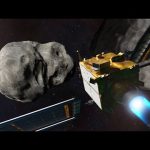
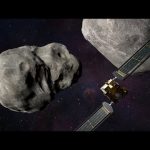
  • NASA’s DART Mission Confirms Crashing Spacecraft into Asteroids Can Deflect Them

    NASA’s DART Mission Confirms Crashing Spacecraft into Asteroids Can Deflect Them

    Since NASA’s Double Asteroid Redirection Test (DART) successfully impacted its target on Sept. 26, 2022 – altering the orbit of the asteroid moonlet Dimorphos by a whopping 33 minutes – the DART team has determined that the mission’s kinetic impactor technique can be an effective way to change the trajectory of an asteroid.

    These findings were published in four papers in the journal Nature on March 1, 2023. Learn more: https://go.nasa.gov/3ZcTOae

  • NASA’s SpaceX Crew-6 Mission to the Space Station (Official Trailer)

    NASA’s SpaceX Crew-6 Mission to the Space Station (Official Trailer)

    NASA and SpaceX are targeting no earlier than 1:45 a.m. EST Monday, Feb. 27, 2023, for the launch of the agency’s Crew-5 mission to the International Space Station.

    The four Crew-6 crewmates – Commander Stephen Bowen, Pilot Warren “Woody” Hoburg, Mission Specialist UAE (United Arab Emirates) astronaut Sultan Alneyadi, and Mission Specialist Roscosmos cosmonaut Andrey Fedyaev – will dock the Dragon spacecraft, named Endeavour, to the forward port on the space station’s Harmony module about 23 hours after liftoff.

    Crew-6’s science mission includes cutting edge research aimed at keeping astronauts and spacecraft safe during deep space exploration, and studies that could lead to improved medical treatments for humans back on Earth. Experiments will include studies of how particular materials burn in microgravity, tissue chip research on heart, brain, and cartilage functions, and an investigation that will collect microbial samples from the outside of the space station. These are just some of the more than 200 science experiments and technology demonstrations that will take place during their mission.

    You can watch the launch live on NASA TV, NASA.gov, the NASA app, and on social media (@NASA).

    Learn more about the Crew-6 mission here: https://blogs.nasa.gov/crew-6/

    Music: Universal Production Music
    Video Producer: Sonnet Apple
    Credit: NASA

  • NASA’s Artemis I Mission Splashes Down in Pacific Ocean

    NASA’s Artemis I Mission Splashes Down in Pacific Ocean

    On Dec. 11, the Artemis I mission will conclude with the entry, descent, and splashdown of the Orion spacecraft. After 25.5 days in space, and a 1.3-million-mile (2.1-million-km) journey around the Moon, Orion is expected to splash down in the Pacific Ocean off the coast of California at 12:39 p.m. EST (17:39 UTC) on Sunday, Dec. 11. The exploration ground systems recovery team from NASA’s Kennedy Space Center in Florida, working with the U.S. Navy, will recover the spacecraft. Live coverage for this event begins at 11 a.m. EST (16:00 UTC).

    Orion launched aboard the Space Launch System (SLS) rocket at 1:47 am EST (06:47 UTC) on Nov. 16 from historic Launch Complex 39B at NASA’s Kennedy Space Center.

    The Artemis I mission is the first integrated test of NASA’s deep space exploration systems: the Orion spacecraft, the SLS rocket, and Kennedy Space Center’s Exploration Ground Systems.

    More: https://www.nasa.gov/specials/artemis-i

    Credit: NASA

  • NASA’s Artemis I Mission Return Trip Lunar Flyby

    NASA’s Artemis I Mission Return Trip Lunar Flyby

    On Dec. 5, NASA will air the lunar flyby of the Orion spacecraft on its return trek toward Earth. Orion completed a burn Dec. 1 to exit a lunar orbit thousands of miles beyond the Moon, where engineers have been testing systems to improve understanding of the spacecraft before future missions with astronauts. The return powered flyby burn, in which the spacecraft will harness the Moon’s gravity and accelerate back toward Earth, is expected at 11:43 a.m. (1643 UTC) The spacecraft is expected to fly about 79 miles above the lunar surface at 11:42 a.m. (16:42 UTC) just before the burn.

    Orion launched aboard the Space Launch System (SLS) rocket at 1:47 am EST (0647 UTC) on Nov. 16 from historic Launch Complex 39B at NASA’s Kennedy Space Center. Orion entered a distant retrograde orbit on at 4:52 p.m. EST (2152 UTC) on Nov. 25, where the spacecraft has been testing systems in a deep space environment.

    The Artemis I mission is the first integrated test of NASA’s deep space exploration systems: the Orion spacecraft, the SLS rocket, and Kennedy Space Center ground systems.

    More: https://www.nasa.gov/specials/artemis-i

    Credit: NASA

  • NASA’s Artemis I Mission Begins Departure from Lunar Orbit

    NASA’s Artemis I Mission Begins Departure from Lunar Orbit

    NASA will begin coverage of the Orion spacecraft performing the first of two maneuvers to exit lunar orbit, called the distant retrograde orbit departure burn, on Dec. 1 at 4:30 p.m. EST (21:30 UTC). The burn is scheduled to occur at 4:53 p.m. EST (21:53 UTC).

    Orion launched aboard the Space Launch System (SLS) rocket at 1:47 a.m. EST (06:47 UTC) on Nov. 16 from historic Launch Complex 39B at NASA’s Kennedy Space Center. Orion entered a distant retrograde orbit on at 4:52 p.m. EST (21:52 UTC) on Nov. 25, where the spacecraft has been testing systems in a deep space environment.

    The Artemis I mission is the first integrated test of NASA’s deep space exploration systems: the Orion spacecraft, the SLS rocket, and Kennedy Space Center ground systems.

    More: https://www.nasa.gov/specials/artemis-i

  • NASA’s SpaceX Crew-4 Mission Returns Home

    NASA’s SpaceX Crew-4 Mission Returns Home

    The astronauts of Crew-4 have undocked from the International Space Station and are on their way home to Earth. Watch live with NASA as the Dragon spacecraft Freedom reenters the atmosphere and splashes down off the coast of Florida. Splashdown is targeted for 4:55 p.m. EDT (2055 UTC), Friday, Oct. 14.

    NASA astronauts Kjell Lindgren, Jessica Watkins, Bob Hines, and ESA (European Space Agency) astronaut Samantha Cristoforetti spent five and a half months living and working aboard the orbiting laboratory. During their stay, they contributed to a number of experiments to expand our understanding of space while benefitting life on Earth: https://go.nasa.gov/3yCDeW0

    Credit: NASA

  • NASA’s SpaceX Crew-4 Mission Undocking from the International Space Station

    NASA’s SpaceX Crew-4 Mission Undocking from the International Space Station

    Watch live as the Dragon Freedom spacecraft undocks with the four crew members of NASA’s SpaceX Crew-4 mission aboard: NASA astronauts Kjell Lindgren, Bob Hines, and Jessica Watkins, as well as ESA (European Space Agency) astronaut Samantha Cristoforetti.

    Undocking from the International Space Station (ISS) is targeted for Friday, Oct. 14. Splashdown is targeted several hours later at 4:55 p.m. EDT (2055 UTC) Friday off the coast of Florida.

    During their stay of nearly six months on the ISS, Crew-4 members contributed to ongoing and new scientific investigations and technology demonstrations, work that is helping to prepare humans for future space exploration missions and generating innovations and benefits for humanity on Earth: https://youtu.be/J61Y5AJ-Kog

  • Update on DART Mission to Asteroid Dimorphos (NASA News Conference Oct. 11, 2022)

    Update on DART Mission to Asteroid Dimorphos (NASA News Conference Oct. 11, 2022)

    Experts discuss early results of the NASA’s Double Asteroid Redirection Test (DART) mission and its intentional collision with its target asteroid, Dimorphos.

    On Monday, Sept. 26, DART successfully impacted its asteroid target in the world’s first planetary defense technology demonstration. As a part of NASA’s overall planetary defense strategy, DART’s impact with the asteroid Dimorphos will help to determine whether asteroid deflection using a kinetic impactor spacecraft is a viable mitigation technique for protecting the planet from an Earth-bound asteroid or comet, if one were discovered. Johns Hopkins APL manages the DART mission for NASA’s Planetary Defense Coordination Office as a project of the agency’s Planetary Missions Program Office. Neither DART’s target asteroid, Dimorphos, nor its larger asteroid parent, Didymos, poses a hazard to Earth.

    Participants include:

    • NASA Administrator Bill Nelson
    • Italian Space Agency President Giorgio Saccoccia

    DART update panel:
    • Lori Glaze, director of the Planetary Science Division at NASA Headquarters in Washington
    • Tom Statler, DART program scientist at NASA Headquarters
    • Nancy Chabot, DART coordination lead at the Johns Hopkins Applied Physics Laboratory (APL) in Laurel, Maryland

    More on DART: https://nasa.gov/dart

    Credit: NASA

  • Samantha Cristoforetti’s second mission highlight | Minerva Mission

    Samantha Cristoforetti’s second mission highlight | Minerva Mission

    ESA astronaut Samantha Cristoforetti will soon complete her second mission to the International Space Station, Minerva.

    She was launched from Kennedy Space Center in late April, and since then has supported many European and international science experiments, as well as taken responsibility for all operations within the US Orbital Segment. In July 2022 she performed her first spacewalk, during which she carried out work in the Russian segment to bring the European Robotic Arm into operation.

    This report provides a summary of the Minerva Mission, which will end shortly with Samantha’s return to Earth.

    Samantha’s personal Twitter: https://twitter.com/AstroSamantha
    Samantha’s personal TikTok: https://www.tiktok.com/@astrosamantha

    ★ Subscribe: http://bit.ly/ESAsubscribe and click twice on the bell button to receive our notifications.

    Check out our full video catalog: http://bit.ly/SpaceInVideos
    Follow us on Twitter: http://bit.ly/ESAonTwitter
    On Facebook: http://bit.ly/ESAonFacebook
    On Instagram: http://bit.ly/ESAonInstagram
    On LinkedIn: https://bit.ly/ESAonLinkedIn
    On Pinterest: https://bit.ly/ESAonPinterest
    On Flickr: http://bit.ly/ESAonFlickr

    We are Europe’s gateway to space. Our mission is to shape the development of Europe’s space capability and ensure that investment in space continues to deliver benefits to the citizens of Europe and the world. Check out https://www.esa.int/ to get up to speed on everything space related.

    Copyright information about our videos is available here: https://www.esa.int/ESA_Multimedia/Terms_and_Conditions

    #ESA
    #MinervaMission
    #SamanthaCristoforetti

  • NASA’s SpaceX Crew-5 Mission Launches to the Space Station (Official NASA Broadcast)

    NASA’s SpaceX Crew-5 Mission Launches to the Space Station (Official NASA Broadcast)

    Our #Crew5 mission to the International Space Station is targeted for liftoff at noon EDT (1600 UTC) Wednesday, Oct. 5, 2022, from Launch Complex 39A at NASA’s Kennedy Space Center in Florida.

    NASA astronauts Nicole Mann and Josh Cassada, as well as JAXA (Japan Aerospace Exploration Agency) astronaut Koichi Wakata and Roscosmos cosmonaut Anna Kikina, will launch aboard their Dragon Endurance spacecraft atop a SpaceX Falcon 9 rocket. For the latest updates: https://blogs.nasa.gov/commercialcrew/

    Find crew bios and more information about the science launching with Crew-5 at https://go.nasa.gov/3SNgdr2

    Credit: NASA

  • NASA’s DART Mission Post-Asteroid-Impact News Briefing

    NASA’s DART Mission Post-Asteroid-Impact News Briefing

    NASA’s Double Asteroid Redirection Test (DART) mission has attempted humanity’s first-ever test of planetary defense! The DART spacecraft intentionally crashed into asteroid Dimorphos at 7:14 p.m. EDT on Monday, September 26, 2022 to see if kinetic force can change its orbit. Why? If this test is successful, the same technique could be used to deflect an Earth-threatening asteroid in the future, should one ever be discovered. The #DARTMission’s target asteroid is NOT a threat to Earth before, during or after the impact event.

    DART is a joint mission between NASA and the Johns Hopkins University Applied Physics Laboratory.

    For more, visit nasa.gov/dart.

  • NASA’s DART Mission to an Asteroid (Official Mission Trailer)

    NASA’s DART Mission to an Asteroid (Official Mission Trailer)

    On Sept. 26, 2022, NASA’s Double Asteroid Redirection Test (DART) spacecraft will intentionally crash into a small asteroid, Dimorphos, in a first-ever test of planetary defense, should we ever need it. The #DARTMission’s target asteroid is NOT a threat to Earth before, during or after the impact event.

    For more, visit: https://www.nasa.gov/dart

    Credit: NASA
    Producers: Scott Bednar & Jessie Wilde
    Editor: Matt Schara
    Voice Actor: Paul Leon

  • Mission Highlights | Cosmic Kiss

    Mission Highlights | Cosmic Kiss

    ESA astronaut Matthias Maurer returned from his first mission to the International Space Station, known as ‘Cosmic Kiss’, on Friday 6 May 2022. Revisit some of the highlights of his first stay in orbit with us.
    During his mission, Matthias became the 600th person in space, conducted his first spacewalk, and supported over one hundred cutting-edge scientific experiments – the findings of which will improve life back here on Earth.

    More info on Cosmic Kiss here: https://bit.ly/ESACosmicKiss

    Follow Matthias: https://twitter.com/astro_matthias

    ★ Subscribe: http://bit.ly/ESAsubscribe and click twice on the bell button to receive our notifications.

    Check out our full video catalog: http://bit.ly/SpaceInVideos
    Follow us on Twitter: http://bit.ly/ESAonTwitter
    On Facebook: http://bit.ly/ESAonFacebook
    On Instagram: http://bit.ly/ESAonInstagram
    On LinkedIn: https://bit.ly/ESAonLinkedIn
    On Pinterest: https://bit.ly/ESAonPinterest
    On Flickr: http://bit.ly/ESAonFlickr

    We are Europe’s gateway to space. Our mission is to shape the development of Europe’s space capability and ensure that investment in space continues to deliver benefits to the citizens of Europe and the world. Check out https://www.esa.int/ to get up to speed on everything space related.

    Copyright information about our videos is available here: https://www.esa.int/ESA_Multimedia/Terms_and_Conditions

    #ESA
    #CosmicKiss
    #MatthiasMaurer

  • Launching a New Mission Around the Moon on This Week @NASA – July 1, 2022

    Launching a New Mission Around the Moon on This Week @NASA – July 1, 2022

    Launching a new mission around the Moon, preparing the Space Launch System for its first flight, and undocking a resupply spacecraft from the space station … a few of the stories to tell you about – This Week at NASA!

    Download Link: https://images.nasa.gov/details-Launching%20a%20New%20Mission%20Around%20the%20Moon%20on%20This%20Week%20@NASA%20%E2%80%93%20July%201,%202022

    Producer: Lacey Young
    Editor: Shane Apple
    Narration: Kevin Cabral
    Music: Universal Production Music
    Credit: NASA

  • Vega-C inaugural launch: mission highlights

    Vega-C inaugural launch: mission highlights

    This animated preview of flight VV21 illustrates gantry rollout and liftoff from Europe’s Spaceport in French Guiana, stage and fairing separations, and deployment of the Italian Space Agency’s LARES-2 scientific payload and six research CubeSats. Vega-C represents a dramatic capability boost compared to its predecessor, Vega, which has flown since 2012. With new first and second stages and an uprated fourth stage, Vega-C increases performance from Vega’s 1.5 t to about 2.2 t in a reference 700 km polar orbit and handles larger payloads.

    Learn more about Vega-C: https://bit.ly/VegaRocketESA

    ★ Subscribe: http://bit.ly/ESAsubscribe and click twice on the bell button to receive our notifications.

    Check out our full video catalog: http://bit.ly/SpaceInVideos
    Follow us on Twitter: http://bit.ly/ESAonTwitter
    On Facebook: http://bit.ly/ESAonFacebook
    On Instagram: http://bit.ly/ESAonInstagram
    On Flickr: http://bit.ly/ESAonFlickr

    We are Europe’s gateway to space. Our mission is to shape the development of Europe’s space capability and ensure that investment in space continues to deliver benefits to the citizens of Europe and the world. Check out https://www.esa.int/ to get up to speed on everything space related.

    Copyright information about our videos is available here: https://www.esa.int/ESA_Multimedia/Terms_and_Conditions

    #ESA
    #VegaC
    #SpaceRockets

  • Watch NASA’s SpaceX Crew-3 Mission Splash Down on Earth

    Watch NASA’s SpaceX Crew-3 Mission Splash Down on Earth

    The four astronauts of Crew-3 are on the way home to Earth. Watch live as they reenter the atmosphere and splash down off the coast of Florida. Splashdown is targeted for 12:37 a.m. EDT (4:37 UTC), Friday, May 6.

    NASA astronauts Raja Chari, Tom Marshburn, and Kayla Barron, and ESA (European Space Agency) astronaut Matthias Maurer spent six months living and working on the International Space Station. During their stay, they contributed to experiments to benefit life on Earth: https://go.nasa.gov/3vQmSXL

  • NASA’s Psyche Mission to an Asteroid: Official NASA Trailer

    NASA’s Psyche Mission to an Asteroid: Official NASA Trailer

    Join the journey as NASA’s Psyche mission team launches in 2022 to explore a unique metallic asteroid orbiting the sun between Mars and Jupiter. The asteroid, likely made largely of nickel-iron metal mixed with rock, could contain metal from the core of a planetesimal (the building block of an early rocky planet) and may offer a unique window into the violent history of collisions and accretion that created the terrestrial planets like Earth.

    Arizona State University leads the Psyche mission. JPL, which is managed by Caltech for NASA, is responsible for the mission’s overall management, system engineering, integration and test, and mission operations. Maxar Technologies in Palo Alto, California, provided the high-power solar electric propulsion spacecraft chassis.

    For more info about NASA’s #MissionToPsyche, go to:

    http://www.nasa.gov/psyche

    and

    https://psyche.asu.edu/

  • Mission Minerva meets Cosmic Kiss | Two astronauts in orbit

    Mission Minerva meets Cosmic Kiss | Two astronauts in orbit

    For the first time since mid 2011, ESA has two astronauts living and working together aboard the International Space Station. Watch a conversation between Samantha Cristoforetti and Matthias Maurer in this rare moment for Europe in space.

    The astronauts’ meeting marks a brief crossover between the start of Samantha’s second space mission, Minerva, and Matthias’s final days in orbit for his first mission, Cosmic Kiss.

    Samantha arrived with Crew-4 on 28 April in @SpaceX Crew Dragon Freedom, while Matthias will depart with Crew-3 in SpaceX Crew Dragon Endurance in May after almost six months on the Station.

    In this video Matthias is impressed by Samantha’s floating ability and says it’s like she never left. Samantha confirms weightless was the thing she missed the most on Earth and talks about the differences on Station since her Italian Space Agency ASI-sponsored Futura mission in 2014-15.

    Matthias is pleased with what he’s achieved in his time on Station, including the science he’s supported and the spacewalk he performed. He wishes Samantha all the best for her mission as she wishes him a safe return to Earth.

    Find out more about the Cosmic Kiss: https://bit.ly/ESACosmicKiss

    Learn more about Mission Minerva: https://bit.ly/MissionMinerva

    ★ Subscribe: http://bit.ly/ESAsubscribe and click twice on the bell button to receive our notifications.

    Check out our full video catalog: http://bit.ly/SpaceInVideos
    Follow us on Twitter: http://bit.ly/ESAonTwitter
    On Facebook: http://bit.ly/ESAonFacebook
    On Instagram: http://bit.ly/ESAonInstagram
    On LinkedIn: https://bit.ly/ESAonLinkedIn
    On Pinterest: https://bit.ly/ESAonPinterest
    On Flickr: http://bit.ly/ESAonFlickr

    We are Europe’s gateway to space. Our mission is to shape the development of Europe’s space capability and ensure that investment in space continues to deliver benefits to the citizens of Europe and the world. Check out https://www.esa.int/ to get up to speed on everything space related.

    Copyright information about our videos is available here: https://www.esa.int/ESA_Multimedia/Terms_and_Conditions

    #ESA
    #CoscmicKiss
    #MissionMinerva

  • NASA’s SpaceX Crew-3: Mission for Science

    NASA’s SpaceX Crew-3: Mission for Science

    After more than six months aboard the International Space Station, the astronauts of NASA’s SpaceX Crew-3 mission are returning home. The four crew members — NASA astronauts Kayla Barron, Raja Chari, and Tom Marshburn, and ESA (European Space Agency) astronaut Matthias Maurer — will travel back to Earth inside a SpaceX Crew Dragon capsule. These crew members contributed to hundreds of scientific investigations and technology demonstrations while aboard the orbiting laboratory. This valuable research helps to prepare humans for future space exploration missions while generating numerous innovations and benefits for humanity on Earth.

    Check out their scientific journey: https://go.nasa.gov/3vQmSXL

  • Axiom Mission 1 Launches to the Space Station (Official NASA Stream)

    Axiom Mission 1 Launches to the Space Station (Official NASA Stream)

    Axiom Mission 1 (or Ax-1), set to lift off at 11:17 a.m. EDT (15:17 UTC) April 8, is the first all-private astronaut mission to the International Space Station. Ax-1 is launching from NASA’s Kennedy Space Center aboard SpaceX’s Crew Dragon Endeavour capsule.

    During their eight-day stay aboard the orbiting laboratory, crew members Larry Connor, Michael López-Alegría, Mark Pathy, and Eytan Stibbe will engage in technology demonstrations and scientific experiments ranging from robotics to data modeling for future cancer research.

    Today’s launch coverage is led by Axiom Space, with support from NASA and SpaceX; NASA’s primary mission responsibilities begin during Endeavour’s approach to the International Space Station, the start of Ax-1 integrated operations. Learn more about NASA’s role in Ax-1 and how we’re working with our industry partners to open low-Earth orbit to more people, more science, and more commercial opportunities: https://go.nasa.gov/3ubIqhP

    https://www.nasa.gov/axiom-1

    #Ax1 #NASA #SpaceStation

  • Webb Quest: Mind-blowing mission to the early Universe

    Webb Quest: Mind-blowing mission to the early Universe

    Embark on a mission with ESA astronomers Mark McCaughrean and Giovanna Giardino to learn more about the James Webb Space Telescope and the early Universe. This programme is suitable for primary and secondary students. Join the quest!

    Find more educational resources, videos and links about astronomy on ESA Education’s Teach with Astronomy webpage: https://www.esa.int/Education/Teach_with_astronomy

    ★ Subscribe: http://bit.ly/ESAsubscribe and click twice on the bell button to receive our notifications.

    Check out our full video catalog: http://bit.ly/SpaceInVideos
    Follow us on Twitter: http://bit.ly/ESAonTwitter
    On Facebook: http://bit.ly/ESAonFacebook
    On Instagram: http://bit.ly/ESAonInstagram
    On LinkedIn: https://bit.ly/ESAonLinkedIn
    On Pinterest: https://bit.ly/ESAonPinterest
    On Flickr: http://bit.ly/ESAonFlickr

    We are Europe’s gateway to space. Our mission is to shape the development of Europe’s space capability and ensure that investment in space continues to deliver benefits to the citizens of Europe and the world. Check out https://www.esa.int/ to get up to speed on everything space related.

    Copyright information about our videos is available here: https://www.esa.int/ESA_Multimedia/Terms_and_Conditions

    #ESA
    #Webb
    #ESAEducation

  • A Commercial Mission Returning Cargo from the Space Station on This Week @ NASA – January 21, 2022

    A Commercial Mission Returning Cargo from the Space Station on This Week @ NASA – January 21, 2022

    A commercial mission returning cargo from the space station, the first space station spacewalk of the year, and observing a massive volcanic eruption from space… a few of the stories to tell you about – This Week at NASA!

    Download Link:
    https://images.nasa.gov/details-A%20Commercial%20Mission%20Returning%20Cargo%20from%20the%20Space%20Station%20on%20This%20Week%20@NASA%20–%20January%2021,%202022

  • Watch NASA’s DART Mission Launch (Double Asteroid Redirection Test) Official Broadcast/Stream

    Watch NASA’s DART Mission Launch (Double Asteroid Redirection Test) Official Broadcast/Stream

    Can we change the motion of an asteroid? Our #DARTMission is set to be the first to try! The Double Asteroid Redirection Test (DART) mission is a spacecraft designed to impact an asteroid as a test of technology to see if it can change the motion of an asteroid in space. The goal of the mission is to see if intentionally crashing a spacecraft into an asteroid is an effective way to change its course, should an Earth-threatening asteroid be discovered in the future. DART’s target is the binary near-Earth asteroid Didymos and its moonlet, which pose no threat to Earth.

    This mission is targeted to launch at 1:21 a.m. EST, Nov. 24 (06:21 UTC), aboard a SpaceX Falcon 9 rocket from Vandenberg Space Force Base in California.

    Learn more about the mission at: www.nasa.gov/dart

  • Our Crew-3 Mission Launches to the Space Station on This Week @NASA – November 12, 2021

    Our Crew-3 Mission Launches to the Space Station on This Week @NASA – November 12, 2021

    Our Crew-3 mission launches to the space station, Crew-2 makes a splash at the end of its record-setting mission, and a big honor for our deputy administrator … a few of the stories to tell you about – This Week at NASA!

    Producer/Writer: Andre Valentine
    Editor: Shane Apple
    Music: Universal Production Music

    Download Link:
    https://images.nasa.gov/details-Our%20Crew-3%20Mission%20Launches%20to%20the%20Space%20Station%20on%20This%20Week%20@NASA%20–%20November%2012,%202021

  • Watch NASA’s SpaceX Crew-3 Mission Launch (Trailer)

    Watch NASA’s SpaceX Crew-3 Mission Launch (Trailer)

    On Nov. 10 at 9:03 p.m. EST (02:03 UTC Nov. 11), the Crew-3 flight will carry NASA astronauts Raja Chari, mission commander; Tom Marshburn, pilot; and Kayla Barron, mission specialist; as well as ESA (European Space Agency) astronaut Matthias Maurer, who will serve as a mission specialist, to the International Space Station for a six-month science mission. Once there, they will perform space station upgrades, conduct science experiments to benefit life on Earth, and continue preparing humanity for future missions to the Moon – and eventually Mars. This is the third crew rotation mission with four astronauts flying on a commercial spacecraft.

    Video Producer/Editor: Amy Leniart

  • Best of Alpha mission timelapse

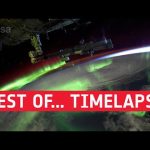
    Best of Alpha mission timelapse

    A collection of the best timelapse videos made during ESA astronaut Thomas Pesquet’s second mission to the International Space Station, “Alpha” in 2021. The camera is setup to take pictures at intervals of two a second, and the pictures are then edited into this video that plays at 25 pictures a second. Most videos around 12 times faster than real speed.

    Thomas shared this video on social media with the caption:

    “Probably the last the timelapse from space, and fittingly here is a special edition “best of” montage: aurora, lightning, spacewalks, day views and spacecraft reentry in less than five minutes. Get comfy, cast it to your largest screen in the house and enjoy!”

    Over 200 experiments are planned during Thomas’ time in space, with 40 European ones and 12 new experiments led by the French space agency @CNES.

    Follow Thomas: http://bit.ly/ThomasPesquetBlog

    ★ Subscribe: http://bit.ly/ESAsubscribe and click twice on the bell button to receive our notifications.

    Check out our full video catalog: http://bit.ly/SpaceInVideos
    Follow us on Twitter: http://bit.ly/ESAonTwitter
    On Facebook: http://bit.ly/ESAonFacebook
    On Instagram: http://bit.ly/ESAonInstagram
    On LinkedIn: https://bit.ly/ESAonLinkedIn
    On Pinterest: https://bit.ly/ESAonPinterest
    On Flickr: http://bit.ly/ESAonFlickr

    We are Europe’s gateway to space. Our mission is to shape the development of Europe’s space capability and ensure that investment in space continues to deliver benefits to the citizens of Europe and the world. Check out https://www.esa.int/ to get up to speed on everything space related.

    Copyright information about our videos is available here: https://www.esa.int/ESA_Multimedia/Terms_and_Conditions

    #ESA
    #Timelapse
    #MissionAlpha

  • The First Mission to the Trojan Asteroids on This Week @NASA – October 16, 2021

    The First Mission to the Trojan Asteroids on This Week @NASA – October 16, 2021

    The first mission to the Trojan asteroids, a prelaunch milestone for our Artemis I mission, and highlighting a few of our NASA centers … a few of the stories to tell you about – This Week at NASA!

    Download Link: https://images.nasa.gov/details-The%20First%20Mission%20to%20the%20Trojan%20Asteroids%20on%20This%20Week%20@NASA%20%E2%80%93%20October%2016,%202021

    Producer: Andre Valentine
    Editor: Shane Apple
    Music: Universal Production Music

  • Launch of NASA’s Lucy Mission to Jupiter’s Trojan Asteroids

    Launch of NASA’s Lucy Mission to Jupiter’s Trojan Asteroids

    Set a reminder: Our Lucy mission is scheduled to launch on Sat., Oct. 16 at 5:34 a.m. EDT (9:34 UTC) to ancient asteroids called Trojans.

    The Trojan asteroids are rocky worlds as old as our solar system, and they share an orbit with Jupiter around the Sun. They’re thought to be remnants of the primordial material that formed the outer planets. On Oct. 16, NASA’s Lucy mission is scheduled to launch from Cape Canaveral, Florida, to explore these small worlds for the first time. Lucy was named after the fossilized human ancestor (called “Lucy” by her discoverers) whose skeleton expanded our understanding of human evolution. The Lucy Mission hopes to expand our understanding of solar system evolution by visiting these 4.5-billion-year-old planetary “fossils.”

  • Space food | Mission Alpha [in French with English subtitles]

    Space food | Mission Alpha [in French with English subtitles]

    ESA astronaut Thomas Pesquet is on his second mission to the International Space Station called Alpha. In this video Thomas talks about his crew preference food that arrived on SpaceX CRS-22 supply spacecraft, the video was recorded on 19 June 2021 in the Zvezda module of the Space Station.

    Astronauts’ full space menu comprise of a range of food designed to meet nutritional and operational requirements on board.
    Because of the two hours of exercise they perform every day on the Station and a full schedule of science and operations, astronauts are expected to consume approximately 3000 calories per day in space. For ESA astronauts such as Thomas, two thirds of this calorie intake come from the basic food supply that is preselected and prepacked by @NASA for the entire space mission.

    The final third of their calories comes from ‘crew choice meals’ – food that the astronauts choose for themselves, either from the US menu or a range of European, Russian and Japanese options.

    Before any mission to the Space Station, the astronauts participate in several space food tasting sessions to help determine what dishes will be included in the basic food supply. During a training course they test a range of different food and drink items and rate each of them in a questionnaire. This information is then provided to NASA’s food lab which determines the final food package.

    Over 200 experiments are planned during Thomas’ time in space, with 40 European ones and 12 new experiments led by the French space agency @CNES.

    Follow Thomas: http://bit.ly/ThomasPesquetBlog

    ★ Subscribe: http://bit.ly/ESAsubscribe and click twice on the bell button to receive our notifications.

    Check out our full video catalog: http://bit.ly/SpaceInVideos
    Follow us on Twitter: http://bit.ly/ESAonTwitter
    On Facebook: http://bit.ly/ESAonFacebook
    On Instagram: http://bit.ly/ESAonInstagram
    On Pinterest: https://bit.ly/ESAonPinterest
    On Flickr: http://bit.ly/ESAonFlickr

    We are Europe’s gateway to space. Our mission is to shape the development of Europe’s space capability and ensure that investment in space continues to deliver benefits to the citizens of Europe and the world. Check out https://www.esa.int/ to get up to speed on everything space related.

    Copyright information about our videos is available here: https://www.esa.int/ESA_Multimedia/Terms_and_Conditions

    #ESA
    #SpaceFood
    #MissionAlpha

  • Launching Lucy, NASA’s First Mission to the Trojan Asteroids

    Launching Lucy, NASA’s First Mission to the Trojan Asteroids

    On Oct. 16, 2021, our Lucy spacecraft will begin its journey to visit a record-breaking number of asteroids. The 12-year mission starts from NASA’s Kennedy Space Center where it’ll launch aboard a United Launch Alliance Atlas V 401 rocket. From there, Lucy will be the first spacecraft to visit a record number of destinations in independent orbits around the sun – one main belt asteroid and seven of Jupiter’s Trojan Asteroids. Like the mission’s namesake – the fossilized human ancestor, “Lucy,” whose skeleton provided unique insight into humanity’s evolution – Lucy will revolutionize our knowledge of planetary origins and the formation of the solar system.

    Lucy’s first launch attempt in its 21-day launch window is scheduled for 5:34 a.m. EDT on Oct. 16. Launch coverage starts at 5 a.m. EDT on NASA TV, the NASA app, and @NASA social media. Be a part of Lucy’s historic launch day by using the hashtag #LucyMission!

    Producer/Editor: Lacey Young
    Music: Universal Production Music

  • A New Earth-Observing Mission Launches to Space on This Week @NASA – October 1, 2021

    A New Earth-Observing Mission Launches to Space on This Week @NASA – October 1, 2021

    A new Earth-observing mission launches to space, a move to make room aboard the space station, and some valuable space station science returns to Earth … a few of the stories to tell you about – This Week at NASA!

    Download Link: https://images.nasa.gov/details-A%20New%20Earth-Observing%20Mission%20Launches%20to%20Space%20on%20This%20Week%20@NASA%20%E2%80%93%20October%201,%202021

    Video Credits:
    Producer/Writer: Andre Valentine
    Editor: Amy Leniart

  • Highlighting an Upcoming Earth-Observing Mission on This Week @NASA – August 20, 2021

    Highlighting an Upcoming Earth-Observing Mission on This Week @NASA – August 20, 2021

    Highlighting an upcoming Earth-observing mission, the science on the next resupply mission to the space station, and testing a new material to help future spacecraft land on distant worlds … a few of the stories to tell you about – This Week at NASA!

    Download Link: https://images.nasa.gov/details-Highlighting%20an%20Upcoming%20Earth-Observing%20Mission%20on%20This%20Week%20@NASA%20–%20August%2020,%202021

    Producer: Andre Valentine
    Editor: Lacey Young
    Music: Universal Production Music

  • A Commercial Resupply Mission to the Space Station on This Week @NASA – August 13, 2021

    A Commercial Resupply Mission to the Space Station on This Week @NASA – August 13, 2021

    A Commercial Resupply Mission to the Space Station, honoring a spaceflight icon, and an out of this world experience, right here on Earth … a few of the stories to tell you about – This Week at NASA!

    Download Link:
    https://images.nasa.gov/details-A%20Commercial%20Resupply%20Mission%20to%20the%20Space%20Station%20on%20This%20Week%20@NASA%20–%20August%2013,%202021

  • Mission Equity: Making NASA Accessible to All

    Mission Equity: Making NASA Accessible to All

    NASA Administrator Bill Nelson and other agency officials and guests discuss the many ways the public can participate in NASA’s mission.

    Five specific avenues of participation and partnership with the agency include:

    NASA’s Internship Program
    Science Competition Process
    Grants & Cooperative Agreements
    Procurement/Contracting Strategies
    Early-Stage Innovations & Partnerships

    For more information visit: https://www.nasa.gov/mission-equity

    Video Producer: Jori Kates
    Music Credit: Universal Production Music

  • Name the mission

    Name the mission

    We need a name for our new spacecraft. Its mission? To spot potentially hazardous solar storms before they reach Earth.

    Between them, our greatest minds have come up with … not very much.

    ESA needs you.

    Send us your suggestions now: http://www.esa.int/Safety_Security/Space_weather/Name_ESA_s_new_mission

    ★ Subscribe: http://bit.ly/ESAsubscribe and click twice on the bell button to receive our notifications.

    Check out our full video catalog: http://bit.ly/SpaceInVideos
    Follow us on Twitter: http://bit.ly/ESAonTwitter
    On Facebook: http://bit.ly/ESAonFacebook
    On Instagram: http://bit.ly/ESAonInstagram
    On Flickr: http://bit.ly/ESAonFlickr

    We are Europe’s gateway to space. Our mission is to shape the development of Europe’s space capability and ensure that investment in space continues to deliver benefits to the citizens of Europe and the world. Check out https://www.esa.int/ to get up to speed on everything space related.

    Copyright information about our videos is available here: https://www.esa.int/ESA_Multimedia/Terms_and_Conditions

    #ESA
    #SpaceWeather
    #NameTheMission