Tag: moon phases

  • December sky highlights ✨ #shorts

    December sky highlights ✨ #shorts

    – Mercury’s beauty at greatest eastern elongation (4 December)

    – New Moon (12 December): Great for capturing Star Trails.

    – Geminids Meteor Shower (14-15 December): without any moonlight interference.

    – Moon-Mercury Conjunction (14 November): A cosmic rendezvous.

    – Solstice (22 December at 4:27 CET): Sol Invictus

    – Full Moon (27 December): A glowing spectacle in the heavens.

    Don’t miss these celestial events in this month!

    📹 ESA – European Space Agency
    📸 EUMETSAT

    #ESA
    #NightSky
    #AstroHighlights

  • Astronomy  highlights of August 2023 ✨ #shorts

    Astronomy highlights of August 2023 ✨ #shorts

    August night sky is full of wonders. ✨

    – Mercury retrograde (23 August 2023): Will you have trouble with communication this month? Up to you to decide.

    – Saturn at opposition (27 August 2023): It’s your time to shine.

    – Super blue moon (30 August 2023): Enjoy it with someone special.

    📹 ESA – European Space Agency

    #ESA
    #August2023
    #Skywatching

  • Clair de Lune 4K Version – Moon Images from NASA’s Lunar Reconnaissance Orbiter

    Clair de Lune 4K Version – Moon Images from NASA’s Lunar Reconnaissance Orbiter

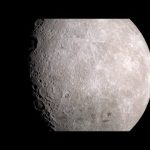
    This visualization uses a digital 3D model of the Moon built from global elevation maps and image mosaics by NASA’s Lunar Reconnaissance Orbiter mission. It was created to accompany a performance of Claude Debussy’s Clair de Lune by the National Symphony Orchestra Pops, led by conductor Emil de Cou, at the Kennedy Center for the Performing Arts in Washington, DC, on June 1 and 2, 2018, as part of a celebration of NASA’s 60th anniversary.

    Clair de Lune (moonlight in French) was published in 1905, as the third of four movements in the composer’s Suite Bergamasque, and unlike the other parts of this work, Clair is quiet, contemplative, and slightly melancholy, evoking the feeling of a solitary walk through a moonlit garden.

    The visuals were composed like a nature documentary, with clean cuts and a mostly stationary virtual camera. The viewer follows the Sun throughout a lunar day, seeing sunrises and then sunsets over prominent features on the Moon. The sprawling ray system surrounding Copernicus crater, for example, is revealed beneath receding shadows at sunrise and later slips back into darkness as night encroaches.

    This video is public domain and along with other supporting visualizations can be downloaded from the Scientific Visualization Studio at: http://svs.gsfc.nasa.gov/4655


    Credit: NASA’s Scientific Visualization Studio

    If you liked this video, subscribe to the NASA Goddard YouTube channel: http://www.youtube.com/NASAExplorer

    Visualization Credits
    Ernie Wright (USRA)
    Lead Visualizer and Editor

    Laurence Schuler (ADNET Systems Inc.)
    Technical Support

    Ian Jones (ADNET Systems Inc.)
    Technical Support

    Wade Sisler (NASA/GSFC)
    Producer

    Noah Petro (NASA/GSFC)
    Scientist