ESA uses terrestrial rocks to recreate the Moon’s surface!
Two state-of-the-art ESA facilities are working closely to develop a simulated lunar environment that will serve as a proving ground for future exploration technologies.
When astronauts return to the lunar surface they are probably going to be doing more driving than walking – but to keep billowing moondust at bay they are going to need roads. An ESA project reported in today’s Nature Scientific Reports tested the creation of roadworthy surfaces by melting simulated moondust with a powerful laser.
54 years ago on 20 July 1969, Apollo 11’s crew made history by being the first people to step foot on the moon.
Today, we’ll be sharing some fun facts about our celestial neighbour! 🌚🌝
1️⃣ Twelve people have walked on the Moon. Between 1969 and 1972, astronauts left scientific experiments on the lunar surface and came back to Earth with nearly 400 kg of rocks and soil. All 12 Apollo Moonwalkers reported symptoms similar to hay fever. Lunar dust is made of sharp, abrasive particles, and it is not known how toxic it is to humans.
2️⃣ You would also weigh less on the Moon! With only 1/6 the gravity, you would be able to jump higher and throw objects farther than on Earth.
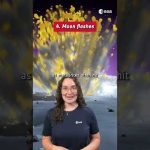
3️⃣ If you look at the Moon through a telescope, you will see brilliant flashes of light. Nobody is sending you signals though – they are meteorites hitting our rocky neighbour at great speed.
4️⃣ If you were to live on the Moon, both day and night would be two weeks long! As humankind goes to the Moon, astronauts will need to work with this new day/night cycle
5️⃣ The Moon hides one ‘face’ from us, we call it the far side of the Moon, and we never get to see it from Earth. What do you think is on the far side of the Moon?
📹 ESA – European Space Agency
★ Subscribe: http://bit.ly/ESAsubscribe and click twice on the bell button to receive our notifications.
We are Europe’s gateway to space. Our mission is to shape the development of Europe’s space capability and ensure that investment in space continues to deliver benefits to the citizens of Europe and the world. Check out https://www.esa.int/ to get up to speed on everything space related.