Steve Spangler is a bestselling author, STEM educator and Emmy award-winning television personality with more than 2,100 television appearances to his credit. Steve appeared as a regular guest on the Ellen DeGeneres Show from 2007-2022 (27 appearances).
Discover what NASA’s Earth data sounds like when it’s turned into music. With each passing Earth Day, the drums get louder. Every sound and instrument tell a story.
The higher the pitch of the music, the more data collected from NASA Earth science missions. The guitar represents the mission launches. The orchestra is split up based on the field of each mission:
The first ever Spin Your Thesis! Human Edition campaign took place in DLR’s Short Arm Human Centrifuge facility in Cologne, Germany. Three teams comprised of 16 students from seven different universities participated in this new ESA Education’s hands-on programme for graduate students.
The Music For Space team from Hungarian and French universities used scientific methods to find the perfect tailored music for astronauts which should help physiologically and phsychologically during long spaceflights, thus merging science and art to help reduce stress.
★ Subscribe: http://bit.ly/ESAsubscribe and click twice on the bell button to receive our notifications.
ESA is Europe’s gateway to space. Our mission is to shape the development of Europe’s space capability and ensure that investment in space continues to deliver benefits to the citizens of Europe and the world. Check out http://www.esa.int/ESA to get up to speed on everything space related.
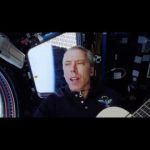
NASA astronaut Drew Feustel recorded this music video from space. Feustel launched to the International Space Station in March 2018 and is currently serving as Expedition 56 Commander. Drew thanks all who helped bring this to life, including his friend, Gord Sinclair, for giving him permission to use the song, and the crew of Expeditions 55 and 56 for their support and participation in NASA’s human space exploration mission.
On 20 July 2018 around 21:50 local time, ESA astronaut Alexander Gerst welcomed the legendary electronic band Kraftwerk and 7500 visitors to the Jazz Open Festival on Stuttgart’s Schlossplatz – live from the International Space Station, where he will live and work until mid-December 2018. During the call with space, Kraftwerk founding member Ralf Hütter and Alexander played a special duet version of the track Spacelab, for which Alexander had a tablet computer configured with virtual synthesizers on board. With thanks to Kraftwerk for sharing this video footage.
————————————————————————————————————–
So begrüßte ESA-Astronaut Alexander Gerst am 20. Juli 2018 um 21:50 Uhr Ortszeit die legendären Elektro-Pioniere Kraftwerk sowie 7500 Besucherinnen und Besucher des Jazz Open-Festivals auf dem Stuttgarter Schlossplatz – und zwar live von der Internationalen Raumstation ISS, auf der er noch bis Mitte Dezember 2018 lebt und arbeitet.
Kraftwerk-Gründungsmitglied Ralf Hütter und Alexander Gerst spielten eine spezielle Version des Tracks Spacelab im Duett an, für das Gerst eigens einen mit virtuellen Synthesizern konfigurierten Tablet-Computer an Bord hatte.
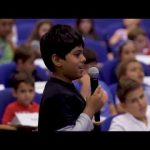
On September 11, 2017, the Deming Center at Columbia Business School partnered with the School for Engineering and Applied Science to host an event on Artificial Intelligence just for the children of faculty, staff and friends of the Center. More than 50 kids ages 6 to 16 gathered to hear Professor of Mechanical Engineering and Director of the Creative Machines Lab Hod Lipson speak to the past, present and future of AI.
Impressing on them that their lives would be profoundly impacted by advances in AI and Machine Learning, Professor Lipson took the children on a journey through the history of the field, bringing them up to speed on the incredible advances of the last 50 years. He then explored all of the ways in which AI is being used today from simply playing a game of Tic Tac Toe and painting portraits to diagnosing diseases and synthesizing the vast amounts of data being generated by computers, algorithms and images that affect our daily lives. They then turned their attention to all of the ways in which AI would permeate their lives in the near future from driverless cars to robotic traffic police.
The children asked creative, probing questions throughout compelling the adults in the room to think outside-of-the-box and consider the deep nuances their questions asked. From 6-year old Aziz who was curious as to whether Artificial Intelligence can exist in water to 12-year old Christina’s question about how AI will affect terrorism and war in the future, children and parents alike were left with a sense of wonder and excitement about the future.
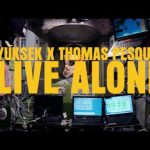
This music video, directed by Jérôme de Gerlache, is a collaboration between French musician Yuksek and ESA astronaut Thomas Pesquet on the International Space Station.
The friends came up for the concept of this film to show both ships of creation: Yuksek’s studio where he composed the music inspired by Thomas Pesquet’s flight, and the spaceship where Thomas is performing science for the benefit of humanity.
Illustrating their everyday working life, they are brought together by music that crosses borders and travels easily from Earth to space. Music connects people anywhere, it is universal and that is its intrinsic beauty.
Thomas is spending six months on the International Space Station as part of his Proxima mission. During Proxima, Thomas will perform around 50 scientific experiments for ESA and France’s space agency CNES as well as take part in many research activities for the other Station partners. The mission is part of ESA’s vision to use Earth-orbiting spacecraft as a place to live and work for the benefit of European society while using the experience to prepare for future voyages of exploration further into the Solar System.
Music: Yuksek « Live Alone feat Roman Rappak »
Directed by Jérôme de Gerlache
Director of photography [space] Thomas Pesquet
Director of photography [earth] Jacques Ballard
Editor Nicolas Capus
Colorgrading Arthur Paux
Thanks to Emilien Lazaron.
Many thanks to Partyfine, Universal Music, Have a great day films, Sparks seeker
ESA’s European Space Operations Centre links people with spacecraft travelling to the frontiers of human knowledge. Our world is about systems, communication and exploration; our passion is for humanity’s voyages into the Universe. And even the grandest journey begins with just a few steps.
On Tuesday, 23 July, the Alan Parsons Live Project played at the Foro Italico in Rome. Alan dedicated his classic song Eye in the Sky to ESA astronaut Luca Parmitano and recorded a video message that was sent to International Space Station. Eye in the Sky is one of Luca’s favourite songs, and on viewing this message, Luca said, “Fantastico!”
Luca Parmitano is the sixth Italian astronaut in space, but he was the first to really go ‘into space’ and leave the the protective shell of his spacecraft, when he made two spacewalks a few weeks ago during his Volare mission.
Video copyright: ESA/Alan Parsons Music
Sirius/Eye in the Sky written by: A. Parsons/E. Woolfson
Music excerpts, courtesy Alan Parsons Music
Video produced by ESA/M. Civita
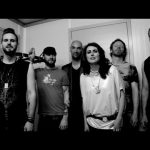
Within Temptation is the internationally known symphonic rock band, founded in the Netherlands in 1996 by vocalist Sharon den Adel and guitarist Robert Westerholt. The band members are interested in all things science-fiction and space-related, and have been following the PromISSe mission of ESA astronaut André Kuipers. When they heard that three of their songs (“Faster”, “Mother Earth” and “The Promise”) had been included in André’s playlist to be played in space, the band were very excited to support his mission. They helped us to produce this video, recording a special message and dedicating their song “Faster” to André, wishing him a high-speed but safe return later this week. Within Temptation are Sharon den Adel, Robert Westerholt, Stefan Helleblad, Jeroen van Veen, Ruud Jolie, Martijn Spierenburg and Mike Coolen.
More information at: www.within-temptation.com
Thanks to the ORTS for the live band footage. Video copyright ESA/Within Temptation. Faster written by S. den Adel, R. Westerholt & D. Gibson. Video produced by ESA/J. Makinen.
There are many links between music and space. Astronauts like Frank De Winne take their favourite rock music with them to orbit, while musicians on Earth often take inspiration from the stars in their work. Some astrophysicists have transposed plasma waves and electron beams into audible sound.
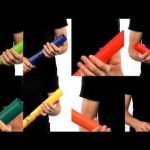
Steve Spangler along with his Demo Team and 9News Meteorologist Kathy Sabine, put on the 2nd annual Weather and Science Day at Coors Field in Colorado on May 17th, 2011. Thanks to Colle McVoy, Steve was able to borrow the worlds largest smoke ring launcher to fire 9′ smoke rings into the crowd. 10,000 people showed up for the pre-game event and using Boom Whackers, created the biggest drum circle ever seen… or heard!
Order BoomWhackers now at http://www.stevespanglerscience.com/product/1179 These cool music maker tubes range in length from 30 cm to 61 cm (12″ to 24″) and provide a full octave (that’s eight) of consecutive notes. You can compose a simple tune by yourself, play together with your family, or drum with an entire class of kids! Experiment with the science of sound!
About Steve Spangler Science…
Steve Spangler is a celebrity teacher, science toy designer, speaker, author and an Emmy award-winning television personality. Spangler is probably best known for his Mentos and Diet Coke geyser experiment that went viral in 2005 and prompted more than 1,000 related YouTube videos. Spangler is the founder of www.SteveSpanglerScience.com, a Denver-based company specializing in the creation of science toys, classroom science demonstrations, teacher resources and home for Spangler’s popular science experiment archive and video collection. Spangler is a frequent guest on the Ellen DeGeneres Show where he takes classroom science experiments to the extreme. Check out his pool filled with 2,500 boxes of cornstarch!
On the education side, Spangler started his career as a science teacher in the Cherry Creek School district for 12 years. Today, Steve travels extensively training teachers in ways to make learning more engaging and fun. His hands-on science boot camps and summer institutes for teachers inspire and teach teachers how to prepare a new generation for an ever-changing work force. Over the last 15 years, he has also made more than 500 television appearances as an authority on hands-on science and inquiry-based learning.
On the business side, Spangler is the founder and CEO of Steve Spangler Science, a Denver-based company specializing in the creation of educational toys and kits and hands-on science training services for teachers. The companys unique business strategies and viral creations have been featured in the Wall Street Journal, Inc. Magazine, Wired and TIME Magazine where online readers voted Steve Spangler #18 in the Top 100 Most Influential People of the Year for 2006 (what were they thinking?). You’ll find more than 140 Spangler created products available online at SteveSpanglerScience.com and distributed to toy stores and mass-market retailers worldwide.
Spangler joined NBC affiliate 9News in 2001 as the science education specialist. His weekly experiments and science segments are designed to teach viewers creative ways to make learning fun. His now famous Mentos Geyser experiment, turning 2-liter bottles of soda into erupting fountains, became an Internet sensation in September 2005 when thousands of people started posting their own Mentos explosions on YouTube.com.
As founder of SteveSpanglerScience.com, Spangler and his design team have developed more than 140 educational toys and science-related products featured by mass-market retailers like Target, Wal-Mart, Toys R’ Us, Discovery Channel Stores and over 1,400 independent specialty toy stores. His educational science catalog and on-line business offers more than a thousand science toys and unique learning resources. Recently, Spangler has been featured in the Wall Street Journal, Inc. Magazine, WIRED, the History Channel, Food Network and TIME Magazine where on-line readers voted Steve Spangler #18 in the Top 100 Most Influential People of the Year for 2006.
His recent appearances on the Ellen DeGeneres Show have taught viewers how to blow up their food, shock their friends, create mountains of foam, play on a bed of nails, vanish in a cloud of smoke and how to turn 2,500 boxes of cornstarch and a garden hose into a swimming pool of fun.
For its Introduction video, ESA chose a piece of music called ‘The Reaktor Song’, by a German band called Eclipse Sol-Air. Complementing the images, the solo violin and piano evoke the pioneering history of European exploration, then the contemporary bass and drums capture the excitement of modern-day exploration and advanced technology.