Tag: NASA (Spacecraft Manufacturer)

  • NASA Launches Go Ultra-High Definition

    NASA Launches Go Ultra-High Definition

    NASA Television’s newest offering, NASA TV UHD, brings ultra-high definition video to a new level with the kind of imagery only the world’s leader in space exploration could provide.

    Using an array of six 4K+ cameras, Harmonic documented the Dec. 6 launch of Orbital ATK’s commercial resupply mission to the International Space Station from Cape Canaveral Air Force Station in Florida. Capturing footage at Ultra High Definition with high frame rate and in high dynamic range (HDR) options.

    The company then post-produced the footage into a program showcasing the entire launch process for airing on NASA TV UHD.

    For more info: http://go.nasa.gov/1lyUGlY

  • Space Station Crew Members Talk to Cast of The Martian

    Space Station Crew Members Talk to Cast of The Martian

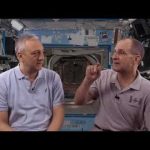
    Aboard the International Space Station, Expedition 45 Commander Scott Kelly and Flight Engineer Kjell Lindgren of NASA took time out of their work schedule to talk to Sebastian Stan and Mackenzie Davis, cast members of the new movie “The Martian”, during a visit they made to Mission Control at the Johnson Space Center, Houston Sept. 15. They were joined by JSC Director Ellen Ochoa. Kelly is at the midway point of a year-long mission aboard the orbital laboratory with Russian cosmonaut Mikhail Kornienko of the Russian Federal Space Agency (Roscosmos), gathering valuable biomedical data that will be used in the formulation of a future human mission to Mars. Lindgren, who is a medical doctor, is beginning the third month of a five-month mission on the outpost.

  • NASA Celebrates Aviation Day

    NASA Celebrates Aviation Day

    A little more than a century ago, on March 3, 1915, congress created the National Advisory Committee for Aeronautics, the organization from which NASA was created in 1958.
    Now, on National Aviation Day, we celebrate 100 years of aviation research, and we’re planning for the next 100 years!

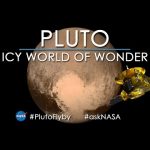
  • NASA’s New Horizons Team Discusses New Science Findings on Pluto

    NASA’s New Horizons Team Discusses New Science Findings on Pluto

    These key excerpts from a July 24 science update at NASA headquarters, features team members of NASA’s New Horizons mission discussing surprising new images and science results from the spacecraft’s historic July 14 flyby of Pluto.

  • New Horizons science update on This Week @NASA – July 24, 2015

    New Horizons science update on This Week @NASA – July 24, 2015

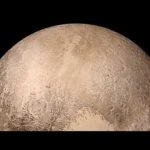
    A July 24 update at NASA headquarters, featured new surprising imagery and science results from the recent flyby of Pluto, by the New Horizons spacecraft. These included an image from the Long Range Reconnaissance Imager or (LORRI) – looking back at Pluto – hours after the historic flyby that revealed a haze in the planet’s sunlit atmosphere that extends as high as 80 miles above Pluto’s surface – much higher than expected. Models suggest that the hazes form when ultraviolet sunlight breaks apart methane gas. LORRI images also show evidence that exotic ices have flowed – and may still be flowing across Pluto’s surface, similar to glacial movement on Earth. This unpredicted sign of present-day geologic activity was detected in Sputnik Planum – an area in the western part of Pluto’s heart-shaped Tombaugh Regio. Additionally, new compositional data from New Horizons’ Ralph instrument indicate that the center of Sputnik Planum is rich in nitrogen, carbon monoxide, and methane ices. Also, Kepler discovers Earth’s “bigger cousin”, New crew launches to space station, EPIC view of Earth, Newman continues NASA center visits and Small Class Vehicle launch pad complete!

  • NASA conducts spin test on15-foot-wide saucer-shaped Low-Density Supersonic Decelerator (LDSD)

    NASA conducts spin test on15-foot-wide saucer-shaped Low-Density Supersonic Decelerator (LDSD)

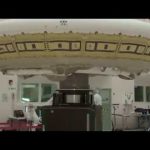
    NASA’s Low-Density Supersonic Decelerator (LDSD) project will be flying a rocket-powered, saucer-shaped test vehicle into near-space from the Navy’s Pacific Missile Range Facility this June from Kauai, Hawaii. To prepare for the flight, a “spin” test was conducted from the gallery above a clean room at NASA’s Jet Propulsion Laboratory in Pasadena, California, where this near-space experimental test vehicle is being prepared for shipment to Hawaii. During the broadcast, the 15-foot-wide, 7,000-pound vehicle underwent a “spin-table” test. The LDSD crosscutting demonstration mission will test breakthrough technologies that will enable large payloads to be safely landed on the surface of Mars, or other planetary bodies with atmospheres, including Earth.

  • NASA Celebrates the 50th Anniversary of Gemini 3

    NASA Celebrates the 50th Anniversary of Gemini 3

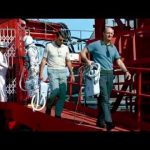
    Gemini 3 launched March 23, 1965 from Cape Canaveral, Florida. It was the first crewed Earth-orbiting spacecraft of the Gemini series. It was piloted by astronauts Virgil “Gus” Grissom and John Young.

  • State of the Union and NASA

    State of the Union and NASA

    President Obama recognizes NASA and Astronaut Scott Kelly at 2015 State of the Union Address.

    http://www.nasa.gov/content/one-year-crew

  • NASA TV Presents: Inside the ISS – December 2014

    NASA TV Presents: Inside the ISS – December 2014

    A look inside the life, science and adventure of being an astronaut aboard the International Space Station.

    www.nasa.gov/mission_pages/station

  • Orion recovery test update on This Week @NASA – August 8, 2014

    Orion recovery test update on This Week @NASA – August 8, 2014

    NASA wrapped up its second Underway Recovery Test Aug. 4 with the Orion spacecraft, off the coast of San Diego, California. The agency teamed with Lockheed Martin, the U.S. Navy and the Department of Defense’s Human Space Flight Support Detachment 3 to evaluate primary and alternative methods to recover Orion after the spacecraft safely splashes down in the ocean at the conclusion of future deep space missions. Orion’s first spaceflight test with a splashdown in the Pacific Ocean is targeted for December. Also, Low-Density Supersonic Decelerator update, 2nd anniversary: 7 Minutes of Terror, Bolden visits MMS at Naval Research Lab, Scanning for algal blooms, Earth science showcase, and more!

  • NASA Renames Historic Facility in Honor of Neil Armstrong

    NASA Renames Historic Facility in Honor of Neil Armstrong

    During a ceremony at Kennedy Space Center on Monday, July 21, NASA renamed the center’s Operations and Checkout Building in honor of late astronaut Neil Armstrong, who passed away in 2012. The ceremony included NASA Administrator Charles Bolden, Kennedy Center Director Robert Cabana, Apollo 11’s Michael Collins and Buzz Aldrin and astronaut Jim Lovell, who was the mission’s back-up commander. International Space Station NASA astronauts Steve Swanson, who is the current station commander, and Reid Wiseman, also took part in the ceremony via satellite downlink from their orbiting laboratory 260 miles above Earth.

    Kennedy’s Operations and Checkout Building has played a vital role in NASA’s spaceflight history. It was used during the Apollo program to process and test the command, service and lunar modules. Today, the facility is being used to process and assemble NASA’s Orion spacecraft, which the agency will use to send astronauts to an asteroid in the 2020s and Mars in the 2030s.

  • Antares Rocket Raised on Launch Pad

    Antares Rocket Raised on Launch Pad

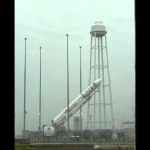
    The Orbital Sciences Corporation Antares rocket, with the Cygnus spacecraft onboard, is seen in this time-lapse movie as it is raised at launch Pad-0A, Thursday, July 10, 2014, at NASA’s Wallops Flight Facility in Virginia. The Antares will launch with the Cygnus spacecraft filled with over 3,000 pounds of supplies for the International Space Station, including science experiments, experiment hardware, spare parts, and crew provisions. The Orbital-2 mission is Orbital Sciences’ second contracted cargo delivery flight to the space station for NASA. Photo Credit: (NASA/Bill Ingalls)

  • NASA celebrates 50 years of Civil Rights progress

    NASA celebrates 50 years of Civil Rights progress

    The Civil Rights Act of 1964 was signed into law July 2, 1964 by President Lyndon Baines Johnson,­ the namesake of NASA¹s Johnson Space Center.
    NASA employees and retirees from around the Nation join together to share their stories as they remember the past, discuss diversity and look forward to future progress.