NASA held a news conference April 4, at the agency’s Jet Propulsion Laboratory (JPL) in Pasadena, California, to preview the beginning of Cassini’s final mission segment, known as the Grand Finale, which begins in late April. The briefing was shown live on NASA Television and on the agency’s website.
Cassini has been orbiting Saturn since June 2004, studying the planet, its rings and its moons. A final close flyby of Saturn’s moon Titan on April 22 will reshape the Cassini spacecraft’s orbit so that it begins its final series of 22 weekly dives through the unexplored gap between the planet and its rings. The first of these dives is planned for April 26. Following these closer-than-ever encounters with the giant planet, Cassini will make a mission-ending plunge into Saturn’s upper atmosphere on Sept. 15.
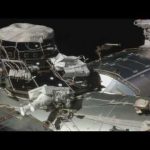
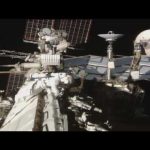
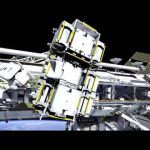
Work continues aboard the International Space Station on upgrades to prepare it for future operational activities. Ground controllers, using the station’s robotic arm, moved the Pressurized Mating Adapter-3 (PMA-3) from the Tranquility module to the station’s Harmony module March 26. PMA-3 will be outfitted with one of two International Docking Adapters to accommodate U.S. commercial spacecraft carrying astronauts on future missions. Four days after the PMA-3 move, NASA’s Shane Kimbrough and Peggy Whitson conducted the second in a series of three planned spacewalks to complete work related to the upgrades. The third spacewalk is planned in April. Also, James Webb Space Telescope Completes Acoustic and Vibration Tests, MAVEN Data Helps Measure Loss of Mars’ Atmosphere, Getting Excited About STEM, and New NASA App for Amazon Fire TV!
Steffi Valkov is a Flight Operations Engineer at NASA Armstrong Flight Research Center. Steffi’s current project, UAS Integration in the NAS, has her fulfilling multiple roles which include leading flight operations working groups, developing flight test scenarios, and control room duties.
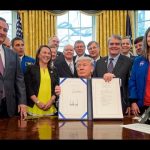
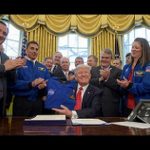
President Trump, who signed into law the NASA Transition Authorization Act of 2017 on March 21, highlighted America’s space agency during his weekly address on March 25.
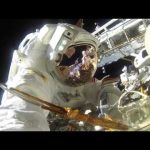
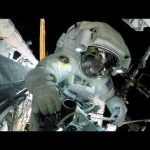
Expedition 50 Commander Shane Kimbrough of NASA and Flight Engineer Thomas Pesquet of the European Space Agency conducted a spacewalk outside the International Space Station March 24 to disconnect cables and electrical connections on Pressurized Mating Adapter-3 (PMA-3), lubricate the latching end effector on the Canadarm2 robotic arm and replace a computer relay box on the station’s truss. PMA-3 will be robotically relocated March 30 by ground controllers from the port side of the Tranquility module to the space-facing side of the Harmony module for the future installation of a second International Docking Adapter that will accommodate the arrivals of commercial crew vehicles. The spacewalk is the first of three planned in a two-week period for station crewmembers that will see PMA-3 reconnected to its new location on Harmony and an avionics box replaced that routes electricity and data to station experiments.
On March 23, NASA conducted a test of an RS-25 engine at the agency’s Stennis Space Center in Bay St. Louis, Mississippi. Four RS-25’s will help power NASA’s Space Launch System (SLS) rocket to space. During this test, engineers evaluated the engine’s new controller or “brain”, which communicates with the SLS vehicle. Once test data is certified, the engine controller will be removed and installed on one of the four flight engines that will help power the first integrated flight of SLS and the Orion spacecraft.
The following is a statement from NASA acting Administrator Robert Lightfoot on President Trump signing Tuesday the National Aeronautics and Space Administration Transition Authorization Act of 2017.
“We would like to thank President Trump for his support of the agency in signing the National Aeronautics and Space Administration Transition Authorization Act of 2017.
“We also want to express our gratitude to a bipartisan Congress for its thoughtful consideration of the agency’s path forward. We are grateful for the longstanding support and trust of the American people, which enables our nation’s space, aeronautics, science, and technology development programs to thrive.
“Our workforce has proven time and again that it can meet any challenge, and the continuing support for NASA ensures our nation’s space program will remain the world’s leader in pioneering new frontiers in exploration, innovation, and scientific achievement.”
Findings published March 15 in the journal Nature from a series of flight tests in 2013 and 2014 near NASA’s Armstrong Flight Research Center in California indicate that using biofuels helps jet engines reduce particle emissions in exhaust by as much as 50 to 70 percent. That’s both an economic and an environmental benefit. The findings were based on data from the Alternative Fuel Effects on Contrails and Cruise Emissions Study, or ACCESS. The international research program led by NASA and involving agencies from Germany and Canada, studied the effects of alternative fuels on aircraft-generated contrails, engine performance and emissions. Also, NASA @SXSW Interactive Festival, Satellites See Winter Storm from Space, CST-100 Starliner Parachute Testing, and NASA’s Pi Day Challenge!
NASA conducted the latest successful test of the Orion spacecraft’s parachute system on March 8 in the skies above the U.S. Army’s Yuma Proving Ground in Arizona. The test was designed to evaluate the parachutes’ performance in an emergency abort situation that would require Orion to be jettisoned from the agency’s Space Launch System rocket during a launch. Even at this relatively low altitude, the parachutes are designed to fully deploy and safely return Orion and its crew to Earth. Also, Shin Honored by Aviation Week, Space Station Resupply Mission Targeted for March 19, Small Business Innovation Proposals Selected, Deep Space Atomic Clock, Modern Figures Virtual Tour, and NASA Aero “Night of Flight”!
On March 2, NASA’s acting Administrator, Robert Lightfoot spoke at the U.S. Chamber of Commerce’s Aviation Summit in Washington, about how the agency’s technology advancements have helped transform the aviation industry. Lightfoot was then joined by Canadian Minister of Transport Marc Garneau, who is a former astronaut and Canadian Space Agency president, and Carol Hallett, counselor to the chamber, for a discussion with NASA’s Shane Kimbrough and Peggy Whitson, via satellite from the International Space Station. The two talked about the vast array of research and technology development conducted aboard the station. Also, Anniversary of One-Year Crew’s Return, IceCube SmallSat Ready for Launch, Orion Propulsion Qualification Module Installed, Small Business Industry Awards, and African American Pioneers in Aviation and Space!
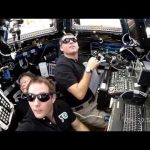
ESA astronaut Thomas Pesquet with NASA astronauts Shane Kimbrough and Peggy Whitson in the Cupola observatory using the International Space Station’s 16-m robotic arm to grapple the SpaceX Dragon cargo spaceship.
The video is sped up 20 times with this recording lasting 45 minutes 30 seconds at normal speed. It shows Shane and Thomas monitoring the spacecraft’s approach scanning the monitors, ready to step in if necessary. Thomas took manual control of the robotic arm and extended it to grapple the vehicle when 11 m from the Station. The Dragon CRS-10 flight was launched on 19 February 2017 and berthed with the Space Station four days later.
The spacecraft carried over 1500 kg of supplies including NASA’s Stratospheric Aerosol and Gas Experiment, or SAGE III, to monitor aerosols, ozone and other gases in Earth’s high atmosphere by looking at the sunlight and moonlight as they pass through. SAGE III is mounted on ESA’s Hexapod – a six-legged tracker that points the facility in the right direction.
Inside the spacecraft was also France’s CNES space agency Fluidics experiment to probe how fluids behave in weightlessness. Thomas is spending six months on the International Space Station as part of his Proxima mission. During Proxima, Thomas will perform around 50 scientific experiments for ESA and France’s space agency CNES as well as take part in many research activities for the other Station partners.
The mission is part of ESA’s vision to use Earth-orbiting spacecraft as a place to live and work for the benefit of European society while using the experience to prepare for future voyages of exploration further into the Solar System.
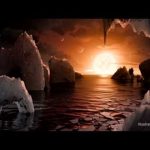
NASA held a news conference Feb. 22 at the agency’s headquarters to discuss the finding by the Spitzer Space Telescope of seven Earth-sized planets around a tiny, nearby, ultra-cool dwarf star. Three of these planets are in the habitable zone, the region around the star in which liquid water is most likely to thrive on a rocky planet. This is the first time so many planets have been found in a single star’s habitable zone, and the first time so many Earth-sized planets have been found around the same star. The finding of this planetary system, called TRAPPIST-1, is the best target yet for studying the atmospheres of potentially habitable, Earth-sized worlds
Mark Davis has been with NASA Armstrong Flight Research Center since April 1990, as a Aerodynamics Engineer. Mark Currently leads the Small Business Innovative Research Program working with small businesses that contribute to NASA’s Research goals.
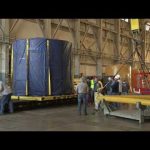
Recovery efforts are underway at NASA’s Michoud Assembly Facility in New Orleans, which was hit by a tornado Feb. 7. In accounting for all 3,500 employees at the facility, officials reported five suffered minor injuries. Buildings, structures and parked cars sustained damage, but there was no reported damage to hardware for NASA’s Space Launch System (SLS) rocket, Orion spacecraft, or the barge Pegasus docked at Michoud. NASA will release updates on the facility’s status as they become available. Also, SpaceX Launch Targeted for Mid-February, SLS Booster Hardware Arrives at KSC, and NASA Aerospace Days!
At 11:25 a.m. CST Feb. 7, a tornado impacted NASA’s Michoud Assembly Facility in New Orleans. At this time, only minor injuries have been reported and NASA employees and other tenants are being accounted for. There is still a threat of severe weather in the area and emergency officials are continuing to monitor the situation to ensure the safety of onsite personnel. The onsite Michoud emergency response team is also conducting damage assessments of buildings and facilities.
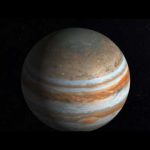
NASA’s Juno spacecraft made its latest close flyby of Jupiter Feb. 2 — passing about 2,700 miles above the planet’s clouds. This was the fourth close flyby since Juno began orbiting Jupiter last year on July 4. During these close passes instruments on the spacecraft probe beneath the cloud cover to collect scientific data about the planet’s structure, atmosphere and magnetosphere. This information could help us better understand the planetary systems being discovered around other stars. Also, Cassini Sees Saturn’s Rings in Greater Detail, The Most Extreme Blazars, NASA at Super Bowl Event, NASA at NBA Black Heritage Celebration, and
Day of Remembrance!
NASA astronaut Randy Bresnik, Paolo Nespoli of ESA (European Space Agency), and Sergey Ryazanskiy of the Russian space agency Roscosmos, who are scheduled to launch to the International Space Station in late spring, participated in a news conference Jan. 25, at the agency’s Johnson Space Center in Houston.
This will be Bresnik’s second trip to the space station, the second expedition for Ryazanskiy, and Nespoli’s third trip to the space station. They will be part of Expeditions 52 and 53.
NASA Television provided live coverage of the Jan. 24 funeral service at Houston’s St. Martin’s Episcopal Church, celebrating the life and legacy of NASA astronaut and U.S. Navy Capt. Eugene A. Cernan. The former Gemini and Apollo astronaut died Jan. 16 at the age of 82.
Cernan left his mark on the history of exploration by flying three times in space, twice to the moon. He also holds the distinction of being the second American to walk in space and the last human to leave his footprints on the lunar surface.
ESA astronaut Thomas Pesquet completed his first spacewalk 13 January 2017 together with NASA astronaut Shane Kimbrough to complete a battery upgrade to the outpost’s power system.
Thomas recorded the spacewalk for the first time with a camera in a space-proof casing that was mounted to a bracket on his chest called the mini work station. This video shows scenes from the spacewalk using this camera.
The spacewalk went as planned and, even better, Shane and Thomas performed a number of extra tasks once they had installed the batteries. They retrieved a failed camera, installed a protective cover on an unused docking port, moved handrails in preparation for future spacewalks and took pictures of external facilities for ground control.
The duo spent five hours and 58 minutes outside the International Space Station.
Thomas is spending six months on the International Space Station as part of his Proxima mission. During Proxima, Thomas will perform around 50 scientific experiments for ESA and France’s space agency CNES as well as take part in many research activities for the other Station partners. The mission is part of ESA’s vision to use Earth-orbiting spacecraft as a place to live and work for the benefit of European society while using the experience to prepare for future voyages of exploration further into the Solar System.
NASA and the National Oceanic and Atmospheric Administration (NOAA) announced on Jan. 18, that global surface temperatures in 2016 were the warmest since modern record keeping began in 1880. The finding was based on results of independent analyses by both agencies. According to analysis by scientists at NASA’s Goddard Institute for Space Studies (GISS) in New York, 2016 is the third year in a row to set a new record for global average surface temperatures, further demonstrating a long-term warming trend. Also, Cygnus Cargo Module Arrives at KSC, Up in 30 Seconds, and Remembering Gene Cernan.
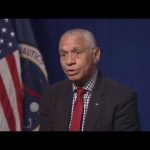
NASA Administrator Charles Bolden shared his thoughts on the life and legacy of Gemini and Apollo astronaut Gene Cernan, who passed away on Jan. 16 at the age of 82.
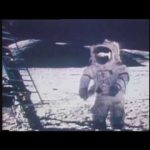
Cernan flew on three separate space missions. He was the second American to walk in space as the pilot on Gemini IX; ventured to the moon on Apollo 10, the pathfinder for the first lunar landing; and as commander of Apollo 17, Cernan holds the distinction of being the last person to leave his footprints on the surface of the moon.
Former NASA astronaut Eugene Cernan, the last man to walk on the moon, died Monday, Jan. 16, following ongoing health issues, according to a statement from his family.
“It is with very deep sadness that we share the loss of our beloved husband and father,” said Cernan’s family. “Our family is heartbroken, of course, and we truly appreciate everyone’s thoughts and prayers. Gene, as he was known by so many, was a loving husband, father, grandfather, brother and friend.”
“Even at the age of 82, Gene was passionate about sharing his desire to see the continued human exploration of space and encouraged our nation’s leaders and young people to not let him remain the last man to walk on the Moon,” the family continued.
Cernan, a Captain in the U.S. Navy, left his mark on the history of exploration by flying three times in space, twice to the moon. He also holds the distinction of being the second American to walk in space and the last human to leave his footprints on the lunar surface.
The following is a statement from NASA Administrator Charles Bolden on the passing of the Gemini and Apollo astronaut:
“Gene Cernan, Apollo astronaut and the last man to walk on the moon, has passed from our sphere, and we mourn his loss. Leaving the moon in 1972, Cernan said, ‘As I take these last steps from the surface for some time into the future to come, I’d just like to record that America’s challenge of today has forged man’s destiny of tomorrow.’ Truly, America has lost a patriot and pioneer who helped shape our country’s bold ambitions to do things that humankind had never before achieved.”
According to the family, details regarding services will be announced in the coming days.
On Jan. 4, NASA held a press briefing at the agency’s Johnson Space Center in Houston to preview a pair of planned spacewalks to perform a complex upgrade to the International Space Station’s power system. NASA’s Shane Kimbrough and Peggy Whitson will conduct the spacewalk on Jan. 6. The second spacewalk, on Jan. 13, will be performed by Kimbrough and Thomas Pesquet of ESA (European Space Agency). Working on the right side truss of the space station, the crew members will install adapter plates and hook up electrical connections for six new lithium-ion batteries that were delivered to the station in December.
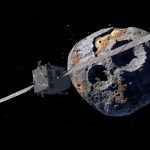
On Jan. 4, NASA announced the selection of two missions to explore previously unexplored asteroids. The first mission, called Lucy, will study asteroids, known as Trojan asteroids, trapped by Jupiter’s gravity. The Psyche mission will explore a very large and rare object in the solar system’s asteroid belt that’s made of metal, and scientists believe might be the exposed core of a planet that lost its rocky outer layers from a series of violent collisions. Lucy is targeted for launch in 2021 and Psyche in 2023. Both missions have the potential to open new windows on one of the earliest eras in the history of our solar system – a time less than 10 million years after the birth of our sun.
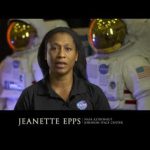
NASA Astronaut Jeanette Epps gives a little advice on moving forward in a STEM career.
Find out more about NASA’s Modern Figures at: https://www.nasa.gov/modernfigures
NASA Scientist Tiffany Kataria drops in on Jennifer Lawrence, Chris Pratt and Michael Sheen for a fun, not so serious chat about science fiction, other worlds and time travel???
2016 marked record-breaking progress in NASA’s exploration objectives. The agency advanced the capabilities needed to travel farther into the solar system while increasing observations of our home and the universe, learning more about how to continuously live and work in space and, of course, inspiring the next generation of leaders to take up our Journey to Mars and make their own discoveries.
NASA successfully launched eight small satellites that will provide scientists with advanced technology to see inside tropical storms and hurricanes like never before. Called the Cyclone Global Navigation Satellite System (CYGNSS), the constellation of eight microsatellite observatories launched Dec. 12 aboard an Orbital ATK air-launched Pegasus XL launch vehicle from Cape Canaveral Air Force Station in Florida. The rocket was dropped and launched from Orbital’s Stargazer L-1011 aircraft over the Atlantic Ocean off the coast of central Florida.
NASA researchers are presenting new findings on a wide range of Earth and space science topics at the annual meeting of the American Geophysical Union this week in San Francisco. With about 24,000 attendees, the meeting is the largest gathering of Earth and space scientists in the world. The full range of NASA’s innovative science and technology is on display. Key findings include new evidence from NASA’s Curiosity rover of how ancient lakes and wet underground environments on Mars changed billions of years ago affecting their favorability for microbial life. A new Earth-observing satellite data set and imagery was released providing a near-real-time view of every large glacier and ice sheet on Earth. The meeting continues through Dec. 16.
Members of the media were invited to NASA’s Kennedy Space Center in Florida to participate in a news conference Dec. 12 with cast members from the 20th Century Fox motion picture Hidden Figures.
The film is based on the book of the same title, by Margot Lee Shetterly, and chronicles the lives of Katherine Johnson, Dorothy Vaughan and Mary Jackson — African-American women working at NASA as “human computers,” who were critical to the success of John Glenn’s Friendship 7 mission in 1962.
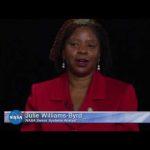
On Dec. 1, NASA Administrator Charlie Bolden helped kick off a yearlong centennial celebration for the agency’s Langley Research Center in Hampton, Virginia with several events highlighting the work of the African American women of Langley’s West Computing Unit. These mathematicians performed critical calculations for several historic NASA space missions in the early days of America’s space program, and their story is told in the book, “Hidden Figures,” by author Margot Lee Shetterly and the upcoming 20th Century Fox movie of the same name. It was also discussed during a NASA education event at Langley featuring Bolden, the film’s director Ted Melfi, NASA’s Chief Historian Bill Barry, and Langley electro-optics engineer Julie Williams-Byrd – a modern-day NASA figure using science, technology, engineering and mathematics, or STEM — skills to make an impact. Later that evening, a VIP social and screenings of the film took place at nearby Virginia Air & Space Center. The women featured in Hidden Figures – Katherine Johnson, Mary Jackson and Dorothy Vaughan – known as “human computers,” helped put John Glenn in orbit, and helped Neil Armstrong and other astronauts land on the moon. Also, Cassini’s Ring-Grazing Orbit around Saturn, Next Space Station Crew Previews Mission, and Russian Cargo Ship Experiences Anomaly after Launch!
NASA celebrates the lives and careers of the Langley West Computing Unit who helped America win the space race of the 1950s and 60s. The lives of these unsung heroines is captured in the book and film “Hidden Figures”.
NASA kicked off a yearlong centennial celebration for its Langley Research Center in Hampton, Virginia, with events Dec. 1 highlighting the critical work done by the African American women of Langley’s West Computing Unit, a story told in the book and upcoming movie “Hidden Figures”. During a NASA education event that was streamed to schools across the country, NASA Administrator Charles Bolden, Film director Ted Melfi, NASA Chief Historian Bill Barry, who consulted on the film, and NASA Modern Figure Julie Williams-Byrd, an electro-optics engineer for the Space Mission Analysis Branch at Langley, discussed the work of past and present NASA figures benefits humanity and enable future long-duration human and robotic exploration into deep space, including the agency’s Journey to Mars.
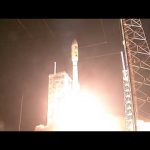
The first spacecraft in a new series of NASA-built advanced geostationary weather satellites launched into orbit aboard a United Launch Alliance Atlas V rocket Nov. 19 from Cape Canaveral Air Force Station in Florida. Once in geostationary orbit, GOES-R will be known as GOES-16 and will provide images of weather patterns and severe storms as regularly as every five minutes or as frequently as every 30 seconds. These images can be used to aid in weather forecasts, severe weather outlooks, watches and warnings, lightning conditions, maritime forecasts and aviation forecasts.
The Expedition 50/51 crew, including NASA astronaut Peggy Whitson, launched aboard a Soyuz spacecraft from the Baikonur Cosmodrome in Kazakhstan Nov. 17 eastern time, to begin a two-day flight to the International Space Station. Whitson, Oleg Novitskiy of the Russian space agency Roscosmos and Thomas Pesquet of ESA (European Space Agency) are scheduled to join Expedition 50 commander Shane Kimbrough of NASA and Roscosmos cosmonauts Sergey Ryzhikov and Andrey Borisenko, who all have been aboard the orbiting laboratory since October. Whitson will assume command of the station in February – making her the first woman to command the space station twice. Whitson and her Expedition 50 crewmates are scheduled to return to Earth next spring. Also, Supermoon Shines Bright, Newman Participates in Operation IceBridge, and Advanced Weather Satellite Mission Previewed!