Tag: Near-Earth Objects

  • ESA counts down to Asteroid Day with news on riskiest asteroid

    ESA counts down to Asteroid Day with news on riskiest asteroid

    A 50-metre asteroid out there has lingered at the top of risk lists around the globe. Initial observations showed 2021 QM1 had a chance of striking Earth in 2052, and frustratingly, follow-up observations soon became impossible. Not only was it outshone by the Sun at a pivotal moment, but QM1 has been receding from view as it moves away from Earth in its current orbit.

    ESA’s Near-Earth Object Coordination Centre together with the European Southern Observatory made finding and assessing the risk from 2021 QM1 a top priority, and this June they had a chance to capture the risky asteroid as it edged away from the brilliant Sun. Now extremely faint in the sky, it would take one of the best telescopes in the world to spot it, and if they do, it will be the faintest asteroid ever detected. Did the team find our risky asteroid? Will it, one day, find us?

    ★ Subscribe: http://bit.ly/ESAsubscribe and click twice on the bell button to receive our notifications.

    Check out our full video catalog: http://bit.ly/SpaceInVideos
    Follow us on Twitter: http://bit.ly/ESAonTwitter
    On Facebook: http://bit.ly/ESAonFacebook
    On Instagram: http://bit.ly/ESAonInstagram
    On LinkedIn: https://bit.ly/ESAonLinkedIn
    On Pinterest: https://bit.ly/ESAonPinterest
    On Flickr: http://bit.ly/ESAonFlickr

    We are Europe’s gateway to space. Our mission is to shape the development of Europe’s space capability and ensure that investment in space continues to deliver benefits to the citizens of Europe and the world. Check out https://www.esa.int/ to get up to speed on everything space related.

    Copyright information about our videos is available here: https://www.esa.int/ESA_Multimedia/Terms_and_Conditions

    #ESA
    #Asteroid
    #AsteroidDay
  • Asteroid Impact Mission (Spanish)

    Asteroid Impact Mission (Spanish)

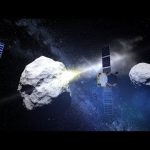
    La misión AIM (Asteroid Impact Mission), candidata a ser desarrollada, actualmente en fase de diseño preliminar.

    AIM se lanzaría en octubre de 2020 y su objetivo es viajar al sistema binario de asteroides Dídimos para estudiar la luna Didymoon. El sistema Didimos cuenta con un cuerpo principal de unos 800 metros de diámetro y una luna que orbita alrededor de este cuerpo principal, de unos 170 metros de diámetro aproximadamente, está luna se la conoce con el nombre de Didymoon. El sistema Didimos se aproximará a 11 millones de kilómetros de la tierra en 2022.

    AIM escaneará la pequeña Didymoon en detalle con su cámara VIS, con imágenes térmicas y un radar de alta resolución para construir mapas detallados de su superficie y estructura interior.

    La nave principal de AIM llevará al menos tres sondas más pequeñas – el módulo de aterrizaje, Mascot-2, desarrollado por el Centro Aeroespacial Alemán (Mascot-1 ya está volando en la misión Hayabusa-2 de JAXA), así como dos o más CubeSats. Así, AIM pondría a prueba las comunicaciones ópticas y los enlaces inter-satelitales en el espacio profundo, una tecnología que será esencial para la exploración futura del espacio.

    Si se aprueba, AIM también será la contribución europea a la misión AIDA, Asteroid Impact and Deflection Assessment. En 2022, la sonda DART (Double-Asteroid Redirection Test), parte dirigida por la NASA, llegará al sistema binario y se estrellará contra Didymoon a una velocidad de unos 6 km/s.

    El impacto será observado por AIM y por sus CubeSats. A través de las imágenes de alta resolución de AIM se evaluará el tamaño y la profundidad del cráter tras el impacto. AIM realizará una segunda fase de mediciones para comparar detalladamente la estructura del objeto, así como su órbita al rededor del asteroide mayor, antes y después del impacto.

    This video is also available in the following languages:
    English: https://youtu.be/h4lpu8HbpFY
    French: https://youtu.be/8GjVhBQsISc
    German: https://youtu.be/Sht_Kmaf5sU

    Credit: ESA/ScienceOffice.org