Tag: operations

  • 2022: A record year for new space objects 🛰️ #shorts

    2022: A record year for new space objects 🛰️ #shorts

    2409 new objects were launched into space in 2022, that’s more than ever before.

    Last year though, also saw a record number of satellites reenter Earth’s atmosphere.

    The rising number of reentries is not necessarily a bad thing. Disposing of satellites efficiently is one of the most important things for keeping low-Earth orbits safe.

    However, most objects reenter in an uncontrolled manner: they are switched off at the end of their mission and left to fall and burn up in Earth’s atmosphere.

    There is good news though. Advancing technology has seen a recent increase in “controlled reentries” for rocket bodies. A controlled reentry allows operators to remove their hardware from protected regions more quickly and with greater control over where, when and how it reenters – and even lands – at the cost of allocating some fuel to do so.

    By the way, just because an older satellite wasn’t designed to be controlled during its descent doesn’t mean it’s impossible to do so. In July 2023, our teams guided the Aeolus satellite to burn up over uninhabited regions in the Atlantic and Antarctica, even though the satellite was designed in the late 1990s with no intention to control it in this way.

    📹 ESA – European Space Agency

    #ESA
    #Satellites
    #SpaceDebris
  • Nicolas Bobrinsky on Excellence | ESA Masterclass

    Nicolas Bobrinsky on Excellence | ESA Masterclass

    The level of practical expertise, technical and operational expertise required to operate in such a fast-paced, rapidly changing environment such as space needs to be permanently developed and improved to maintain the technical excellence at the right level. But the constant improvement of the technical and operational knowledge is an exciting journey. Nicolas has experienced this first-hand since he joined the European Space Agency Operation Centre as Ground Station Engineer. As a young engineer at ESA, you can gain extremely valuable expertise through launch campaigns, test and validation campaigns, time at the console in the operation control room together with your team, witnessing and learning from the whole life cycle of a real satellite mission, one impossible thing at the time.

    With 35 years of experience at ESA, Nicolas Bobrinsky is the former Head of Ground Systems Engineering & Innovation Department. He initiated and further managed the Space Situational Awareness and later the ESA Space Safety Programme.

    In four episodes of this new series of ESA Masterclass, Nicolas takes us through major events in his career at ESA, covering cornerstone missions, first attempts, overcoming technical challenges, leading diverse teams and solving the unexpected problems that are part of any space endeavour.

    ★ Subscribe: http://bit.ly/ESAsubscribe and click twice on the bell button to receive our notifications.

    Check out our full video catalog: http://bit.ly/SpaceInVideos
    Follow us on Twitter: http://bit.ly/ESAonTwitter
    On Facebook: http://bit.ly/ESAonFacebook
    On Instagram: http://bit.ly/ESAonInstagram
    On LinkedIn: https://bit.ly/ESAonLinkedIn
    On Pinterest: https://bit.ly/ESAonPinterest
    On Flickr: http://bit.ly/ESAonFlickr

    We are Europe’s gateway to space. Our mission is to shape the development of Europe’s space capability and ensure that investment in space continues to deliver benefits to the citizens of Europe and the world. Check out https://www.esa.int/ to get up to speed on everything space related.

    Copyright information about our videos is available here: https://www.esa.int/ESA_Multimedia/Terms_and_Conditions

    #ESA
    #MasterClass
    #NicolasBobrinsky

  • Nicolas Bobrinsky on People management and Teamwork | ESA Masterclass

    Nicolas Bobrinsky on People management and Teamwork | ESA Masterclass

    Imagine you are singing in a choir. You are doing your best, just like everybody else. Suddenly, somebody turns to you and points out that you are not singing the right note. If you are told off in a harsh way, you may feel bad about it, and if this happens too often you might not only feel upset about the choir but might even leave it for good. Eventually, the whole choir could end if everybody just leaves.

    It is the duty of the choir conductor (the ESA team head) to be able to address every single situation in the right way, to make everyone feel heard and encouraged.

    In the third video of this new series of ESA Masterclass, Nicolas shares some lessons learned in his decades as a team leader on what it takes to keep a team together through mutual trust and recognition and make all members work in a harmonious way, like singers of a well-tuned choir.

    With 35 years of experience at ESA, Nicolas Bobrinsky is the former Head of Ground Systems Engineering & Innovation Department. He initiated and further managed the Space Situational Awareness and later the ESA Space Safety Programme.

    In four episodes of this new series of ESA Masterclass, Nicolas takes us through major events in his career at ESA, covering cornerstone missions, first attempts, overcoming technical challenges, leading diverse teams and solving the unexpected problems that are part of any space endeavour.

    ★ Subscribe: http://bit.ly/ESAsubscribe and click twice on the bell button to receive our notifications.

    Check out our full video catalog: http://bit.ly/SpaceInVideos
    Follow us on Twitter: http://bit.ly/ESAonTwitter
    On Facebook: http://bit.ly/ESAonFacebook
    On Instagram: http://bit.ly/ESAonInstagram
    On LinkedIn: https://bit.ly/ESAonLinkedIn
    On Pinterest: https://bit.ly/ESAonPinterest
    On Flickr: http://bit.ly/ESAonFlickr

    We are Europe’s gateway to space. Our mission is to shape the development of Europe’s space capability and ensure that investment in space continues to deliver benefits to the citizens of Europe and the world. Check out https://www.esa.int/ to get up to speed on everything space related.

    Copyright information about our videos is available here: https://www.esa.int/ESA_Multimedia/Terms_and_Conditions

    #ESA
    #MasterClass
    #NicolasBobrinsky

  • Nicolas Bobrinsky on Space Safety | ESA Masterclass

    Nicolas Bobrinsky on Space Safety | ESA Masterclass

    Satellites in orbit underpin our modern lives. They are used in many areas and disciplines, including space science, Earth observation, meteorology, climate research, telecommunication, navigation and human space exploration. However, as space activities have increased, a new and unexpected hazard has started to emerge: space debris.

    If space debris – uncontrolled human-made objects such as spent upper stages of rockets and pieces of satellites – hits a satellite, it could cause serious damage, which can even end a mission (as has happened in the past). If debris crashes on Earth’s surface, it could potentially hit populated areas.

    In this second video, Nicolas looks back on the first key steps taken at ESA to develop the Space Safety Programme, devoted to the detection, prevention and mitigation of threats originating from space. This includes not just space debris but also asteroids and space weather. The latter is an intense, occasional energetic storm of particles and material emitted by the Sun. Mitigating these hazards protects our planet, society and economically-important infrastructure on Earth and in orbit.

    A key element for the forecasting and prevention of space weather is to observe the Sun from the side. Discover more in this second video of the ESA Masterclass with Nicolas Bobrinsky. With 35 years of experience at ESA, Nicolas Bobrinsky is the former Head of Ground Systems Engineering & Innovation Department. He initiated and further managed the Space Situational Awareness and later the ESA Space Safety Programme.

    In four episodes of this new series of ESA Masterclass, Nicolas takes us through major events in his career at ESA, covering cornerstone missions, first attempts, overcoming technical challenges, leading diverse teams and solving the unexpected problems that are part of any space endeavour.

    ★ Subscribe: http://bit.ly/ESAsubscribe and click twice on the bell button to receive our notifications.

    Check out our full video catalog: http://bit.ly/SpaceInVideos
    Follow us on Twitter: http://bit.ly/ESAonTwitter
    On Facebook: http://bit.ly/ESAonFacebook
    On Instagram: http://bit.ly/ESAonInstagram
    On LinkedIn: https://bit.ly/ESAonLinkedIn
    On Pinterest: https://bit.ly/ESAonPinterest
    On Flickr: http://bit.ly/ESAonFlickr

    We are Europe’s gateway to space. Our mission is to shape the development of Europe’s space capability and ensure that investment in space continues to deliver benefits to the citizens of Europe and the world. Check out https://www.esa.int/ to get up to speed on everything space related.

    Copyright information about our videos is available here: https://www.esa.int/ESA_Multimedia/Terms_and_Conditions

    #ESA
    #MasterClass
    #NicolasBobrinsky

  • Nicolas Bobrinsky on Innovation and Risk Management | ESA Masterclass

    Nicolas Bobrinsky on Innovation and Risk Management | ESA Masterclass

    Innovation is triggered by many drivers. One of these is the constant need for ESA to develop innovative solutions,such asuniquespacecrafttechnologies.

    In this first video, Nicolas recalls how he and his team had to think outside the box to find a solution for ESA to communicate with Ulysses. Thespacecraft was flyingaround the north pole of the Sun,which ismuch fartherin deep spacethan satellites had beenlaunched up to that point.

    The success of this solution motivated the decision to build ESA’sfirst deep-space communications antennas in New Norcia, in Australia, thus enabling many ESA scientific firstsin deep-space exploration.

    The antennas would, some decades after, be critically important receivers forthe messages sent by the very distant Rosetta probe, on its quest to find and land on the comet 67P/Churyumov–Gerasimenko, and other ESA science and exploration missions such as Mars Express, Venus Expressand Cassini-Huygens.

    With 35 yearsof experience at ESA, Nicolas Bobrinsky is the former Head of Ground Systems Engineering & Innovation Department. He initiated and further managed the Space Situational Awareness and later the ESA Space Safety Programme.

    In four episodes of this new series of ESA Masterclass, Nicolas takes us through major events in his career at ESA, covering cornerstone missions, first attempts, overcoming technical challenges, leading diverse teamsand solving the unexpected problems that are part of any space endeavour.

    ★ Subscribe: http://bit.ly/ESAsubscribe and click twice on the bell button to receive our notifications.

    Check out our full video catalog: http://bit.ly/SpaceInVideos
    Follow us on Twitter: http://bit.ly/ESAonTwitter
    On Facebook: http://bit.ly/ESAonFacebook
    On Instagram: http://bit.ly/ESAonInstagram
    On LinkedIn: https://bit.ly/ESAonLinkedIn
    On Pinterest: https://bit.ly/ESAonPinterest
    On Flickr: http://bit.ly/ESAonFlickr

    We are Europe’s gateway to space. Our mission is to shape the development of Europe’s space capability and ensure that investment in space continues to deliver benefits to the citizens of Europe and the world. Check out https://www.esa.int/ to get up to speed on everything space related.

    Copyright information about our videos is available here: https://www.esa.int/ESA_Multimedia/Terms_and_Conditions

    #ESA
    #MasterClass
    #NicolasBobrinsky

  • Dodging debris to keep satellites safe

    Dodging debris to keep satellites safe

    Our planet is surrounded by spacecraft helping us study our changing climate, save lives following disasters, deliver global communication and navigation services and help us answer important scientific questions.

    But these satellites are at risk. Accidental collisions between objects in space can produce huge clouds of fast-moving debris that can spread and damage additional satellites with cascading effect.

    In this animation, find out how teams at ESA’s European Space Operations Centre in Darmstadt, Germany, take action to keep satellites safe after receiving an alert warning of a possible collision between an active satellite and a piece of space debris.

    When the alert is raised, ESA experts determine the risk of a collision and plan a collision avoidance manoeuvre that can be used to get the satellite out of harm’s way if necessary.

    Additional observations of the piece of space debris help the team better understand its path and the risk of collision. If that risk remains too high (typically 1 in 10 000), the planned manoeuvre is carried out to temporarily change the orbit of the satellite until the threat has passed.

    Each manoeuvre comes at a price. They take skill and time to plan, cost precious fuel – shortening the lifetime of the mission – and often require instruments to be temporarily shut off, preventing them from collecting important data.

    While most alerts do not end up requiring evasive action, the number of alerts is rapidly increasing. Hundreds are already issued every week. Several companies have begun to launch large constellations into low-Earth orbit to provide global internet access. They have great benefits, but could be a source of huge disruption if we do not change our behaviour.

    In just a few years, our current methods for avoiding collisions in space will no longer be enough. To safeguard humankind’s continued access to space for future generations, ESA is developing technologies for an automated collision avoidance system.

    Find out more: https://space-debris-conference.sdo.esoc.esa.int/

    ★ Subscribe: http://bit.ly/ESAsubscribe and click twice on the bell button to receive our notifications.

    Check out our full video catalog: http://bit.ly/SpaceInVideos
    Follow us on Twitter: http://bit.ly/ESAonTwitter
    On Facebook: http://bit.ly/ESAonFacebook
    On Instagram: http://bit.ly/ESAonInstagram
    On Flickr: http://bit.ly/ESAonFlickr

    We are Europe’s gateway to space. Our mission is to shape the development of Europe’s space capability and ensure that investment in space continues to deliver benefits to the citizens of Europe and the world. Check out https://www.esa.int/ to get up to speed on everything space related.

    Copyright information about our videos is available here: https://www.esa.int/ESA_Multimedia/Terms_and_Conditions

    #ESA
    #TimeToAct
    #SpaceDebris

  • Paolo Ferri on the culture at mission control | ESA Masterclass

    Paolo Ferri on the culture at mission control | ESA Masterclass

    Step inside the Main Control Room at ESOC, ESA’s European Space Operations Centre in Darmstadt, Germany, and one thing becomes immediately clear: teams that operate space missions are highly hierarchical, and the Flight Director is indisputably in charge.

    How does this work, and why is this the case? In the last of his Masterclass series, Paolo Ferri delves into the culture of operations, from written rules and procedures to equally important unwritten principles that guide the day-to-day working lives of those flying Europe’s spacecraft.

    Paolo explains that on rare occasions, an internal battle takes place when protocols, procedures and flight rules don’t seem up to the task, and someone must assume the huge responsibility of deciding whether or not they need to be violated to keep a mission functioning.

    With 36 years’ of experience at ESA, Paolo Ferri is responsible for mission operations, and he has played a leading role in ensuring the success of missions like Eureca, ESA’s first-ever reusable satellite; Cluster, one of the longest-flying science missions; Venus Express, Europe’s first exploration of Earth’s ‘evil twin’; and Rosetta, humanity’s first landing on a comet.

    In five episodes of ‘Leadership at Mission Control’, Paolo takes us through major events in his career at ESA, covering cornerstone missions, first attempts, overcoming technical challenges, building diverse teams, working under pressure and solving the unexpected problems that are part of any space endeavour.

    This is the last episode of the ESA Masterclass series with Paolo Ferri. Thank you very much for watching!

    ★ Subscribe: http://bit.ly/ESAsubscribe and click twice on the bell button to receive our notifications.

    Check out our full video catalog: http://bit.ly/SpaceInVideos
    Follow us on Twitter: http://bit.ly/ESAonTwitter
    On Facebook: http://bit.ly/ESAonFacebook
    On Instagram: http://bit.ly/ESAonInstagram
    On Flickr: http://bit.ly/ESAonFlickr

    We are Europe’s gateway to space. Our mission is to shape the development of Europe’s space capability and ensure that investment in space continues to deliver benefits to the citizens of Europe and the world. Check out http://www.esa.int/ESA to get up to speed on everything space related.

    Copyright information about our videos is available here: http://www.esa.int/spaceinvideos/Terms_and_Conditions

    #ESA
    #MasterClass
    #MissionControl

  • Earth from Space: Darmstadt

    Earth from Space: Darmstadt

    The Copernicus Sentinel-2 mission takes us over Darmstadt, Germany, home to ESA’s European Space Operations Centre, in this week’s edition of the Earth from Space programme.

    Download the image: https://www.esa.int/ESA_Multimedia/Images/2020/11/Darmstadt_Germany

    ★ Subscribe: http://bit.ly/ESAsubscribe and click twice on the bell button to receive our notifications.

    Check out our full video catalog: http://bit.ly/SpaceInVideos
    Follow us on Twitter: http://bit.ly/ESAonTwitter
    On Facebook: http://bit.ly/ESAonFacebook
    On Instagram: http://bit.ly/ESAonInstagram
    On Flickr: http://bit.ly/ESAonFlickr

    We are Europe’s gateway to space. Our mission is to shape the development of Europe’s space capability and ensure that investment in space continues to deliver benefits to the citizens of Europe and the world. Check out http://www.esa.int/ESA to get up to speed on everything space related.

    Copyright information about our videos is available here: https://www.esa.int/ESA_Multimedia/Terms_and_Conditions

    #ESA
    #EarthFromSpace
    #Darmstadt

  • Paolo Ferri on working under pressure | ESA Masterclass

    Paolo Ferri on working under pressure | ESA Masterclass

    Understanding the laws of the universe is fundamental to flying missions in space. But one spacecraft under Paolo Ferri’s care seemed to be particularly susceptible to Murphy’s law – ‘Anything that can go wrong, will go wrong.’

    In 1992, ESA’s first-ever reusable satellite, Eureca, was delivered into orbit (and later retrieved) by a NASA Space Shuttle. It spent just under a year in orbit, and presented a plethora of problems from Day 1. While it was ultimately successful, Eureca required constant care from engineering teams on ground as well as hands-on help from astronauts in orbit.

    As Deputy Operations Manager for the mission, Paolo Ferri explains in his fourth masterclass how this intense period acted as a ‘school’ for him, as he and his team were put under immense pressure by this orbiting ‘box of surprises’ constantly on the edge of catastrophe and mission failure.

    With 36 years’ of experience at ESA, Paolo Ferri is responsible for mission operations, and he has played a leading role in ensuring the success of missions like Eureca, ESA’s first-ever reusable satellite; Cluster, one of the longest-flying science missions; Venus Express, Europe’s first exploration of Earth’s ‘evil twin’; and Rosetta, humanity’s first landing on a comet.

    In five episodes of ‘Leadership at Mission Control’, Paolo takes us through major events in his career at ESA, covering cornerstone missions, first attempts, overcoming technical challenges, building diverse teams, working under pressure and solving the unexpected problems that are part of any space endeavour.

    New episodes from Paolo’s Masterclass will be released each Sunday, stay tuned!

    ★ Subscribe: http://bit.ly/ESAsubscribe and click twice on the bell button to receive our notifications.

    Check out our full video catalog: http://bit.ly/SpaceInVideos
    Follow us on Twitter: http://bit.ly/ESAonTwitter
    On Facebook: http://bit.ly/ESAonFacebook
    On Instagram: http://bit.ly/ESAonInstagram
    On Flickr: http://bit.ly/ESAonFlickr

    We are Europe’s gateway to space. Our mission is to shape the development of Europe’s space capability and ensure that investment in space continues to deliver benefits to the citizens of Europe and the world. Check out http://www.esa.int/ESA to get up to speed on everything space related.

    Copyright information about our videos is available here: http://www.esa.int/spaceinvideos/Terms_and_Conditions

    #ESA
    #MasterClass
    #MissionControl

  • Paolo Ferri on leadership, coaching, learning | ESA Masterclass

    Paolo Ferri on leadership, coaching, learning | ESA Masterclass

    As space missions have become more complex, the teamwork needed on the ground has also become more sophisticated and challenging. Through almost four decades at the forefront of Europe’s voyages in space, Paolo Ferri went from Operations Engineer on the Eureca mission to Operations Manager of the four-spacecraft Cluster mission and then the Rosetta mission, followed by serving as Flight Director on Rosetta, Venus Express and Goce. His career has been capped off by eight years as Head of Mission Operations for the Agency, overseeing all of ESA’s robotic mission operations.

    In his third masterclass, Paolo shares what he has learnt going from an engineering expert with complete and specific knowledge of a single mission, to being responsible at a senior manager level for the success of dozens of missions operated by international teams each as diverse, unique and complex as the spacecraft they fly.

    With 36 years’ of experience at ESA, Paolo Ferri is responsible for mission operations, and he has played a leading role in ensuring the success of missions like Eureca, ESA’s first-ever reusable satellite; Cluster, one of the longest-flying science missions; Venus Express, Europe’s first exploration of Earth’s ‘evil twin’; and Rosetta, humanity’s first landing on a comet.

    In five episodes of ‘Leadership at Mission Control’, Paolo takes us through major events in his career at ESA, covering cornerstone missions, first attempts, overcoming technical challenges, building diverse teams, working under pressure and solving the unexpected problems that are part of any space endeavour.

    New episodes from Paolo’s Masterclass will be released each Sunday, stay tuned!

    ★ Subscribe: http://bit.ly/ESAsubscribe and click twice on the bell button to receive our notifications.

    Check out our full video catalog: http://bit.ly/SpaceInVideos
    Follow us on Twitter: http://bit.ly/ESAonTwitter
    On Facebook: http://bit.ly/ESAonFacebook
    On Instagram: http://bit.ly/ESAonInstagram
    On Flickr: http://bit.ly/ESAonFlickr

    We are Europe’s gateway to space. Our mission is to shape the development of Europe’s space capability and ensure that investment in space continues to deliver benefits to the citizens of Europe and the world. Check out http://www.esa.int/ESA to get up to speed on everything space related.

    Copyright information about our videos is available here: http://www.esa.int/spaceinvideos/Terms_and_Conditions

    #ESA
    #MasterClass
    #MissionControl

  • Paolo Ferri on communication and teamwork | ESA Masterclass

    Paolo Ferri on communication and teamwork | ESA Masterclass

    Throughout the life of every mission, radio signals are transmitted between stations on ground and the spacecraft orbiting Earth, or voyaging across the Solar System. These signals contain instructions and commands sent up from mission control, and beam down data such as views of our planet collected by high-tech instruments on board.

    However, this ‘conversation’ between space and Earth is only as good as the conversations taking place on Earth, where effective communication and teamwork are fundamental. Effectively passing on information, experience and challenges are the key to success during critical operations, as teams evolve over the life of decades-long missions, and between different mission teams themselves.

    In his second masterclass, Paolo Ferri illustrates the importance of effective communication with the help of Exosat, a flipchart and a ‘blind’ spacecraft, Venus Express.

    With 36 years’ of experience at ESA, Paolo Ferri is responsible for mission operations, and he has played a leading role in ensuring the success of missions like Eureca, ESA’s first-ever reusable satellite; Cluster, one of the longest-flying science missions; Venus Express, Europe’s first exploration of Earth’s ‘evil twin’; and Rosetta, humanity’s first landing on a comet.

    In five episodes of ‘Leadership at Mission Control’, Paolo takes us through major events in his career at ESA, covering cornerstone missions, first attempts, overcoming technical challenges, building diverse teams, working under pressure and solving the unexpected problems that are part of any space endeavour.

    New episodes from Paolo’s Masterclass will be released each Sunday, stay tuned!

    ★ Subscribe: http://bit.ly/ESAsubscribe and click twice on the bell button to receive our notifications.

    Check out our full video catalog: http://bit.ly/SpaceInVideos
    Follow us on Twitter: http://bit.ly/ESAonTwitter
    On Facebook: http://bit.ly/ESAonFacebook
    On Instagram: http://bit.ly/ESAonInstagram
    On Flickr: http://bit.ly/ESAonFlickr

    We are Europe’s gateway to space. Our mission is to shape the development of Europe’s space capability and ensure that investment in space continues to deliver benefits to the citizens of Europe and the world. Check out http://www.esa.int/ESA to get up to speed on everything space related.

    Copyright information about our videos is available here: http://www.esa.int/spaceinvideos/Terms_and_Conditions

    #ESA
    #MasterClass
    #MissionControl

  • Paolo Ferri on thinking outside the box | ESA Masterclass

    Paolo Ferri on thinking outside the box | ESA Masterclass

    In the first of the Masterclass series, we head to Darmstadt, Germany, where epoch-making robotic space exploration missions have been flown under the watchful eye of one man, Paolo Ferri.

    Once a spacecraft is launched to space, that’s it. Thousands or millions of kilometres away, there can be no manual fixes, on-the-fly upgrades or last-minute changes. It’s now up to teams at mission control to use the tools and technologies at their disposal, as well as their own knowledge, teamwork and creativity to overcome the inevitable problems faced by any mission in space.

    In ‘Thinking Outside the Box,” Paolo describes three missions that suffered unexpected and potentially fatal flaws: Smart-1, Cluster and Exosat, and how on-the-ground knowledge, innovation and ingenuity prevented their untimely demise, allowing the science to go on.

    With 36 years’ of experience at ESA, Paolo Ferri is responsible for mission operations, and he has played a leading role in ensuring the success of missions like Eureca, ESA’s first-ever reusable satellite; Cluster, one of the longest-flying science missions; Venus Express, Europe’s first exploration of Earth’s ‘evil twin’; and Rosetta, humanity’s first landing on a comet.

    In five episodes of ‘Leadership at Mission Control’, Paolo takes us through major events in his career at ESA, covering cornerstone missions, first attempts, overcoming technical challenges, building diverse teams, working under pressure and solving the unexpected problems that are part of any space endeavour.

    New episodes from Paolo’s Masterclass will be released each Sunday, stay tuned!

    ★ Subscribe: http://bit.ly/ESAsubscribe and click twice on the bell button to receive our notifications.

    Check out our full video catalog: http://bit.ly/SpaceInVideos
    Follow us on Twitter: http://bit.ly/ESAonTwitter
    On Facebook: http://bit.ly/ESAonFacebook
    On Instagram: http://bit.ly/ESAonInstagram
    On Flickr: http://bit.ly/ESAonFlickr

    We are Europe’s gateway to space. Our mission is to shape the development of Europe’s space capability and ensure that investment in space continues to deliver benefits to the citizens of Europe and the world. Check out http://www.esa.int/ESA to get up to speed on everything space related.

    Copyright information about our videos is available here: http://www.esa.int/spaceinvideos/Terms_and_Conditions

    #ESA
    #MasterClass
    #MissionControl

  • Leadership at Mission Control with Paolo Ferri | ESA Masterclass

    Leadership at Mission Control with Paolo Ferri | ESA Masterclass

    Join experts from across ESA who share decades of knowledge, experience and lessons from careers at the forefront of space exploration. Europe’s space missions have increased our understanding of the Universe, and our place in it, and now anyone can learn from the people who make it possible.

    With 36 years’ experience at the European Space Agency, Paolo Ferri is responsible for mission operations and has played a leading role in ensuring the success of ambitious missions like Eureca, Cluster, Venus Express and the epoch-making Rosetta – humanity’s first landing on a comet. In five episodes of ‘Leadership at Mission Control’, Paolo takes us through the major events in his career, covering cornerstone missions, first attempts, overcoming technical challenges, building diverse teams and solving the unexpected problems that arise with even the best-planned missions.

    ★ Subscribe: http://bit.ly/ESAsubscribe and click twice on the bell button to receive our notifications.

    Check out our full video catalog: http://bit.ly/SpaceInVideos
    Follow us on Twitter: http://bit.ly/ESAonTwitter
    On Facebook: http://bit.ly/ESAonFacebook
    On Instagram: http://bit.ly/ESAonInstagram
    On Flickr: http://bit.ly/ESAonFlickr

    We are Europe’s gateway to space. Our mission is to shape the development of Europe’s space capability and ensure that investment in space continues to deliver benefits to the citizens of Europe and the world. Check out http://www.esa.int/ESA to get up to speed on everything space related.

    Copyright information about our videos is available here: http://www.esa.int/spaceinvideos/Terms_and_Conditions

    #ESA
    #MasterClass
    #MissionControl

  • Solar Orbiter operations simulations

    Solar Orbiter operations simulations

    ESA’s Solar Orbiter is getting ready for its launch on an Atlas V rocket provided by NASA and operated by United Launch Alliance from Cape Canaveral, Florida.

    Once in space, and over the course of several years, the spacecraft will repeatedly use the gravity of Venus and Earth to raise its orbit above the poles of the Sun, providing new perspectives on our star, including the first images of the Sun’s polar regions.

    All these operations will be controlled from the European Space Operations Centre (ESOC), Germany, where a dedicated team is currently working on simulations of the first moments in orbit, after separation from the launcher, but also all the delicate manoeuvres of the journey that will make Solar Orbiter mission possible.

    Learn more Solar Orbiter: http://bit.ly/ESASolarOrbiter

    ★ Subscribe: http://bit.ly/ESAsubscribe and click twice on the bell button to receive our notifications.

    Check out our full video catalog: http://bit.ly/SpaceInVideos
    Follow us on Twitter: http://bit.ly/ESAonTwitter
    On Facebook: http://bit.ly/ESAonFacebook
    On Instagram: http://bit.ly/ESAonInstagram
    On Flickr: http://bit.ly/ESAonFlickr

    We are Europe’s gateway to space. Our mission is to shape the development of Europe’s space capability and ensure that investment in space continues to deliver benefits to the citizens of Europe and the world. Check out http://www.esa.int/ESA to get up to speed on everything space related.

    Copyright information about our videos is available here: http://www.esa.int/spaceinvideos/Terms_and_Conditions

    #ESA
    #SolarOrbiter
    #WeAreAllSolarOrbiters

  • OPS-SAT: ESA’s flying lab, open to all

    OPS-SAT: ESA’s flying lab, open to all

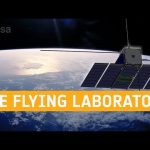
    What would you do with a powerful computer based in space? At just 30 cm in height, OPS-SAT is a tiny CubeSat designed to serve as a large-scale software laboratory in orbit – containing one of the most powerful flight computers ever flown – to test innovative control software from teams all over Europe. Anyone can apply to try out their software aboard OPS-SAT, from companies to research teams to computer clubs, linking directly from the internet. The small satellite packs in a high-resolution camera, radio antennas, optical receiver, reaction wheels and GPS. OPS-SAT can be rebooted if any experimental software crashes, allowing otherwise risky inflight testing as a way to make space smarter.

    ★ Subscribe: http://bit.ly/ESAsubscribe and click twice on the bell button to receive our notifications.

    Check out our full video catalog: http://bit.ly/SpaceInVideos
    Follow us on Twitter: http://bit.ly/ESAonTwitter
    On Facebook: http://bit.ly/ESAonFacebook
    On Instagram: http://bit.ly/ESAonInstagram
    On Flickr: http://bit.ly/ESAonFlickr

    We are Europe’s gateway to space. Our mission is to shape the development of Europe’s space capability and ensure that investment in space continues to deliver benefits to the citizens of Europe and the world. Check out http://www.esa.int/ESA to get up to speed on everything space related.

    Copyright information about our videos is available here: http://www.esa.int/spaceinvideos/Terms_and_Conditions

    #ESA
    #OPSSAT
    #Satellite

  • OPS-SAT: the flying laboratory

    OPS-SAT: the flying laboratory

    On 17 December, ESA will launch a first-of-its-kind space laboratory, OPS-SAT. The small, low-cost test satellite has been specifically designed for operational experiments in space, and includes the most powerful flight computer on board any current ESA spacecraft.

    Consumer electronics have gone through a revolution over the last 30 years with computers becoming ever faster, smaller and better. But when it comes to million- or even billion-euro satellites, their onboard hardware and software have not seen this revolution because of the risks of testing new technology in flight.

    As spacecraft managers dare to fly only tried-and-tested hard and software in the harsh conditions of space, innovation on the operational side of satellites is a very slow-moving process. This is where OPS-SAT steps in, bringing down the barriers to spacecraft operations it provides a chance to safely test out new mission control techniques.

    Anyone can apply to become an ‘experimenter’ and test their innovative software and new mission operations techniques in space. Proving technology for future missions and paving the way for satellites to further evolve with minimum risk, OPS-SAT will be launched with ESA’s Cheops satellite from Europe’s Spaceport in Kourou, French Guiana.

    ★ Subscribe: http://bit.ly/ESAsubscribe and click twice on the bell button to receive our notifications.

    Check out our full video catalog: http://bit.ly/SpaceInVideos
    Follow us on Twitter: http://bit.ly/ESAonTwitter
    On Facebook: http://bit.ly/ESAonFacebook
    On Instagram: http://bit.ly/ESAonInstagram
    On Flickr: http://bit.ly/ESAonFlickr

    We are Europe’s gateway to space. Our mission is to shape the development of Europe’s space capability and ensure that investment in space continues to deliver benefits to the citizens of Europe and the world. Check out http://www.esa.int/ESA to get up to speed on everything space related.

    Copyright information about our videos is available here: http://www.esa.int/spaceinvideos/Terms_and_Conditions

    #ESA
    #OPSSAT
    #Satellite

  • ESA’s detection expertise

    ESA’s detection expertise

    What’s the difference between spotting asteroids in space, and debris objects in Earth orbit? At first, both look like tiny dots streaming across the sky, against a backdrop of twinkling stars. As part of its Space Safety & Security activities, ESA brings together experts in asteroid and debris detection, asking what these two vital fields have in common, and how they can protect us from hazards in space.

    ★ Subscribe: http://bit.ly/ESAsubscribe and click twice on the bell button to receive our notifications.

    Check out our full video catalog: http://bit.ly/SpaceInVideos
    Follow ESA on Twitter: http://bit.ly/ESAonTwitter
    On Facebook: http://bit.ly/ESAonFacebook
    On Instagram: http://bit.ly/ESAonInstagram
    On Flickr: http://bit.ly/ESAonFlickr

    ESA is Europe’s gateway to space. Our mission is to shape the development of Europe’s space capability and ensure that investment in space continues to deliver benefits to the citizens of Europe and the world. Check out http://www.esa.int/ESA to get up to speed on everything space related.

    Copyright information about our videos is available here: http://www.esa.int/spaceinvideos/Terms_and_Conditions

  • The Elites Human Slavery Experiment, Artificial Intelligence and the Endgame Alien Threat Nightmare

    The Elites Human Slavery Experiment, Artificial Intelligence and the Endgame Alien Threat Nightmare

    I had the honor and priviledge to be able to sit down with Nick Redfern and interview him in person for the second time! This was a 2 part discussion starting off with big brother, propaganda, artificial intelligence and mind control. We end with part 2 connecting the dots of the first part with the UFOs, and the Artificial Alien Threat.

    PART 1
    Elite Bloodlines
    Illuminati
    New World Order
    Orchestrated Events
    Big Brother the Orwellian Society
    Surveillance through Social Media
    Propaganda through Television and Mainstream Media
    Mind Control and Dumbing Down the Masses
    GMOs in Food and Pharmaceutical Drugs as a Weapon for the Elite
    Black Budget Operations and Programs
    Artificial Intelligence
    Virtual Reality
    Technology is great but can easily be abused
    Post 9/11 World
    DARPA and Microchip Implants
    Low Frequency Weapon
    Georgia Guide Stones
    Depopulation Agendas

    PART 2 CONNECTING THE DOTS WITH PART 1
    Ronald Reagans Alien Threat Speech
    Project Bluebeam and the Fake Alien Threat
    Advanced Holographic Technologies
    Bob Lazar, Area 51, and Alien Technologies
    Black Triangle UFO’s
    Fabricated Events
    The Orchestration of the Second Coming of Christ
    Are Governments of the World working alongside ET’s
    Project Serpo and Eisenhower
    Disinformation
    Dulce Underground Wars
    Phil Schneider
    Are ET’s traveling here? Are they already here possibly underground or hollow earth?
    Underground Top Secret Facilities
    Underground Submersive Objects

  • ExoMars Trace Gas Orbiter completes aerobraking

    ExoMars Trace Gas Orbiter completes aerobraking

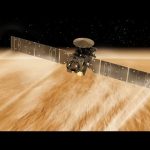
    Since arriving at Mars in October 2016, the ExoMars Trace Gas Orbiter has been aerobraking its way into a close orbit of the Red Planet by using the top of the atmosphere to create drag and slow down. It is almost in the right orbit to begin observations – only a few hundred kilometres to go! With aerobraking complete, additional manoeuvres will bring the craft into a near-circular two-hour orbit, about 400 km above the planet, by the end of April. The mission’s main goal is to take a detailed inventory of the atmosphere, sniffing out gases like methane, which may be an indicator of active geological or biological activity. The camera will help to identify surface features that may be related to gas emissions. The spacecraft will also look for water-ice hidden below the surface, which could influence the choice of landing sites for future exploration. It will also relay large volumes of science data from NASA’s rovers on the surface back to Earth and from the ESA–Roscosmos ExoMars rover, which is planned for launch in 2020.

    Visit our website to learn more about ExoMars: https://www.esa.int/Our_Activities/Space_Science/ExoMars

  • ESA’s Space Operations Centre – “Where missions come alive”

    ESA’s Space Operations Centre – “Where missions come alive”

    ESA’s European Space Operations Centre links people with spacecraft travelling to the frontiers of human knowledge.

    Our world is about systems, communication and exploration; our passion is for humanity’s voyages into the Universe.

    And even the grandest journey begins with just a few steps.

    More about ESOC:
    http://www.esa.int/About_Us/ESOC

  • ESOC: Where missions come alive

    ESOC: Where missions come alive

    ESOC – European Space Operations Centre 2017

    As a centre of excellence for mission operations since 1967, ESA’s ‘mission control’ delivers expertise and experience in a unique mix that serves the scientific and engineering goals of ESA, and enables economically vital European programmes like Copernicus and Galileo.

    ESOC is home to highly specialised teams who control and navigate spacecraft, manage ESA’s worldwide tracking station network, and build the ground systems that enable satellites to conduct their missions. Spacecraft flown from ESOC are studying our planet and helping us understand climate change through realtime Earth data, and are exploring our Sun and Solar System or peering deep into the mysteries of time and space.

    The centre is unique and unparalleled in its ability to control sophisticated probes, and to design, develop and build everything needed on ground to successfully fly satellites in space.

    Our world is about systems, communication and exploration; our passion is for humanity’s voyages into the Universe.

    In 2017, ESOC celebrates its 50th anniversary #esoc50
    http://www.esa.int/esoc
    http://www.esa.int/esoc50

    This video is also available in the following languages:
    German: https://www.youtube.com/watch?v=Tl4W91VF_SM />French: https://www.youtube.com/watch?v=8-VHgc6kWMQ

  • ESA’s Space Operations Centre – the ESOC music video

    ESA’s Space Operations Centre – the ESOC music video

    ESA’s European Space Operations Centre links people with spacecraft travelling to the frontiers of human knowledge. Our world is about systems, communication and exploration; our passion is for humanity’s voyages into the Universe. And even the grandest journey begins with just a few steps.

  • Meet ESA, the space agency for Europe

    Meet ESA, the space agency for Europe

    You, together with your 500 million fellow citizens from ESA’s 20* European member nations, are the collective owners of one of the world’s leading space agencies.

    The European Space Agency is an intergovernmental organisation, a cooperative coming together of its Member States in their national interest and common good.

    This new video offers a quick introduction: Europe, meet ESA.

    (*As of February 2015, 22 Member States)

  • Space for Europe

    Space for Europe

    Space touches us all on Earth – it is used for protecting our environment, for improving our everyday lives, for safety and security, and for stimulating our need for knowledge. Space is a key asset for Europe to face global challenges, for boosting our economic growth, for building our future.

  • Space: for protecting our environment

    Space: for protecting our environment

    Space touches us all on Earth – it is used for protecting our environment, for improving our everyday lives, for safety and security, and for stimulating our need for knowledge. Space is a key asset for Europe to face global challenges, for boosting our economic growth, for building our future.