In the vast expanse of space, astronauts face a unique challenge – the need to share spacesuits during prolonged spacewalks. These suits, including their inner linings that come into direct contact with the astronauts’ skin, tend to accumulate bodily fluids over time. Drawing a rather relatable analogy, it’s akin to sharing underwear in space!
However, the practicality of washing these spacesuit interiors on lunar surfaces or beyond presents a significant hurdle. To counter this, a dedicated group of researchers is delving into innovative strategies to curb the growth of potentially harmful microbes within the inner layers of these suits.
Here’s where the solution gets intriguing: the world of microbiology offers a fascinating approach. Certain types of microbes possess ‘secondary metabolites’ that allow them to combat other microbes. These compounds are not only diverse in colour but also possess antibiotic properties. The ingenious idea involves integrating these microbial warriors into the very fabric of the spacesuit’s inner layer.
This pioneering research isn’t confined solely to the realm of spacesuits; its implications extend far beyond. The outcomes hold the potential to revolutionise the field of antimicrobial treatments and smart textile technologies right here on Earth. As we gear up for lunar expeditions and beyond, these microbial-fighting fabrics could play a pivotal role in ensuring astronauts’ health and well-being while opening new frontiers of innovation back home.
NOVA has teamed up with Cook’s Illustrated to cook up a recipe for stars and black holes – a culinary “course” on how the most mysterious objects in the universe are created.
Scientific notes:
Stellar mass black holes vs. supermassive black holes
* Stellar mass black holes form from the collapse of massive stars at the ends of their lives, so they have roughly the same mass as a star. Supermassive black holes are physically identical to their smaller counterparts, except they are 10 thousand to a billion times the size of the sun. However, their formation is more of a mystery. They may form from the merging of smaller black holes. http://astronomy.swin.edu.au/cosmos/S/Supermassive+Black+Hole
Supermassive black holes at the center of galaxies
* Almost every large galaxy has a supermassive black hole at its center, but researchers are not yet sure (https://jila.colorado.edu/research/astrophysics/black-holes-galaxies) why that’s the case, how they originate, and what their role is in the creation and evolution of galaxies.
Why are stars different colors?
* The color of a star depends on its temperature (http://www.atnf.csiro.au/outreach/education/senior/astrophysics/photometry_colour.html). The hotter a star, the higher energy its light will be. Higher energy/temperature corresponds with the blue end of the visible spectrum and lower energy/temperature corresponds with the red end.
How does dark matter make stars spin faster?
* In the 1960s, astronomers Vera Rubin and Kent Ford noticed that stars at the edges of galaxies were moving just as fast as stars at the center, which surprised them: it appeared that the force of gravity causing stars to orbit the center of the galaxy was not weakening over distance. Their observation implied that something else, distributed throughout the galaxy, was exerting a gravitation pull. We now know that that “something else,” now named dark matter, accounts for about 85% of the matter in the universe. (It existence was inferred in the 1930s, when the astronomer Fritz Zwicky(http://www2.astro.psu.edu/users/rbc/a1/week_10.html) noticed that galaxies in clusters were moving faster than they should.)
Size of the universe
* The universe is only 13.8 billion years old, but has a radius of about 46 billion light-years. If nothing can travel faster than the speed of light, how can that be? The expansion of the universe, driven by dark energy, is causing distances between objects to grow. Note that it is not moving those objects apart; rather, it is increasing the amount of space between them. https://phys.org/news/2015-10-big-universe.html
Cosmic webs
* Galaxies are not distributed randomly (http://skyserver.sdss.org/dr1/en/astro/structures/structures.asp) in space; instead, clusters of galaxies form web-like patterns. These webs consist of filaments, where dark matter and ordinary (baryonic) matter are concentrated, and voids, where galaxies are scarce. Researchers believe that these large-scale structures grew out of minor fluctuations in density at the beginning of the universe.
Composition of the early universe
* Moments after the Big Bang, the universe formed the nuclei for what would be come the universe’s hydrogen and helium atoms, with one helium nucleus for every 10 or 11 hydrogen (http://umich.edu/~gs265/bigbang.htm). When the first stars formed, there were no heavier elements — those elements formed inside stars.
String Theory Landscape
* The String Theory Landscape is a theory that the universe we live in is one of many universes. It attempts to explain how certain constants of nature seem “fine-tuned” for life, which contradicts the anthropic principle, or the notion that we humans hold a special place in the universe. https://www.scientificamerican.com/article/multiverse-the-case-for-parallel-universe/%0A
Disintegration of the universe
* In the future Degenerate Era of the universe, as space-time expands and stars burn up, all of the matter in stars will be consumed by black holes. But even black holes are not forever. Stephen Hawking theorized that black holes will slowly radiate away their mass in what is now called Hawking radiation until they too dissipate away. http://www.nytimes.com/books/first/a/adams-universe.html
______
MEDIA CREDITS:
Music provided by APM
Sound effects: Freesound.org
Additional Animations:
– Galaxy within Universe: Edgeworx;
– Stars at center of Milky Way – NASA/NCSA University of Illinois Visualization by Frank Summers, Space Telescope Science Institute, Simulation by Martin White and Lars Hernquist, Harvard University
Fly-through movie of Hebes Chasma, the northernmost part of Valles Marineris. The movie was created from images taken by the High Resolution Stereo Camera on Mars Express.
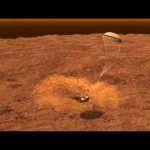
A new rendering of Huygens descent and touchdown created using real data recorded by the probe’s instruments as it descended to the surface of Titan, Saturn’s largest moon, on 14 January 2005.
The animation takes into account Titan’s atmospheric conditions, including the Sun and wind direction, the behaviour of the parachute (with some artistic interpretation only on the movement of the ropes after touchdown), and the dynamics of the landing itself. Even the stones immediately facing Huygens were rendered to match the photograph of the landing site returned from the probe, which is revealed at the end of the animation.
Split into four sequences, the animation first shows a wide-angle view of the descent and landing followed by two close-ups of the touchdown from different angles, and finally a simulated view from Huygens itself — the true Huygens experience.
This animation was released on the eighth anniversary of Huygen’s touchdown on Titan as a Space Science Image of the Week feature.
Animation: ESA–C. Carreau/Schröder, Karkoschka et al (2012). Image from Titan’s surface: ESA/NASA/JPL/University of Arizona