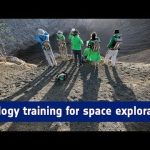
ESA’s Pangaea training course prepares astronauts and space engineers to identify planetary geological features during future missions to the Moon, Mars and asteroids.
The Pangaea campaign – named after the ancient supercontinent – provides the crew with introductory and practical knowledge to find interesting rock samples and assess the most likely places to find traces of life on other planets. Leading European planetary geologists share their insights into the geology of the Solar System.
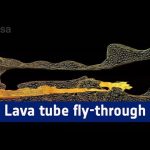
Theoretical work is followed by field trips to the Ries impact crater in Germany, the sedimentary environment of Geopark Bletterbach in the Italian Dolomites and the volcanic landscapes of the Geopark of Lanzarote, Spain.
Pangaea is the first step in preparing European astronauts to become planetary explorers on missions to other planets, allowing them to effectively communicate with science advisors on Earth.
Through Pangaea, Europe is also developing operational concepts for surface missions where astronauts and robots work together, among themselves and with scientists and engineers on Earth, using the best field geology and planetary observation techniques.
More about Pangaea: http://bit.ly/ESACaves
Pangaea blog: http://bit.ly/PangaeaBlog
Credits: Film director, video shooting and editing: Sirio Sechi
★ Subscribe: http://bit.ly/ESAsubscribe