Tag: path

  • Artemis I Path to the Pad: Launch and Recovery

    Artemis I Path to the Pad: Launch and Recovery

    On Nov. 16, 2022, NASA made history with the launch of our Space Launch System (SLS) rocket and Orion spacecraft – our newest transportation system that will return humans to the Moon. Relive the powerful moment SLS rumbled away from Earth, beginning Orion’s three-week test flight around the Moon, and watch as we document Orion’s splashdown in the Pacific Ocean, closing the first chapter in America’s next deep space exploration story.

    All about Artemis I: https://www.nasa.gov/specials/artemis-i/

    Writer: Danielle Sempsrott
    Editor: Francisco Martin
    Producers: John Sackman, Michael Justice & Madison Tuttle
    Music courtesy of Gothic Storm Music
    Credit: NASA

  • Artemis I Path to the Pad: Roll to the Pad

    Artemis I Path to the Pad: Roll to the Pad

    Before our Space Launch System (SLS) rocket and Orion spacecraft can launch our nation into a new era of spaceflight, the duo must first undergo a wet dress rehearsal at the launch pad prior to liftoff.

    Watch SLS and Orion continue on their path to the pad as they travel to Kennedy Space Center’s Launch Pad 39B for a full countdown rehearsal – an operation involving hundreds of engineers stationed all across the nation.

    All about Artemis I: https://www.nasa.gov/specials/artemis-i/

    Credits:
    Writer: Danielle Sempsrott
    Editor: Francisco Martin
    Producers: John Sackman, Michael Justice & Madison Tuttle
    Music courtesy of Gothic Storm Music
    Credit: NASA

  • Artemis I Path to the Pad: The Spacecraft

    Artemis I Path to the Pad: The Spacecraft

    Named after one of the largest constellations in the night sky, Orion is the name given to the spacecraft that will carry the first woman and first person of color to the Moon. But before we fly astronauts aboard, the spacecraft, powered by our Space Launch System rocket, will travel tens of thousands of miles on a flight test around the Moon. Watch as teams at NASA’s Kennedy Space Center prepare Orion for that journey, outfitting the spacecraft with its necessary components as it moves along its path to the pad.

    All about Artemis I: https://www.nasa.gov/specials/artemis-i/

    Writer: Danielle Sempsrott
    Editor: Francisco Martin
    Producers: John Sackman, Michael Justice & Madison Tuttle
    Music courtesy of Gothic Storm Music
    Credit: NASA

  • Artemis I Path to the Pad: The Rocket

    Artemis I Path to the Pad: The Rocket

    Have you ever wondered what it takes to assemble the most powerful rocket NASA has ever built? Watch documentary footage of our Space Launch System (SLS) rocket’s transformation into the over-300-foot-tall launch vehicle that will return humanity to the Moon.

    Starting with manufacturing and ending with stacking operations inside NASA Kennedy Space Center’s Vehicle Assembly Building, this is only the beginning of SLS’s path to the pad.

    All about Artemis I: https://www.nasa.gov/specials/artemis-i

    Writer: Danielle Sempsrott
    Editor: Francisco Martin
    Producers: John Sackman, Michael Justice & Madison Tuttle
    Music courtesy of Gothic Storm Music
    Credit: NASA

    #Artemis #NASA #KennedySpaceCenter #Moon #Space #Orion #PathToThePad

  • Artemis I Path to the Pad: NASA Series Trailer

    Artemis I Path to the Pad: NASA Series Trailer

    Through Artemis, NASA will once again land humans on the Moon. But before that can happen, we must first launch our Space Launch System (SLS) rocket—the most powerful rocket we’ve ever built—and Orion spacecraft on a flight test around the Moon. Join us as we document this moment in history and watch as we follow SLS and Orion on their path to the pad. The first episode of this series will premiere here on Aug. 12, 2022.

    All about Artemis I: https://www.nasa.gov/specials/artemis-i/

    Writer: Danielle Sempsrott
    Editor: Francisco Martin
    Producers: John Sackman, Michael Justice & Madison Tuttle
    Credit: NASA

    #Artemis #NASA #KennedySpaceCenter #Moon #Space #Orion #PathToThePad

  • NASA’s CAPSTONE: Flying a New Path to the Moon

    NASA’s CAPSTONE: Flying a New Path to the Moon

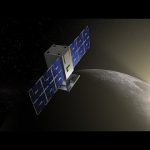
    How can a satellite the size of a microwave oven help shape human missions to the Moon and beyond?

    CAPSTONE will fly in a unique, halo-shaped orbit around the Moon before the orbit is used by Gateway, NASA’s future lunar outpost for our Artemis program. The CAPSTONE mission, short for Cislunar Autonomous Positioning System Technology Operations and Navigation Experiment, will validate navigation technologies and orbital dynamics for Gateway, which will one day serve as a staging area for missions to the Moon and potentially as a jumping point for missions to Mars.

    The CubeSat will come within 1,000 miles of one lunar pole on its near pass and 43,500 miles from the other pole at its peak every seven days, requiring less propulsion capability for spacecraft flying to and from the Moon’s surface than other circular orbits. It’s a six-month mission that will help launch a new era of exploration.

    CAPSTONE will lift off aboard a Rocket Lab Electron rocket from New Zealand. The mission is targeted to launch no earlier than June 25, 2002.

    More: https://go.nasa.gov/3FzSrcD

    #Artemis

  • #EZScience Episode 4: The Path to Mars 2020

    #EZScience Episode 4: The Path to Mars 2020

    Let’s talk about science! Watch the fourth episode of our #EZScience series to learn about NASA’s upcoming Mars 2020 rover mission by looking back at the Mars Pathfinder mission and Sojourner rover. Discover the innovative elements of Mars 2020 (including a small solar-powered helicopter!) and what we hope to learn about the Red Planet when our new rover arrives in February 2021.

    ABOUT THE SERIES: In our #EZScience video series with the National Air and Space Museum, NASA’s associate administrator for science Dr. Thomas Zurbuchen and Museum director Dr. Ellen Stofan talk about the latest in planetary science and exploration.

    Learn more: https://www.nasa.gov/ezscience

  • Rosetta’s final path

    Rosetta’s final path

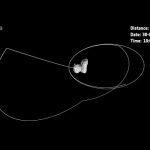
    Animation of Rosetta’s final trajectory in the last 10 days of its mission at Comet 67P/Churyumov–Gerasimenko.

    On 24 September 2016, Rosetta will leave a close flyover orbit and transfer into the start of a 16 x 23 km orbit that will be used to prepare and line up for the final descent. In the evening of 29 September (20:50 GMT) Rosetta will manoeuvre onto a collision course with the comet, beginning the descent from an altitude of 19 km. The spacecraft will fall freely, without further manoeuvres, collecting scientific data during the descent.

    The trajectory shown in this animation is created from real data provided in the last month, but may not necessarily follow the exact distance/time details because of natural deviations in the trajectory associated with the comet’s gravity and outgassing.

    Find out more about Rosetta at:
    http://blogs.esa.int/rosetta
    and
    http://www.esa.int/rosetta