This footage is from 20 January 2014, when ESA’s Rosetta spacecraft awoke from deep space hibernation, more than 800 million kilometres from Earth. After spending 31 months in a power-saving sleep mode to conserve energy while travelling through the cold, outer regions of the Solar System, Rosetta successfully reactivated and sent a signal back to Earth — a simple “Hello, world!” that marked the beginning of one of the most ambitious space missions in history. Rosetta went on to become the first spacecraft to rendezvous with a comet (67P/Churyumov–Gerasimenko), orbit it, and deploy a lander, Philae, to its surface.
Imagine you are singing in a choir. You are doing your best, just like everybody else. Suddenly, somebody turns to you and points out that you are not singing the right note. If you are told off in a harsh way, you may feel bad about it, and if this happens too often you might not only feel upset about the choir but might even leave it for good. Eventually, the whole choir could end if everybody just leaves.
It is the duty of the choir conductor (the ESA team head) to be able to address every single situation in the right way, to make everyone feel heard and encouraged.
In the third video of this new series of ESA Masterclass, Nicolas shares some lessons learned in his decades as a team leader on what it takes to keep a team together through mutual trust and recognition and make all members work in a harmonious way, like singers of a well-tuned choir.
With 35 years of experience at ESA, Nicolas Bobrinsky is the former Head of Ground Systems Engineering & Innovation Department. He initiated and further managed the Space Situational Awareness and later the ESA Space Safety Programme.
In four episodes of this new series of ESA Masterclass, Nicolas takes us through major events in his career at ESA, covering cornerstone missions, first attempts, overcoming technical challenges, leading diverse teams and solving the unexpected problems that are part of any space endeavour.
★ Subscribe: http://bit.ly/ESAsubscribe and click twice on the bell button to receive our notifications.
We are Europe’s gateway to space. Our mission is to shape the development of Europe’s space capability and ensure that investment in space continues to deliver benefits to the citizens of Europe and the world. Check out https://www.esa.int/ to get up to speed on everything space related.
The Moon has inspired and beckoned generations to explore. NASA’s Artemis I mission will forge a new path to the Moon, charting a course for a new, diverse generation of explorers. We’ll develop the cutting-edge technology we’ll need to venture even farther – to Mars and beyond. The Artemis I rocket and spacecraft are now combined and undergoing final testing at Kennedy Space Center in Florida, where it will soon launch on the first in a series of increasingly ambitious missions. Thanks to the daily efforts of NASA and its international and industry team members, our dreams are poised to take flight. We are going.
Producer: Barbara Zelon, Alysia Lee Writer & Director: Paul Wizikowski Editor: Phil Sexton Sound Mix: Eric Land Lunar Photography: Andrew McCarthy Workforce Photography: NASA, ESA Narrator: NASA Astronaut Victor Glover
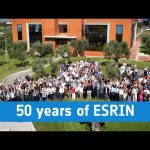
ESRIN, ESA’s centre for Earth observation in Frascati, near Rome, is one of the agency’s main specialised centres in Europe, and its founding ceremony took place 50 years ago on 27 September 1968.
Today, ESRIN manages the exploitation phase of the Earth Observation satellites and the ground segment for ESA and third-party Earth observation satellites, maintaining the largest archive of environmental data in Europe and coordinating over 20 ground stations and ground segment facilities in Europe. It also hosts the project team managing the Vega small-launcher programme.
ESA is Europe’s gateway to space. Our mission is to shape the development of Europe’s space capability and ensure that investment in space continues to deliver benefits to the citizens of Europe and the world. Check out http://www.esa.int/ESA to get up to speed on everything space related.
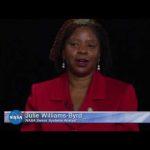
NASA kicked off a yearlong centennial celebration for its Langley Research Center in Hampton, Virginia, with events Dec. 1 highlighting the critical work done by the African American women of Langley’s West Computing Unit, a story told in the book and upcoming movie “Hidden Figures”. During a NASA education event that was streamed to schools across the country, NASA Administrator Charles Bolden, Film director Ted Melfi, NASA Chief Historian Bill Barry, who consulted on the film, and NASA Modern Figure Julie Williams-Byrd, an electro-optics engineer for the Space Mission Analysis Branch at Langley, discussed the work of past and present NASA figures benefits humanity and enable future long-duration human and robotic exploration into deep space, including the agency’s Journey to Mars.