Tag: photography

  • Thomas and Matthias astro chats: space photography | Episode 4

    Thomas and Matthias astro chats: space photography | Episode 4

    Join ESA astronauts Thomas Pesquet and Matthias Maurer at NASA’s Johnson Space Center in Houston, Texas, USA. In part four of this video series, the astronauts discuss taking photos on the International Space Station.

    Though mission details and dates are yet to be confirmed, Thomas and Matthias are the next two European astronauts in line for flights. Thomas has flown to the International Space Station before, while Matthias will fly for the first time.

    Prior to a mission, astronauts train extensively to ensure they are familiar with the vast array of systems and operations on board. In this video, the pair reflect on the images Thomas took during his first mission and how he plans to approach space photography the second time around.

    This video was filmed in June 2020. At that time, the platform Thomas and Matthias were standing on – in front of a full-scale mock-up of the International Space Station – was the only place at NASA’s JSC that they could interact without face masks. Despite this, the pair were required to maintain social distance at all times as a precaution.

    Learn more: https://bit.ly/HumanAndRoboticExplorationESA

    ★ Subscribe: http://bit.ly/ESAsubscribe and click twice on the bell button to receive our notifications.

    Check out our full video catalog: http://bit.ly/SpaceInVideos
    Follow us on Twitter: http://bit.ly/ESAonTwitter
    On Facebook: http://bit.ly/ESAonFacebook
    On Instagram: http://bit.ly/ESAonInstagram
    On Flickr: http://bit.ly/ESAonFlickr

    We are Europe’s gateway to space. Our mission is to shape the development of Europe’s space capability and ensure that investment in space continues to deliver benefits to the citizens of Europe and the world. Check out http://www.esa.int/ESA to get up to speed on everything space related.

    Copyright information about our videos is available here: http://www.esa.int/spaceinvideos/Terms_and_Conditions

    #ESA
    #MatthiasMaurer
    #ThomasPesquet
  • The Moon camera

    The Moon camera

    Which camera to send to the Moon? The iconic images taken with the Hasselblad 500 series captivated the world. Today, Hasselblad cameras are synonymous with the Apollo missions. We visited Gothenburg to find out how a Swedish camera made it to the Moon.

    Learn more: http://bit.ly/BuzzAldrinAndTheEagle

    ★ Subscribe: http://bit.ly/ESAsubscribe and click twice on the bell button to receive our notifications.

    Check out our full video catalog: http://bit.ly/SpaceInVideos
    Follow us on Twitter: http://bit.ly/ESAonTwitter
    On Facebook: http://bit.ly/ESAonFacebook
    On Instagram: http://bit.ly/ESAonInstagram
    On Flickr: http://bit.ly/ESAonFlickr

    We are Europe’s gateway to space. Our mission is to shape the development of Europe’s space capability and ensure that investment in space continues to deliver benefits to the citizens of Europe and the world. Check out http://www.esa.int/ESA to get up to speed on everything space related.

    Copyright information about our videos is available here: http://www.esa.int/spaceinvideos/Terms_and_Conditions

    #ESA
    #Apollo
    #Hasselblad

  • Day and night

    Day and night

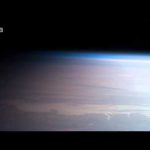
    It takes 90 minutes for an astronaut on the International Space Station to circle Earth completely, passing from daytime to nighttime and back again. This video taken by ESA astronaut Alexander Gerst shows the view from space in under one minute. Each orbit the Station moves around 2200 km to the West in relation to 90 minutes before.

    Astronauts often use normal consumer digital cameras to take pictures of Earth through Europe’s observatory module Cupola in their spare time. Setting the camera to take an image every few seconds and then playing the images back quickly create this timelapse effect.

    Alexander worked as a geophysicist and volcanologist before he was chosen as an ESA astronaut in 2009. His Blue Dot mission includes an extensive scientific programme of experiments in physical science, biology, and human physiology as well as radiation research and technology demonstrations. All experiments chosen make use of the out-of-this-world laboratory to improve life on Earth or prepare for further human exploration of our Solar System.

    Read more about his mission at http://www.esa.int/Our_Activities/Human_Spaceflight/Blue_dot

    Follow Alexander here: http://alexandergerst.esa.int/