What’s the science behind texting? When you hit send, how does your message leave your phone and make the journey to your friend’s phone?
Subscribe: http://youtube.com/whatthephysics?sub_confirmation=1
↓Want more info?↓
CREDITS:
Host, Writer, Animator, Editor:
Greg Kestin
Special thanks:
Tyler Howe
Julie Elsky
Lissy Herman
Patrick Mitran
Jerry Gibson
Lauren Aguirre
Kristine Allington
Anna Rothschild
Allison Eck
Ari Daniel
Lauren Miller
SCIENTIFIC NOTES:
– Messages can also be encoded by altering the phase of the signal being sent from the antenna.
– Phones use several (~8) frequencies at one time, and since there are limited frequencies (~100) for the tower to use, manages the sharing of them.
MEDIA CREDITS:
Music provided by APM:
Curio C
Sound effects:
Freesound.org
Images:
Two tree cell towers (Devra)
Top of cell tower (Ervins Strauhmanis)
Stock footage from Pond5:
digital-computer-brain-binary
bangkok-city-skyline-aerial-da
aerial-fly-over-green-forest-c
Learn about what physics actually is, why it’s awesome, and why you should come with me on a ride through understanding the wacky universe in which we live.
How is the chemical energy of gasoline transformed into kinetic energy of a moving car? And where does that kinetic energy go when the car crashes into something and stops moving?
When you mix red and green, what do you get? White light is all of the colors, right? So, how do computer screens show you every wavelength of light? Or do they?
We all know tides have something to do with gravity from the Moon and Sun, but if gravity affects the motion of all objects equally, then how come oceans have large tides while other bodies of water don’t? It’s because your mental picture of the tides is probably WRONG!!! Join Gabe on this week’s episode of PBS Space Time as he sets the record straight on tidal force, gravitational differential and what role the moon actually plays in tides. Why don’t lakes have tides? Watch the episode to find out!
Even if you don’t, watch anyway. Maybe I’ll convince you. And if not, maybe I’ll impart some important skills or perspectives upon you. A lot of what I say can be applied not only to physics, but to other academic disciplines as well.
Here are some resources for learning physics (in order of increasing difficulty)
Amateur (little to no math)
A Briefer History of Time by Stephen Hawking
The Grand Design by Stephen Hawking and Leonard Mlodinow
The Elegant Universe by Brian Greene
Cosmos by Carl Sagan
Fearful Symmetry by Anthony Zee
Recruit (some calculus, maybe a DiffEQ here or there)
University Physics by Roger Freedman
Physics (Vol 1 and 2) by Resnick, Halliday, and Krane
Regular (know calculus cold, and have a good handle on DiffEQs)
An Introduction to Mechanics by Kleppner and Kolenkow
Electricity and Magnetism by Purcell
Classical and Statistical Thermodynamics by Ashley Carter
Hardened (all of the “baby maths” should be second nature to you)
Classical Mechanics by Taylor
Introduction to Electrodynamics by Griffiths
Introduction to Quantum Mechanics by Griffiths
Introduction to Elementary Particles by Griffiths
Veteran (you will not survive)
A Modern Approach to Quantum Mechanics by Townsend
Quantum Field Theory in a Nutshell by Anthony Zee
Studies indicating that studying in pairs is ideal:
Hake, R. R. (1998). Interactive-engagement versus traditional methods: A six-thousand-student survey of mechanics test data for introductory physics courses. American journal of Physics, 66, 64.
Joe Hanson – Host and writer
Joe Nicolosi – Director
Amanda Fox – Producer, Spotzen IncKate Eads – Associate Producer
Katie Graham – Director of Photography
Editing/Motion Graphics – Andrew Matthews/Kirby Conn
Gaffers – John Knudsen/Philip Sheldon
Post-production intern – Dalton Allen
Five cool physics tricks, but how do they work?
Explanations: http://youtu.be/jIMihpDmBpY
Check out Audible.com: http://bit.ly/AudibleVe
Leave your ideas in the comments below or subscribe for the answers next week.
Has the universe a beginning or was it here since forever? Well, evidence suggests that there was indeed a starting point to this universe we are part of right now. But how can this be? How can something come from nothing? And what about time? We don’t have all the answers yet so let’s talk about what we know.
Also, we try to make this one not depressing. Tell us if we succeeded.
BY THE WAY. We have a website now. We’ll try to blog from time to time, show you guys how we make the videos and give more insight to our process. Also we sell stuff. We really don’t know where this whole kurzgesagt stuff leads us. But we are really thankful for all the attention and positive feedback and yeah, maybe we can make this our jobs — it would be pretty nice and we could do more content each month. But we’ll see. For now, thank you very much everybody for making this little adventure possible.
If you like the MUSIC of the video, you can get it here: http://bit.ly/1fCOlLI
Thomas did an aweful good job again. 🙂
Next Video: April. (as soon as we can but we kind of have to make a living and visit college) Topic: Nuclear Energy (probably, if we finish the research in time — if not something else)
Short videos, explaining things. For example Evolution, the Universe, Time, the Stock Exchange or controversial topics like Fracking. Because we love science.
We’re a bunch of Information designers from munich, visit us on our website, twitter, facebook or behance to say hi!
Did you know that the majority of burps are simply caused by swallowed air? It’s true! Burping is a natural human phenomenon, but it’s also possible for a bottle to burp. Say what?! Believe it… bottles can belch just like a human. All it takes is a bit of science know-how, especially when it comes to the properties of air and water.
Blowing up balloons can be quite the task. You’ll spend a ton of time huffing and puffing while blowing your breath into the rubbery orb. Don’t waste all of that time and energy making yourself light-headed! Try dropping a piece of dry ice into a balloon instead, and watch what happens.
In this 3 Minute Thinking video Dr Sanjay Modgil imagines a future full of new technology and asks fundamental questions about artificial intelligence.
Read the full experiment at http://www.stevespanglerscience.com/experiment/magic-with-physics-pendulum
While many magicians rely on the arts of deception or slight of hand to baffle their audience, we like to use principles of science to achieve the same effect. With the Pendulum Stop trick, you’ll use the sympathetic motion of two pendulums to make your friends think they’ve developed telekinetic powers… or are a Jedi… we’ll leave that part up to them. All you need are some household items and you’ll be fooling people in no time at all!
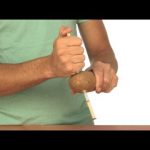
Learn more at http://www.stevespanglerscience.com/lab/experiments/straw-through-a-potato/ Sometimes you have to stop and ask yourself, “Who comes up with this stuff?” No one ever uses a straw to eat a potato, but science nerds seem to like to find ways to poke straws through potatoes. There must be a deeper meaning… and there is!