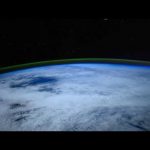
Each year on 22 April, people across the planet join forces to raise awareness about the unequivocal effects of climate change and the importance of protecting our planet for future generations. We celebrate Earth Day every day at ESA. 💙
📹 European Space Agency (ESA) 📸 ESA/NASA 🎙️ The audio features a clip from David Attenborough
In this special episode of our Curious Universe podcast, we turn the tables and put host Padi Boyd in the interview seat. Padi shares stories from her time with NASA’s groundbreaking Kepler mission, which showed us many more exoplanets—planets orbiting other stars—than we had previously discovered. She also tells us about her dream astronomical dinner companion and her go-to karaoke song.
In this special episode of our Curious Universe podcast, we turn the tables and put host Padi Boyd in the interview seat. Padi shares stories from her time with NASA’s groundbreaking Kepler mission, which showed us many more exoplanets—planets orbiting other stars—than we had previously discovered.
She also tells us about her dream astronomical dinner companion and her go-to karaoke song. Plus, we’ll wrap up another season of wild and wonderful adventures by answering questions from listeners like you and sharing behind-the-scenes tidbits from Season 6. For the first time, this episode of Curious Universe is also available as a video podcast.
NASA’s Curious Universe is an official NASA podcast. Discover more adventures with NASA experts at https://nasa.gov/curiousuniverse
As Mars orbits around our Sun, time on the Red Planet is measured in years. However, there are some significant differences between a year on Mars and a year on Earth. Let’s look at some similarities and differences between a year on the two planets.
We are Europe’s gateway to space. Our mission is to shape the development of Europe’s space capability and ensure that investment in space continues to deliver benefits to the citizens of Europe and the world. Check out https://www.esa.int/ to get up to speed on everything space related.
Most striking about Webb’s new image is the crisp view of the planet’s dynamic rings — some of which haven’t been seen at all, let alone with this clarity, since the Voyager 2 flyby in 1989. In addition to several bright narrow rings, the Webb images clearly show Neptune’s fainter dust bands. Webb’s extremely stable and precise image quality also permits these very faint rings to be detected so close to Neptune.
We are Europe’s gateway to space. Our mission is to shape the development of Europe’s space capability and ensure that investment in space continues to deliver benefits to the citizens of Europe and the world. Check out https://www.esa.int/ to get up to speed on everything space related.
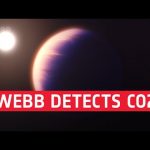
A transmission spectrum of the hot gas giant exoplanet WASP-39 b, captured by Webb’s Near-Infrared Spectrograph on 10 July 2022, reveals the first definitive evidence for carbon dioxide in the atmosphere of a planet outside the Solar System. This is the first detailed transmission spectrum ever captured that covers wavelengths between 3 and 5.5 microns.
We are Europe’s gateway to space. Our mission is to shape the development of Europe’s space capability and ensure that investment in space continues to deliver benefits to the citizens of Europe and the world. Check out https://www.esa.int/ to get up to speed on everything space related.
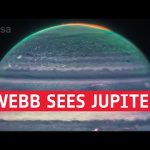
Webb’s Jupiter observations will give scientists even more clues to Jupiter’s inner life since with giant storms, powerful winds, aurorae, and extreme temperature and pressure conditions, the planet has a lot going on.
We are Europe’s gateway to space. Our mission is to shape the development of Europe’s space capability and ensure that investment in space continues to deliver benefits to the citizens of Europe and the world. Check out https://www.esa.int/ to get up to speed on everything space related.
We are Europe’s gateway to space. Our mission is to shape the development of Europe’s space capability and ensure that investment in space continues to deliver benefits to the citizens of Europe and the world. Check out https://www.esa.int/ to get up to speed on everything space related.
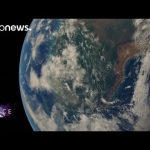
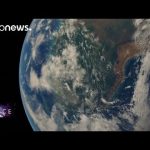
To celebrate Earth Day, this week’s edition of the Earth from Space programme features a spectacular image of Earth captured by Meteosat Second Generation.
We are Europe’s gateway to space. Our mission is to shape the development of Europe’s space capability and ensure that investment in space continues to deliver benefits to the citizens of Europe and the world. Check out https://www.esa.int/ to get up to speed on everything space related.
Watch over one hour of our planet, seen from the International Space Station, in 4K resolution. This compilation was made from video taken by ESA astronauts, mostly by Thomas Pesquet during his first mission, Proxima, and ESA astronaut Alexander Gerst on his second mission, Horizons, as well as footage from Samantha Cristoforetti’s Futura mission and Paolo Nespoli’s Vita mission.
Flying 400 km above our amazing planet Earth, the Space Station travels at 28 800 km/h to stay in orbit. The videos are in real time and not sped up or edited. Most of the scenes were filmed in the European-built Cupola module, the Space Station’s observatory.
On 21 April 2001, the first ESA astronaut Umberto Guidoni arrived at the Space Station. Since then, the Space Station has grown immensely, as have the number of Europeans to have worked in it, together with the science experiments performed in orbit.
Europe contributes around 8% of the running costs of the International Space Station, but has built a large part of the structure, including ESA’s Columbus laboratory, the Cupola observatory, the Tranquillity and Harmony modules, as well as the computers that collect data and provide navigation, communications and operations for the Russian segment.
ESA also provided the Space Station with supplies and boosted its orbit through five Automated Transfer Vehicles, the heaviest and most versatile Space Station supply ferry. This programme evolved into the European Service Modules that ESA is supplying for @NASA’s Artemis programme, taking humans forward to the Moon and thus continuing the exemplary international collaboration beyond Earth’s orbit.
Since Umberto’s mission, there have been 26 further ESA astronaut missions to the International Space Station, with astronauts flying to Station on either the Russian Soyuz or US Space Shuttle spacecraft.
Thomas Pesquet’s second mission, Alpha, is the 28th mission for ESA, with ESA astronaut Matthias Maurer already lined up for his first flight later this year, and ESA astronaut Samantha Cristoforetti scheduled for the 30th ESA International Space Station mission in 2022.
★ Subscribe: http://bit.ly/ESAsubscribe and click twice on the bell button to receive our notifications.
We are Europe’s gateway to space. Our mission is to shape the development of Europe’s space capability and ensure that investment in space continues to deliver benefits to the citizens of Europe and the world. Check out https://www.esa.int/ to get up to speed on everything space related.
The ExoMars team have performed important parachute drop tests as crucial preparation for a safe touchdown on Mars in 2023. The European Rosalind Franklin rover will search for signs of past life beneath the surface of Mars with its unique two metre drill and onboard laboratory. The Russian surface science platform Kazachok will study the environment at the landing site. Landing on Mars is always a challenging endeavour and all possible parameters are taken into account.
We are Europe’s gateway to space. Our mission is to shape the development of Europe’s space capability and ensure that investment in space continues to deliver benefits to the citizens of Europe and the world. Check out https://www.esa.int/ to get up to speed on everything space related.
Water is life, on Earth and in space. Dutch ESA astronaut André Kuipers recounts his experience living in space for 204 days, and his time looking back on the blue face of ‘Planet Aqua’, comparing notes with divers about what is going on beneath the waves. He goes on to explore how space technology is being used for water management, from orbital tracking of water quality and pollution to spacecraft-grade recycling systems deployed down on the ground, as well as ambitious efforts to identify marine plastic litter using satellites. Produced for SIWI World Water Week with the support of the Netherlands Ministry of Foreign Affairs.
★ Subscribe: http://bit.ly/ESAsubscribe and click twice on the bell button to receive our notifications.
We are Europe’s gateway to space. Our mission is to shape the development of Europe’s space capability and ensure that investment in space continues to deliver benefits to the citizens of Europe and the world. Check out https://www.esa.int/ to get up to speed on everything space related.
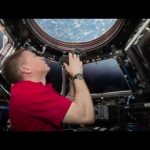
While in orbit, NASA astronauts Robert Behnken and Douglas Hurley captured stunning views of our home planet Earth.
The duo made history May 30 when they launched from American soil in a commercially built and operated American crew spacecraft to the International Space Station. Their mission and test flight is helping NASA certify SpaceX’s crew transportation system for regular flights carrying astronauts to and from the orbiting laboratory.
NASA’s unique vantage point of space allows us to better understand Earth’s interconnected systems and use that knowledge to live sustainably on our home planet, protect life around the world, and adapt to natural and human-caused changes. As NASA joins the world in observing the 50th anniversary of Earth Day, we reaffirm our commitment to understanding our planet’s interconnected systems to help protect them for future generations.
ExoMars 2020 has passed a number of milestones. The European carrier module was delivered in March. The European rover, which contains nine instruments, has been assembled by Airbus UK and is under environmental testing in Toulouse. It should be integrated with the spacecraft by the end of the year. The spacecraft is now in the Thales Alenia Space test facilities in Cannes to start the environmental and performance verification test campaign that will last until February 2020.
However, there remain some important challenges ahead for the parachute system of the descent module. Recent balloon high-altitude drop tests were unsuccessful. As a result, the next and final two drop tests, scheduled between January and March 2020, must be fully successful otherwise the mission cannot launch in 2020.
The joint ESA and Russian mission consists of four elements: a carrier module to propel the spacecraft to Mars, a descent module, a surface science platform and the Rosalind Franklin rover, which will use its drill up to depths of two meters to search for signs of life.
We are Europe’s gateway to space. Our mission is to shape the development of Europe’s space capability and ensure that investment in space continues to deliver benefits to the citizens of Europe and the world. Check out http://www.esa.int/ESA to get up to speed on everything space related.
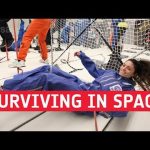
Plans for human space exploration in the next decades are to leave Earth orbit and go to destinations such as the Moon and Mars. But what are the challenges associated with human survival in space and what kind of research is needed to address these challenges?
Life-support systems expert Lucie Poulet participated in four Mars analogue missions as a crew member and has over eight years of experience working on regenerative life-support systems with various groups such as the Micro-Ecological Life-Support System Alternative (MELiSSA) project and the German Aerospace Center, DLR, in Bremen, Germany.
Space Bites hosts the best talks on space exploration from the most inspiring and knowledgeable speakers from the field. Held at the technical heart of the European Space Agency in The Netherlands, the lectures illustrate challenges of space.
We are Europe’s gateway to space. Our mission is to shape the development of Europe’s space capability and ensure that investment in space continues to deliver benefits to the citizens of Europe and the world. Check out https://www.esa.int/ to get up to speed on everything space related.
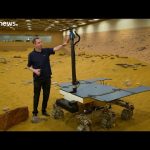
ExoMars is the first mission to head to the Red Planet to seek signs of life, now or in the past. It’s a massive scientific and technical challenge, and Euronews meets some of the team involved in this joint ESA-Roscosmos project in this month’s edition of Space.
ESA is Europe’s gateway to space. Our mission is to shape the development of Europe’s space capability and ensure that investment in space continues to deliver benefits to the citizens of Europe and the world. Check out http://www.esa.int/ESA to get up to speed on everything space related.
To support Kurzgesagt and learn more about Brilliant, go to https://www.brilliant.org/nutshell and sign up for free. The first 688 people that go to that link will get 20% off the annual Premium subscription.
Are wormholes real or are they just magic disguised as physics and maths? And if they are real how do they work and where can we find them?
🐦🐧🐤 PATREON BIRD ARMY 🐤🐧🐦
▀▀▀▀▀▀▀▀▀▀▀▀▀▀▀▀▀▀▀▀▀▀▀▀▀▀
Many Thanks to our wonderful Patreons from http://kgs.link/patreon who support us every month and made this video possible:
Big Skapinsky, Liam Wenzel, Juan Gonzalez, Grigory Sarnitsky, Brandon Cleary, Amanda Hutchings, Siddharth Amarsee, Maciamo Hay, Nick T., Gabriel Correa, Matthew McAteer, Javier Silva Calvo, javier canella, Gergely Szakács, Pernox, Alana leonhardy, Tommi Moilanen, David DiGiovanni, Jack Bernstein, Jonas Steen Nielsen, Thomas Pyke, Gizem Ozdemir, ShiroiYami, Alice Bater, Ennio Sialiti, Alexander Evans, Eric Chan, Peter Noort, Adrian Haslinger, Tomasz Różalski, Miro Cibula, Lyle Jeff, Sunil Pai, Aurélien Delaux, Piotr Pałek, Øyvind Helland, Khloudalahbaby, Nicola Larosa, Dave, Montant, Eli V, ryan oberfield, Iain Garioch, Janina Lamøy, Saurischian, Zachary Osman, Cody Douglas, Can Berk Güder, Jason Lin, Eric Lugo, Emil Hjort, Luuk Perdaems, Brandon Carraway, Zack Methven, dava, Gauthier Muguerza, Tim Andreev, Robin Gielings, Mihai Anei, Pranab Kumar Mishra, jeong-min, An, Nerijana, jongre1512, Mike Levy, David W., Jakob Stams, Linda Yancey, Leo White, John, Justin Boh, Thot, Matthew Dyet, Andrei Stefan, Patrick McKelvy, Kervan Govender, Rajiv Cruz, Peter Duncan, Ramsey Elbasheer, Zhuang Miao, Brayden Sola, frikinside, Yasmeen Mawlawi, Loic Rebillard, Nicholas Miller, Philipp Bergamin, K. Gustavo Carlos, Albin, Connor Wilson, Talal Al-Khaldi, NURO, Durham Goode, Christopher Hadley, Sean Holland, iulian constantin, Pumpk!nH34D, Douwe de Jong, Jens Baumann, Vladislav Aleynikov, Joshua Olson, Andrew Boggs, William Wu, Andrew Mckinley, Eric Burnett, Benjamin Bromberg, Barry Costa, Philippe Ryll, Barbieri Davide, Claire Baldauf, Ondrej Debreceni, Benjamin Sairanen, Elija Peterson, Eki Hassa, Ryan K. Allen, Ville Vuorela, Reinhold Dunkl, Gloria Hope, Matti Hanberg, Moritz Roell, Marco Schmidt, Trey, Jiesi Ren, Maurice Simmons, Simon Sardeson-Coe, Sam Day, Orphansmith, Noah T Blanchard, Gerald Balla, Yannick van Andel, Khaled I. Johari
Earth is the largest rocky planet in our Solar System, and the only body we know of capable of supporting life. With so much news about exoplanets dominating the headlines, in this episode of Space we take a step back to take a look at Earth as a planet.
Four and a half billion years old and 149.6 million kilometres from the Sun, it’s not like anything else in the Solar System: “Planet Earth is quite a particular planet,” says Josef Aschbacher, Director of Earth Observation at ESA. “We have 70% of water, we have land masses which are actually moving over time. We have an atmosphere which is rich in oxygen, nitrogen, in water vapour. All of these are necessities in order to have life on a planet like this.”
Rome is a perfect spot to look at the defining characteristics of planet Earth, in particular the presence of liquid water. Our home planet has the right temperature and correct atmospheric pressure for water to flow on its surface, making it so hospitable to life.
A legnagyobb sziklás bolygó a Naprendszerben, egy igazán különleges hely: lássuk, milyen planéta tulajdonképpen a Föld.
Egy négy és fél milliárd éves szikla, nagyjából százötven millió kilométerre a Naptól. Az egyetlen általunk ismert bolygó, amelyen élet lehetséges. A Naprendszeren belül pedig egészen biztosan egyedülálló.
– A Föld egy különleges bolygó – szögezte le Josef Aschbacher, az Európai Űrügynökség (ESA) Föld-megfigyelési Központjának igazgatója. – A felszín 70 százalékát víz fedi, vannak nagy földtömegek, amelyek lassan mozognak. Van oxigénben, nitrogénben vízgőzben gazdag atmoszféra. Ezek mindegyikéhez szükség van ahhoz, hogy az élet fennmaradhasson egy ilyen bolygón.
A Föld felületén minden emlékeztet arra, hogy a folyékony víz mennyire fontos. A Marssal vagy a Vénusszal ellentétben a Földön a hőmérséklet és a légköri nyomás is megfelelő ahhoz, hogy folyékony víz legyen a felszínen.
‘A Beautiful Planet’ stars Earth as seen from space by astronauts and cosmonauts aboard the orbiting laboratory. Shooting spanned multiple expeditions with NASA astronauts Kjell Lindgren, Terry Virts, and Barry “Butch” Wilmore as well as former NASA astronaut Scott Kelly volunteering as filmmakers during their time on station.
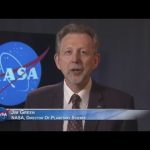
NASA’s Director of Planetary Science, Jim Green, discusses the Jan. 20 Astronomical Journal science paper that points to the possibility of a new “Planet 9” in our solar system beyond Pluto, examining the scientific process and inviting you to have a front row seat to our exploration of the solar system.
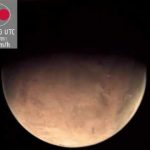
This movie was generated from 600 individual still images captured by the Visual Monitoring Camera (VMC) on board Mars Express during the 8194th orbit on 27 May 2010 between 02:00 and 09:00 UTC (04:00-11:00 CEST) and were transmitted to Earth a few hours later via ESA’s 35m New Norcia deep space station in Australia.
The portion of the movie where the planet beneath the spacecraft was dark has been largely removed since no detail was visible.
The images show the spacecraft’s slow descent from high above the planet, speeding up as closest approach is passed and then slowing down again as the distance increases. Towards the start of the video, the giant Martian volcanoes can be seen followed by the beginning of the ice coverage around the South Pole as the spacecraft crosses over to the night side of the planet. Shortly after emerging back onto the day side of the planet, the beautiful North Pole can be observed, followed by the long climb away from the planet over the equator. Finally, at the end of the movie, the disk of Phobos can be seen crossing from top to bottom of the image.
Credit: ESA – European Space Agency, CC BY-SA 3.0 IGO
Copyright Notice:
This work is licenced under the Creative Commons Attribution-ShareAlike 3.0 IGO (CC BY-SA 3.0 IGO) licence. The user is allowed to reproduce, distribute, adapt, translate and publicly perform this publication, without explicit permission, provided that the content is accompanied by an acknowledgement that the source is credited as ‘ESA/DLR/FU Berlin’, a direct link to the licence text is provided and that it is clearly indicated if changes were made to the original content. Adaptation/translation/derivatives must be distributed under the same licence terms as this publication. To view a copy of this license, please visit http://creativecommons.org/licenses/by-sa/3.0/igo/
The Curiosity rover continues to make its way to Mars and its scheduled landing in Gale Crater on Monday, Aug. 6. Also Mars Yard; New record set; New heat shield test and new mission previewed; Landsat 40 and remembering Sally Ride and more….
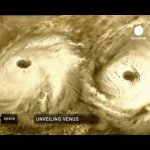
Es conocido como el lucero del alba o la estrella de la mañana, pero no es una estrella: es un planeta. Venus es, junto con Marte, nuestro vecino más cercano, y al mismo tiempo, un gran desconocido. Levantamos el velo que esconde los misterios del planeta ardiente.
On l’appelle l’étoile du berger ou encore l’étoile du matin, mais c’est tout sauf une étoile. C’est même une planète de notre voisinage immédiat. Vénus est, avec Mars, la plus proche planète de la Terre. Proche peut-être mais au combien différente. On commence tout juste à lever quelques pans du voile qui entoure le mystère de la planète brûlante.
It can be called the morning or evening star, depending on where you are or what time it is, but it is anything but a star. In fact, it is one of our nearest planetary neighbours. Venus and Mars may be Earth’s close cousins, but they are oh-so different. Only now are we starting to peer through Venus’ clouds to reveal the burning planet’s secrets.
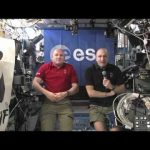
ESA astronaut and World Wildlife Fund (WWF) ambassador André Kuipers and his Expedition 31 crewmate, NASA astronaut Don Pettit, took part in a video call with the WWF annual meeting that took place in Rotterdam, the Netherlands on 8 May 2012.
WWF representatives worldwide heard what André and Don had to say about our planet. Their unique vantage point on the International Space Station and ESA’s Earth observation satellites help us understand how fragile our planet is.
The Dutch branch of the WWF — Wereld Natuur Fonds — is celebrating its 50th anniversary this year.
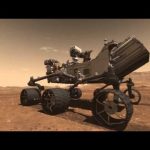
This 11-minute animation depicts key events of NASA’s Mars Science Laboratory mission, which will launch in late 2011 and land a rover, Curiosity, on Mars in August 2012. A shorter 4-minute version of this animation, with narration, is also available on our youtube page.
Pegaso 51 B è il nome che è stato dato al primo pianeta extra sistema solare scoperto nel 1995. Da allora ne sono stati scoperti altri 500. Space è andato a perlustare i recessi della ricerca su queste porzioni di universo.
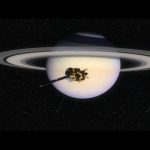
Há algumas décadas, para observar Saturno, os cientistas recorriam a telescópios. Hoje em dia, os segredos de Saturno e da sua misteriosa lua Titã são revelados graças aos dados e imagens enviados pela missão Cassini-Huygens. Saturno nunca antes visto, é o tema de Space esta semana.
Hasta hace algunas décadas para ver Saturno la ciencia tenía que mirar a través de telescópios. Hoy Saturno y su misteriosa luna Titán son nuevos conocidos gracias a la misión Cassini-Huygens que desde 2004 envía imágenes y datos. Una aventura que está cambiando la percepción que hasta ahora teníamos de nuestro Sistema Solar.
Noch vor einigen Jahrzehnten konnte man den Saturn nur mit dem Teleskop beobachten. Heute lüftet die Cassini-Huygens-Mission mit ihren Bildern die Geheimnisse des Saturnsystems und liefert Antworten auf entscheidende wissenschaftliche Fragen.