How would humanity respond if we discovered an asteroid headed for Earth? NASA’s upcoming documentary, “Planetary Defenders,” takes you inside the high-stakes world of asteroid hunting and planetary defense. Follow dedicated scientists and astronomers as they work to protect Earth from potential impacts. With stunning visuals and compelling stories, this gripping documentary reveals the human spirit behind the quest to safeguard our planet.
Coming soon to NASA+ in spring 2025. No subscription required. https://plus.nasa.gov
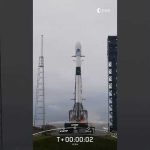
ESA’s Hera mission lifted off on a SpaceX Falcon 9 from Cape Canaveral Space Force Station in Florida, USA, on 7 October at 10:52 local time (16:52 CEST, 14:52 UTC).
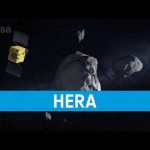
Hera is ESA’s first planetary defence mission. It will fly to a unique target among the 1.3 million asteroids in our Solar System – the only body to have had its orbit shifted by human action – to solve lingering unknowns associated with its deflection.
Hera will carry out the first detailed survey of a ‘binary’ – or double-body – asteroid, 65803 Didymos, which is orbited by a smaller body, Dimorphos. Hera’s main focus will be Dimorphos, whose orbit around the main body was previously altered by NASA’s kinetic-impacting DART spacecraft.
By sharpening scientific understanding of this ‘kinetic impact’ technique of asteroid deflection, Hera should turn the experiment into a well-understood and repeatable technique for protecting Earth from an asteroid on a collision course.
We are Europe’s gateway to space. Our mission is to shape the development of Europe’s space capability and ensure that investment in space continues to deliver benefits to the citizens of Europe and the world. Check out https://www.esa.int/ to get up to speed on everything space related.
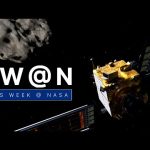
The world’s first-ever planetary defense test is a big hit, a major hurricane spotted from space, and moving our mega Moon rocket back inside ahead of that storm … a few of the stories to tell you about – This Week at NASA!
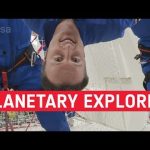
We are training astronauts to explore the lunar surface, collect samples, perform experiments and create an outpost in order to live and work on the Moon. But how will future lunar exploration differ from how Apollo astronauts explored and worked on the Moon?
Our astronaut Matthias Maurer talks of the challenging training he went through during the new episode of Space Bites.
Space Bites hosts the best talks on space exploration from the most inspiring and knowledgeable speakers from the field. Held at the technical heart of the European Space Agency in The Netherlands, the lectures illustrate the challenges of space.
We are Europe’s gateway to space. Our mission is to shape the development of Europe’s space capability and ensure that investment in space continues to deliver benefits to the citizens of Europe and the world. Check out http://www.esa.int/ESA to get up to speed on everything space related.
Hera will show us things we’ve never seen before. Astrophysicist and Queen guitarist Brian May tells the story of our mission that would be humanity’s first-ever spacecraft to visit a double asteroid.
The asteroid system – named Didymos – is typical of the thousands that pose an impact risk to our planet, and even the smaller of the two would be big enough to destroy an entire city if it were to collide with Earth.
Hera will help us to find out if it would be possible to deflect such an asteroid on a collision course with Earth. The mission will revolutionise our understanding of asteroids and how to protect ourselves from them, and therefore could be crucial for saving our planet.
First, NASA will crash its DART spacecraft into the smaller asteroid – known as Didymoon – before Hera comes in to map the resulting impact crater and measure the asteroid’s mass. Hera will carry two CubeSats on board, which will be able to fly much closer to the asteroid’s surface, carrying out crucial scientific studies, before touching down. Hera’s up-close observations will turn asteroid deflection into a well-understood planetary defence technique.
The Hera mission will be presented to our Space19+ meeting this November, where Europe’s space ministers will take a final decision on flying the mission, as part of the Agency’s broader planetary defence initiatives that aim to protect European and world citizens.
We are Europe’s gateway to space. Our mission is to shape the development of Europe’s space capability and ensure that investment in space continues to deliver benefits to the citizens of Europe and the world. Check out http://www.esa.int/ESA to get up to speed on everything space related.
The mission of the Office of Planetary Protection is to promote the responsible exploration of the solar system by implementing and developing efforts that protect the science, explored environments, and Earth. The objectives of planetary protection are several-fold and include: Preserving our ability to study other worlds as they exist in their natural states; avoiding the biological contamination of explored environments that may obscure our ability to find life elsewhere – if it exists; and to ensure that we take prudent precautions to protect Earth’s biosphere in case life does exist elsewhere.