Our Proba-3 mission recently pulled off its first-ever autonomous formation flight — aligning with the Sun and holding position for hours, all on its own.
This is precision. This is the future. And it’s just the beginning.
In 2024, ESA continued to drive Europe’s innovation and excellence in space, equipping the continent with advanced tools and knowledge to address global and local challenges. The year saw pioneering missions, cutting-edge satellites and the pivotal restoration of Europe’s independent access to space.
The first Ariane 6 launch was perhaps ‘the’ highlight of the year but it was only one of many achievements. We saw the last Vega launch and then the return to flight of Vega-C, the more powerful, upgraded version carrying Sentinel-1C.
Far away in our Solar System, the ESA/JAXA BepiColombo spacecraft performed two Mercury flybys in 2024, needed so that it can enter orbit around Mercury in 2026. Juice also performed a crucial gravity assist, this time becoming the first spacecraft to conduct a Moon-Earth double flyby on its way to Jupiter.
Twenty years after ESA’s Rosetta was launched and 10 years since its historic arrival at the comet 67P/Churyumov-Gerasimenko, we launched another spacecraft to a small body, the Hera planetary defence mission to investigate asteroid Dimorphos.
2024 was an important year for Europe’s Galileo constellation which continued to expand with the launch of four new satellites and an updated Galileo ground system. The year also saw the launch of ESA’s Proba-3 mission: two precision formation-flying satellites forming a solar coronagraph to study the Sun’s faint corona.
In human spaceflight, Europe continues to contribute to science from the ISS as Andreas Mogensen’s Huginn mission continued into 2024. Andreas even met up in space with ESA project astronaut Marcus Wandt who was launched on his Muninn mission, making it the first time two Scandinavians were in space together.
Meanwhile the latest class of ESA astronauts completed basic training and graduated in April. Two of them, Sophie and Raphaël, were then assigned to long-duration missions to the ISS in 2026.
We made crucial steps for Europe in gaining access to the Moon: the inauguration of our LUNA facility with DLR, and the delivery of a third European Service Module for NASA’s Orion spacecraft as part of the Artemis programme.
Europe is also contributing to the international Lunar Gateway and developing and ESA lunar lander called Argonaut. These landers will rely on ESA Moonlight, the programme to establish Europe’s first dedicated satellite constellation for lunar communication and navigation.
As 2024 draws to a close, ESA’s achievements this year have reinforced Europe’s role in space. ESA’s journey continues to explore new frontiers, shaping the space landscape for generations to come.
Credits: ESA – European Space Agency
★ Subscribe: http://bit.ly/ESAsubscribe and click twice on the bell button to receive our notifications.
We are Europe’s gateway to space. Our mission is to shape the development of Europe’s space capability and ensure that investment in space continues to deliver benefits to the citizens of Europe and the world. Check out https://www.esa.int/ to get up to speed on everything space related.
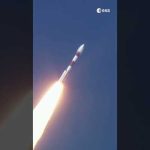
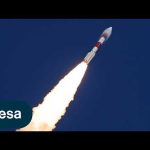
Proba-3 lifted off on its PSLV-XL rocket from Satish Dhawan Space Centre in Sriharikota, India, on Thursday, 5 December, at 11:34 CET (10:34 GMT, 16:04 local time). The mission was launched using this Indian launcher because it needed to be placed in a highly elliptical orbit extending more than 60 500 km from the ground.
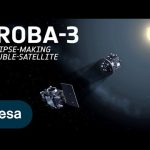
After integration and testing was completed at Redwire Space in Belgium, Proba-3 was transported to India to be prepared for launch. The latest member of ESA’s family of in-orbit demonstration missions, Proba-3 is in fact two spacecraft being launched together, which will separate in orbit to begin performing precise formation flying, precise to a single millimetre, about the thickness of an average fingernail. To prove their performance, Proba-3 has been devoted to an ambitious scientific goal. The pair will line up precisely with the Sun 150 m apart so that one casts a precisely controlled shadow onto the other.
By blocking out the fiery disc of the Sun, Proba-3’s ‘Occulter’ spacecraft will mimic a terrestrial total solar eclipse, to open up views of the Sun’s faint surrounding atmosphere, or ‘corona’, which is a million times fainter than its parent star. Proba-3’s second ‘Coronagraph’ spacecraft hosts the optical instrument that will observe the solar corona. If Proba-3’s initial commissioning phase goes to plan then the spacecraft pair will be separated early in the new year to begin their individual check-outs. The operational phase of the mission, including the first observations of the corona through active formation flying, should begin in about four months.
Proba-3 was led for ESA by Sener in Spain, overseeing a consortium of 14 ESA Member States and Canada including Airbus Defence and Space in Spain manufacturing the spacecraft and Redwire Space in Belgium responsible for the spacecraft avionics, assembly and operations. CSL in Belgium produced Proba-3’s ASPIICS coronagraph Spacebel in Belgium developed the onboard and ground segment software with GMV responsible for the formation flying system and flight dynamics.
Credits: ESA/ISRO – NSIL
★ Subscribe: http://bit.ly/ESAsubscribe and click twice on the bell button to receive our notifications.
We are Europe’s gateway to space. Our mission is to shape the development of Europe’s space capability and ensure that investment in space continues to deliver benefits to the citizens of Europe and the world. Check out https://www.esa.int/ to get up to speed on everything space related.
ESA’s Proba-3 mission lifted off on its PSLV-XL rocket from Satish Dhawan Space Centre in Sriharikota, India, on Thursday, 5 December, at 11:34 CET (10:34 GMT, 16:04 local time).
ESA’s Proba-3 mission lifted off on its PSLV-XL rocket from Satish Dhawan Space Centre in Sriharikota, India, on Thursday, 5 December, at 11:34 CET (10:34 GMT, 16:04 local time).
Credits: ISRO – NSIL
★ Subscribe: http://bit.ly/ESAsubscribe and click twice on the bell button to receive our notifications.
We are Europe’s gateway to space. Our mission is to shape the development of Europe’s space capability and ensure that investment in space continues to deliver benefits to the citizens of Europe and the world. Check out https://www.esa.int/ to get up to speed on everything space related.
Meet Esther, our System Engineer currently working on the Proba-3 mission.
Proba-3 is scheduled to liftoff on Wednesday, 4 December, at 11:38 CET from the Satish Dhawan Space Centre in India, Proba-3 will use two satellites to create the perfect conditions for observing the Sun’s corona.
One satellite features a telescope, kept in the centre of the shadow cast by the other satellite around 150 m away, thanks to an occulter disc. Maintaining the correct position in the shadow requires a precise formation flying capability, down to a single millimetre of precision.
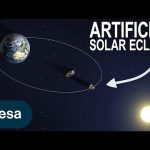
Proba-3 is ESA’s – and the world’s – first precision formation flying mission. A pair of satellites will fly together relative to the Sun so that one casts a precisely-controlled shadow onto the other, to create a prolonged solar eclipse in orbit. In the process the mission will open up the Sun’s faint surrounding coronal atmosphere for sustained study. Normally this corona is rendered invisible by the brilliant face of the Sun, like a firefly next to a bonfire.
Due for launch together this autumn, the two Proba-3 satellites will fly 144-m apart for up to six hours at a time to create these eclipses. Beside its scientific interest, this experiment will be a perfect method to demonstrate the precise positioning of the two platforms. It will be enabled using a novel combination of guidance technologies. In this video the Proba-3 team details the mission concept.
We are Europe’s gateway to space. Our mission is to shape the development of Europe’s space capability and ensure that investment in space continues to deliver benefits to the citizens of Europe and the world. Check out https://www.esa.int/ to get up to speed on everything space related.
During a solar eclipse the Earth is plunged into darkness and the Sun’s ghostly atmosphere becomes visible. Scientists travel the globe to experience total solar eclipses, which occur for just a few minutes at a time every 18 months or so. But what exactly causes solar eclipses, and how do scientists try to make their own, including with ESA’s new Proba-3 mission?
Timestaps of the video: 00:00 – 00:32 – Intro 00:33 – 01:45 – How do solar eclipses happen? 01:46 – 02:45 – How do we know anything about the solar corona given that eclipses occur so rarely? 02:46 – 04:00 – How can we create a perfect artificial solar eclipse in space?
Credits: ESA – European Space Agency Videos: ESA, NASA, Solar Orbiter/EUI (ESA/NASA), SOHO/LASCO (ESA/NASA), ESA-Magic Fennec, Getty Images
★ Subscribe: http://bit.ly/ESAsubscribe and click twice on the bell button to receive our notifications.
We are Europe’s gateway to space. Our mission is to shape the development of Europe’s space capability and ensure that investment in space continues to deliver benefits to the citizens of Europe and the world. Check out https://www.esa.int/ to get up to speed on everything space related.