Tag: Probe

  • POV: Huygens probe landing on Titan

    POV: Huygens probe landing on Titan

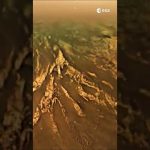
    19 years ago, on 25 December 2004, ESA’s Huygens probe was released from the Cassini spacecraft. Huygens continued on to Titan, Saturn’s largest and most interesting moon, descending via parachute and touching-down at 11:30 UTC, 14 January 2005. The descent phase lasted around 2 hours, 27 minutes, with a further 1 hour and 10 minutes of operation on the surface.

    This video has been accelerated to 200% speed, showing the descent from an altitude of 62 km at 9:41 UTC to the touchdown.

    Credits: NASA/ESA/University of Arizona

    #ESA #Titan #Huygens
  • Parker Solar Probe Countdown to T-Zero for a Journey to “Touch” the Sun

    Parker Solar Probe Countdown to T-Zero for a Journey to “Touch” the Sun

    NASA’s historic Parker Solar Probe mission that launched Aug. 12, 2018 from Space Launch Complex 37 on Cape Canaveral Air Force Station in Florida will revolutionize our understanding of the Sun. The Parker Solar Probe spacecraft will travel through the Sun’s atmosphere, closer to the surface than any spacecraft before it, facing brutal heat and radiation conditions — and ultimately providing humanity with the closest-ever observations of a star. This is a look at the moments leading up to T-Zero for NASA’s mission to “touch” the Sun.

    Learn more about the mission at: https://www.nasa.gov/parkersolarprobe

  • NASA’s Parker Solar Probe Mission Launches to Touch the Sun

    NASA’s Parker Solar Probe Mission Launches to Touch the Sun

    NASA’s Parker Solar Probe mission launched Aug. 11 from Cape Canaveral Air Force Station in Florida. The mission will be the first to fly directly through the Sun’s corona – the hazardous region of intense heat and solar radiation in the Sun’s atmosphere that is visible during an eclipse. It will gather data that could help answer questions about solar physics that have puzzled scientists for decades. Gathering information about fundamental processes near the Sun can help improve our understanding of how our solar system’s star changes the space environment, where space weather can affect astronauts, interfere with satellite orbits, or damage spacecraft electronics.

    This video is available for download from NASA’s Image and Video Library: https://images.nasa.gov/details-NHQ_2018_0812_Parker%20Solar%20Probe%20Mission%20Launches%20to%20Touch%20the%20Sun%20-.html

  • The Huygens experience

    The Huygens experience

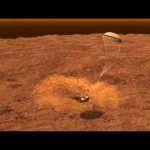
    A new rendering of Huygens descent and touchdown created using real data recorded by the probe’s instruments as it descended to the surface of Titan, Saturn’s largest moon, on 14 January 2005.
    The animation takes into account Titan’s atmospheric conditions, including the Sun and wind direction, the behaviour of the parachute (with some artistic interpretation only on the movement of the ropes after touchdown), and the dynamics of the landing itself. Even the stones immediately facing Huygens were rendered to match the photograph of the landing site returned from the probe, which is revealed at the end of the animation.
    Split into four sequences, the animation first shows a wide-angle view of the descent and landing followed by two close-ups of the touchdown from different angles, and finally a simulated view from Huygens itself — the true Huygens experience.
    This animation was released on the eighth anniversary of Huygen’s touchdown on Titan as a Space Science Image of the Week feature.

    Animation: ESA–C. Carreau/Schröder, Karkoschka et al (2012). Image from Titan’s surface: ESA/NASA/JPL/University of Arizona

  • STS-134 Gets New Launch Date on This Week @NASA

    STS-134 Gets New Launch Date on This Week @NASA

    The launch of space shuttle Endeavour on STS-134 has been rescheduled for May 16th. Launch is scheduled for 8:56 a.m. Eastern. Also, NASA’s Gravity Probe B mission confirms two aspects of Albert Einstein’s theory of general relativity. Plus, two Mercury explorers honored; Young innovators recognized; ISS honored; NextGen Day; rotocraft research; FIRST finals; and HQ Cyber Café.

  • Einstein Passes Tests by NASA’s Gravity Probe B

    Einstein Passes Tests by NASA’s Gravity Probe B

    NASA’s Gravity Probe B (GP-B) spacecraft has confirmed two key predictions derived from Albert Einstein’s general theory of relativity. Launched in 2004, GP-B was designed to test Einstein using four ultra-precise gyroscopes to measure the hypothesized geodetic effect, which is the warping of space and time around a gravitational body, and frame-dragging, which is the amount a spinning object pulls space and time with it as it rotates. (News briefing held May 4, 2011 at NASA Headquarters in Washington.)

  • ESA Euronews: Segredos de Saturno

    ESA Euronews: Segredos de Saturno

    Há algumas décadas, para observar Saturno, os cientistas recorriam a
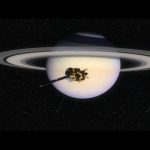
    telescópios. Hoje em dia, os segredos de Saturno e da sua misteriosa lua Titã são revelados graças aos dados e imagens enviados pela missão Cassini-Huygens. Saturno nunca antes visto, é o tema de Space esta semana.

  • ESA Euronews: Los secretos de Saturno

    ESA Euronews: Los secretos de Saturno

    Hasta hace algunas décadas para ver Saturno la ciencia tenía que mirar a
    través de telescópios. Hoy Saturno y su misteriosa luna Titán son nuevos
    conocidos gracias a la misión Cassini-Huygens que desde 2004 envía imágenes y datos. Una aventura que está cambiando la percepción que hasta ahora teníamos de nuestro Sistema Solar.

  • ESA Euronews: Der Saturn gibt seine Geheimnisse preis

    ESA Euronews: Der Saturn gibt seine Geheimnisse preis

    Noch vor einigen Jahrzehnten konnte man den Saturn nur mit dem Teleskop
    beobachten. Heute lüftet die Cassini-Huygens-Mission mit ihren Bildern die
    Geheimnisse des Saturnsystems und liefert Antworten auf entscheidende
    wissenschaftliche Fragen.

  • Cosmic Vision – See how Huygens landed on Titan

    Cosmic Vision – See how Huygens landed on Titan

    After an epic space journey, the European Huygens probe landed on Saturn’s moon Titan, a mysterious satellite that has perplexed astronomers for decades. On 14 January 2005, Huygens made the farthest touchdown of any human-built object sent to land on another world.