NASA wrapped up its second Underway Recovery Test Aug. 4 with the Orion spacecraft, off the coast of San Diego, California. The agency teamed with Lockheed Martin, the U.S. Navy and the Department of Defense’s Human Space Flight Support Detachment 3 to evaluate primary and alternative methods to recover Orion after the spacecraft safely splashes down in the ocean at the conclusion of future deep space missions. Orion’s first spaceflight test with a splashdown in the Pacific Ocean is targeted for December. Also, Low-Density Supersonic Decelerator update, 2nd anniversary: 7 Minutes of Terror, Bolden visits MMS at Naval Research Lab, Scanning for algal blooms, Earth science showcase, and more!
Tag: Recovery
-
ThermoMag – 1st lecture on Thermoelectricity
Lecture from Anastasiia Prytuliak, European Space Agency postdoctoral research fellow in the Institute Laue Langevin and European Radiation Synchrotron Facility in Grenoble, France about a project called “ThermoMag”, which is devoted to the research and development of energy-harvesting thermoelectric materials.
“ThermoMag” is a project co-funded by the 7th Framework Programme of the European Commission, coordinated by the European Space Agency.
Watch the second lecture: http://www.youtube.com/watch?v=lmHSu5Yh6cE
-
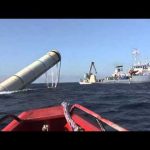
Shuttle’s Boosters Recovered in HD
NASA has released the first ever up-close, high-definition video of Kennedy Space Center’s solid rocket booster (SRB) recovery ships retrieving SRB segments from the Atlantic Ocean following a space shuttle launch. The unprecedented video is from the launch of the most recent shuttle mission, STS-133, Discovery’s final flight, on Feb. 24.
Following each space shuttle launch, crew members of Liberty Star and Freedom Star pull the spent boosters out of the ocean and return them to Hangar AF at Cape Canaveral Air Force Station in Florida. Once they are processed, the boosters are transported to Utah, where they are refurbished and stored, if needed.