Tag: return

  • The return of Andreas Mogensen | Huginn Mission

    The return of Andreas Mogensen | Huginn Mission

    After more than 6 months on the International Space Station, ESA astronaut Andreas Mogensen returned to Earth, marking the end of his Huginn mission. It was his second mission to the Space Station and his first long-duration, where he was the pilot of Crew-7, which consisted of Jasmin Moghbeli (NASA), Satoshi Furukawa (JAXA), and Konstantin Borisov (Roscosmos).

    Credits: ESA/NASA/SpaceX

    ★ Subscribe: http://bit.ly/ESAsubscribe and click twice on the bell button to receive our notifications.

    Check out our full video catalog: http://bit.ly/SpaceInVideos
    Follow us on Twitter: http://bit.ly/ESAonTwitter
    On Facebook: http://bit.ly/ESAonFacebook
    On Instagram: http://bit.ly/ESAonInstagram
    On LinkedIn: https://bit.ly/ESAonLinkedIn
    On Pinterest: https://bit.ly/ESAonPinterest
    On Flickr: http://bit.ly/ESAonFlickr

    We are Europe’s gateway to space. Our mission is to shape the development of Europe’s space capability and ensure that investment in space continues to deliver benefits to the citizens of Europe and the world. Check out https://www.esa.int/ to get up to speed on everything space related.

    Copyright information about our videos is available here: https://www.esa.int/ESA_Multimedia/Terms_and_Conditions

    #ESA #Huginn #AndreasMogensen
  • OSIRIS-REx Asteroid Sample Return (Official 4K NASA Broadcast)

    OSIRIS-REx Asteroid Sample Return (Official 4K NASA Broadcast)

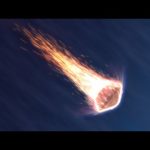
    Watch a spacecraft deliver an asteroid sample to Earth! Our OSIRIS-REx (Origins, Spectral Interpretation, Resource Identification, and Security–Regolith Explorer) spacecraft is approaching Earth, and on Sept. 24, 2023, it will release its sample return capsule into the atmosphere on a path to land at the Department of Defense’s Utah Test and Training Range.

    The touchdown will mark the end of a seven-year journey to explore asteroid Bennu, collect a sample from its surface, and deliver it to Earth as the U.S’s first pristine asteroid sample. Scientists around the world will study the sample over the coming decades to learn about how our planet and solar system formed, as well as the origin of organics that may have led to life on Earth.

    For more information about OSIRIS-REx, visit https://solarsystem.nasa.gov/missions/osiris-rex/in-depth/

    Credit: NASA

    #NASA #Asteroid #Space #OSIRISREx

  • Tracking a Mission’s Historic Return to Earth on This Week @NASA – September 22, 2023

    Tracking a Mission’s Historic Return to Earth on This Week @NASA – September 22, 2023

    Tracking a mission’s historic return to Earth, a year of science onboard the space station, and the safe arrival of the station’s newest resident astronaut … a few of the stories to tell you about – This Week at NASA!

    Link to download this video:
    https://images.nasa.gov/details/Tracking%20a%20Mission%E2%80%99s%20Historic%20Return%20to%20Earth%20on%20This%20Week%20@NASA%20%E2%80%93%20September%2022,%202023

    Video Producer: Andre Valentine
    Video Editor: Andre Valentine
    Narrator: Andre Valentine
    Music: Universal Production Music
    Credit: NASA

  • OSIRIS-REx Asteroid Sample Return Mission Overview (Official NASA Briefing)

    OSIRIS-REx Asteroid Sample Return Mission Overview (Official NASA Briefing)

    Experts from NASA’s OSIRIS-REx (Origins, Spectral Interpretation, Resource Identification, and Security–Regolith Explorer) mission give an overview on the asteroid sample capsule’s landing and recovery plans set for Sept. 24, 2023.

    News conference participants are:

    • Melissa Morris, OSIRIS-REx program executive, NASA Headquarters, Washington
    • Dante Lauretta, OSIRIS-REx principal investigator, University of Arizona, Tucson
    • Rich Burns, OSIRIS-REx project manager, NASA’s Goddard Space Flight Center, Greenbelt, Maryland
    • Sandra Freund, OSIRIS-REx program manager, Lockheed Martin, Littleton, Colorado
    • Kevin Righter, OSIRIS-REx deputy curation lead, NASA’s Johnson Space Center, Houston

    On Sept. 24, the OSIRIS-REx spacecraft will approach Earth and release its sample return capsule into the atmosphere on a path to land at the Department of Defense’s Utah Test and Training Range. The event makes it the first U.S. asteroid sample return.

    The touchdown will mark the end of a seven-year journey to explore asteroid Bennu, collect a sample from its surface, and deliver it to Earth for study. Scientists around the world will study the sample over the coming decades to learn about how our planet and solar system formed, as well as the origin of organics that may have led to life on Earth.

    All about the mission: https://www.nasa.gov/osiris-rex

    Credit: NASA

  • NASA’s Artemis I Mission Return Trip Lunar Flyby

    NASA’s Artemis I Mission Return Trip Lunar Flyby

    On Dec. 5, NASA will air the lunar flyby of the Orion spacecraft on its return trek toward Earth. Orion completed a burn Dec. 1 to exit a lunar orbit thousands of miles beyond the Moon, where engineers have been testing systems to improve understanding of the spacecraft before future missions with astronauts. The return powered flyby burn, in which the spacecraft will harness the Moon’s gravity and accelerate back toward Earth, is expected at 11:43 a.m. (1643 UTC) The spacecraft is expected to fly about 79 miles above the lunar surface at 11:42 a.m. (16:42 UTC) just before the burn.

    Orion launched aboard the Space Launch System (SLS) rocket at 1:47 am EST (0647 UTC) on Nov. 16 from historic Launch Complex 39B at NASA’s Kennedy Space Center. Orion entered a distant retrograde orbit on at 4:52 p.m. EST (2152 UTC) on Nov. 25, where the spacecraft has been testing systems in a deep space environment.

    The Artemis I mission is the first integrated test of NASA’s deep space exploration systems: the Orion spacecraft, the SLS rocket, and Kennedy Space Center ground systems.

    More: https://www.nasa.gov/specials/artemis-i

    Credit: NASA

  • The Crew-3 Astronauts Return From the Space Station on This Week @NASA – May 6, 2022

    The Crew-3 Astronauts Return From the Space Station on This Week @NASA – May 6, 2022

    The Crew-3 astronauts return from the space station, the spacecraft for another commercial crew mission is on the move, and discussing NASA’s budget … a few of the stories to tell you about – This Week at NASA!

    Download Link:
    https://images.nasa.gov/details-The%20Crew-3%20Astronauts%20Return%20From%20the%20Space%20Station%20on%20This%20Week%20@NASA%20–%20May%206,%202022

    Producer: Andre Valentine
    Editor: Lacey Young
    Music: Universal Production Music

  • NASA’s Return to Venus

    NASA’s Return to Venus

    Venus, our planetary neighbor, is a hot, hellish unforgiving world and NASA has selected two bold new missions to study this inferno-like planet: DAVINCI+ and VERITAS. Are Venus and Earth fundamentally unique worlds? Or are the differences between these ‘twins’ only cosmetic? Answering this question is key to understanding what makes other rocky planets habitable and, ultimately, emerge with life.

    Download Link: https://images.nasa.gov/details-NASA‘s%20Return%20to%20Venus

    Learn more about NASA’s newest Discovery missions: https://go.nasa.gov/NewVenusMissions

  • Safe Return to Earth from the Space Station on This Week @NASA – April 17, 2021

    Safe Return to Earth from the Space Station on This Week @NASA – April 17, 2021

    A safe return to Earth from the space station, greeting the astronauts of the next Commercial Crew flight, and an update on the development of a human lunar landing system … a few of the stories to tell you about – This Week at NASA!

    Download Link: https://images.nasa.gov/details-Safe%20Return%20to%20Earth%20from%20the%20Space%20Station%20on%20This%20Week%20@NASA%20%E2%80%93%20April%2017,%202021

  • Splashdown Recap: Bob & Doug Come Home

    Splashdown Recap: Bob & Doug Come Home

    NASA Astronauts Robert Behnken and Douglas Hurley splashed down in the Dragon Endeavour capsule at 2:48 p.m. EDT on Sunday, Aug. 2, off the coast of Pensacola, Florida.

    The Crew Dragon hatch was opened at 3:59 p.m., and Behnken and Hurley exited the spacecraft onto the Go Navigator for initial medical checks before returning to shore by helicopter. Once returned to shore, both crew members will immediately board a waiting NASA plane to fly back to Ellington field in Houston.

    Hurley and Behnken arrived to the International Space Station May 31 and spent 62 days supporting science and research aboard the orbiting laboratory as part of Expedition 63.

    Demo-2 is SpaceX’s final test flight and is providing data on the performance of the Falcon 9 rocket, Crew Dragon spacecraft and ground systems, as well as in-orbit, docking, splashdown, and recovery operations. The data will inform NASA’s certification of the SpaceX crew transportation system for regular flights carrying astronauts to and from the space station. SpaceX is readying the hardware for the first rotational mission that will occur following NASA certification, which is expected to take about six weeks.

    Download link: https://images.nasa.gov/details-Splashdown%20Recap%20-%20Bob%20&%20Doug%20Come%20Home

  • NASA Astronauts Return to Earth, Splashdown on SpaceX Dragon Endeavour

    NASA Astronauts Return to Earth, Splashdown on SpaceX Dragon Endeavour

    After 62 days in space, approximately 1,024 orbits around our planet and four spacewalks, our #LaunchAmerica crew members made their way home!

    On Sunday, Aug. 2, 2020, NASA astronauts Robert Behnken and Douglas Hurley returned to Earth aboard SpaceX’s Crew Dragon Endeavour spacecraft. They splashed down safely in the Gulf of Mexico off the coast of Pensacola, Florida at 2:48 p.m. EDT.

  • NASA Astronauts Return Home in SpaceX’s Crew Dragon Spacecraft

    NASA Astronauts Return Home in SpaceX’s Crew Dragon Spacecraft

    They’re coming home! 🌎

    On Aug. 1, NASA astronauts Robert Behnken and Douglas Hurley will depart from the International Space Station aboard SpaceX’s Dragon “Endeavour” spacecraft after their mission aboard our orbiting laboratory. Starting at 5:15 p.m. EDT, tune in for our live coverage to see the duo undock from the station and make their return back to planet Earth.

  • Countdown To Return of Human Spaceflight from Florida on This Week @NASA – May 15, 2020

    Countdown To Return of Human Spaceflight from Florida on This Week @NASA – May 15, 2020

    Counting down to the return of human spaceflight from Florida, a successful space station resupply mission, and a virtual tool to help develop lunar landers … a few of the stories to tell you about – This Week at NASA!

    This video is available for download from NASA’s Image and Video Library: https://images.nasa.gov/details-Countdown%20To%20Return%20of%20Human%20Spaceflight%20from%20Florida%20on%20This%20Week%20@NASA%20%E2%80%93%20May%2015,%202020

  • Discussing a Safe Return to On-site Work on This Week @NASA – May 8, 2020

    Discussing a Safe Return to On-site Work on This Week @NASA – May 8, 2020

    Discussing the approach to increasing on-site work, the launch pad is ready for Artemis I, and new findings from an Earth-observing mission … a few of the stories to tell you about – This Week at NASA!

    This video is available for download from NASA’s Image and Video Library: https://images.nasa.gov/details-Discussing%20a%20Safe%20Return%20to%20On-site%20Work%20on%20This%20Week%20@NASA%20%E2%80%93%20May%208,%202020

  • A Safe Return to Earth for a Record Setting Astronaut on This Week @NASA – February 7, 2020

    A Safe Return to Earth for a Record Setting Astronaut on This Week @NASA – February 7, 2020

    A record-setting astronaut returns safely to Earth, practicing for the first launch of Artemis, and honoring a member of a legendary group of aviators … a few of the stories to tell you about – This Week at NASA!

    This video is available for download from NASA’s Image and Video Library: https://images.nasa.gov/details-NHQ_2020_0207_A%20Safe%20Return%20to%20Earth%20for%20a%20Record-Setting%20Astronaut%20on%20This%20Week%20@NASA%20%E2%80%93%20February%207,%202020

  • Luca Parmitano: return to Earth

    Luca Parmitano: return to Earth

    ESA astronaut Luca Parmitano touched down in the Kazakh Steppe at 09:12 GMT (10:12 CET), 6 February 2020 after his second six-month mission on the International Space Station. Luca returned to Earth in the Russian Soyuz MS-13 spacecraft alongside US astronaut Christina Koch and Russian cosmonaut Alexander Skvortsov.
    During his second mission, known as ‘Beyond’, Luca served as the third European and first ever Italian in command of the International Space Station. Before leaving the Station, he handed this role over to Russian cosmonaut Oleg Skripocha in a traditional change of command ceremony.

    While in orbit, Luca also performed four complex spacewalks to maintain the cosmic-ray-detecting Alpha Magnetic Spectrometer AMS-02, remotely operated a rock-collecting rover in the Netherlands, supported more than 50 European and over 200 international experiments, gained the European record for longest cumulative spacewalking time, and publicly shared countless images as he warned of the challenges facing our planet.

    Luca will now return to ESA’s Astronaut Centre in Cologne, Germany where he will continue to work with researchers to gather baseline data and undertake an extensive programme of rehabilitation supported by ESA experts. The findings of this research and Luca’s work in space will help shape the future of space exploration and enhance technological developments on Earth.

    Follow Luca: http://bit.ly/ESALucaParmitano

    ★ Subscribe: http://bit.ly/ESAsubscribe and click twice on the bell button to receive our notifications.

    Check out our full video catalog: http://bit.ly/SpaceInVideos
    Follow us on Twitter: http://bit.ly/ESAonTwitter
    On Facebook: http://bit.ly/ESAonFacebook
    On Instagram: http://bit.ly/ESAonInstagram
    On Flickr: http://bit.ly/ESAonFlickr

    We are Europe’s gateway to space. Our mission is to shape the development of Europe’s space capability and ensure that investment in space continues to deliver benefits to the citizens of Europe and the world. Check out http://www.esa.int/ESA to get up to speed on everything space related.

    Copyright information about our videos is available here: http://www.esa.int/spaceinvideos/Terms_and_Conditions

    #ESA
    #MissionBeyond
    #LucaParmitano

  • Seeking Landers to Return Humans to the Moon on This Week @NASA – July 26, 2019

    Seeking Landers to Return Humans to the Moon on This Week @NASA – July 26, 2019

    Seeking ideas for landing systems to return humans to the Moon, showcasing our aeronautics research efforts, and the science connection to Apollo 11’s splashdown … a few of the stories to tell you about – This Week at NASA!

    This video is available for download from NASA’s Image and Video Library: https://images.nasa.gov/details-NHQ_2019_0726_Seeking%20Landers%20to%20Return%20Humans%20to%20the%20Moon%20on%20This%20Week%20@NASA%20%E2%80%93%20July%2026,%202019.html

  • How do astronauts return to Earth? [with Closed Captions]

    How do astronauts return to Earth? [with Closed Captions]

    [TURN CC ON!]

    The ride home from the International Space Station sees the astronauts brake from 28 800 km/h to a standstill at touchdown in barely three hours. How does the Soyuz spacecraft reenter the atmosphere? And how does the capsule land?

    Watch in just two minutes the sequence of events from farewell to landing. This video is based on a training lesson for ESA astronauts, and it features dramatic footage of actual landings.

    To find out more, watch the extended version: https://www.youtube.com/watch?v=-l7MM9yoxII />
    Credits:
    ESA; NASA; Roscosmos; S.P. Korolev Rocket; Space Corporation Energia; Aerospace Search and Rescue Service of the Russian Federation.

    ★ Subscribe: http://bit.ly/ESAsubscribe and click twice on the bell button to receive our notifications.

    Check out our full video catalog: http://bit.ly/SpaceInVideos
    Follow ESA on Twitter: http://bit.ly/ESAonTwitter
    On Facebook: http://bit.ly/ESAonFacebook
    On Instagram: http://bit.ly/ESAonInstagram
    On Flickr: http://bit.ly/ESAonFlickr

    ESA is Europe’s gateway to space. Our mission is to shape the development of Europe’s space capability and ensure that investment in space continues to deliver benefits to the citizens of Europe and the world. Check out http://www.esa.int/ESA to get up to speed on everything space related.

    Copyright information about our videos is available here: http://www.esa.int/spaceinvideos/Terms_and_Conditions

  • Mars sample return

    Mars sample return

    Spacecraft in orbit and on Mars’s surface have made many exciting discoveries, transforming our understanding of the planet and unveiling clues to the formation of our Solar System, as well as helping us understand our home planet. The next step is to bring samples to Earth for detailed analysis in sophisticated laboratories where results can be verified independently and samples can be reanalysed as laboratory techniques continue to improve.

    Bringing Mars to Earth is no simple undertaking—it would require at least three missions from Earth and one never-been-done-before rocket launch from Mars.

    A first mission, NASA’s 2020 Mars Rover, is set to collect surface samples in pen-sized canisters as it explores the Red Planet. Up to 31 canisters will be filled and readied for a later pickup – geocaching gone interplanetary.

    In the same period, ESA’s ExoMars rover, which is also set to land on Mars in 2021, will be drilling up to two meters below the surface to search for evidence of life.

    A second mission with a small fetch rover would land nearby and retrieve the samples in a Martian search-and-rescue operation. This rover would bring the samples back to its lander and place them in a Mars Ascent Vehicle – a small rocket to launch the football-sized container into Mars orbit.

    A third launch from Earth would provide a spacecraft sent to orbit Mars and rendezvous with the sample containers. Once the samples are safely collected and loaded into an Earth entry vehicle, the spacecraft would return to Earth, release the vehicle to land in the United States, where the samples will be retrieved and placed in quarantine for detailed analysis by a team of international scientists.

    Credits: NASA/ESA

    ★ Subscribe: http://bit.ly/ESAsubscribe
    Learn more: http://bit.ly/BringingMartianSoilToEarth

  • Asteroid Sample Return Mission Launches on This Week @NASA – September 9, 2016

    Asteroid Sample Return Mission Launches on This Week @NASA – September 9, 2016

    On Sept. 8, NASA launched the Origins, Spectral Interpretation, Resource Identification, Security – Regolith Explorer, or OSIRIS-REx mission from Cape Canaveral Air Force Station in Florida. OSIRIS-REx, the first U.S. mission to sample an asteroid, is scheduled to arrive at near-Earth asteroid Bennu in 2018. Mission plans call for the spacecraft to survey the asteroid, retrieve a small sample from its surface, and return the sample to Earth for study in 2023. Analysis of that sample is expected to reveal clues about the history of Bennu over the past 4.5 billion years, as well as clues about the evolution of our solar system. Also, Williams’ Record-Breaking Spaceflight Concludes, Next ISS Crew Prepares for Launch, Sample Return Robot Challenge, NASA X-Plane Gets its Wing, and Convergent Aeronautics Solutions Showcase!