Tag: rocket launch

  • We are going to Jupiter‼️ 🚀🧃 #shorts

    We are going to Jupiter‼️ 🚀🧃 #shorts

    Our Jupiter Icy Moons Explorer, Juice, lifted off on an Ariane 5 rocket from Europe’s Spaceport in French Guiana at 14:14 CEST on 14 April 2023. The successful launch marks the beginning of an ambitious voyage to uncover the secrets of the ocean worlds around giant planet Jupiter.

    Following launch and separation from the rocket, our European Space Operations Centre in Darmstadt, Germany, confirmed acquisition of signal via the New Norcia ground station in Australia at 15:04 CEST. The spacecraft’s vast 27 m long solar arrays unfurled into their distinctive cross shapes at 15:33 CEST, ensuring Juice can travel to the outer Solar System. The completion of this critical operation marked the launch a success.

    Over the next two-and-half weeks Juice will deploy its various antennas and instrument booms, including the 16 m long radar antenna, 10.6 m long magnetometer boom, and various other instruments that will study the environment of Jupiter and the subsurface of the icy moons.

    An eight-year cruise with four gravity-assist flybys at Earth and Venus will slingshot the spacecraft towards the outer Solar System. The first flyby in April 2024 will mark a space exploration first: Juice will perform a lunar-Earth gravity-assist – a flyby of the Moon followed 1.5 days later by one of Earth.

    Juice is a mission under our leadership with contributions from @NASA, @JAXA-HQ and Israel Space Agency.

    ★ Subscribe: http://bit.ly/ESAsubscribe and click twice on the bell button to receive our notifications.

    Check out our full video catalog: http://bit.ly/SpaceInVideos
    Follow us on Twitter: http://bit.ly/ESAonTwitter
    On Facebook: http://bit.ly/ESAonFacebook
    On Instagram: http://bit.ly/ESAonInstagram
    On LinkedIn: https://bit.ly/ESAonLinkedIn
    On Pinterest: https://bit.ly/ESAonPinterest
    On Flickr: http://bit.ly/ESAonFlickr

    We are Europe’s gateway to space. Our mission is to shape the development of Europe’s space capability and ensure that investment in space continues to deliver benefits to the citizens of Europe and the world. Check out https://www.esa.int/ to get up to speed on everything space related.

    Copyright information about our videos is available here: https://www.esa.int/ESA_Multimedia/Terms_and_Conditions

    #ESA
    #Jupiter
    #JuiceMission

  • MTG-I1 lifts off

    MTG-I1 lifts off

    The first Meteosat Third Generation Imager (MTG-I1) satellite lifted off on an Ariane 5 rocket from Europe’s Spaceport in French Guiana on 13 December at 21:30 CET.

    From geostationary orbit, 36,000 km above the equator, this all-new weather satellite will provide state-of-the art observations of Earth’s atmosphere and realtime monitoring of lightning events, taking weather forecasting to the next level. The satellite carries two completely new instruments: Europe’s first Lightning Imager and a Flexible Combined Imager.

    MTG-I1 is the first of six satellites that form the full MTG system, which will provide critical data for weather forecasting over the next 20 years. In full operations, the mission will comprise two MTG-I satellites and one MTG Sounding (MTG-S) satellites working in tandem.

    ★ Subscribe: http://bit.ly/ESAsubscribe and click twice on the bell button to receive our notifications.

    Check out our full video catalog: http://bit.ly/SpaceInVideos
    Follow us on Twitter: http://bit.ly/ESAonTwitter
    On Facebook: http://bit.ly/ESAonFacebook
    On Instagram: http://bit.ly/ESAonInstagram
    On LinkedIn: https://bit.ly/ESAonLinkedIn
    On Pinterest: https://bit.ly/ESAonPinterest
    On Flickr: http://bit.ly/ESAonFlickr

    We are Europe’s gateway to space. Our mission is to shape the development of Europe’s space capability and ensure that investment in space continues to deliver benefits to the citizens of Europe and the world. Check out https://www.esa.int/ to get up to speed on everything space related.

    Copyright information about our videos is available here: https://www.esa.int/ESA_Multimedia/Terms_and_Conditions

    #ESA
    #MTG-I
    #Satellite

  • Webb flies Ariane 5: from preparation to liftoff at Europe’s Spaceport

    Webb flies Ariane 5: from preparation to liftoff at Europe’s Spaceport

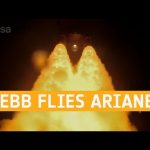
    The James Webb Space Telescope lifted off on an Ariane 5 rocket from Europe’s Spaceport in French Guiana, at 13:20 CET on 25 December 2021 on its exciting mission to unlock the secrets of the Universe.

    This timelapse shows highlights of the launch campaign from the arrival of Webb in French Guiana through to liftoff.

    Every launch requires meticulous planning and preparation. For Webb, this process began about 15 years ago. Webb arrived from California on board the MN Colibri which sailed the Panama Canal to Pariacabo harbour in French Guiana. The shallow Kourou river was specially dredged to ensure a clear passage and the vessel followed high tide to safely reach port on 12 October 2021.

    Though the telescope weighs only six tonnes, it was more than 10.5 m high and almost 4.5 m wide when folded. At Europe’s Spaceport it was unpacked inside a dedicated spacecraft preparation facility fitted with walls of air filters to protect the telescope from contamination during preparations for launch.

    After its arrival in the final assembly building, Webb was lifted slowly about 40 m high and then carefully manoeuvred on top of Ariane 5 – one of the most delicate operations during the entire launch campaign. A ‘shower curtain’ about 12 m high and 8 m in diameter was installed in between two platforms, to create a closed-off space around Webb to avoid any contamination.

    On the day of encapsulation, the fairing was lowered over the observatory and locked in place for liftoff. A laser guiding system assisted this particularly delicate operation for a perfect fit inside Ariane 5’s fairing.

    Ariane 5 with Webb was rolled out from the final assembly building to the launch pad on 22 December. On 25 December, Ariane 5 performed the flawless launch of this once in a generation mission. Ariane 5’s highly precise launch meant that Webb saved its own fuel which can be used to significantly extend its expected lifetime of 10 years.

    Webb is the largest, most powerful telescope ever launched into space. As part of an international collaboration agreement, ESA has provided the telescope’s launch service using the Ariane 5 launch vehicle. Working with partners, ESA was responsible for the development and qualification of Ariane 5 adaptations for the Webb mission and for the procurement of the launch service by @arianespace. ESA has also provided the workhorse spectrograph NIRSpec and 50% of the mid-infrared instrument MIRI, in collaboration with the University of Arizona. Webb is an international partnership between @NASA, ESA and the @Canadian Space Agency.

    Learn more about this historic launch: https://bit.ly/WebbLiftoff

    Credits: Directed by Manuel Pedoussaut/zetapress, Stephane Corvaja/ESA
    Music by Hubrid Planete-a

    ★ Subscribe: http://bit.ly/ESAsubscribe and click twice on the bell button to receive our notifications.

    Check out our full video catalog: http://bit.ly/SpaceInVideos
    Follow us on Twitter: http://bit.ly/ESAonTwitter
    On Facebook: http://bit.ly/ESAonFacebook
    On Instagram: http://bit.ly/ESAonInstagram
    On LinkedIn: https://bit.ly/ESAonLinkedIn
    On Pinterest: https://bit.ly/ESAonPinterest
    On Flickr: http://bit.ly/ESAonFlickr

    We are Europe’s gateway to space. Our mission is to shape the development of Europe’s space capability and ensure that investment in space continues to deliver benefits to the citizens of Europe and the world. Check out https://www.esa.int/ to get up to speed on everything space related.

    Copyright information about our videos is available here: https://www.esa.int/ESA_Multimedia/Terms_and_Conditions

    #ESA
    #Webb
    #WebbFliesAriane

  • #EZScience: Preparing to Launch the Perseverance Rover to Mars

    #EZScience: Preparing to Launch the Perseverance Rover to Mars

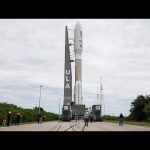
    In this “On the Go” episode of #EZScience, we’re on the scene at Kennedy Space Center with the rocket that will take the Perseverance rover and the Ingenuity helicopter to Mars.

    ABOUT THE SERIES: In our #EZScience video series with the National Air and Space Museum, NASA’s associate administrator for science Dr. Thomas Zurbuchen and Museum director Dr. Ellen Stofan talk about the latest in planetary science and exploration.

    Learn more about the series: https://www.nasa.gov/ezscience

  • After the Launch: NASA and SpaceX Share Updates about Historic #LaunchAmerica Mission

    After the Launch: NASA and SpaceX Share Updates about Historic #LaunchAmerica Mission

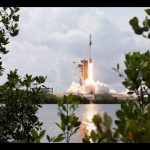
    Liftoff! The SpaceX Falcon 9 rocket carrying NASA astronauts Robert Behnken and Douglas Hurley aboard the company’s Crew Dragon spacecraft launched from Kennedy Space Center’s historic Launch Pad 39A at 3:22 p.m. EDT on May 30, kicking off a critical final flight test of the SpaceX crew transportation system.

    Following the successfully launch, NASA hosted a postlaunch news conference for officials to talk about the mission live from NASA’s Kennedy Space Center in Florida.

    Participants included:
    o NASA Administrator Jim Bridenstine
    o Pat Forrester, NASA Chief Astronaut
    o Kathy Lueders, manager, NASA Commercial Crew Program
    o Elon Musk, SpaceX chief engineer
    o Kirk Shireman, manager, International Space Station Program

    Learn more by visiting https://www.nasa.gov/launchamerica/

  • NASA Administrator Bridenstine Chats with Elon Musk of SpaceX

    NASA Administrator Bridenstine Chats with Elon Musk of SpaceX

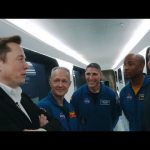
    On the latest Watch this Space, NASA Administrator Jim Bridenstine chats with SpaceX CEO and Chief Designer Elon Musk during a tour of Launch Complex 39A just before the Demo-1 launch at the Kennedy Space Center in Florida. The historic Demo-1 mission launched at 2:49 a.m. EDT on Saturday, March 2 and was the first launch of a commercially built and operated American spacecraft and space system designed for humans as part of NASA’s Commercial Crew Program.

    Learn more about the Commercial Crew program: https://blogs.nasa.gov/commercialcrew/.

  • How Do We Prepare a Spacecraft for Launch? Countdown to T-Zero for NASA’s TESS Mission

    How Do We Prepare a Spacecraft for Launch? Countdown to T-Zero for NASA’s TESS Mission

    Revisit the April 18, 2018, launch of NASA’s Transiting Exoplanet Survey Satellite (TESS) aboard a SpaceX Falcon 9 rocket. TESS is already scanning the skies, identifying planet candidates that may be orbiting distant stars. https://go.nasa.gov/2Q3J9ei

    TESS is NASA’s next step in the search for planets outside of our solar system, including those that could support life. The mission will find exoplanets that periodically block part of the light from their host stars, events called transits. TESS will survey 200,000 of the brightest stars near the sun to search for transiting exoplanets.

  • NASA Launches Go Ultra-High Definition

    NASA Launches Go Ultra-High Definition

    NASA Television’s newest offering, NASA TV UHD, brings ultra-high definition video to a new level with the kind of imagery only the world’s leader in space exploration could provide.

    Using an array of six 4K+ cameras, Harmonic documented the Dec. 6 launch of Orbital ATK’s commercial resupply mission to the International Space Station from Cape Canaveral Air Force Station in Florida. Capturing footage at Ultra High Definition with high frame rate and in high dynamic range (HDR) options.

    The company then post-produced the footage into a program showcasing the entire launch process for airing on NASA TV UHD.

    For more info: http://go.nasa.gov/1lyUGlY

  • Onboard camera view: launch and separation of Sentinel-1A

    Onboard camera view: launch and separation of Sentinel-1A

    Cameras mounted on the Soyuz Fregat upper stage that sent Sentinel-1A into space on 3 April 2014 captured this superb footage. It shows liftoff, the various stages in the rocket’s ascent and the Sentinel-1A satellite being released from the Fregat upper stage to start its life in orbit around Earth.

    The 2.3 tonne satellite lifted off on a Soyuz rocket from Europe’s Spaceport in Kourou, French Guiana at 21:02 GMT (23:02 CEST). The first stage separated 118 sec later, followed by the fairing (209 sec), stage 2 (287 sec) and the upper assembly (526 sec). After a 617 sec burn, the Fregat upper stage delivered Sentinel into a Sun-synchronous orbit at 693 km altitude. The satellite separated from the upper stage 23 min 24 sec after liftoff.

    Sentinel-1 is the first in the family of satellites for Europe’s Copernicus programme. It carries an advanced radar to scan Earth’s surface in all weather conditions and regardless of whether it is day or night. This new mission will be used to care for many aspects of our environment, from detecting and tracking oil spills and mapping sea ice to monitoring movement in land surfaces and mapping changes in the way land is used.

  • ESA Euronews: Soyuz descola pela primeira vez do Porto Espacial da Europa

    ESA Euronews: Soyuz descola pela primeira vez do Porto Espacial da Europa

    Lançou o Sputnik e Gagarin para o espaço. O mítico foguetão russo Soyuz conta já com mais de 1700 voos. O lançamento do Porto Espacial Europeu, na Guiana Francesa, abre um novo capítulo na sua longa carreira.