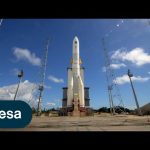
Europe’s new rocket Ariane 6 will take off from Europe’s Spaceport in French Guiana, near the equator, and far from populated areas.
Why did Europe choose a spaceport on the other side of the world? The main reason is the lack of space. There are hardly any places in Europe where rockets can be launched and fly over unpopulated areas during its initial launch phase. We also need a large area to build the launch pad and operations.
Europe’s Spaceport is also very close to the equator. As our Earth spins itself, you can get an extra boost if you launch where Earth is widest… at the equator.
📹 ESA – European Space Agency 📸 ESA – European Space Agency
ESA supports Europe’s space transportation visionaries and entrepreneurs through Boost! This video shows just some of the companies that have received co-funding from ESA’s Boost! programme: Orbex with its Prime launcher, D-Orbit offering orbital transportation and precise payload delivery with InOrbitNow, Skyrora’s XL launcher, HyImpulse’s SL1, ForgeStar from SpaceForge preparing for manufacturing in microgravity and returning them to Earth, Isar Aerospace’s Spectrum launcher, Rocket Factory Augsburg’s RFA One and PLD Space’s Miura.
Space is open for business – space transportation gets you there! With its Boost! programme, ESA is boosting commercial initiatives that offer transportation services to space, in space, and returning from space.
To achieve this, ESA nurtures industrial entrepreneurship and stimulates growth and competitiveness within the privately led and funded space sector in Europe via Boost! – ESA’s Commercial Space Transportation Services and Support programme.
This programme also supports ESA Member States in implementing national space transportation objectives in the field of spaceports, testing facilities and associated services.
We are Europe’s gateway to space. Our mission is to shape the development of Europe’s space capability and ensure that investment in space continues to deliver benefits to the citizens of Europe and the world. Check out https://www.esa.int/ to get up to speed on everything space related.
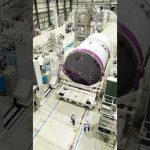
The two central stages for Ariane 6’s first flight are being assembled in the launcher assembly building (BAL) at Europe’s Spaceport. The core stage and the upper stage for Europe’s new rocket Ariane 6 are set to fly in the Summer of 2024. Once assembled, the stages will be transferred to the launch pad.
On the launch pad, the two stages will be raised into their vertical launch position inside the mobile assembly building. Here the two boosters for Ariane 6’s first flight will be added and then the payloads will be placed on top and be covered by the fairing – Ariane 6’s nose cone that splits vertically in two.
The stages arrived at Europe’s Spaceport on novel hybrid sail ship Canopée on 21 February after a two-week transatlantic crossing from mainland Europe.
Ariane 6 is an all-new design, created to succeed Ariane 5 as Europe’s heavy-lift launch system. With Ariane 6’s upper stage restart capability, Europe’s launch capability will be tailored to the needs of multiple payload missions, for example to orbit satellite constellations. This autonomous capability to reach Earth orbit and deep space supports Europe’s navigation, Earth observation, scientific and security programmes. Ongoing development of Europe’s space transportation capabilities is made possible by the sustained dedication of thousands of talented people working in ESA’s 22 Member States.
The largest components for the first flight model of Europe’s new rocket Ariane 6 arrived at the port of Pariacabo in Kourou, French Guiana on 21 February 2024 via the novel ship, Canopée (canopy in French).
The Ariane 6 stages and components are all manufactured across Europe. On this trip, Canopée brought the central core for Ariane 6’s first flight. The main engine and the main stage were integrated in Les Mureaux, France, while the upper stage and insulation for the rocket’s exterior were built up in Bremen, Germany.
The various Ariane 6 components are then offloaded and transported by road to the new Ariane 6 launch vehicle assembly building just a few kilometres away. Here, the launcher stages are unpacked and installed on the assembly line for integration, and finally, liftoff.
The Ariane 6 boosters are already in Europe’s Spaceport after their production in Italy, they are the same P120C solid propulsion boosters as used for Europe’s Vega-C rocket.
First the central core will be assembled horizontally after which it is transported to the launchpad. Here it will be lifted into the upright position after which Boosters and the upper stage will be added inside the mobile gantry.
This summer Flight Model-1 will be ready to let its engine rumble and fly.
Credits: ESA/CNES/Arianespace/Arianegroup
★ Subscribe: http://bit.ly/ESAsubscribe and click twice on the bell button to receive our notifications.
We are Europe’s gateway to space. Our mission is to shape the development of Europe’s space capability and ensure that investment in space continues to deliver benefits to the citizens of Europe and the world. Check out https://www.esa.int/ to get up to speed on everything space related.
For 40 years, ESA has been shaping the future in space, while delivering crucial access to space for Europe. That work continues, as brand-new rockets are set to take flight: some reusable, some carbon-neutral, with hybrid propulsion, two and three stages, small, large, crewed and uncrewed, to Earth orbit and deep space, the journey continues.
All of these missions are currently in development in Europe and will ensure our continued ability to explore beyond our own home, while looking back to learn more about it.
This, is the future of space exploration.
★ Subscribe: http://bit.ly/ESAsubscribe and click twice on the bell button to receive our notifications.
We are Europe’s gateway to space. Our mission is to shape the development of Europe’s space capability and ensure that investment in space continues to deliver benefits to the citizens of Europe and the world. Check out https://www.esa.int/ to get up to speed on everything space related.
Teams across Europe and at Europe’s Spaceport in French Guiana, have been tirelessly conducting a test campaign that will, in 2024, end with the first launch of Europe’s newest heavy-lift rocket, Ariane 6.
In the summer, the mobile gantry was rolled back at the launchpad, revealing the huge rocket to the elements. Then, the main stage’s Vulcain 2.1 engine roared into life in a series of ‘hot fire’ tests for the rocket and entire ground system, including tank filling rehearsals, countdowns, vibration-damping water systems and more.
Tests continued on the upper-stage reignitable Vinci engine and Auxiliary Power Unit at the German Aerospace Center (DLR) test site in Lampoldshausen.
Very soon, tests will be complete, and Europe’s heavy-lift rocket will take flight.
★ Subscribe: http://bit.ly/ESAsubscribe and click twice on the bell button to receive our notifications.
We are Europe’s gateway to space. Our mission is to shape the development of Europe’s space capability and ensure that investment in space continues to deliver benefits to the citizens of Europe and the world. Check out https://www.esa.int/ to get up to speed on everything space related.
The Fly a Rocket! programme offers the chance to University students early in their studies to learn about rocketry and to launch their very own rocket from Andøya Space Center. This programme is realised in partnership with the Norwegian Center for Space-related Training (NAROM) and the Norwegian Space Center (Norsk Romsenter).
We are Europe’s gateway to space. Our mission is to shape the development of Europe’s space capability and ensure that investment in space continues to deliver benefits to the citizens of Europe and the world. Check out http://www.esa.int/ESA to get up to speed on everything space related.
Europe’s Spaceport lies northeast of South America in French Guiana, an overseas department of France. This location near the equator enables the Ariane, Soyuz and Vega launch vehicles operated at the Spaceport to complete a wide range of missions to any orbit for clients from around the globe.
The Spaceport comes under the responsibility of the French space agency CNES while infrastructures are funded by the European Space Agency.
ESA owns the launcher and satellite preparation buildings, launch operation facilities and a plant for making solid propellant and integrating solid rocket motors.
ESA also finances new facilities, such as launch complexes and industrial production facilities for new launchers such as Vega-C and Ariane 6.
★ Subscribe: http://bit.ly/ESAsubscribe and click twice on the bell button to receive our notifications.
We are Europe’s gateway to space. Our mission is to shape the development of Europe’s space capability and ensure that investment in space continues to deliver benefits to the citizens of Europe and the world. Check out http://www.esa.int/ESA to get up to speed on everything space related.
The 250th flight of an Ariane launcher was another success. The Ariane launcher programme has effectively put Europe on the map in the worldwide commercial satellites launcher market. Next 24 December will mark the 40th anniversary of the first Ariane Launch from Europe’ Spaceport in French Guiana and the situation has evolved along the years. An opportunity to look at what has been achieved and what can be expected for the future of Space Transportation in Europe.
★ Subscribe: http://bit.ly/ESAsubscribe and click twice on the bell button to receive our notifications.
We are Europe’s gateway to space. Our mission is to shape the development of Europe’s space capability and ensure that investment in space continues to deliver benefits to the citizens of Europe and the world. Check out http://www.esa.int/ESA to get up to speed on everything space related.
Things are shaping up at Europe’s Spaceport in French Guiana in preparation for Ariane 6. Take a tour of the launch complex and its various facilities.
Recent tests have used mock-ups of the P120C boosters to trial how they will be transported. See them on the launch pad, and get a sense of scale for Ariane 6.
We are Europe’s gateway to space. Our mission is to shape the development of Europe’s space capability and ensure that investment in space continues to deliver benefits to the citizens of Europe and the world. Check out http://www.esa.int/ESA to get up to speed on everything space related.
Watch in 360 degrees as an United Launch Alliance Delta IV Heavy rocket lifts off from Space Launch Complex-37 at Cape Canaveral Air Force Station in Florida carrying NASA’s Parker Solar Probe spacecraft. Roughly the size of a small car, the spacecraft lifted off at 3:31 a.m. EDT on Aug. 12, 2018, starting its historic mission to “touch” the Sun.
NASA works with the Maker community to create new ideas and technologies to drive exploration here on Earth and out in space. The agency uses prizes and challenges, like the Future Engineers 3-D printing challenge for students, and programs like the CubeSat Launch Initiative, which works with students across the country to build and launch small satellites, to encourage innovation and STEM development. During the National Week of Making 2016, NASA committed to continuing its work in order to help groups in all 50 states launch a satellite into orbit.
NASA has re-targeted the liftoff of space shuttle Endeavour for Friday, April 29, at 3:47 p.m. EDT. The move comes to resolve a scheduling conflict with a Russian Progress supply vehicle scheduled to launch April 27 and arrive at the station two days later. Also, Goddard Memorial Symposium; “Wheels” rolls with big Shorty; cost-saving software summit; two honors for Ames; and, marking Odyssey’s beginning.
Administrator Charles Bolden talks of the contributions to the space program made by African Americans, including Guy Bluford, the first black man in space; the first African American woman in space; and Fred Gregory, the first black to pilot and command a space shuttle mission.
A new target launch date has been selected for STS-133, allowing ample time for repairs to space shuttle Discovery. Also, NASA’s chief technologist and planetary science director were among more than 20 speakers featured at the second TEDxNASA conference in Newport News, Virginia. Hosted by the Langley Research Center, TEDx focused on education, innovation, family, technology, art and space travel. Plus, X-15 astronaut Joe Wagner joins Aerospace Hall of Fame; HQ Honor Awards; and Herrington helps celebrate American Indian & Alaska Native Heritage Month.
The Tea Bag Rocket is really an adaptation of a classic science demonstration called the Ditto Paper Rocket. Each piece of Ditto paper had a sheet of tissue paper that separated the two-part form, and it was this discarded piece of paper that kids used to make the “rocket.” Since Ditto paper is a thing of the past, science teachers found a simple replacement – a tea bag. Watch the video and see the floating ball of ashes.
About Steve Spangler…
Steve Spangler is a celebrity teacher, science toy designer, speaker, author and an Emmy award-winning television personality. Spangler is probably best known for his Mentos and Diet Coke geyser experiment that went viral in. Spangler is the founder of www.SteveSpanglerScience.com, a Denver-based company specializing in the creation of science toys, classroom science demonstrations, teacher resources and home for Spangler’s popular science experiment archive and video collection. Spangler is a frequent guest on the Ellen DeGeneres Show and Denver 9 News where he takes classroom science experiments to the extreme. For teachers, parents or DIY Science ideas – check out other sources of learning:
Order now at http://www.stevespanglerscience.com/product/flying-film-canisters Everyone loves a film canister experiment… but in this digital-age, where can you find a film canister? Weve been asking ourselves the same thing for a long time, but now, we are bringing back film canister science. These super-sturdy film canisters are the best weve ever seen and were specially made for Steve Spangler Science to ensure the biggest pop. And, unlike regular film canisters, our Flying Film Canisters have gradations on the side for accurate scientific explorations.
About Steve Spangler Science…
Steve Spangler is a celebrity teacher, science toy designer, speaker, author and an Emmy award-winning television personality. Spangler is probably best known for his Mentos and Diet Coke geyser experiment that went viral in 2005 and prompted more than 1,000 related YouTube videos. Spangler is the founder of www.SteveSpanglerScience.com, a Denver-based company specializing in the creation of science toys, classroom science demonstrations, teacher resources and home for Spangler’s popular science experiment archive and video collection. Spangler is a frequent guest on the Ellen DeGeneres Show where he takes classroom science experiments to the extreme. Check out his pool filled with 2,500 boxes of cornstarch!
On the education side, Spangler started his career as a science teacher in the Cherry Creek School district for 12 years. Today, Steve travels extensively training teachers in ways to make learning more engaging and fun. His hands-on science boot camps and summer institutes for teachers inspire and teach teachers how to prepare a new generation for an ever-changing work force. Over the last 15 years, he has also made more than 500 television appearances as an authority on hands-on science and inquiry-based learning.
On the business side, Spangler is the founder and CEO of Steve Spangler Science, a Denver-based company specializing in the creation of educational toys and kits and hands-on science training services for teachers. The companys unique business strategies and viral creations have been featured in the Wall Street Journal, Inc. Magazine, Wired and TIME Magazine where online readers voted Steve Spangler #18 in the Top 100 Most Influential People of the Year for 2006 (what were they thinking?). You’ll find more than 140 Spangler created products available online at SteveSpanglerScience.com and distributed to toy stores and mass-market retailers worldwide.
Spangler joined NBC affiliate 9News in 2001 as the science education specialist. His weekly experiments and science segments are designed to teach viewers creative ways to make learning fun. His now famous Mentos Geyser experiment, turning 2-liter bottles of soda into erupting fountains, became an Internet sensation in September 2005 when thousands of people started posting their own Mentos explosions on YouTube.com.
As founder of SteveSpanglerScience.com, Spangler and his design team have developed more than 140 educational toys and science-related products featured by mass-market retailers like Target, Wal-Mart, Toys R’ Us, Discovery Channel Stores and over 1,400 independent specialty toy stores. His educational science catalog and on-line business offers more than a thousand science toys and unique learning resources. Recently, Spangler has been featured in the Wall Street Journal, Inc. Magazine, WIRED, the History Channel, Food Network and TIME Magazine where on-line readers voted Steve Spangler #18 in the Top 100 Most Influential People of the Year for 2006.
His recent appearances on the Ellen DeGeneres Show have taught viewers how to blow up their food, shock their friends, create mountains of foam, play on a bed of nails, vanish in a cloud of smoke and how to turn 2,500 boxes of cornstarch and a garden hose into a swimming pool of fun.