Tag: Rosetta mission

  • How we made history by landing on a comet?

    How we made history by landing on a comet?

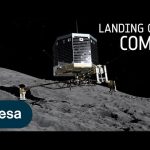
    On 12 November 2014, after a ten-year journey through the Solar System and over 500 million kilometres from home, Rosetta’s lander Philae made space exploration history by touching down on a comet for the first time. On the occasion of the tenth anniversary of this extraordinary feat, we celebrate by taking a look back over the mission’s highlights.

    Rosetta was an ESA mission with contributions from its Member States and NASA. It studied Comet 67P/Churyumov-Gerasimenko for over two years, including delivering lander Philae to the comet’s surface. Philae was provided by a consortium led by DLR, MPS, CNES and ASI.

    Credits: ESA – European Space Agency

    ★ Subscribe: http://bit.ly/ESAsubscribe and click twice on the bell button to receive our notifications.

    Check out our full video catalog: http://bit.ly/SpaceInVideos
    Follow us on Twitter: http://bit.ly/ESAonTwitter
    On Facebook: http://bit.ly/ESAonFacebook
    On Instagram: http://bit.ly/ESAonInstagram
    On LinkedIn: https://bit.ly/ESAonLinkedIn
    On Pinterest: https://bit.ly/ESAonPinterest
    On Flickr: http://bit.ly/ESAonFlickr

    We are Europe’s gateway to space. Our mission is to shape the development of Europe’s space capability and ensure that investment in space continues to deliver benefits to the citizens of Europe and the world. Check out https://www.esa.int/ to get up to speed on everything space related.

    Copyright information about our videos is available here: https://www.esa.int/ESA_Multimedia/Terms_and_Conditions

    #ESA #Comet #RosettaMission

  • Latest from Rosetta

    Latest from Rosetta

    Three years after the Rosetta mission officially ended in 2016, scientists met at ESA’s ESTEC facility in The Netherlands to discuss the latest findings at the final Science Working Team (SWT) meeting.

    From the launch in 2004, to its arrival at comet 67P in 2014, Rosetta has been an emotional and inspiring mission. Its findings have furthered our understanding of comets and changed our perceptions of how the Solar System formed.

    The mission produced an enormous amount of data which will keep many scientists busy for years. The OSIRIS camera, for example, took 100 000 images. These are archived – with the analysis of images recently providing further insight into the comet’s activity.

    Rosetta’s legacy of cometary science and data is not just continuing to produce more work, however, it’s also inspiring the next generation of scientists. Some began working on Rosetta as students and are now taking their experience forward onto ESA’s future Comet Interceptor mission.

    Further insight into the comet’s activity: http://bit.ly/CometCollapsingCliffsAndBouncingBoulders

    ★ Subscribe: http://bit.ly/ESAsubscribe and click twice on the bell button to receive our notifications.

    Check out our full video catalog: http://bit.ly/SpaceInVideos
    Follow us on Twitter: http://bit.ly/ESAonTwitter
    On Facebook: http://bit.ly/ESAonFacebook
    On Instagram: http://bit.ly/ESAonInstagram
    On Flickr: http://bit.ly/ESAonFlickr

    We are Europe’s gateway to space. Our mission is to shape the development of Europe’s space capability and ensure that investment in space continues to deliver benefits to the citizens of Europe and the world. Check out http://www.esa.int/ESA to get up to speed on everything space related.

    Copyright information about our videos is available here: http://www.esa.int/spaceinvideos/Terms_and_Conditions

    #ESA
    #Rosetta
    #SpaceExploration

  • Rosetta: the story continues

    Rosetta: the story continues

    This short movie shares an impression of some of the scientific highlights from Rosetta’s mission at Comet 67P/Churyumov–Gerasimenko, as told through the voices of scientists working with Rosetta’s vast dataset, two years after the mission ended.

    Rosetta launched in 2004 and travelled for ten years to its destination before deploying the lander Philae to the comet’s surface. Following the comet along its orbit around the Sun, Rosetta studied the comet’s surface changes, its dusty, gassy environment and its interaction with the solar wind. Even though scientific operations concluded in September 2016 with Rosetta’s own descent to the comet’s surface, analysis of the mission’s data will continue for decades.

    Credits: This is an ESA Web TV production. The video contains artist impressions of the spacecraft (credit: ESA/ATG medialab) and animations/infographics by ESA. Images of the comet are from Rosetta’s OSIRIS and NAVCAM cameras, as well as Philae’s CIVA camera (credits: ESA/Rosetta/MPS for OSIRIS Team MPS/UPD/LAM/IAA/SSO/INTA/UPM/DASP/IDA – CC BY SA 4.0; ESA/Rosetta/NavCam – CC BY-SA IGO 3.0; ESA/Rosetta/Philae/CIVA). Ground-based images were provided by Colin Snodgrass/Alan Fitzsimmons/Liverpool Telescope. The plasma visualisation is based on modelling and simulation by Technische Universität Braunschweig and Deutsches Zentrum für Luft- und Raumfahrt, and visualised by Zuse-Institut Berlin. The animation of Philae’s flight across the surface is based on data from Philae’s ROMAP, RPC-MAG, OSIRIS, ROLIS, CIVA CONSERT, SESAME and MUPUS instrument teams, the Lander Control Centre at DLR and the Science Operation and Navigation Center at CNES.

    Learn more about #Rosetta: http://bit.ly/RosettaMissionESA

    ★ Subscribe: http://bit.ly/ESAsubscribe

    Check out our full video catalog: http://bit.ly/SpaceInVideos
    Follow ESA on Twitter: http://bit.ly/ESAonTwitter
    On Facebook: http://bit.ly/ESAonFacebook
    On Instagram: http://bit.ly/ESAonInstagram
    On Flickr: http://bit.ly/ESAonFlickr

    ESA is Europe’s gateway to space. Our mission is to shape the development of Europe’s space capability and ensure that investment in space continues to deliver benefits to the citizens of Europe and the world. Check out http://www.esa.int/ESA to get up to speed on everything space related.

    Copyright information about our videos is available here: http://www.esa.int/spaceinvideos/Terms_and_Conditions

  • Rosetta’s final images

    Rosetta’s final images

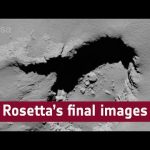
    Enjoy this compilation of with the last images taken by Rosetta’s high resolution OSIRIS camera during the mission’s final hours at Comet 67P/Churyumov-Gerasimenko. As it moved closer towards the surface it scanned across an ancient pit and sent back images showing what would become its final resting place.

    Browse all images via the Archive Image Browser: https://imagearchives.esac.esa.int

    Credits: Images: ESA/Rosetta/MPS for OSIRIS Team MPS/UPD/LAM/IAA/SSO/INTA/UPM/DASP/IDA – CC BY-SA 4.0
    Image compilation: ESA–D. C. Jimeno and M. P. Ayucar

    ★ Subscribe: http://bit.ly/ESAsubscribe

    Learn more: http://bit.ly/RosettaImageArchiveComplete

  • ESA Euronews: Rosetta heads for glorious crash-landing

    ESA Euronews: Rosetta heads for glorious crash-landing

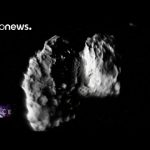
    In just a few days’ time ESA’s Rosetta mission is going to come to a close in a most extraordinary fashion, because the spacecraft is going to slowly, and deliberately crash-land into the comet that it has been orbiting for the past two years.

    Euronews is with the team as they prepare for this dramatic finale.

    This video is available in the following languages:
    English https://www.youtube.com/watch?v=K_7u71Lu3S4
    German https://www.youtube.com/watch?v=MX7SYFWzUp8
    French https://www.youtube.com/watch?v=WXTn3mDWH-Y
    Spanish https://www.youtube.com/watch?v=SjenXVAFTTw
    Italian https://www.youtube.com/watch?v=32nyF3IkzU8
    Portuguese https://www.youtube.com/watch?v=4_CTvNZfXxc
    Greek https://www.youtube.com/watch?v=CdUgVQibZWo
    Hungarian https://www.youtube.com/watch?v=i3OTRPHckSM

  • ESA Euronews: El final programado de Rosetta

    ESA Euronews: El final programado de Rosetta

    En pocos días, la misión Rosetta de la Agencia Espacial Europea (ESA) tocará a su fin. Y lo hará de la forma más extraordinaria, porque la nave espacial irá a chocar, lenta y deliberadamente, contra el cometa alrededor del cual ha estado orbitando durante los últimos dos años. Nos reunimos con el equipo mientras preparan este dramático final.

  • ESA Euronews: Rosetta se prépare au choc fatal sur la comète Tchouri

    ESA Euronews: Rosetta se prépare au choc fatal sur la comète Tchouri

    Le 30 septembre prochain, la sonde Rosetta s’écrasera lentement et délibérément sur la comète autour de laquelle elle orbite depuis deux ans. Or elle n’a pas été conçue pour cela. L’issue sera fatale. Mais avant cette dernière manoeuvre, les scientifiques ont prévu d’effectuer des relevés inédits à l’approche de “Tchouri”.

  • ESAHangout: Preparing for Rosetta’s grand finale

    ESAHangout: Preparing for Rosetta’s grand finale

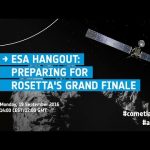
    ESA’s Rosetta spacecraft is set to complete its incredible mission in a controlled descent to the surface of Comet 67P/C-G on 30 September. Mission experts joined an ESA Hangout on 19 September to discuss Rosetta’s final days and hours of operation, including expectations for the images and other scientific data that will be collected as the spacecraft gets closer and closer to the surface. They also discuss the exciting discovery of Philae that was made earlier this month. 

    Hangout guests:
    Andrea Accomazzo, Flight operations director 
    Sylvain Lodiot, Rosetta spacecraft operations manager
    Claire Vallat or Richard Moissl (TBC), Rosetta science ground segment liaison scientist 
    Laurence O’Rourke, Rosetta downlink science operations manager (lander search coordinator) 

    Moderated by Emily Baldwin, Space Science Editor.

  • The Rosetta Mission

    The Rosetta Mission

    The Rosetta Mission has captured the interest and imagination of a generation and it is not over yet! Take a look at this Royal Observatory Greenwich video which explains what Rosetta and Philae have achieved as well as the impact the mission has had on our knowledge of our very own solar system. http://bit.ly/rogvideo #rogrosetta

    Credits:
    ROG – Creator
    Beakus – Producer
    Amaël Isnard – Director

  • Using LEGO®  to simulate ESA’s touchdown on a comet

    Using LEGO® to simulate ESA’s touchdown on a comet

    Comets are primeval leftovers from the origins of the Solar System. To fully understand these ancient objects and perhaps the origins of life on Earth, ESA’s Rosetta mission will rendezvous with comet Churyumov-Gerasimenko in 2014. In November of that year, Rosetta’s Philae lander will touchdown on the comet and thoroughly investigate its composition.

    Copyright © Lightcurve Films/Maarten Roos, ESA, DLR, Europlanet, LEGO

  • ESA Space Scientist Detlef Koschny explains why he originally built Rosetta in LEGO®

    ESA Space Scientist Detlef Koschny explains why he originally built Rosetta in LEGO®

    Space missions are complicated pieces of orbital choreography. When planning a mission, spacecraft engineers must calculate how to point the solar panels towards the Sun, the main antenna towards Earth and the instruments towards the target. ESA Space Scientist Detlef Koschny build a LEGO model of Rosetta mission in order to visualise these precise orientations.

    Copyright © Lightcurve Films/Maarten Roos, ESA, DLR, Europlanet, LEGO

  • ESA Space Scientist Detlef Koschny demonstrates the prototype LEGO®  Philae lander

    ESA Space Scientist Detlef Koschny demonstrates the prototype LEGO® Philae lander

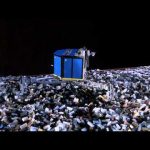
    Built using LEGO Mindstorms, the Philae lander model can be controlled using a home computer. It can rotate and move the drill up and down to simulate the behaviour of the real lander. As part of ESA’s Rosetta space mission, Philae will land on comet Churyumov-Gerasimenko in November 2014 to study its composition.

    Copyright © Lightcurve Films/Maarten Roos, ESA, DLR, Europlanet, LEGO