Tag: Rosetta Orbiter

  • Rosetta’s ever-changing view of a comet

    Rosetta’s ever-changing view of a comet

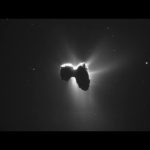
    These 210 images reflect Rosetta’s ever-changing view of Comet 67P/Churyumov–Gerasimenko between July 2014 and September 2016.

    The sequence begins in the month leading up to Rosetta’s arrival on 6 August, when the comet was barely a few pixels in the field of view. Suddenly, the curious shape was revealed and Rosetta raced to image its surface, coming within 10 km, to find a suitable place for Philae to land just three months later.

    Philae’s landing is featured with the ‘farewell’ images taken by both spacecraft of each other shortly after separation, and by Philae as it drew closer to the surface at its first touchdown point. An image taken at the final landing site is also shown.The subsequent images, taken by Rosetta, reflect the varying distance from the comet as well as the comet’s rise and fall in activity as they orbited the Sun.

    Before the comet reached its most active phase in August 2015, Rosetta was able to make some close flybys, including one in which the lighting geometry from the Sun was such that the spacecraft’s shadow could be seen on the surface.

    Then, owing to the increase of dust in the local environment, Rosetta had to maintain a safer distance and carry out scientific observations from afar, but this also gave some impressive views of the comet’s global activity, including jets and outburst events.

    Once the activity began to subside, Rosetta could come closer again and conduct science nearer to the nucleus, including capturing more high-resolution images of the surface, and looking out for changes after this active period.

    Eventually, as the comet returned to the colder outer Solar System, so the available solar power to operate Rosetta fell. The mission concluded with Rosetta making its own dramatic descent to the surface on 30 September 2016, the final images taken reflected in the last images shown in this montage.

    Explore thousands of Rosetta images in our Archive Image Browser: https://imagearchives.esac.esa.int/

    More about Rosetta and its science discoveries: http://www.esa.int/Our_Activities/Space_Science/Rosetta

    Credits: ESA/Rosetta/NavCam – CC BY-SA IGO 3.0; ESA/Rosetta/MPS for OSIRIS Team MPS/UPD/LAM/IAA/SSO/INTA/UPM/DASP/IDA; ESA/Rosetta/Philae/CIVA; ESA/Rosetta/Philae/ROLIS/DLR

  • The amazing adventures of Rosetta and Philae (German)

    The amazing adventures of Rosetta and Philae (German)

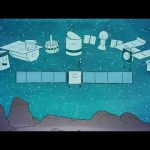
    Watch the amazing cartoon adventures of Rosetta and Philae, now back-to-back in one special feature-length production.

    Find out how Rosetta and Philae first got inspired to visit a comet, and follow them on their incredible ten-year journey through the Solar System to their destination, flying around planets and past asteroids along the way. Watch as Philae tries to land on the comet and deals with some unexpected challenges!

    Learn about the fascinating observations that Rosetta made as she watched the comet change before her eyes as they got closer to the Sun and then further away again. Finally, wish Rosetta farewell, as she, too, finishes her amazing adventure on the surface of the comet. Keep watching for one last surprise!

    This video is also available in
    English: https://www.youtube.com/watch?v=HD2zrF3I_II />Italian: https://www.youtube.com/watch?v=mOE1lt-t3JY />French: https://www.youtube.com/watch?v=t2qcopytSbQ />Spanish: https://www.youtube.com/watch?v=jfU09NXRnfI

  • The amazing adventures of Rosetta and Philae (Spanish)

    The amazing adventures of Rosetta and Philae (Spanish)

    Watch the amazing cartoon adventures of Rosetta and Philae, now back-to-back in one special feature-length production.

    Find out how Rosetta and Philae first got inspired to visit a comet, and follow them on their incredible ten-year journey through the Solar System to their destination, flying around planets and past asteroids along the way. Watch as Philae tries to land on the comet and deals with some unexpected challenges!

    Learn about the fascinating observations that Rosetta made as she watched the comet change before her eyes as they got closer to the Sun and then further away again. Finally, wish Rosetta farewell, as she, too, finishes her amazing adventure on the surface of the comet. Keep watching for one last surprise!

  • The amazing adventures of Rosetta and Philae (French)

    The amazing adventures of Rosetta and Philae (French)

    Watch the amazing cartoon adventures of Rosetta and Philae, now back-to-back in one special feature-length production.

    Find out how Rosetta and Philae first got inspired to visit a comet, and follow them on their incredible ten-year journey through the Solar System to their destination, flying around planets and past asteroids along the way. Watch as Philae tries to land on the comet and deals with some unexpected challenges!

    Learn about the fascinating observations that Rosetta made as she watched the comet change before her eyes as they got closer to the Sun and then further away again. Finally, wish Rosetta farewell, as she, too, finishes her amazing adventure on the surface of the comet. Keep watching for one last surprise!

  • The amazing adventures of Rosetta and Philae

    The amazing adventures of Rosetta and Philae

    Watch the amazing cartoon adventures of Rosetta and Philae, now back-to-back in one special feature-length production.

    Find out how Rosetta and Philae first got inspired to visit a comet, and follow them on their incredible ten-year journey through the Solar System to their destination, flying around planets and past asteroids along the way. Watch as Philae tries to land on the comet and deals with some unexpected challenges!

    Learn about the fascinating observations that Rosetta made as she watched the comet change before her eyes as they got closer to the Sun and then further away again. Finally, wish Rosetta farewell, as she, too, finishes her amazing adventure on the surface of the comet. Keep watching for one last surprise!

    This video is also available in
    Italian: https://www.youtube.com/watch?v=mOE1lt-t3JY
    French: https://www.youtube.com/watch?v=t2qcopytSbQ
    Spanish: https://www.youtube.com/watch?v=jfU09NXRnfI
    German: https://www.youtube.com/watch?v=gDmp4ZhSuIc

  • Rosetta’s complete journey around the comet

    Rosetta’s complete journey around the comet

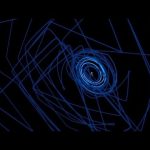
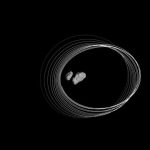
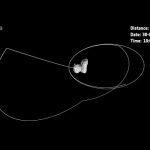
    Animation visualising Rosetta’s trajectory around Comet 67P/Churyumov–Gerasimenko, from arrival to mission end.

    The animation begins on 31 July 2014, during Rosetta’s final approach to the comet after its ten-year journey through space. The spacecraft arrived at a distance of 100 km on 6 August, from where it gradually approached the comet and entered initial mapping orbits that were needed to select a landing site for Philae. These observations also enabled the first comet science of the mission.The manoeuvres in the lead up to, during and after Philae’s release on 12 November are seen, before Rosetta settled into longer-term science orbits.

    In February and March 2015 the spacecraft made several flybys. One of the closest triggered a ‘safe mode’ that forced it to retreat temporarily until it was safe to draw gradually closer again.

    The comet’s increased activity in the lead up to and after perihelion in August 2015 meant that Rosetta remained well beyond 100 km for several months.In June 2015, contact was restored with Philae again – albeit temporary, with no permanent link able to be maintained, despite a series of dedicated trajectories flown by Rosetta for several weeks.

    Following the closest approach to the Sun, Rosetta made a dayside far excursion some 1500 km from the comet, before re-approaching to closer orbits again, enabled by the reduction in the comet’s activity.

    In March–April 2016 Rosetta went on another far excursion, this time on the night side, followed by a close flyby and orbits dedicated to a range of science observations.

    In early August the spacecraft started flying elliptical orbits that brought it progressively closer to the comet. On 24 September Rosetta left its close, flyover orbits and switched into the start of a 16 x 23 km orbit that was used to prepare and line up for the final descent.

    On the evening of 29 September Rosetta manoeuvred onto a collision course with the comet, beginning the final, slow descent from an altitude of 19 km. It collected scientific data throughout the descent and gently struck the surface at 10:39 GMT on 30 September in the Ma’at region on the comet’s ‘head’, concluding the mission.

    The trajectory shown in this animation is created from real data, but the comet rotation is not. Distances are given with respect to the comet centre (except for the zero at the end to indicate completion), but may not necessarily follow the exact comet distance because of natural deviations from the comet’s gravity and outgassing. An arrow indicates the direction to the Sun as the camera viewpoint changes during the animation.

    More about the Rosetta mission:
    http://rosetta.esa.int

  • Rosetta end of mission

    Rosetta end of mission

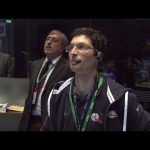
    Inside the main control room at ESA’s operation centre as the Rosetta spacecraft sends its last signal from Comet 67P/Churyumov–Gerasimenko, confirming the end of the spacecraft’s 12.5 year journey in space.

  • Once upon a time… mission complete

    Once upon a time… mission complete

    On the last day of her incredible mission, Rosetta slowly descends to the surface of Comet 67P/Churyumov-Gerasimenko. After having sent her extraordinary data back home, she is ready to join Philae for a well deserved rest on the comet. But is there one last surprise in store?

    This video is available in the following languages:
    English https://www.youtube.com/watch?v=vcYo-qQ5HbA
    German https://www.youtube.com/watch?v=4ngPV02ie4g
    Spanish https://www.youtube.com/watch?v=1PI103Je-cE
    French https://www.youtube.com/watch?v=MwML3kdmbPk
    Italian https://www.youtube.com/watch?v=X_vaJmUt37s

    More about Rosetta:
    http://rosetta.esa.int
    http://blogs.esa.int/rosetta

    Credit: ESA

  • (German) Once upon a time… mission complete

    (German) Once upon a time… mission complete

    On the last day of her incredible mission, Rosetta slowly descends to the surface of Comet 67P/Churyumov-Gerasimenko. After having sent her extraordinary data back home, she is ready to join Philae for a well deserved rest on the comet. But is there one last surprise in store?

    More about Rosetta:
    http://rosetta.esa.int
    http://blogs.esa.int/rosetta

    Credit: ESA

  • (French) Once upon a time… mission complete

    (French) Once upon a time… mission complete

    On the last day of her incredible mission, Rosetta slowly descends to the surface of Comet 67P/Churyumov-Gerasimenko. After having sent her extraordinary data back home, she is ready to join Philae for a well deserved rest on the comet. But is there one last surprise in store?

    More about Rosetta:
    http://rosetta.esa.int
    http://blogs.esa.int/rosetta

    Credit: ESA

  • (Italian) Once upon a time… mission complete

    (Italian) Once upon a time… mission complete

    On the last day of her incredible mission, Rosetta slowly descends to the surface of Comet 67P/Churyumov-Gerasimenko. After having sent her extraordinary data back home, she is ready to join Philae for a well deserved rest on the comet. But is there one last surprise in store?

    More about Rosetta:
    http://rosetta.esa.int
    http://blogs.esa.int/rosetta

    Credit: ESA

  • Once upon a time… Rosetta’s grand finale

    Once upon a time… Rosetta’s grand finale

    Rosetta revisits the exciting scientific discoveries she made during her time at Comet 67P/Churyumov-Gerasimenko, including the successful search to find Philae. Finally, she starts preparing to descend to the comet for the end of her extraordinary mission.

    This video is available in the following languages:
    English https://www.youtube.com/watch?v=lVKFyFbfpOI
    German https://www.youtube.com/watch?v=hoDMZRAyDFs
    Spanish https://www.youtube.com/watch?v=OzAzBHmH8y8
    French https://www.youtube.com/watch?v=EoJ1bE80pK8
    Italian https://www.youtube.com/watch?v=k5fAIKzJRBs

    More about Rosetta:
    http://rosetta.esa.int
    http://blogs.esa.int/rosetta

    Credit: ESA

  • Visualising Rosetta’s descent

    Visualising Rosetta’s descent

    Animation visualising Rosetta’s descent to Comet 67P/Churyumov–Gerasimenko on 30 September 2016. The sequence is speeded up to show the relative motion of Rosetta and the rotating comet below.

    Rosetta will target a smooth region close to several large pits measuring more than 100 m across and 60 m deep, on the small lobe of the comet.

    The impact time is predicted as 11:20 GMT +/- 20 minutes on 30 September.

    More information about Rosetta’s descent towards region of active pits, see
    http://www.esa.int/Our_Activities/Space_Science/Rosetta/Rosetta_s_descent_towards_region_of_active_pits

    For the latest updates, see http://rosetta.esa.int

    Credit: ESA/ATG medialab, Music: Pawel Blaszczak

  • Rosetta’s last orbits around the comet

    Rosetta’s last orbits around the comet

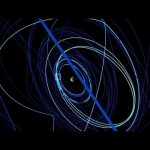
    Animation of Rosetta’s trajectory over the last two months of its mission at Comet 67P/Churyumov–Gerasimenko.

    The animation begins in early August, when the spacecraft started flying elliptical orbits that brought it progressively closer to the comet at its closest approach.

    On 24 September 2016, Rosetta will leave its current close, flyover orbits and transfer into the start of a 16 x 23 km orbit that will be used to prepare and line up for the final descent.

    On the evening of 29 September (20:50 GMT) Rosetta will manoeuvre onto a collision course with the comet, beginning the descent from an altitude of 19 km. The spacecraft will fall freely, without further manoeuvres, collecting scientific data during the descent.

    The trajectory shown here was created from real data provided over the last month, but may not necessarily follow the exact comet distance because of natural deviations from the comet’s gravity and outgassing.

    Find out more about Rosetta at:
    http://blogs.esa.int/rosetta
    and
    http://www.esa.int/rosetta

  • Rosetta’s final path

    Rosetta’s final path

    Animation of Rosetta’s final trajectory in the last 10 days of its mission at Comet 67P/Churyumov–Gerasimenko.

    On 24 September 2016, Rosetta will leave a close flyover orbit and transfer into the start of a 16 x 23 km orbit that will be used to prepare and line up for the final descent. In the evening of 29 September (20:50 GMT) Rosetta will manoeuvre onto a collision course with the comet, beginning the descent from an altitude of 19 km. The spacecraft will fall freely, without further manoeuvres, collecting scientific data during the descent.

    The trajectory shown in this animation is created from real data provided in the last month, but may not necessarily follow the exact distance/time details because of natural deviations in the trajectory associated with the comet’s gravity and outgassing.

    Find out more about Rosetta at:
    http://blogs.esa.int/rosetta
    and
    http://www.esa.int/rosetta

  • Rosetta’s journey around the comet

    Rosetta’s journey around the comet

    Animation visualising Rosetta’s two-year journey around Comet 67P/Churyumov–Gerasimenko.

    The animation begins on 31 July 2014, during Rosetta’s final approach to the comet after its ten-year journey through space. The spacecraft arrived at a distance of 100 km on 6 August whereupon it gradually approached the comet and entered initial mapping orbits that were needed to select a landing site for Philae. These observations also enabled the first comet science of the mission. The manoeuvres in the lead up to, during and after Philae’s deployment on 12 November are seen, before Rosetta settled into longer-term science orbits.

    In February and March 2015 the spacecraft made several flybys. One of the closest flybys triggered a ‘safe mode’ event that forced it to retreat temporarily until it was safe to gradually draw closer again. The comet’s increased activity in the lead up to and after perihelion in August 2015 meant that Rosetta remained well beyond 100 km distances for several months.

    In June 2015, contact was restored with Philae again – albeit temporary, with no permanent link able to be maintained, despite a series of dedicated trajectories flown by Rosetta for several weeks.

    Following perihelion, Rosetta performed a dayside far excursion some 1500 km from the comet, before re-approaching to closer orbits again, enabled by the reduction in the comet’s activity. In March–April 2016 Rosetta went on another far excursion, this time on the night side, followed by a close flyby and orbits dedicated to a range of science observations.

    The animation finishes at 9 August 2016, before the details of the end of mission orbits were known. A visualisation of the trajectories leading to the final descent to the surface of the comet on 30 September will be provided once available.

    The trajectory shown in this animation is created from real data, but the comet rotation is not. An arrow indicates the direction to the Sun as the camera viewpoint changes during the animation.

  • Once upon a time… Rosetta’s second year at the comet

    Once upon a time… Rosetta’s second year at the comet

    Rosetta describes the exciting discoveries she made during her second year at Comet 67P/Churyumov-Gerasimenko, after the comet made its closest approach to the Sun along its orbit. She also tells us about her efforts to contact Philae, and starts counting down to her own mission finale.

    This video is available in the following languages:
    English https://www.youtube.com/watch?v=lxdDx8frN_Y
    Spanish https://www.youtube.com/watch?v=zM-ZJBinuBk
    French https://www.youtube.com/watch?v=bFF1izh10PM
    Italian https://www.youtube.com/watch?v=3aS1pgOU8Gs
    German https://www.youtube.com/watch?v=ne_PvPJZYL4