Tag: SatNav

  • Saying goodbye to Galileo 1st Generation

    Saying goodbye to Galileo 1st Generation

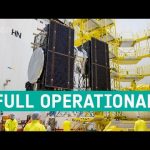
    Galileo is Europe’s largest satellite constellation – and the world’s most accurate satnav system. The work on Galileo began two decades ago with two test GIOVE satellites, followed by a series of operational launches.

    The two GIOVE satellites, the first Galileo In-Orbit Validation satellite and all 34 Galileo Full Operational Capability satellites were tested at ESA’s ESTEC Test Centre, Europe’s largest satellite testing facility.

    On this day the very last satellite in the Galileo First Generation series leaves the site, and the people responsible for readying them for space have gathered to say goodbye. Next will come the Galileo Second Generation satellites, already in development.

    Galileo is managed and funded by the European Union. The @EuropeanCommission, ESA and EUSPA (the EU Agency for the Space Programme) have signed an agreement by which ESA acts as design authority and system development prime on behalf of the Commission and EUSPA as the exploitation and operation manager of Galileo/EGNOS.
    ★ Subscribe: http://bit.ly/ESAsubscribe and click twice on the bell button to receive our notifications.

    Check out our full video catalog: http://bit.ly/SpaceInVideos
    Follow us on Twitter: http://bit.ly/ESAonTwitter
    On Facebook: http://bit.ly/ESAonFacebook
    On Instagram: http://bit.ly/ESAonInstagram
    On LinkedIn: https://bit.ly/ESAonLinkedIn
    On Pinterest: https://bit.ly/ESAonPinterest
    On Flickr: http://bit.ly/ESAonFlickr

    We are Europe’s gateway to space. Our mission is to shape the development of Europe’s space capability and ensure that investment in space continues to deliver benefits to the citizens of Europe and the world. Check out https://www.esa.int/ to get up to speed on everything space related.

    Copyright information about our videos is available here: https://www.esa.int/ESA_Multimedia/Terms_and_Conditions

    #ESA
    #Galileo
    #SatelliteNavigation
  • Testing Galileo for space

    Testing Galileo for space

    Galileo has grown to become Europe’s single largest satellite constellation, and the world’s most accurate satellite navigation system, delivering metre-level positioning to more than 3.5 billion users around the globe.

    It all began at ESTEC’s Test Centre, Europe’s largest satellite testing facility. This is where the very first positioning fix took place in March 2013, after the launch into orbit of the initial four IOV satellites. Following that, all 34 Galileo Full Operational Capability satellites also passed by ESTEC for their pre-flight testing.
    This 3000 sq. m environmentally-controlled complex, operated and managed by European Test Services for ESA, hosts an array of test equipment able to simulate all aspects of spaceflight, from the noise and vibration of launch to the vacuum and temperature extremes of Earth orbit.
    The production line at manufacturer OHB in Germany completed one new satellite every six weeks. After integration each satellite was then shipped to the ESTEC Test Centre for a three-month test campaign, after which it would be accepted by the Agency and declared ready for flight. Some facilities have had to be adapted specifically for Galileo, and the ESTEC Test Centre had to institute new security protocols because this was the first time that satellites with security restrictions were being tested at the site.
    Today there are 28 of these Galileo First Generation satellites in service, with 10 more due to be launched in the next years. Upgraded Galileo Second Generation satellites are under development and will follow them into orbit later this decade.
    Members of ESA’s Galileo team and ETS look back on this massive testing effort that established Galileo was ready for space.

    *About Galileo* :
    Galileo is managed and funded by the European Union. The European Commission, ESA and EUSPA (the EU Agency for the Space Programme) have signed an agreement by which ESA acts as design authority and system development prime on behalf of the Commission and EUSPA as the exploitation and operation manager of Galileo/EGNOS.

    ★ Subscribe: http://bit.ly/ESAsubscribe and click twice on the bell button to receive our notifications.

    Check out our full video catalog: http://bit.ly/SpaceInVideos
    Follow us on Twitter: http://bit.ly/ESAonTwitter
    On Facebook: http://bit.ly/ESAonFacebook
    On Instagram: http://bit.ly/ESAonInstagram
    On LinkedIn: https://bit.ly/ESAonLinkedIn
    On Pinterest: https://bit.ly/ESAonPinterest
    On Flickr: http://bit.ly/ESAonFlickr

    We are Europe’s gateway to space. Our mission is to shape the development of Europe’s space capability and ensure that investment in space continues to deliver benefits to the citizens of Europe and the world. Check out https://www.esa.int/ to get up to speed on everything space related.

    Copyright information about our videos is available here: https://www.esa.int/ESA_Multimedia/Terms_and_Conditions

    #ESA
    #Galileo
    #Satellite

  • Galileo: en route to full operational capability

    Galileo: en route to full operational capability

    Soon another pair of Galileo satellites will be launched on top of a Soyuz from Europe spaceport in French Guiana. These satellites are the first of the so-called ‘Batch 3’, comprising of 12 additional first-generation Galileo satellites commissioned in 2017 to bring the constellation to full operational capability. They will be used to further expand the constellation up to 38 satellites and act as backups and spares for satellites that reach their end-of-life.
    This 11th Galileo launch also marks the 10 year anniversary of the first launch of the Galileo operational satellites and the start of the construction of the constellation. Ten years later Galileo is the most accurate satellite navigation system in the world and available on every recent smartphone and device. It is also two decades since satellite navigation was first introduced as a completely new activity in the European space sector.

    Meanwhile ESA continues to ensure the future of the Galileo programme and European expertise in satellite navigation. For Galileo ESA has already commissioned a second generation of more powerful and flexible navigation satellites while new services are being developed to meet market demand.

    ★ Subscribe: http://bit.ly/ESAsubscribe and click twice on the bell button to receive our notifications.

    Check out our full video catalog: http://bit.ly/SpaceInVideos
    Follow us on Twitter: http://bit.ly/ESAonTwitter
    On Facebook: http://bit.ly/ESAonFacebook
    On Instagram: http://bit.ly/ESAonInstagram
    On LinkedIn: https://bit.ly/ESAonLinkedIn
    On Pinterest: https://bit.ly/ESAonPinterest
    On Flickr: http://bit.ly/ESAonFlickr

    We are Europe’s gateway to space. Our mission is to shape the development of Europe’s space capability and ensure that investment in space continues to deliver benefits to the citizens of Europe and the world. Check out https://www.esa.int/ to get up to speed on everything space related.

    Copyright information about our videos is available here: https://www.esa.int/ESA_Multimedia/Terms_and_Conditions

    #ESA
    #Galileo
    #SatelliteNavigation
  • Galileo: the first ten years

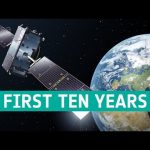
    Galileo: the first ten years

    Europe’s own satellite navigation system, Galileo, has become the world’s most precise, delivering metre-level accuracy, available anywhere on Earth. It is also saving lives, relaying distress calls for search and rescue. Today there are 26 Galileo satellites in orbit 23 222 km over our heads; the first of them were launched on 21 October 2011, with nine more launches in the following years. The satellites in space are supported by a globe-spanning ground segment. The system as a whole is set to grow, with the first of 12 ‘Batch 3’ about to join the current satellites in orbit and new ‘Galileo Second Generation’ satellites in development.

    Galileo has been financed by the EU and developed by ESA, with services delivered by EUSPA.

    ★ Subscribe: http://bit.ly/ESAsubscribe and click twice on the bell button to receive our notifications.

    Check out our full video catalog: http://bit.ly/SpaceInVideos
    Follow us on Twitter: http://bit.ly/ESAonTwitter
    On Facebook: http://bit.ly/ESAonFacebook
    On Instagram: http://bit.ly/ESAonInstagram
    On LinkedIn: https://bit.ly/ESAonLinkedIn
    On Pinterest: https://bit.ly/ESAonPinterest
    On Flickr: http://bit.ly/ESAonFlickr

    We are Europe’s gateway to space. Our mission is to shape the development of Europe’s space capability and ensure that investment in space continues to deliver benefits to the citizens of Europe and the world. Check out https://www.esa.int/ to get up to speed on everything space related.

    Copyright information about our videos is available here: https://www.esa.int/ESA_Multimedia/Terms_and_Conditions

    #ESA
    #Galileo
    #SatelliteNavigation
  • Galileo: finding our way

    Galileo: finding our way

    More than two billion smartphones, with users worldwide are now making use of Europe’s Galileo navigation satellite constellation. But how do satellites thousands of kilometres away in space manage to tell you where you are and where you’re going? Simply being so far away is part of the answer – learn the details of the world’s most precise navigation system in this new video.

    ★ Subscribe: http://bit.ly/ESAsubscribe and click twice on the bell button to receive our notifications.

    Check out our full video catalog: http://bit.ly/SpaceInVideos
    Follow us on Twitter: http://bit.ly/ESAonTwitter
    On Facebook: http://bit.ly/ESAonFacebook
    On Instagram: http://bit.ly/ESAonInstagram
    On Flickr: http://bit.ly/ESAonFlickr

    We are Europe’s gateway to space. Our mission is to shape the development of Europe’s space capability and ensure that investment in space continues to deliver benefits to the citizens of Europe and the world. Check out https://www.esa.int/ to get up to speed on everything space related.

    Copyright information about our videos is available here: https://www.esa.int/ESA_Multimedia/Terms_and_Conditions

    #ESA
    #Galileo
    #SatelliteNavigation

  • Satellite Navigation | Meet the experts

    Satellite Navigation | Meet the experts

    Satellite navigation is a big part of our daily lives. How do our phones and cars know where to go? Nicola de Quattro, head of engineering and innovation at Vitrociset Belgium, explains how sat nav works along with its present and future applications in this episode of Meet the Experts.

    Learn more: http://bit.ly/ExpeditionHome12_18YearsOld

    ★ Subscribe: http://bit.ly/ESAsubscribe and click twice on the bell button to receive our notifications.

    Check out our full video catalog: http://bit.ly/SpaceInVideos
    Follow us on Twitter: http://bit.ly/ESAonTwitter
    On Facebook: http://bit.ly/ESAonFacebook
    On Instagram: http://bit.ly/ESAonInstagram
    On Flickr: http://bit.ly/ESAonFlickr

    We are Europe’s gateway to space. Our mission is to shape the development of Europe’s space capability and ensure that investment in space continues to deliver benefits to the citizens of Europe and the world. Check out http://www.esa.int/ESA to get up to speed on everything space related.

    Copyright information about our videos is available here: http://www.esa.int/spaceinvideos/Terms_and_Conditions

    #ESA
    #MeetTheExperts
    #ExpeditionHome

  • ESAIL maritime microsatellite

    ESAIL maritime microsatellite

    Soon a Vega will launch from Kourou carrying a payload of several satellites. These will be delivered into orbit by a new multi-payload system developed by ESA. Among these small satellites, E-SAIL. This microsatellite is dedicated to supporting maritime traffic and making seafaring safer. It is part of ESA’s SAT-AIS programme, which aims is to increase the coverage of the Automatic Identification System for ships. This system is a short-range coastal tracking system currently used on ships that makes traffic safer but which has a limited range. With microsatellites from the SAT-AIS programme such as E-SAIL maritime shipping can be made safer across the oceans.

    ★ Subscribe: http://bit.ly/ESAsubscribe and click twice on the bell button to receive our notifications.

    Check out our full video catalog: http://bit.ly/SpaceInVideos
    Follow us on Twitter: http://bit.ly/ESAonTwitter
    On Facebook: http://bit.ly/ESAonFacebook
    On Instagram: http://bit.ly/ESAonInstagram
    On Flickr: http://bit.ly/ESAonFlickr

    We are Europe’s gateway to space. Our mission is to shape the development of Europe’s space capability and ensure that investment in space continues to deliver benefits to the citizens of Europe and the world. Check out http://www.esa.int/ESA to get up to speed on everything space related.

    Copyright information about our videos is available here: http://www.esa.int/spaceinvideos/Terms_and_Conditions

    #ESA
    #ESAIL
    #SatNav