Steve Spangler is a bestselling author, STEM educator and Emmy award-winning television personality with more than 2,100 television appearances to his credit. Steve appeared as a regular guest on the Ellen DeGeneres Show from 2007-2022. Learn more about Steve at https://stevespangler.com/about-steve-spangler/
Steve Spangler is a bestselling author, STEM educator and Emmy award-winning television personality with more than 2,100 television appearances to his credit. Steve appeared as a regular guest on the Ellen DeGeneres Show from 2007-2022. Learn more about Steve at https://stevespangler.com/about-steve-spangler/
Steve Spangler is a bestselling author, STEM educator and Emmy award-winning television personality with more than 2,100 television appearances to his credit. Steve appeared as a regular guest on the Ellen DeGeneres Show from 2007-2022. Learn more about Steve at https://stevespangler.com/about-steve-spangler/
This summer, Earth has been experiencing some of the hottest temperatures on record and July is shaping up to follow this record-breaking trend. Join NASA climate experts on Monday, Aug. 14 as they discuss impacts of climate change, and how data can be used to mitigate its effects.
According to the @worldmetorg, July 2023 is likely to have been the hottest month on record. While much of Europe, North America and Asia suffered the immediate consequences of these brutal temperatures, extreme events are also hitting hard far away in the icy reaches of Antarctica. In a paper published today, scientists highlight Antarctica’s vulnerability to extremes and the role that satellites play in monitoring this remote region.
In the vast expanse of space, astronauts face a unique challenge – the need to share spacesuits during prolonged spacewalks. These suits, including their inner linings that come into direct contact with the astronauts’ skin, tend to accumulate bodily fluids over time. Drawing a rather relatable analogy, it’s akin to sharing underwear in space!
However, the practicality of washing these spacesuit interiors on lunar surfaces or beyond presents a significant hurdle. To counter this, a dedicated group of researchers is delving into innovative strategies to curb the growth of potentially harmful microbes within the inner layers of these suits.
Here’s where the solution gets intriguing: the world of microbiology offers a fascinating approach. Certain types of microbes possess ‘secondary metabolites’ that allow them to combat other microbes. These compounds are not only diverse in colour but also possess antibiotic properties. The ingenious idea involves integrating these microbial warriors into the very fabric of the spacesuit’s inner layer.
This pioneering research isn’t confined solely to the realm of spacesuits; its implications extend far beyond. The outcomes hold the potential to revolutionise the field of antimicrobial treatments and smart textile technologies right here on Earth. As we gear up for lunar expeditions and beyond, these microbial-fighting fabrics could play a pivotal role in ensuring astronauts’ health and well-being while opening new frontiers of innovation back home.
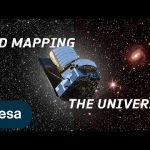
ESA’s Euclid mission will create a 3D-map of the Universe that scientists will use to measure the properties of dark energy and dark matter and uncover the nature of these mysterious components. The map will contain a vast amount of data, it will cover more than a third of the sky and its third dimension will represent time spanning 10 billion years of cosmic history.
But dealing with the huge and detailed set of novel data that Euclid observations will produce is not an easy task. To prepare for this, scientists in the Euclid Consortium have developed one of the most accurate and comprehensive computer simulations of the large-scale structure of the Universe ever produced. They named this the Euclid Flagship simulation.
Running on large banks of advanced processors, computer simulations provide a unique laboratory to model the formation and evolution of large-scale structures in the Universe, such as galaxies, galaxy clusters, and the filamentary cosmic web they form. These state-of-the-art computational techniques allow astrophysicists to trace the motion and behavior of an extremely large number of dark-matter particles over cosmological volumes under the influence of their own gravitational pull. They replicate how and where galaxies form and grow, and are used to predict their distribution across the celestial sphere.
Explore the Euclid Flagship simulation in this video and get a sneak preview of the structure of the dark Universe, as we currently model it. New insights will be brought to you by the Euclid mission in the coming years.
Credits: ESA/Euclid Consortium/Cacao Cinema The authors kindly acknowledge the use of the Splotch package: http://www.mpa-garching.mpg.de/~kdolag/Splotch
★ Subscribe: http://bit.ly/ESAsubscribe and click twice on the bell button to receive our notifications.
We are Europe’s gateway to space. Our mission is to shape the development of Europe’s space capability and ensure that investment in space continues to deliver benefits to the citizens of Europe and the world. Check out https://www.esa.int/ to get up to speed on everything space related.
The fraction of light that an object reflects is called its ‘albedo’. Most planets have a low albedo, either because they have an atmosphere that absorbs a lot of light, or because their surface is dark or rough. Earth, for example, only reflects around 30% of incoming sunlight. Exceptions tend to be frozen ice-worlds, or planets like Venus which have a cloud layer (reflecting 75% of the Sun’s light in Venus’ case).
LTT9779 b’s 80% of albedo came as a surprise because the planet’s side facing its star is estimated to be around 2000 °C. Any temperature above 100 °C is too hot for clouds of water to form, but the temperature of this planet’s atmosphere should even be too hot for clouds made of metal or glass.
LTT9779 b can form metallic clouds despite being so hot because the atmosphere is oversaturated with silicate and metal vapours.
📹 ESA – European Space Agency 🖥️ Ricardo Ramírez Reyes/Universidad de Chile
★ Subscribe: http://bit.ly/ESAsubscribe and click twice on the bell button to receive our notifications.
We are Europe’s gateway to space. Our mission is to shape the development of Europe’s space capability and ensure that investment in space continues to deliver benefits to the citizens of Europe and the world. Check out https://www.esa.int/ to get up to speed on everything space related.
Pearls and seashells are made from the same basic stuff as easily crushed chalk – humble calcium carbonate – so why are they so much tougher? Researchers are taking design tips from the micro-structure of these naturally formed materials to produce stronger, more fracture-resistant ceramics for future space missions.
The project began last year, with samples synthesised at Imperial College’s laboratory and tested at Azimut Space in Germany, with the Materials Testing Centre at Coventry in the UK looking into scaling up production processes.
📹 ESA – European Space Agency 📸 ESA, Dr. Erik Poloni, Airbus Defence and Space SAS 2014 A. Gilbert, University of Glasgow
★ Subscribe: http://bit.ly/ESAsubscribe and click twice on the bell button to receive our notifications.
We are Europe’s gateway to space. Our mission is to shape the development of Europe’s space capability and ensure that investment in space continues to deliver benefits to the citizens of Europe and the world. Check out https://www.esa.int/ to get up to speed on everything space related.
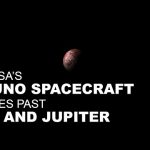
On May 16, 2023, NASA’s Juno spacecraft flew past Jupiter’s volcanic moon Io, and then the gas giant soon after. Io is the most volcanically active body in the solar system. Slightly larger than Earth’s moon, Io is a world in constant torment. Not only is the biggest planet in the solar system forever pulling at it gravitationally, but so are its Galilean siblings – Europa and the biggest moon in the solar system, Ganymede. The result is that Io is continuously stretched and squeezed, actions linked to the creation of the lava seen erupting from its many volcanoes.
This rendering provides a “starship captain” point of view of the flyby, using images from JunoCam. For both targets, Io and Jupiter, raw JunoCam images were reprojected into views similar to the perspective of a consumer camera. The Io flyby and the Jupiter approach movie were rendered separately and composed into a synchronous split-screen video.
Launched on Aug. 5, 2011, Juno embarked on a 5-year journey to Jupiter. Its mission: to probe beneath the planet’s dense clouds and answer questions about the origin and evolution of Jupiter, our solar system, and giant planets in general across the cosmos. Juno arrived at the gas giant on July 4, 2016, after a 1.7-billion-mile journey, and settled into a 53-day polar orbit stretching from just above Jupiter’s cloud tops to the outer reaches of the Jovian magnetosphere. Now in its extended mission, NASA’s most distant planetary orbiter continues doing flybys of Jupiter and its moons.
Voxa – descarcă aplicația Voxa și ai acces nelimitat la întreg catalogul în baza abonamentului lunar aflat acum la prețul de 9.99 lei, redusdela48lei. Descarcă aplicația Voxa din App Store sau Google Play și ascultă și tu: “Visul lui Einstein și alte eseuri”, de Stephen Hawking – https://bit.ly/3pL5GDX
Folosește codul promo PRESURA pentru o reducere 50% din abonamentul anual: https://cambly.biz/presura Foloseste-te de oferta valabila doar un timp limitat si invata limba engleza direct de la vorbitorii nativi!
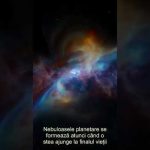
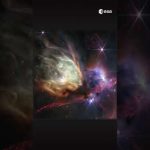
This video takes the viewer on a journey through space to the Rho Ophiuchi cloud complex.
From our cosmic backyard in the Solar System to distant galaxies near the dawn of time, the NASA/ESA/CSA James Webb Space Telescope has delivered on its promise of revealing the Universe like never before in its first year of science operations. To celebrate the completion of a successful first year, a new Webb image has been released of a small star-forming region in the Rho Ophiuchi cloud complex. While the region is relatively quiet, its proximity at 390 light-years makes for a highly detailed close-up, with no foreground stars in the intervening space.
Credits: ESA/Webb, NASA, ESA, CSA, JPL-Caltech/Harvard-Smithsonian CfA, DSS2, N. Bartmann (ESA/Webb), E. Slawik, N. Risinger, D. de Martin, M. Zamani (ESA/Webb), K. Pontoppidan (STScI), A. Pagan (STScI)
Music: Tonelabs – The Red North
★ Subscribe: http://bit.ly/ESAsubscribe and click twice on the bell button to receive our notifications.
We are Europe’s gateway to space. Our mission is to shape the development of Europe’s space capability and ensure that investment in space continues to deliver benefits to the citizens of Europe and the world. Check out https://www.esa.int/ to get up to speed on everything space related.
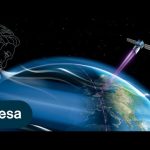
ESA’s Earth Explorer Aeolus satellite was launched in August 2018 on a trailblazing mission to show how profiling Earth’s winds from space can improve weather forecasts and climate models. Data from its pioneering wind-mapping laser, which at one stage was thought a nigh-impossible feat of engineering, has been used by leading weather forecasting services throughout Europe.
Marking the end of Aeolus’ remarkable mission, ESA worked with composer Jamie Perera to create a woodwind piece from data that spans the lifetime of the satellite’s life in orbit around Earth.
In the resulting orchestral piece, every second is a day in the life of Aeolus, with data represented by the following instruments:
Piccolo: Rayleigh Top Altitude (the tops of clouds) Flute: Rayleigh Observation Type (density of clouds) Oboe: Rayleigh Reference Temperature (wind temperature) Clarinet 1: Rayleigh Wind Velocity (wind velocity) Clarinet 2: Rayleigh Wind Reference Pressure (air pressure) Bassoon/Bass Clarinet: Rayleigh Bottom Altitude (Earth’s surface) Ambient Synth: Validity Flag 0 (Aeolus downtime)
You can also hear landmark events such as volcanic eruptions represented by drums, hurricanes represented by wind sound effects, and the Coronavirus pandemic represented by a pulsing synth.
We are Europe’s gateway to space. Our mission is to shape the development of Europe’s space capability and ensure that investment in space continues to deliver benefits to the citizens of Europe and the world. Check out https://www.esa.int/ to get up to speed on everything space related.
This month marks one year since the James Webb Space Telescope astonished the world with the release of its first images and data. Since then, the observatory has been transforming the way we see the universe, from revealing details of planets and moons in our own solar system, to providing new understanding of how stars and galaxies form.
Join experts on Wednesday, July 12, as they highlight Webb’s first year of science and answer your questions about the mission. Submit questions during our live chat.
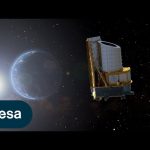
If you think its only possible be held in orbit around a central body of mass – say a planet or a star – you’d be wrong. It is in fact possible to orbit around an invisible point, an oasis of forces, infinitesimal in size. ESA’s Euclid mission was launched on 1 July 2023 to uncover the secrets of the dark universe. Its destination? Like many astronomy missions before it, Lagrange point 2.
‘L2’ is an ideal location for astronomy missions because they can keep the Sun, Earth and Moon behind them at all times, so they don’t interfere with observations, while at the same time getting a clear view of deep space and pointing an antenna back to Earth to remain in close communication. The permanent sunlight on Euclid at L2 also keeps the telescope thermally stable, allowing for the extremely high stability required for the instrument’s long exposure observations. Euclid’s orbit around Lagrange point 2 is big. In terms of distance, the ‘radius’ of Euclid’s orbit varies from about 400 000 kilometres at its closest to the centre, and up to 800 000 kilometres at its furthest. By the time Euclid has completed one full revolution around L2, the Moon will have circled the Earth six times.
The reason for this large orbit is that it is almost free, in terms of fuel, to get there. The better the accuracy of the rocket that launches a mission into such a large halo orbit around L2, the less fuel that’s needed to perform correction manoeuvres – and Euclid only required a tiny correction manoeuvre after its near-perfect launch on a Space X Falcon 9.
This animation, created using “Gaia Sky”, shows Euclid’s path from Earth to this unique and useful position in space. Located about 1.5 million kilometres from Earth in the opposite direction from the Sun, the second Lagrange point (or Libration point) is about four times further away than our Moon.
Euclid will spend about a month getting to ‘L2’ followed by a planned six years in orbit, from where it will study the mysterious nature of dark matter and dark energy, that make up 95% of our Universe, but about which very little is known.
Credits: ESA/Gaia/DPAC, CC BY-SA 3.0 IGO
★ Subscribe: http://bit.ly/ESAsubscribe and click twice on the bell button to receive our notifications.
We are Europe’s gateway to space. Our mission is to shape the development of Europe’s space capability and ensure that investment in space continues to deliver benefits to the citizens of Europe and the world. Check out https://www.esa.int/ to get up to speed on everything space related.
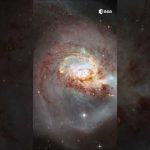
This video takes the viewer on a journey through space to the peculiar galaxy NGC 3256.
This distorted galaxy is the wreckage of a head-on collision between two spiral galaxies which likely occurred 500 million years ago, and it is studded with clumps of young stars which were formed as gas and dust from the two galaxies collided.
We are Europe’s gateway to space. Our mission is to shape the development of Europe’s space capability and ensure that investment in space continues to deliver benefits to the citizens of Europe and the world. Check out https://www.esa.int/ to get up to speed on everything space related.