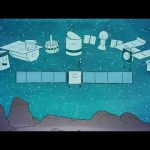
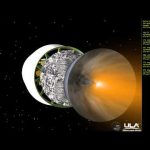
On the last day of her incredible mission, Rosetta slowly descends to the surface of Comet 67P/Churyumov-Gerasimenko. After having sent her extraordinary data back home, she is ready to join Philae for a well deserved rest on the comet. But is there one last surprise in store?
Rosetta revisits the exciting scientific discoveries she made during her time at Comet 67P/Churyumov-Gerasimenko, including the successful search to find Philae. Finally, she starts preparing to descend to the comet for the end of her extraordinary mission.
Animation visualising Rosetta’s descent to Comet 67P/Churyumov–Gerasimenko on 30 September 2016. The sequence is speeded up to show the relative motion of Rosetta and the rotating comet below.
Rosetta will target a smooth region close to several large pits measuring more than 100 m across and 60 m deep, on the small lobe of the comet.
The impact time is predicted as 11:20 GMT +/- 20 minutes on 30 September.
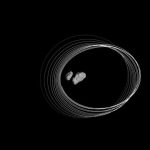
Animation of Rosetta’s trajectory over the last two months of its mission at Comet 67P/Churyumov–Gerasimenko.
The animation begins in early August, when the spacecraft started flying elliptical orbits that brought it progressively closer to the comet at its closest approach.
On 24 September 2016, Rosetta will leave its current close, flyover orbits and transfer into the start of a 16 x 23 km orbit that will be used to prepare and line up for the final descent.
On the evening of 29 September (20:50 GMT) Rosetta will manoeuvre onto a collision course with the comet, beginning the descent from an altitude of 19 km. The spacecraft will fall freely, without further manoeuvres, collecting scientific data during the descent.
The trajectory shown here was created from real data provided over the last month, but may not necessarily follow the exact comet distance because of natural deviations from the comet’s gravity and outgassing.
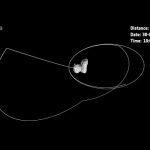
Animation of Rosetta’s final trajectory in the last 10 days of its mission at Comet 67P/Churyumov–Gerasimenko.
On 24 September 2016, Rosetta will leave a close flyover orbit and transfer into the start of a 16 x 23 km orbit that will be used to prepare and line up for the final descent. In the evening of 29 September (20:50 GMT) Rosetta will manoeuvre onto a collision course with the comet, beginning the descent from an altitude of 19 km. The spacecraft will fall freely, without further manoeuvres, collecting scientific data during the descent.
The trajectory shown in this animation is created from real data provided in the last month, but may not necessarily follow the exact distance/time details because of natural deviations in the trajectory associated with the comet’s gravity and outgassing.
Launched in December 2013, Gaia is destined to create the most accurate map yet of the Milky Way. By making accurate measurements of the positions and motions of stars in the Milky Way, it will answer questions about the origin and evolution of our home galaxy.
The first intermediate data release, containing among other things three-dimensional positions and two-dimensional motions of a subset of two million stars, demonstrates that Gaia’s measurements are as precise as planned, paving the way to create the full map of one billion stars to be released towards the end of 2017.
Located on the UK Space Gateway, Harwell Campus, the ESA-RAL Advanced Manufacturing Laboratory provides expertise and test services to investigate and optimise advanced materials and manufacturing processes in support of cutting-edge research and development. The facility is physically located within the Science and Technology Facilities Council’s Rutherford Appleton Laboratory (RAL).
The laboratory takes in samples of material destined for future space projects and puts them through various tests. A wide range of material properties and characteristics can be investigated in order to provide recommendations on how the materials can best be applied or improved before they can be considered for further development and used in a fully-fledged space mission. It has access to a metal-based 3D printer and is equipped with a suite of powerful microscopes, an X-ray CT machine and a range of furnaces.
Mechanical testing such as tensile and micro hardness testing is also performed.The lab is a gateway to accessing some of the extensive on-site testing facilities based on Harwell Campus, such as STFC’s ISIS Neutron Source, the Diamond Light Source synchrotron and the UK’s Central Laser Facility.
Currently around 63% of students are disengaged at school, meaning that they withdrawal either physically or mentally before they have mastered the skills that are required to flourish in later life. In this talk Scott Bolland explores the science of learning, the mismatch between how we teach and how the brain natural learns, and the important role that artificial intelligence could take in addressing the limitations in our current education system.
Dr Scott Bolland is the founder of New Dawn Technologies, a high-tech software company aiming to revolutionise education through the use of artificial intelligence. He has spent the last 20 years actively researching and teaching in the field of cognitive science – the scientific study of how the mind works – which spans disciplines such as psychology, philosophy, neuroscience, artificial intelligence and computer science. He holds a PhD in this field, as well as a university medal for outstanding academic scholarship.
This talk was given at a TEDx event using the TED conference format but independently organized by a local community. Learn more at http://ted.com/tedx
NASA works with the Maker community to create new ideas and technologies to drive exploration here on Earth and out in space. The agency uses prizes and challenges, like the Future Engineers 3-D printing challenge for students, and programs like the CubeSat Launch Initiative, which works with students across the country to build and launch small satellites, to encourage innovation and STEM development. During the National Week of Making 2016, NASA committed to continuing its work in order to help groups in all 50 states launch a satellite into orbit.
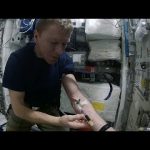
ESA astronaut Tim Peake shows how to draw blood for research on the International Space Station. Researchers often request samples before, during and after a spaceflight to examine differences.
The tubes of blood are put in a refrigerated centrifuge and then stored in the International Space Station’s –80°C freezer called MELFI for later analysis on Earth.
Kasha Patel and Mike Behrenfeld chat about the North Atlantic Aerosols and Marine Ecosystems Study (NAAMES). This NASA field experiment took to the sea in May to investigate the world’s largest plankton bloom and how it gives rise to small organic particles that leave the ocean and end up in the atmosphere, ultimately influencing clouds and climate.
Advanced scientific note about Doppler: If there is a light moving away from you at constant velocity in static flat (Minkowski) space-time, no matter how red it is, you will never conclude it is going faster than light. But, here I am discussing the conclusions one might come to if you mistakenly use Doppler in the context of the curved space-time of the universe (where there is expansion). Interpreting the huge redshift as a result of the doppler effect, could make one think that galaxies we see are moving away at speeds approaching light speed. And since what we are actually seeing is light from those galaxies from billions of years ago, and given that the universe is expanding, you might be tempted to say that they have since “accelerated” to faster than the speed of light. You might go further and say that there are more distant galaxies that we can’t see which are moving away even faster. So you might conclude there are galaxies moving faster than light in the universe. But the redshift isn’t from doppler and this “acceleration” of the expanding universe isn’t actually causing a true increase in velocity.
Sometimes astronomers do say there is a faster than light “recession speed” by pretending the expansion of the universe is causing distant galaxies to move away from each other at a corresponding velocity, but that’s misleading. In general relativity, you can actually have an increase in space between objects without causing a corresponding increase in the relatives velocities of those objects.
Special thanks:
Marissa Giustina
Nick Hutzler
Julie Elksy
Byron Drury
Jacob Barandes
Tyler Howe
Lissy Herman
Ari Daniel
Lauren Aguirre
Kristine Allington
Allison Eck
Anna Rotschild
MEDIA CREDITS:
Music provided by APM:
Deep_Science_No-perc
Mysteries_of_Science_B
Dreaming_of_the_Stars_a
Curiosity_Kills_the_Cat_2
Conundrum_a
Images:
Stars – Rene Barrios
Earth – Eirika
galaxy spiral (by coornio – diviantart)
Squirrel with scissors – 60811670 – Dollarphotoclub
Equations – 91613623 – Dollarphotoclub
Maxresdefault – Sean Stewart
Marissa Giustina – Lammerhuber
Tangled cat – David Swayze
Cat doll – Vicky Somma
Stock footage:
train-exits-tunnel – Pond5
Bin_pulsar_442 – Courtesy of Nasa
Expanding in space (40294) – Courtesy of Nasa
WMAP_archive – Courtesy of Nasa
Does gravity change the color of light all around you? Einstein thought so. Did this ingenious experiment proved him right?
Subscribe: http://youtube.com/whatthephysics?sub…
↓Want more info?↓
Special thanks:
Tyler Howe
Ari Daniel
Paul Horowitz
Sara Tewksbury
Seeta Joseph
Karishma Desai
Lauren Aguirre
Kristine Allington
Allison Eck
Lauren Miller
Stuart McNeil
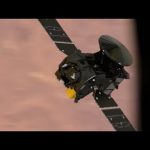
On 14 March at 09:31 GMT ExoMars 2016 will be launched from Baikonur onboard a Proton rocket.
The joint European and Russian ExoMars mission will test key exploration technologies and search for evidence of methane and other rare gases in the Martian atmosphere. These gases could result from geological processes or they could be signatures of current biological activity on the planet.
This film examines the two European science instruments on the ExoMars Trace Gas Orbiter (TGO) – CaSSIS and NOMAD. The high-resolution CaSSIS (Colour and Stereo Surface Imaging System) acts as the orbiter’s scientific eye. It is a telescope with a sophisticated detector that can provide colour and stereo images over a nine and a half kilometre wide strip. CaSSIS will examine recurring slope linea – dark lines on the surface of Mars at different times of the day over the planet’s seasons. These linea are believed to be associated with liquid brine. They increase in size during the Martian spring and summer and fade away during autumn and winter.
NOMAD (Nadir and Occultation for MArs Discovery) will be the first high resolution instrument of its kind around the planet. It will observe information about Mars’ atmosphere by looking at the Sun during sunsets and sunrises. It contains three spectrometers – two working in the infrared and one in ultraviolet – and can identify trace gases in the atmosphere, such as methane. The presence of methane in Mars’ atmosphere could result from simple life forms like microbes.
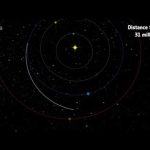
The journey that the ExoMars 2016 spacecraft will take from Earth to Mars. ‘Distance to Mars’ is the straight-line distance between the spacecraft and Mars, and not the actual distance that the spacecraft will travel.
The mission is scheduled for launch in the 14–25 March window. The Trace Gas Orbiter and the Schiaparelli entry, descent and landing demonstrator module will separate on 16 October. Schiaparelli is set to enter the martian atmosphere on 19 October, while TGO will enter orbit around Mars.
What’s the science behind texting? When you hit send, how does your message leave your phone and make the journey to your friend’s phone?
Subscribe: http://youtube.com/whatthephysics?sub_confirmation=1
↓Want more info?↓
CREDITS:
Host, Writer, Animator, Editor:
Greg Kestin
Special thanks:
Tyler Howe
Julie Elsky
Lissy Herman
Patrick Mitran
Jerry Gibson
Lauren Aguirre
Kristine Allington
Anna Rothschild
Allison Eck
Ari Daniel
Lauren Miller
SCIENTIFIC NOTES:
– Messages can also be encoded by altering the phase of the signal being sent from the antenna.
– Phones use several (~8) frequencies at one time, and since there are limited frequencies (~100) for the tower to use, manages the sharing of them.
MEDIA CREDITS:
Music provided by APM:
Curio C
Sound effects:
Freesound.org
Images:
Two tree cell towers (Devra)
Top of cell tower (Ervins Strauhmanis)
Stock footage from Pond5:
digital-computer-brain-binary
bangkok-city-skyline-aerial-da
aerial-fly-over-green-forest-c
Learn about what physics actually is, why it’s awesome, and why you should come with me on a ride through understanding the wacky universe in which we live.
The work NASA does, and will continue in 2016, helps the United States maintain its world leadership in space exploration and scientific discovery. The agency will continue investing in its journey to Mars, returning human spaceflight launches from American soil, fostering groundbreaking technology development, breakthroughs in aeronautics and bringing to every American the awe-inspiring discoveries and images captured by NASA’s missions in our solar system and beyond.
For more about NASA’s missions, research and discoveries, visit:
How is the chemical energy of gasoline transformed into kinetic energy of a moving car? And where does that kinetic energy go when the car crashes into something and stops moving?
Meet some real-life robots, and find out what robots really are, and what they do for us every day!
———-
Like SciShow? Want to help support us, and also get things to put on your walls, cover your torso and hold your liquids? Check out our awesome products over at DFTBA Records: http://dftba.com/SciShow
This is hands down the BEST and easiest fake blood recipe out there. Our secret is the unique combination of Imperial powdered sugar and cocoa powder. The combination with red food coloring makes this the sickest BLENDER BLOOD you can make.
When you mix red and green, what do you get? White light is all of the colors, right? So, how do computer screens show you every wavelength of light? Or do they?
ESA astronaut Samantha Cristoforetti photographs stunning Earth images of Lufthansa worldwide destinations during her Futura mission onboard the ISS. An ESA for Lufthansa inflight film.
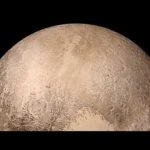
A July 24 update at NASA headquarters, featured new surprising imagery and science results from the recent flyby of Pluto, by the New Horizons spacecraft. These included an image from the Long Range Reconnaissance Imager or (LORRI) – looking back at Pluto – hours after the historic flyby that revealed a haze in the planet’s sunlit atmosphere that extends as high as 80 miles above Pluto’s surface – much higher than expected. Models suggest that the hazes form when ultraviolet sunlight breaks apart methane gas. LORRI images also show evidence that exotic ices have flowed – and may still be flowing across Pluto’s surface, similar to glacial movement on Earth. This unpredicted sign of present-day geologic activity was detected in Sputnik Planum – an area in the western part of Pluto’s heart-shaped Tombaugh Regio. Additionally, new compositional data from New Horizons’ Ralph instrument indicate that the center of Sputnik Planum is rich in nitrogen, carbon monoxide, and methane ices. Also, Kepler discovers Earth’s “bigger cousin”, New crew launches to space station, EPIC view of Earth, Newman continues NASA center visits and Small Class Vehicle launch pad complete!
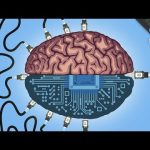
Scientists Are Convinced Mind Transfer Is the Key to Immortality http://motherboard.vice.com/blog/scientists-are-convinced-mind-transfer-is-the-key-to-immortality
“Call it mind transfer, uploading, brain backup, whatever—the idea of copying the human brain to a computer so it can live on without the body has a strong hold on futurists, neuroscientists, and folks that just want to live forever.”
Engineering a memory with LTD and LTP http://www.nature.com/nature/journal/v511/n7509/full/nature13294.html
“It has been proposed that memories are encoded by modification of synaptic strengths through cellular mechanisms such as long-term potentiation (LTP) and long-term depression (LTD).”
If your brain were a computer, how much storage space would it have? http://io9.com/if-your-brain-were-a-computer-how-much-storage-space-w-509687776
“The comparison between the human brain and a computer is not a perfect one, but it does lend itself to some interesting lines of inquiry. For instance: what is the storage capacity of your brain?”
____________________
DNews is dedicated to satisfying your curiosity and to bringing you mind-bending stories & perspectives you won’t find anywhere else! New videos twice daily.
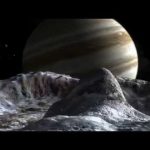
NASA announced May 26, it has selected nine science instruments for a mission to Jupiter’s moon Europa to investigate whether the icy moon has conditions suitable for life. The instruments, targeted for launch aboard a robotic probe in the 2020s, include cameras and spectrometers to collect high-resolution imagery; an ice penetrating radar to measure surface thickness and look for subsurface lakes; and a magnetometer to measure the strength and direction of the moon’s magnetic field, and allow scientists to determine the depth and salinity of the moon’s ocean. The mission will collect data during a series of close flybys of Europa during a three-year period. Also, Commercial Crew update, Space station module relocated, Bolden visits space companies, SLS engine test, Supersonic vehicle test and more!
ESA astronaut Samantha Cristoforetti, from Italy, will shortly be ending her long-duration stay onboard the International Space Station. Launched in November 2014, the Futura mission is the result of a special agreement between NASA and the Italian Space Agency ASI.
During her time in orbit Samantha Cristoforetti has undergone an intensive programme of scientific research, educational and maintenance activities, as well as overseeing the undocking of ESA’s fifth – and last – Automated Transfer Vehicle.
ESA astronaut Samantha Cristoforetti running experiments in weightlessness during her Futura mission for scientists from all over the world. The International Space Station offers three state-of-the-art laboratories where research can be done without gravity. The European Columbus laboratory, the Japanese Kibo and the American Destiny module offer facilities for physics, biology, geophysics and medicine.
Samantha’s 40-hour work week is devoted to science and maintaining the weightless research centre. This video gives a fast-track impression of some of the experiments she worked on. In quick succession we see Samantha working on: exercise machine ARED, measuring her body mass, the robotic droids SPHERES, ESA’s microgravity glovebox, muscle-measurement machine MARES, centrifuge-incubator Kubik, Biolab, Materials Science Laboratory and ejecting miniature satellites called Cubesats into space.
Even if you don’t, watch anyway. Maybe I’ll convince you. And if not, maybe I’ll impart some important skills or perspectives upon you. A lot of what I say can be applied not only to physics, but to other academic disciplines as well.
Here are some resources for learning physics (in order of increasing difficulty)
Amateur (little to no math)
A Briefer History of Time by Stephen Hawking
The Grand Design by Stephen Hawking and Leonard Mlodinow
The Elegant Universe by Brian Greene
Cosmos by Carl Sagan
Fearful Symmetry by Anthony Zee
Recruit (some calculus, maybe a DiffEQ here or there)
University Physics by Roger Freedman
Physics (Vol 1 and 2) by Resnick, Halliday, and Krane
Regular (know calculus cold, and have a good handle on DiffEQs)
An Introduction to Mechanics by Kleppner and Kolenkow
Electricity and Magnetism by Purcell
Classical and Statistical Thermodynamics by Ashley Carter
Hardened (all of the “baby maths” should be second nature to you)
Classical Mechanics by Taylor
Introduction to Electrodynamics by Griffiths
Introduction to Quantum Mechanics by Griffiths
Introduction to Elementary Particles by Griffiths
Veteran (you will not survive)
A Modern Approach to Quantum Mechanics by Townsend
Quantum Field Theory in a Nutshell by Anthony Zee
Studies indicating that studying in pairs is ideal:
Hake, R. R. (1998). Interactive-engagement versus traditional methods: A six-thousand-student survey of mechanics test data for introductory physics courses. American journal of Physics, 66, 64.
There are a number of things that can help your balance. You could try walking with books on your hand, walking a tightrope, or taking some ballet classes. If you’re a hex nut, however, you’re going to need some help from magnets and their magnetic fields. Do you think you have the magnetism it takes to master the Balancing Hex Nut Challenge?
NASA’s Soil Moisture Active Passive (SMAP) spacecraft launched Jan. 31 from California’s Vandenberg Air Force Base. SMAP is the first U.S. Earth-observing satellite designed to collect global observations of surface soil moisture. The mission’s high resolution space-based measurements of soil moisture will give scientists a new capability to better predict natural hazards of extreme weather and improve our understanding of Earth’s water, energy and carbon cycles.
If you’ve ever spent time outdoors in the cold, there’s a good chance you’ve used or seen chemical hand warmers. If you want to experience the science inside of those disposable plastic bags, then try your chilly hand at the Homemade Hand Warmer experiment. You can witness how an everyday chemical reaction like rusting can be used to keep your digits from falling off.
It might have happened to you… You put a bottle of soda in the freezer for a few minutes just to get it ice cold. When you take the soda out of the freezer, it’s still a liquid (nothing unusual has happened just yet). However, the second you twist off the cap, the soda instantly freezes! The process is amazing to watch… but it’s a real bummer if you were thirsty (because it’s tough to suck ice out of the bottle). This is a great illustration of how carbon dioxide can lower the freezing point of water. Get some ice, some salt, and some plastic bottles of soda water and try this very cool science demo.
So, you’re waiting for your dinner to arrive and you’re bored out of your mind. There’s nothing to read… the conversation is slim to none… and you’ve already counted all of the sugar packets. Hmmm? There’s a straw… and straws are interesting. Is there anything you can do with a straw to “be amazing?” Keep reading – in a matter of minutes you’ll have the entire restaurant upset by your science antics.
Here’s a classic science demonstration that is sure to wake you up… and the people down the street… and every dog in the neighborhood! With a little practice and some science know-how, you’ll turn an ordinary piece of aluminum rod into a singing virtuoso.