A solar eruption detected simultaneously at Earth, the Moon and Mars emphasises the need to prepare human exploration missions for the dangers of space radiation.
📹 ESA – European Space Agency
#ESA
#Sun
#Eruption

A solar eruption detected simultaneously at Earth, the Moon and Mars emphasises the need to prepare human exploration missions for the dangers of space radiation.
📹 ESA – European Space Agency
#ESA
#Sun
#Eruption
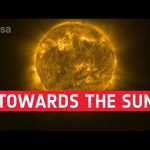
This sequence was taken by Solar Orbiter’s Extreme Ultraviolet Imager using the Full Sun Imager telescope, and shows the Sun at a wavelength of 17 nanometers. This wavelength is emitted by gas in the Sun’s atmosphere with a temperature of around one million degrees. The colour on this image has been artificially added because the original wavelength detected by the instrument is invisible to the human eye.
Credit: ESA & @NASA /Solar Orbiter/EUI Team
★ Subscribe: http://bit.ly/ESAsubscribe and click twice on the bell button to receive our notifications.
Check out our full video catalog: http://bit.ly/SpaceInVideos
Follow us on Twitter: http://bit.ly/ESAonTwitter
On Facebook: http://bit.ly/ESAonFacebook
On Instagram: http://bit.ly/ESAonInstagram
On LinkedIn: https://bit.ly/ESAonLinkedIn
On Pinterest: https://bit.ly/ESAonPinterest
On Flickr: http://bit.ly/ESAonFlickr
We are Europe’s gateway to space. Our mission is to shape the development of Europe’s space capability and ensure that investment in space continues to deliver benefits to the citizens of Europe and the world. Check out https://www.esa.int/ to get up to speed on everything space related.
Copyright information about our videos is available here: https://www.esa.int/ESA_Multimedia/Terms_and_Conditions
#ESA
#NASA
#SolarOrbiter

Solar Orbiter has made the first ever remote sensing observation consistent with a magnetic phenomenon called a solar switchback – sudden and large deflections of the solar wind’s magnetic field. The new observation provides a full view of the structure, in this case confirming it has an S-shaped character, as predicted. Furthermore, the global perspective provided by the Solar Orbiter data indicates that these rapidly changing magnetic fields can have their origin near the surface of the Sun.
★ Subscribe: http://bit.ly/ESAsubscribe and click twice on the bell button to receive our notifications.
Check out our full video catalog: http://bit.ly/SpaceInVideos
Follow us on Twitter: http://bit.ly/ESAonTwitter
On Facebook: http://bit.ly/ESAonFacebook
On Instagram: http://bit.ly/ESAonInstagram
On LinkedIn: https://bit.ly/ESAonLinkedIn
On Pinterest: https://bit.ly/ESAonPinterest
On Flickr: http://bit.ly/ESAonFlickr
We are Europe’s gateway to space. Our mission is to shape the development of Europe’s space capability and ensure that investment in space continues to deliver benefits to the citizens of Europe and the world. Check out https://www.esa.int/ to get up to speed on everything space related.
Copyright information about our videos is available here: https://www.esa.int/ESA_Multimedia/Terms_and_Conditions
#ESA
#Sun
#SolarOrbiter

Solar Orbiter is a space mission of international collaboration between ESA and @NASA.
Solar Orbiter’s closest approach to the Sun, known as perihelion, took place on 26 March. The spacecraft was inside the orbit of Mercury, at about one-third the distance from the Sun to the Earth, and its heatshield was reaching around 500°C. But it dissipated that heat with its innovative technology to keep the spacecraft safe and functioning.
Learn more: http://bit.ly/SolarOrbiterESA
#SolarOrbiter
#TheSunUpClose
Our star dominates the environment within our Solar System. Unpredictable and temperamental, the Sun has made life on the inner-most planets impossible, due to the intense radiation and colossal amounts of energetic material it blasts in every direction, creating the ever-changing conditions in space known as ‘space weather’.
More about space weather:
http://www.esa.int/spaceweather