Tag: space

  • Europe’s future space transport ecosystem

    Europe’s future space transport ecosystem

    ESA’s future launcher preparatory programme is crafting a space transportation ecosystem, guiding the companies and engineers of today to develop and test the technologies required to meet future needs.

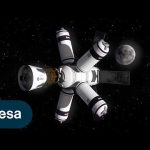
    Space transportation will be moving towards frequent reusable launchers supporting a complete industrial ecosystem around Earth. In the coming decades, the European Space Agency (ESA) foresees transportation hubs in orbit around our planet providing logistic services much like airports or train stations on Earth. These hubs will offer refilling and maintenance services for spacecraft and provide platforms for manufacturing and assembly and in space transportation to other destinations.

    To create this new transportation ecosystem, new technology developments are needed, such as automatic rendezvous and capturing of spacecraft, transfer of fuel and payloads between spacecraft, tugging spacecraft to other orbits around Earth or destinations in space.

    The end goal for companies working on a proof of concept is to fly a demonstrator mission in space. Together with ESA, industry will get to this point through a process that starts with discussing needs and proposing solutions, and is followed by proving their use-case and collaborating on standards and regulations.  Developing and demonstrating these new technologies is also expected to open commercial opportunities for European space transportation companies.

    Finally, the Odyssey project proposes to put all these key technologies together into one package by providing a dedicated service for transport vehicles and spacecraft in orbit: an uncrewed propellant depot offering refilling services. Called Odyssey (a loose abbreviation for Orbital Depot for Your Sustained Space Exploration & beYond) this depot would store propellant brought from visiting supply rockets and distribute it as needed to spacecraft on a stopover to destinations farther away such as the Moon or Mars, or to Earth-orbiting navigation satellites that have used all their propellant and need a refill to extend their working life.

    The Odyssey concept, if it can be demonstrated to be viable, would also be a contribution to a more sustainable use of space, by providing important elements of a future circular space economy.

    Credits: European Space Agency (ESA)

    Access the video on the ESA video library: https://www.esa.int/ESA_Multimedia/Videos/2025/09/Europe_s_future_space_transport_ecosystem

    ★ Subscribe: http://bit.ly/ESAsubscribe and click twice on the bell button to receive our notifications.

    Check out our full video catalog: http://bit.ly/SpaceInVideos
    Follow us on Twitter: http://bit.ly/ESAonTwitter
    On Facebook: http://bit.ly/ESAonFacebook
    On Instagram: http://bit.ly/ESAonInstagram
    On LinkedIn: https://bit.ly/ESAonLinkedIn
    On Pinterest: https://bit.ly/ESAonPinterest
    On Flickr: http://bit.ly/ESAonFlickr

    We are Europe’s gateway to space. Our mission is to shape the development of Europe’s space capability and ensure that investment in space continues to deliver benefits to the citizens of Europe and the world. Check out https://www.esa.int/ to get up to speed on everything space related.

    Copyright information about our videos is available here: https://www.esa.int/ESA_Multimedia/Terms_and_Conditions

  • The most accurate 3D map of stellar nurseries in the Milky Way

    The most accurate 3D map of stellar nurseries in the Milky Way

    Scientists created the most accurate three-dimensional map of star-formation regions in our Milky Way galaxy, based on data from the European Space Agency’s Gaia space telescope. This map will teach us more about these obscure cloudy areas, and the hot young stars that shape them.

    It is notoriously difficult to map and study regions in space where stars form because they are usually hidden from view by thick clouds of gas and dust, whose distances cannot be directly measured.

    Gaia can’t see these clouds directly, but it can measure stellar positions and the so-called ‘extinction’ of stars. This means it can see how much light from stars is blocked by dust. From this, scientists can create 3D maps showing where the dust is, and use those maps to figure out how much ionised hydrogen gas is present – a telltale sign of star formation.

    The new 3D map of star-forming regions in the Milky Way is based on Gaia observations of 44 million ‘ordinary’ stars and 87 O-type stars. The map extends to a distance of 4000 light-years from us, with the Sun at the centre.

    Read more: https://www.esa.int/Science_Exploration/Space_Science/Gaia/Fly_through_Gaia_s_3D_map_of_stellar_nurseries

    Credit: European Space Agency (ESA)
    Animation: ESA/Gaia/DPAC, S. Payne-Wardenaar, L. McCallum et al (2025), CC BY-SA 3.0 IGO
    Music:
    My Story – Echoes Of The Heart

    Access the video on the ESA video library: https://www.esa.int/ESA_Multimedia/Videos/2025/09/The_most_accurate_3D_map_of_stellar_nurseries_in_the_Milky_Way

    ★ Subscribe: http://bit.ly/ESAsubscribe and click twice on the bell button to receive our notifications.

    Check out our full video catalog: http://bit.ly/SpaceInVideos
    Follow us on Twitter: http://bit.ly/ESAonTwitter
    On Facebook: http://bit.ly/ESAonFacebook
    On Instagram: http://bit.ly/ESAonInstagram
    On LinkedIn: https://bit.ly/ESAonLinkedIn
    On Pinterest: https://bit.ly/ESAonPinterest
    On Flickr: http://bit.ly/ESAonFlickr

    We are Europe’s gateway to space. Our mission is to shape the development of Europe’s space capability and ensure that investment in space continues to deliver benefits to the citizens of Europe and the world. Check out https://www.esa.int/ to get up to speed on everything space related.

    Copyright information about our videos is available here: https://www.esa.int/ESA_Multimedia/Terms_and_Conditions

  • Which planets have wind? 🌬️🪐

    Which planets have wind? 🌬️🪐

    Jupiter has super strong winds and massive storms, including the iconic Great Red Spot, a storm bigger than Earth! At the poles, winds can reach up to 1440 km/h.

    Saturn is even windier! It has some of the fastest, but not the fastest winds in our Solar System blow. Winds here can reach 1800 km/h.

    Venus has super-rotating winds that race around the planet up to 60x faster than Venus itself spins. That’s way faster than Earth’s winds, which top out at 10–20% of our planet’s rotation speed.

    Mars has a thin atmosphere, so winds are usually gentle. But during dust storms, they can kick up to around 100 km/h.

    Neptune holds the record for the fastest winds in the Solar System, blowing at over 2000 km/h!

    For context: the fastest wind ever recorded on Earth? 408 km/h—during a massive tornado in Australia.

    📹 European Space Agency (ESA)
    📸 ESA/Voyager 2, NASA, NSSDC Photo Gallery ID P-34709C

    #ESA #Space #SolarSystem

  • Europe’s future in space transportation

    Europe’s future in space transportation

    Space is huge and essential to humankind, fuelling knowledge, supporting our economies and driving global prosperity. None of this would be possible without reliable access to space.

    Since 1979, Europe has relied on the Ariane rockets and Vega series to launch its missions. Today, with Ariane 6 and Vega-C, ESA ensures Europe’s autonomous and independent access to space. But we are also looking ahead. With the Ariane Smart Transfer and Release In-orbit Ship (ASTRIS), Phoebus, P160C boosters, the MR-10 engine and more, ESA is enhancing its rockets with new innovations that improve cost, performance, capability and sustainability.

    ESA is also leading the way in developing new propulsion systems to power the European launchers of the future. In collaboration with industry, ESA is supporting the development of new technologies to be used on rocket, boosters, upper stages, landers and spacecraft.

    Initiates like Boosters for European Space Transportation (BEST!), Technologies for High-thrust Re-Usable Space Transportation (THRUST!) and Future Innovation and Research in Space Transportation programme (FIRST!), are advancing key technologies for reusable boosters, engines and other innovations crucial for the future of space exploration. ESA’s Space Rider is a reusable spacecraft and robotic laboratory, designed to stay in low Earth-orbit for two months and return payloads to Earth. Themis is a prototype for testing reusable rocket technologies, including vertical takeoff, landing and reuse, powered by the Prometheus engine.

    The future of space transport extends beyond Earth launches, with in-orbit operations, transportation systems to support satellite servicing, orbital refuelling, and payload transfers between orbits.

    To support all of this, ESA is upgrading its ground support and Europe’s Spaceport in French Guiana, to accommodate more launches.

    Through programmes like ‘Boost!’ ESA is empowering the European Space Industry, supporting innovative companies which are creating new launch services. The European Launcher Challenge is shaping a competitive European launch sector for the future, strengthening Europe’s autonomous access to space.

    Credit: European Space Agency (ESA)

    Access the video on the ESA video library: https://www.esa.int/ESA_Multimedia/Videos/2025/06/The_future_of_ESA_Transportation

    ★ Subscribe: http://bit.ly/ESAsubscribe and click twice on the bell button to receive our notifications.

    Check out our full video catalog: http://bit.ly/SpaceInVideos
    Follow us on Twitter: http://bit.ly/ESAonTwitter
    On Facebook: http://bit.ly/ESAonFacebook
    On Instagram: http://bit.ly/ESAonInstagram
    On LinkedIn: https://bit.ly/ESAonLinkedIn
    On Pinterest: https://bit.ly/ESAonPinterest
    On Flickr: http://bit.ly/ESAonFlickr

    We are Europe’s gateway to space. Our mission is to shape the development of Europe’s space capability and ensure that investment in space continues to deliver benefits to the citizens of Europe and the world. Check out https://www.esa.int/ to get up to speed on everything space related.

    Copyright information about our videos is available here: https://www.esa.int/ESA_Multimedia/Terms_and_Conditions
  • Our new asteroid hunter opens its eye to the sky! ☄️

    Our new asteroid hunter opens its eye to the sky! ☄️

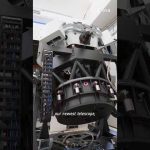
    Meet Flyeye — the telescope that sees space like a fly! 🪰

    With its very first glimpse of the sky, Flyeye is ready to begin scanning for asteroids that might one day come a little too close to Earth.

    Inspired by the compound eye of a fly, it can spot a huge chunk of sky in one go — more than 200 times the area of the full Moon. And it’s designed to do it all automatically, night after night.

    It hasn’t found any space rocks yet, but it’s only just opened its eye. This is the first step towards a future network of fly-eyed telescopes keeping watch over our planet.

    Not bad for a bug-inspired bit of space tech.

    📹 European Space Agency (ESA)
    📸 ESA/A. Baker

    #ESA #Space #Asteroid

  • “Is there wind on the Moon?” 💨

    “Is there wind on the Moon?” 💨

    Short answer: no. No wind, no rain, no snow.

    With only a very thin atmosphere, and no magnetic field, the Moon can’t protect itself from the elements that come from outer space, making the outlook look bleak for our grey companion.

    What the Moon does experience is solar wind, a stream of tiny particles coming from the Sun.

    During some parts of the month, Earth’s own magnetic field partially shields the Moon from the stream of solar wind particles that constantly bombard it.

    📹 European Space Agency (ESA)
    📸 ESA/NASA

    #ESA #Space #Moon

  • A dragon made of clouds is singing to Earth

    A dragon made of clouds is singing to Earth

    What if satellite cloud data could become music? Meet Hakuryu — a dragon born as the European Space Agency’s EarthCARE satellite, singing a song of peace for our planet.

    EarthCARE is the European Space Agency’s most advanced Earth Explorer launched to date, equipped with instruments that help us understand clouds and aerosols in new and unprecedented ways.

    It is a collaboration between ESA and the Japanese Aerospace Exploration Agency, JAXA, who designed and developed the satellite’s Cloud Profiling Radar (CPR) instrument. JAXA called EarthCARE Hakuryu, which is Japanese for White Dragon.

    Hakuryu now lends its name to the title of a groundbreaking immersive installation that creates an audiovisual story from EarthCARE cloud and aerosol data in a way that has never been seen or heard before.

    Through data sonification, Hakuryu transforms over thirty types of data into immersive soundscapes and music. Clouds become choirs as Hakuryu sings to Earth, with voices from notable public, scientific and ESA figures joined by those needing care most – people from the frontline of climate change, displacement and conflict.

    Adding to this, data from atmospheric elements such as rain, snow, dust and smoke are rendered as rich environmental sonic textures. Simultaneously the same data is transformed into clouds, creating a vibrant trail behind an animated white dragon. Viewers slowly fly with Hakuryu, in a beautiful representation of Earth as it moves from day into night on its journey around the sun.

    The film you see here comprises one entire EarthCARE orbit around our planet. It is running live all week at ESA’s Living Planet Symposium in Vienna, from 23 to 27 June 2025, as an immersive installation. Following its debut, Hakuryu will travel the world in a variety of ways soon to be revealed.

    More about EarthCARE: https://esa.int/earthcare

    More about the EarthCARE DISC: https://earth.esa.int/eogateway/activities/earthcare-disc

    Visit the artist’s website: https://www.jamieperera.com/

    Credits:
    Artist: Jamie Perera

    Visual programming: Tekja (Jacopo Hirschstein)

    Sonification programmer: N3xtcoder (Jonathan Moore) & Adrian Lewis

    ESA development & production: Bjoern Frommknecht, Peter Bickerton, Shannon Mason and the EarthCARE Data, Innovation and Science Cluster (DISC)

    Installation production: Lorenza Versace

    Additional audio development: Danny Bright

    ★ Subscribe: http://bit.ly/ESAsubscribe and click twice on the bell button to receive our notifications.

    Check out our full video catalog: http://bit.ly/SpaceInVideos
    Follow us on Twitter: http://bit.ly/ESAonTwitter
    On Facebook: http://bit.ly/ESAonFacebook
    On Instagram: http://bit.ly/ESAonInstagram
    On LinkedIn: https://bit.ly/ESAonLinkedIn
    On Pinterest: https://bit.ly/ESAonPinterest
    On Flickr: http://bit.ly/ESAonFlickr

    We are Europe’s gateway to space. Our mission is to shape the development of Europe’s space capability and ensure that investment in space continues to deliver benefits to the citizens of Europe and the world. Check out https://www.esa.int/ to get up to speed on everything space related.

    Copyright information about our videos is available here: https://www.esa.int/ESA_Multimedia/Terms_and_Conditions
  • ESA turns 50! 🎉 Meet some of the brilliant people behind half a century of missions and discoveries.

    ESA turns 50! 🎉 Meet some of the brilliant people behind half a century of missions and discoveries.

    Roy Gibson was ESA’s very first Director General. Born in 1924, he led the Agency from its foundation in 1975 until 1980.

    Ulf Merbold was the first ESA astronaut to fly in space, as part of the crew of the STS-9 Spacelab 1 mission on Space Shuttle Columbia in 1983.

    Claudie Heigneré made history in 2001 as the first female European astronaut on a ‘taxi flight’ to the International Space Station.

    Gerhard Schwehm was ESA’s first planetary scientist, working on the Giotto mission that provided the first close-up images of a comet nucleus. He then became Mission Manager for the Rosetta mission until his retirement.

    Paolo Ferri dedicated 20 years to Rosetta, first as Operations Manager, then as Flight Director, and eventually as Head of the Mission Operations Department.

    Elsa Montagnon is currently Head of the Mission Operations Division. Previously, she was Spacecraft Operations Manager for BepiColombo, Europe’s first mission to Mercury, launched in 2018.

    Josef Aschbacher became ESA Director General in 2021. From 2016–21, he was ESA Director for Earth Observation Programmes He has been a key leader of the European Copernicus programme, which is now considered to be one of the most successful Earth observation programmes in the world.

    📹 European Space Agency (ESA)
    📸 European Space Agency (ESA)

    #ESA #Space #Astronaut

  • Elevating Europe in space for fifty years

    Elevating Europe in space for fifty years

    For half a century, the European Space Agency (ESA) has been serving Europe as its space agency and inspiring its citizens. On 30 May 1975, the ESA Convention was signed by 10 founding Member States and has since now expanded to 23 Member States, three Associate Members, four Cooperating States and a Cooperation Agreement with Canada. This anniversary year provides the opportunity to reflect not only on ESA’s past achievements, but even more so on its future perspectives.

    Credits: European Space Agency (ESA)

    *Correction: 1990, Launch of NASA/ESA Hubble Space Telescope*

    Check out our full video catalog: http://bit.ly/SpaceInVideos
    Follow us on Twitter: http://bit.ly/ESAonTwitter
    On Facebook: http://bit.ly/ESAonFacebook
    On Instagram: http://bit.ly/ESAonInstagram
    On LinkedIn: https://bit.ly/ESAonLinkedIn
    On Pinterest: https://bit.ly/ESAonPinterest
    On Flickr: http://bit.ly/ESAonFlickr

    We are Europe’s gateway to space. Our mission is to shape the development of Europe’s space capability and ensure that investment in space continues to deliver benefits to the citizens of Europe and the world. Check out https://www.esa.int/ to get up to speed on everything space related.

    Copyright information about our videos is available here: https://www.esa.int/ESA_Multimedia/Terms_and_Conditions

  • Space is getting crowded – and not in a good way 💥

    Space is getting crowded – and not in a good way 💥

    Our 2025 Space Environment Report is out, and the message is clear: if we want to keep using space, we need to clean it up.

    From satellite breakups to daily re-entries, Earth’s orbit is buzzing with activity (and debris).

    Let’s keep space safe, together.

    📹 European Space Agency (ESA)

    #ESA #Space #SpaceDebris

  • Our planet is so special! 🥹🌍 #EarthDay2025

    Our planet is so special! 🥹🌍 #EarthDay2025

    Each year on 22 April, people across the planet join forces to raise awareness about the unequivocal effects of climate change and the importance of protecting our planet for future generations.
    We celebrate Earth Day every day at ESA. 💙

    📹 European Space Agency (ESA)
    📸 ESA/NASA
    🎙️ The audio features a clip from David Attenborough

    #ESA #Earth #Space

  • This space telescope is mapping the Universe! 🌌 (Part 2)

    This space telescope is mapping the Universe! 🌌 (Part 2)

    On 19 March 2025, our Euclid mission released its first batch of survey data, including a preview of its deep fields. Here, hundreds of thousands of galaxies in different shapes and sizes take centre stage and show a glimpse of their large-scale organisation in the cosmic web.

    📹 ESA – European Space Agency
    📸 ESA /Euclid/Euclid Consortium/@NASA, image processing by J.-C. Cuillandre, E. Bertin, G. Anselmi
    Euclid Deep Field South, 70x zoom: ESA/Euclid/Euclid Consortium/NASA, image processing by J.-C. Cuillandre, E. Bertin, G. Anselmi

    #ESA #Euclid #Space

  • This space telescope is mapping the Universe! 🌌

    This space telescope is mapping the Universe! 🌌

    On 19 March 2025, our Euclid mission released its first batch of survey data, revealing an astonishing view of the cosmic web.

    With just one scan of its deep fields, Euclid has already detected 26 million galaxies, some as far as 10.5 billion light-years away! This is just a preview of what’s to come, as Euclid will continue mapping the Universe in unprecedented detail.

    What’s in this first release?
    – Three vast mosaics covering 63 square degrees of the sky
    – A catalogue of 380 000 galaxies, classified with AI + citizen scientists
    – 500 new gravitational lens candidates, almost all never seen before
    – The first hints of Euclid’s full cosmic atlas, which will eventually cover one-third of the sky

    This data is a huge leap forward in understanding how galaxies are distributed across the Universe and how dark matter and dark energy shape the cosmos.

    Over the next six years, Euclid will revisit these deep fields 30 to 52 times, uncovering billions of galaxies and pushing the astrophysics’ boundaries.

    📹 @europeanspaceagency
    📸 ESA /Euclid/Euclid Consortium/@NASA, image processing by J.-C. Cuillandre, E. Bertin, G. Anselmi
    Euclid Deep Field South, 70x zoom: ESA/Euclid/Euclid Consortium/NASA, image processing by J.-C. Cuillandre, E. Bertin, G. Anselmi

    #ESA #Euclid #Space

  • Experiencing zero gravity on Earth

    Experiencing zero gravity on Earth

    Ever wondered how astronauts prepare for the weightlessness of space? In Bordeaux, France, our astronauts train for microgravity using parabolic flights! These special flights create brief periods of zero gravity, mimicking the conditions of space.

    By performing a series of steep climbs and descents, the plane allows astronauts to experience intense 2G forces before entering a 22-second weightless phase! This crucial training helps future astronauts adapt to moving, working, and even jumping in zero gravity.

    Join us as we follow Rosemary Coogan, Sławosz Uznański-Wiśniewski, and John McFall on their parabolic flight training.

    Credits: ESA – European Space Agency
    Footage: ESA/Novaspace

    ★ Subscribe: http://bit.ly/ESAsubscribe and click twice on the bell button to receive our notifications.

    Check out our full video catalog: http://bit.ly/SpaceInVideos
    Follow us on Twitter: http://bit.ly/ESAonTwitter
    On Facebook: http://bit.ly/ESAonFacebook
    On Instagram: http://bit.ly/ESAonInstagram
    On LinkedIn: https://bit.ly/ESAonLinkedIn
    On Pinterest: https://bit.ly/ESAonPinterest
    On Flickr: http://bit.ly/ESAonFlickr

    We are Europe’s gateway to space. Our mission is to shape the development of Europe’s space capability and ensure that investment in space continues to deliver benefits to the citizens of Europe and the world. Check out https://www.esa.int/ to get up to speed on everything space related.

    Copyright information about our videos is available here: https://www.esa.int/ESA_Multimedia/Terms_and_Conditions

    #ESA #Space #ZeroGravity

  • Euclid discovers a stunning Einstein ring 🤩

    Euclid discovers a stunning Einstein ring 🤩

    Euclid, the European Space Agency’s dark Universe detective, has made an astonishing discovery – right in our cosmic backyard.

    An Einstein Ring, an extremely rare phenomenon, has been found hiding in plain sight in a galaxy not so far away. 🤩

    During early testing in September 2023, the team spotted something special in one of Euclid’s first images—an Einstein Ring! This rare phenomenon, caused by gravitational lensing, was found around the well-known galaxy NGC 6505, just 590 million light-years away. The light from a much more distant galaxy (4.42 billion light-years away) is bending around it, creating a stunning cosmic ring.

    This discovery shows just how powerful Euclid is. With its mission now in full swing, we can expect many more hidden cosmic wonders to be revealed!

    📹 ESA – European Space Agency
    📸 ESA/Euclid/Euclid Consortium/NASA, image processing by J.-C. Cuillandre, G. Anselmi, T. Li

    #ESA #Euclid #EinsteinRing

  • Did someone say glow up? ✨

    Did someone say glow up? ✨

    📹 ESA – European Space Agency

    📸 ESA/Webb, NASA & CSA, J. Lee and the PHANGS-JWST and PHANGS-HST Teams, A. Scholz, K. Muzic, A. Langeveld, R. Jayawardhana, A. Adamo (Stockholm University) and the FEAST JWST team, STScI, A. Riess (JHU/STScI), Euclid/Euclid Consortium

    #ESA #Space #Webb

  • Why these volunteers are in bed for 60 days straight

    Why these volunteers are in bed for 60 days straight

    A group of volunteers is spending two months lying in bed—with their feet up and one shoulder always touching the mattress—even while eating, showering, and using the toilet. But why? This extreme bedrest study is helping scientists understand how space travel affects the human body and how to keep astronauts healthy on long missions.

    Microgravity causes muscle and bone loss, fluid shifts, and other physiological changes similar to those experienced by bedridden patients on Earth. By studying volunteers here on Earth, researchers can develop better countermeasures for astronauts and even improve treatments for medical conditions like osteoporosis.

    In this study, participants are divided into three groups: one stays in bed with no exercise, another cycles in bed to mimic astronaut workouts, and a third cycles while being spun in a centrifuge to simulate artificial gravity. Scientists hope artificial gravity could become a key tool in protecting astronauts during deep-space missions.

    Could you handle 60 days in bed for the sake of space exploration? Let us know in the comments!

    Credits: ESA – European Space Agency

    ★ Subscribe: http://bit.ly/ESAsubscribe and click twice on the bell button to receive our notifications.

    Check out our full video catalog: http://bit.ly/SpaceInVideos
    Follow us on Twitter: http://bit.ly/ESAonTwitter
    On Facebook: http://bit.ly/ESAonFacebook
    On Instagram: http://bit.ly/ESAonInstagram
    On LinkedIn: https://bit.ly/ESAonLinkedIn
    On Pinterest: https://bit.ly/ESAonPinterest
    On Flickr: http://bit.ly/ESAonFlickr

    We are Europe’s gateway to space. Our mission is to shape the development of Europe’s space capability and ensure that investment in space continues to deliver benefits to the citizens of Europe and the world. Check out https://www.esa.int/ to get up to speed on everything space related.

    Copyright information about our videos is available here: https://www.esa.int/ESA_Multimedia/Terms_and_Conditions

    #ESA #SpaceResearch #Astronaut

  • Say hello to ALISSE! 🧑‍⚕️

    Say hello to ALISSE! 🧑‍⚕️

    The AI-powered innovation transforming space medicine. Astronauts can now perform expert-level ultrasounds without Earth-based guidance—keeping them healthy on deep-space missions while paving the way for smarter, more accessible healthcare on Earth.

    The future of exploration starts here!

    📸 ESA/NASA – Alexander Gerst
    📹 ESA – European Space Agency

    #ESA #Astronaut #AI

  • Floating in zero gravity… on Earth? 🌍 How is that possible?

    Floating in zero gravity… on Earth? 🌍 How is that possible?

    Air Zero G’s parabolic flights create a weightless environment by flying along a curved path called a parabola. This short period of weightlessness lasts about 22 seconds, during which people and experiments on board the parabolic flight can experience the same weightlessness as astronauts in orbit on the International Space Station.

    The price to pay for this free-floating freedom is two short periods of hypergravity, during which everything weighs almost double for 20 seconds: first when the aircraft pulls up sharply and then again when it pulls out sharply afterwards to return to a normal flight path.

    Each parabola takes about one minute to complete and is repeated 31 times in one flight, providing a total of about ten minutes of zero-gravity.

    The flights provide European scientists with access to a repeatable, low-gravity research environment. Hundreds of experiments have flown over thousands of parabolas, enabling extensive scientific endeavours across many disciplines and resulting in a huge legacy of publications.

    📹 ESA – European Space Agency

    📸 ESA/Novespace

    #ESA #ZeroG #ParabolicFlight

  • Welding in space? It’s happening! ✅

    Welding in space? It’s happening! ✅

    Our engineers have analysed the first-ever autonomous weld performed in orbit—a game-changer for sustainable space exploration. Discover how this breakthrough is paving the way for in-space manufacturing and construction, bringing us closer to building habitats and infrastructure beyond Earth.

    Credit: ESA – European Space Agency

    #ESA #InSpaceManufacturing #SpaceInnovation

  • How living on the Moon could affect your brain! 🧠🌕

    How living on the Moon could affect your brain! 🧠🌕

    We know how microgravity impacts the brain thanks to astronauts on the ISS, but what about life on the Moon or Mars? Future explorers will also face hypoxia—low oxygen levels—which could affect their brain function and decision-making.

    A team of students is tackling this challenge by conducting zero-gravity flight experiments to study how the brain responds to both microgravity and hypoxia. Their research could help improve astronaut safety for future lunar and Martian missions, ensuring they can explore safely beyond their spacecraft.

    Could this be a key step in preparing humans for deep space exploration? Let us know your thoughts in the comments!

    📹 ESA – European Space Agency
    📸 ESA – European Space Agency

    #ESA #SpaceExploration #BrainInSpace

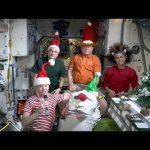
  • Space Station Astronauts Deliver a Christmas Message for 2024

    Space Station Astronauts Deliver a Christmas Message for 2024

    Aboard the International Space Station, NASA astronauts Suni Williams, Nick Hague, Butch Wilmore, and Don Pettit wish a merry Christmas and a happy holiday season to Earth in a message recorded on Dec. 23, 2024.

    The four astronauts are in the middle of a long-duration mission living and working aboard the microgravity laboratory. The goal of their mission is to advance scientific knowledge and demonstrate new technologies for future human and robotic exploration missions as part of NASA’s Moon and Mars exploration approach, including lunar missions through NASA’s Artemis program.

    Learn more about the International Space Station: https://www.nasa.gov/international-space-station/
    Get the latest updates from the orbiting laboratory: https://blogs.nasa.gov/spacestation/

    Credit: NASA

  • Space Station Astronauts Deliver a Thanksgiving Message for 2024

    Space Station Astronauts Deliver a Thanksgiving Message for 2024

    Aboard the International Space Station, NASA Expedition 72 crew members Suni Williams, Nick Hague, Butch Wilmore, and Don Pettit wish a happy Thanksgiving to Earth. The crew shared their thoughts on the holiday, as well as their plans for their Thanksgiving meal.

    The four astronauts are in the middle of a long-duration mission living and working aboard the microgravity laboratory. The goal of their mission is to advance scientific knowledge and demonstrate new technologies for future human and robotic exploration missions as part of NASA’s Moon and Mars exploration approach, including lunar missions through NASA’s Artemis program.

    Learn more about the International Space Station: https://www.nasa.gov/international-space-station/
    Get the latest updates from the orbiting laboratory: https://blogs.nasa.gov/spacestation/

    Credit: NASA

    Download: https://go.nasa.gov/3ZlXxoy

  • SPACE ROCKS: Live from ESA Open Day 2024 at ESTEC

    SPACE ROCKS: Live from ESA Open Day 2024 at ESTEC

    Live interviews and highlights from the ESA Open Day at ESTEC, featuring ESA astronauts Andreas Mogensen and André Kuipers, NASA astronaut Anna Fisher, The Expanse actor Steven Strait and more.

    The ESA Open Day is an annual event where ESA opens the doors of the European Space Research and Technology Centre in the Netherlands to the public.

    For more information on the ESA Open Day at ESTEC head to https://www.esa.int/About_Us/ESTEC/ESA_Open_Days_2024
    For more information on Space Rocks, head to www.spacerocksofficial.com

    —————————————————

    ★ Subscribe: http://bit.ly/ESAsubscribe and click twice on the bell button to receive our notifications.

    Check out our full video catalog: http://bit.ly/SpaceInVideos
    Follow us on Twitter: http://bit.ly/ESAonTwitter
    On Facebook: http://bit.ly/ESAonFacebook
    On Instagram: http://bit.ly/ESAonInstagram
    On LinkedIn: https://bit.ly/ESAonLinkedIn
    On Pinterest: https://bit.ly/ESAonPinterest
    On Flickr: http://bit.ly/ESAonFlickr

    We are Europe’s gateway to space. Our mission is to shape the development of Europe’s space capability and ensure that investment in space continues to deliver benefits to the citizens of Europe and the world. Check out https://www.esa.int/ to get up to speed on everything space related.

    Copyright information about our videos is available here: https://www.esa.int/ESA_Multimedia/Terms_and_Conditions
    #ESA #SpaceRocks #OpenDay

  • International Space Station: Humanity’s Lab in Space (Narrated by Adam Savage)

    International Space Station: Humanity’s Lab in Space (Narrated by Adam Savage)

    Orbiting more than 200 miles (320 km) above Earth, the International Space Station is a powerhouse of cutting-edge science that is unlocking discoveries not possible on Earth. We’re testing technologies that are critical to our return to the Moon and contributing to medical and social breakthroughs that improve life on our home planet.

    After more than two decades of results, we continue to inspire future generations from a platform that is one of the largest international collaborations of our time.

    Learn more about the research being conducted on station: https://www.nasa.gov/iss-science
    Follow updates on the science conducted aboard the space station: https://x.com/iss_research

    Special thanks to Adam Savage for lending his voice to the project.

    Credit: NASA
    Producer: Nicole Rose

    Download this video: https://images.nasa.gov/details/ISS_Research_Overview-Adam_Savage

  • Zoom into interacting galaxies Arp 142 🔎 #shorts

    Zoom into interacting galaxies Arp 142 🔎 #shorts

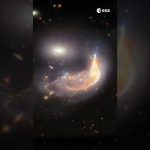
    This video takes the viewer on a journey through space to the interacting galaxies known as Arp 142.

    The distorted spiral galaxy at the centre, the Penguin, and the compact elliptical galaxy at the left, the Egg, are locked in an active embrace. A new near- and mid-infrared image from the James Webb Space Telescope, taken to mark its second year of science, shows that their interaction is marked by a faint upside-down U-shaped blue glow.

    The pair, known jointly as Arp 142, made their first pass between 25 and 75 million years ago — causing ‘fireworks’, or new star formation, in the Penguin. In the most extreme cases, mergers can cause galaxies to form thousands of new stars per year for a few million years. For the Penguin, research has shown that about 100 to 200 stars have formed per year. By comparison, our Milky Way galaxy (which is not interacting with a galaxy of the same size) forms roughly six to seven new stars per year.

    Arp 142 lies 326 million light-years from Earth in the constellation Hydra.

    Credit: NASA, ESA, CSA, STScI, N. Bartmann (ESA/Webb)

    #ESA #Webb #Universe

  • How Europe’s biggest rocket came to be: Ariane 6 montage

    How Europe’s biggest rocket came to be: Ariane 6 montage

    The first half of 2024 saw hundreds of people across Europe building, cajoling, shipping, lowering, integrating, securing and protecting the precious pieces and parts that came together to create Ariane 6 – Europe’s new heavy-lift rocket.

    Huge engines, boosters and outer shells met tiny screws, electrical boards and masses of supercooled fuel. All this came together at Europe’s Spaceport in French Guiana, for the spectacular first launch of Ariane 6 on 9 July 2024, restoring Europe’s access to space.

    Get a glimpse at the teamwork, skill and care that went into this moment over many months, in this montage of Ariane 6 images, videos and timelapse photography spanning 30 January to 9 July 2024.

    ★ Subscribe: http://bit.ly/ESAsubscribe and click twice on the bell button to receive our notifications.

    Check out our full video catalog: http://bit.ly/SpaceInVideos
    Follow us on Twitter: http://bit.ly/ESAonTwitter
    On Facebook: http://bit.ly/ESAonFacebook
    On Instagram: http://bit.ly/ESAonInstagram
    On LinkedIn: https://bit.ly/ESAonLinkedIn
    On Pinterest: https://bit.ly/ESAonPinterest
    On Flickr: http://bit.ly/ESAonFlickr

    We are Europe’s gateway to space. Our mission is to shape the development of Europe’s space capability and ensure that investment in space continues to deliver benefits to the citizens of Europe and the world. Check out https://www.esa.int/ to get up to speed on everything space related.

    Copyright information about our videos is available here: https://www.esa.int/ESA_Multimedia/Terms_and_Conditions

    #ESA #Ariane6 #Rocket

  • Fly across Nili Fossae with ESA’s Mars Express

    Fly across Nili Fossae with ESA’s Mars Express

    Mars’s surface is covered in all manner of scratches and scars. Its many marks include the fingernail scratches of Tantalus Fossae, the colossal canyon system of Valles Marineris, the oddly orderly ridges of Angustus Labyrinthus, and the fascinating features captured in today’s video release from Mars Express: the cat scratches of Nili Fossae.

    Nili Fossae comprises parallel trenches hundreds of metres deep and several hundred kilometres long, stretching out along the eastern edge of a massive impact crater named Isidis Planitia.

    This new video features observations from Mars Express’s High Resolution Stereo Camera (HRSC). It first flies northwards towards and around these large trenches, showing their fractured, uneven appearance, before turning back to head southwards. It ends by zooming out to a ‘bird’s eye’ view, with the landing site of NASA’s Perseverance rover, Jezero Crater, visible in the lower-middle part of the final scene. (You can explore this crater further via ESA’s interactive map.)

    The trenches of Nili Fossae are actually features known as ‘graben’, which form when the ground sitting between two parallel faults fractures and falls away. As the graben seem to curve around Isidis Planitia, it’s likely that they formed as Mars’s crust settled following the formation of the crater by an incoming space rock hitting the surface. Similar ruptures – the counterpart to Nili Fossae – are found on the other side of the crater, and named Amenthes Fossae.

    Scientists have focused on Nili Fossae in recent years due to the impressive amount and diversity of minerals found in this area, including silicates, carbonates, and clays (many of which were discovered by Mars Express’s OMEGA instrument). These minerals form in the presence of water, indicating that this region was very wet in ancient martian history. Much of the ground here formed over 3.5 billion years ago, when surface water was abundant across Mars. Scientists believe that water flowed not only across the surface here but also beneath it, forming underground hydrothermal flows that were heated by ancient volcanoes.

    Because of what it could tell us about Mars’s ancient and water-rich past, Nili Fossae was considered as a possible landing site for NASA’s Curiosity rover, before the rover was ultimately sent to Gale Crater in 2012. Another mission, NASA’s Perseverance rover, was later sent to land in the nearby Jezero Crater, visible at the end of this video.

    Mars Express has visited Nili Fossae before, imaging the region’s graben system back in 2014. The mission has orbited the Red Planet since 2003, imaging Mars’s surface, mapping its minerals, studying its tenuous atmosphere, probing beneath its crust, and exploring how various phenomena interact in the martian environment. For more from the orbiter and its HRSC, see ESA’s Mars Express releases.

    Disclaimer: This video is not representative of how Mars Express flies over the surface of Mars. See processing notes below.

    Processing notes: The video is centred at 23°N, 78°E. It was created using Mars Chart (HMC30) data, an image mosaic made from single-orbit observations from Mars Express’s HRSC. This mosaic was combined with topography derived from a digital terrain model of Mars to generate a three-dimensional landscape. For every second of the movie, 62.5 separate frames are rendered following a pre-defined camera path. The vertical exaggeration is three-fold. Atmospheric effects – clouds and haze – have been added, and start building up at a distance of 50 km.

    Credit: ESA/DLR/FU Berlin & NASA/JPL-Caltech/MSSS, CC BY-SA 3.0 IGO

    ★ Subscribe: http://bit.ly/ESAsubscribe and click twice on the bell button to receive our notifications.

    Check out our full video catalog: http://bit.ly/SpaceInVideos
    Follow us on Twitter: http://bit.ly/ESAonTwitter
    On Facebook: http://bit.ly/ESAonFacebook
    On Instagram: http://bit.ly/ESAonInstagram
    On LinkedIn: https://bit.ly/ESAonLinkedIn
    On Pinterest: https://bit.ly/ESAonPinterest
    On Flickr: http://bit.ly/ESAonFlickr

    We are Europe’s gateway to space. Our mission is to shape the development of Europe’s space capability and ensure that investment in space continues to deliver benefits to the citizens of Europe and the world. Check out https://www.esa.int/ to get up to speed on everything space related.

    Copyright information about our videos is available here: https://www.esa.int/ESA_Multimedia/Terms_and_Conditions
    #ESA #Mars #Satellite

  • Taking EarthCARE into orbit

    Taking EarthCARE into orbit

    ESA’s EarthCARE satellite lifted off on a SpaceX Falcon 9 rocket from the Vandenberg Space Force Base in California, US, on 29 May at 00:20 CEST (28 May, 15:20 local time).

    Developed as a cooperation between ESA and the Japan Aerospace Exploration Agency (JAXA), the Earth Cloud Aerosol and Radiation Explorer satellite carries a set of four instruments to make a range of different measurements that together will shed new light on the role that clouds and aerosols play in regulating Earth’s climate.

    Credits: ESA/SpaceX

    ★ Subscribe: http://bit.ly/ESAsubscribe and click twice on the bell button to receive our notifications.

    Check out our full video catalog: http://bit.ly/SpaceInVideos
    Follow us on Twitter: http://bit.ly/ESAonTwitter
    On Facebook: http://bit.ly/ESAonFacebook
    On Instagram: http://bit.ly/ESAonInstagram
    On LinkedIn: https://bit.ly/ESAonLinkedIn
    On Pinterest: https://bit.ly/ESAonPinterest
    On Flickr: http://bit.ly/ESAonFlickr

    We are Europe’s gateway to space. Our mission is to shape the development of Europe’s space capability and ensure that investment in space continues to deliver benefits to the citizens of Europe and the world. Check out https://www.esa.int/ to get up to speed on everything space related.

    Copyright information about our videos is available here: https://www.esa.int/ESA_Multimedia/Terms_and_Conditions
    #ESA #EarthCARE #Launch

  • Five new stunning images from Euclid’s Telescope

    Five new stunning images from Euclid’s Telescope

    ESA’s Euclid space mission has released five unprecedented new views of the Universe. These never-before-seen images demonstrate Euclid’s remarkable ability to unravel the secrets of the cosmos. Scientists are now equipped to hunt for rogue planets, study mysterious matter through lensed galaxies, and explore the evolution of the Universe. Join us as we explore these groundbreaking discoveries and what they mean for the future of space exploration.

    Credits: ESA – European Space Agency

    Chapters:
    00:00 – 00:36 Intro
    00:36 – 01:14 The Galaxy Cluster Abell 2390
    01:15 – 02:14 Messier 78: Stellar Nurseries and Galactic Formation
    02:15 – 03:02 Galaxies in the Dorado Group
    03:03 – 04:27 NGC 6744
    04:28 – 05:25 Abell 2764
    05:26 – 6:16 Conclusion

    ★ Subscribe: http://bit.ly/ESAsubscribe and click twice on the bell button to receive our notifications.

    Check out our full video catalog: http://bit.ly/SpaceInVideos
    Follow us on Twitter: http://bit.ly/ESAonTwitter
    On Facebook: http://bit.ly/ESAonFacebook
    On Instagram: http://bit.ly/ESAonInstagram
    On LinkedIn: https://bit.ly/ESAonLinkedIn
    On Pinterest: https://bit.ly/ESAonPinterest
    On Flickr: http://bit.ly/ESAonFlickr

    We are Europe’s gateway to space. Our mission is to shape the development of Europe’s space capability and ensure that investment in space continues to deliver benefits to the citizens of Europe and the world. Check out https://www.esa.int/ to get up to speed on everything space related.

    Copyright information about our videos is available here: https://www.esa.int/ESA_Multimedia/Terms_and_Conditions
    #ESA #Euclid #Universe

  • ESA’s Euclid celebrates first science with sparkling cosmic views

    ESA’s Euclid celebrates first science with sparkling cosmic views

    ESA is releasing a new set of full-colour images captured by the space telescope Euclid. Five new portraits of our cosmos were captured during Euclid’s early observations phase, each revealing amazing new science. Euclid’s ability to unravel the secrets of the cosmos is something you will not want to miss.

    Credits: ESA – European Space Agency

    ★ Subscribe: http://bit.ly/ESAsubscribe and click twice on the bell button to receive our notifications.

    Check out our full video catalog: http://bit.ly/SpaceInVideos
    Follow us on Twitter: http://bit.ly/ESAonTwitter
    On Facebook: http://bit.ly/ESAonFacebook
    On Instagram: http://bit.ly/ESAonInstagram
    On LinkedIn: https://bit.ly/ESAonLinkedIn
    On Pinterest: https://bit.ly/ESAonPinterest
    On Flickr: http://bit.ly/ESAonFlickr

    We are Europe’s gateway to space. Our mission is to shape the development of Europe’s space capability and ensure that investment in space continues to deliver benefits to the citizens of Europe and the world. Check out https://www.esa.int/ to get up to speed on everything space related.

    Copyright information about our videos is available here: https://www.esa.int/ESA_Multimedia/Terms_and_Conditions
    #ESA #Euclid #DarkMatter

  • Euclid celebrates first science with sparkling new images

    Euclid celebrates first science with sparkling new images

    Today, ESA’s Euclid space mission releases five unprecedented new views of the Universe. The never-before-seen images demonstrate Euclid’s ability to unravel the secrets of the cosmos and enable scientists to hunt for rogue planets, use lensed galaxies to study mysterious matter, and explore the evolution of the Universe.

    Read more about Euclid’s first images and download the individual images here:

    Credits: ESA/Euclid/Euclid Consortium/NASA, image processing by J.-C. Cuillandre (CEA Paris-Saclay), G. Anselmi

    ★ Subscribe: http://bit.ly/ESAsubscribe and click twice on the bell button to receive our notifications.

    Check out our full video catalog: http://bit.ly/SpaceInVideos
    Follow us on Twitter: http://bit.ly/ESAonTwitter
    On Facebook: http://bit.ly/ESAonFacebook
    On Instagram: http://bit.ly/ESAonInstagram
    On LinkedIn: https://bit.ly/ESAonLinkedIn
    On Pinterest: https://bit.ly/ESAonPinterest
    On Flickr: http://bit.ly/ESAonFlickr

    We are Europe’s gateway to space. Our mission is to shape the development of Europe’s space capability and ensure that investment in space continues to deliver benefits to the citizens of Europe and the world. Check out https://www.esa.int/ to get up to speed on everything space related.

    Copyright information about our videos is available here: https://www.esa.int/ESA_Multimedia/Terms_and_Conditions
    #ESA #Euclid #Science

  • First Space Station missions for new ESA astronauts

    First Space Station missions for new ESA astronauts

    Join us live on 22 May at 16:35 BST (17:35 CEST) as ESA Director General Josef Aschbacher announces the first two astronaut missions for the new ESA astronaut class of 2022 on the first day of the Space Council, held in Brussels on 22 and 23 May 2024.

    ESA’s most recent class of astronauts selected in 2022 includes Sophie Adenot, Pablo Álvarez Fernández, Rosemary Coogan, Raphaël Liégeois, and Marco Sieber. They recently completed one year of basic training and graduated as ESA astronauts on 22 April at ESA’s European Astronaut Centre in Germany, making them eligible for spaceflight. During their missions aboard the International Space Station, ESA astronauts will engage in a diverse range of activities, from conducting scientific experiments and medical research to Earth observation, outreach and operational tasks.

    ★ Subscribe: http://bit.ly/ESAsubscribe and click twice on the bell button to receive our notifications.

    Check out our full video catalog: http://bit.ly/SpaceInVideos
    Follow us on Twitter: http://bit.ly/ESAonTwitter
    On Facebook: http://bit.ly/ESAonFacebook
    On Instagram: http://bit.ly/ESAonInstagram
    On LinkedIn: https://bit.ly/ESAonLinkedIn
    On Pinterest: https://bit.ly/ESAonPinterest
    On Flickr: http://bit.ly/ESAonFlickr

    We are Europe’s gateway to space. Our mission is to shape the development of Europe’s space capability and ensure that investment in space continues to deliver benefits to the citizens of Europe and the world. Check out https://www.esa.int/ to get up to speed on everything space related.

    Copyright information about our videos is available here: https://www.esa.int/ESA_Multimedia/Terms_and_Conditions
    #ESA #Astronauts #SpaceStation

  • A year in training: ESA’s new astronauts graduate

    A year in training: ESA’s new astronauts graduate

    ESA’s newly graduated astronauts reach the end of one year of rigorous basic astronaut training. Discover the journey of Sophie Adenot, Rosemary Coogan, Pablo Álvarez Fernández, Raphaël Liégeois, Marco Sieber, and Australian Space Agency astronaut candidate Katherine Bennell-Pegg. Selected in November 2022, the group began their training in April 2023.

    Basic astronaut training provides the candidates with an overall familiarisation and training in various areas, such as spacecraft systems, spacewalks, flight engineering, robotics and life support systems as well as survival and medical training. They received astronaut certification at ESA’s European Astronaut Centre on 22 April 2024.

    Following certification, the new astronauts will move on to the next phases of pre-assignment and mission-specific training – paving the way for future missions to the International Space Station and beyond.

    Credits:
    Video: ESA – European Space Agency
    ISS and EVA footage: ESA/NASA

    Music: Scorekeepers

    ★ Subscribe: http://bit.ly/ESAsubscribe and click twice on the bell button to receive our notifications.

    Check out our full video catalog: http://bit.ly/SpaceInVideos
    Follow us on Twitter: http://bit.ly/ESAonTwitter
    On Facebook: http://bit.ly/ESAonFacebook
    On Instagram: http://bit.ly/ESAonInstagram
    On LinkedIn: https://bit.ly/ESAonLinkedIn
    On Pinterest: https://bit.ly/ESAonPinterest
    On Flickr: http://bit.ly/ESAonFlickr

    We are Europe’s gateway to space. Our mission is to shape the development of Europe’s space capability and ensure that investment in space continues to deliver benefits to the citizens of Europe and the world. Check out https://www.esa.int/ to get up to speed on everything space related.

    Copyright information about our videos is available here: https://www.esa.int/ESA_Multimedia/Terms_and_Conditions
    #ESA #Astronaut #Training

  • Zoom into the Horsehead Nebula 🔎 #shorts

    Zoom into the Horsehead Nebula 🔎 #shorts

    This video takes the viewer on a journey through space to reveal a new image from the NASA/ESA/CSA James Webb Space Telescope, the Horsehead Nebula.

    This zoom video features three unique views of the Horsehead Nebula, including images from as ESA’s Euclid telescope, the NASA/ESA Hubble Space Telescope’s infrared view of the object, and finally revealing the new image from Webb’s NIRCam (Near-InfraRed Camera) instrument. It is the sharpest infrared image of the object to date, showing a part of the iconic nebula in a whole new light, and capturing its complexity with unprecedented spatial resolution. You can learn more about this new image here.

    Credit: ESA/Webb, NASA, CSA, K. Misselt (University of Arizona) and A. Abergel (IAS/University Paris-Saclay, CNRS)
    Music: Stellardrone – The Night Sky in Motion

    #ESA #Webb #HorseheadNebula

  • Highlights from ESA basic astronaut training

    Highlights from ESA basic astronaut training

    ESA’s newly graduated astronauts reach the end of one year of rigorous basic astronaut training. Watch the key moments during the journey of Sophie Adenot, Rosemary Coogan, Pablo Álvarez Fernández, Raphaël Liégeois, Marco Sieber, and Australian Space Agency astronaut candidate Katherine Bennell-Pegg. Selected in November 2022, the group began their training in April 2023.

    Basic astronaut training provides the candidates with an overall familiarisation and training in various areas, such as spacecraft systems, spacewalks, flight engineering, robotics and life support systems as well as survival and medical training. They received astronaut certification at ESA’s European Astronaut Centre on 22 April 2024.

    Following certification, the new astronauts will move on to the next phases of pre-assignment and mission-specific training – paving the way for future missions to the International Space Station and beyond.

    Credits:
    ESA – European Space Agency
    ESA/NASA
    NASA
    ESA/Royal Netherlands Air Force

    ★ Subscribe: http://bit.ly/ESAsubscribe and click twice on the bell button to receive our notifications.

    Check out our full video catalog: http://bit.ly/SpaceInVideos
    Follow us on Twitter: http://bit.ly/ESAonTwitter
    On Facebook: http://bit.ly/ESAonFacebook
    On Instagram: http://bit.ly/ESAonInstagram
    On LinkedIn: https://bit.ly/ESAonLinkedIn
    On Pinterest: https://bit.ly/ESAonPinterest
    On Flickr: http://bit.ly/ESAonFlickr

    We are Europe’s gateway to space. Our mission is to shape the development of Europe’s space capability and ensure that investment in space continues to deliver benefits to the citizens of Europe and the world. Check out https://www.esa.int/ to get up to speed on everything space related.

    Copyright information about our videos is available here: https://www.esa.int/ESA_Multimedia/Terms_and_Conditions
    #ESA #Astronaut #ESAastro2022

  • Happy Earth Day 2024! 🌎🌍🌏 #shorts

    Happy Earth Day 2024! 🌎🌍🌏 #shorts

    Each year on 22 April, people across the planet join forces to raise awareness about the depleting quality of the environment, the unequivocal effects of climate change and the importance of protecting our planet for future generations. We celebrate Earth Day every day at ESA. This week, this spectacular image of Earth is brought to you by the Meteosat Second Generation series of missions.

    Music: First Survivors 4 by Los Angeles-based British composer, Luke Richards. Sourced from Audio Network Limited.

    Credits: ESA/NASA

    #ESA #Earth #EarthDay

  • Graduation ceremony of ESA astronaut class of 2022

    Graduation ceremony of ESA astronaut class of 2022

    Watch the replay as ESA astronaut candidates Sophie Adenot, Rosemary Coogan, Pablo Álvarez Fernández, Raphaël Liégeois, Marco Sieber and Australian Space Agency astronaut candidate Katherine Bennell-Pegg receive astronaut certification at ESA’s European Astronaut Centre. This officially marks their transition into fully-fledged astronauts, ready and eligible for spaceflight.

    The group was selected in November 2022 and began their year-long basic astronaut training in April 2023.

    Basic astronaut training provides the candidates with an overall familiarisation and training in various areas, such as spacecraft systems, spacewalking, flight engineering, robotics and life support systems, as well as survival and medical training.

    Following certification, the new astronauts will move on to the next phases of pre-assignment and mission-specific training, paving the way for future missions to the International Space Station and beyond.

    Chapters:
    00:00 – 05:14 – Stay tuned
    05:15 – 07:05 – Event
    07:06 – 16:46 – Statement from Josef Aschbacher, ESA Director General
    16:47 – 21:35 – Statement from Daniel Neuenschwander, Director of Human and Robotic Exploration
    21:36 – 24:40 – Statement from Frank De Winne, Head of ESA’s European Astronaut Centre
    24:41 – 31:35 – Event
    31:36 – 36:35 – ESA astronaut class of 2022 graduation ceremony
    36:36 – 40:10 – Statement from Enrico Palermo, Head of the Australian Space Agency
    40:11 – 41:03 – Katherine Bennell-Pegg graduation ceremony
    41:04 – 44:40 – Statement from Thomas Dermine, State Secretary for Economic Recovery and Strategic Investments
    44:41 – 56:20 – Live Q&A
    56:21 – 57:15 End of event

    Credits: ESA – European Space Agency

    ★ Subscribe: http://bit.ly/ESAsubscribe and click twice on the bell button to receive our notifications.

    Check out our full video catalog: http://bit.ly/SpaceInVideos
    Follow us on Twitter: http://bit.ly/ESAonTwitter
    On Facebook: http://bit.ly/ESAonFacebook
    On Instagram: http://bit.ly/ESAonInstagram
    On LinkedIn: https://bit.ly/ESAonLinkedIn
    On Pinterest: https://bit.ly/ESAonPinterest
    On Flickr: http://bit.ly/ESAonFlickr

    We are Europe’s gateway to space. Our mission is to shape the development of Europe’s space capability and ensure that investment in space continues to deliver benefits to the citizens of Europe and the world. Check out https://www.esa.int/ to get up to speed on everything space related.

    Copyright information about our videos is available here: https://www.esa.int/ESA_Multimedia/Terms_and_Conditions
    #ESA #Astronaut #GraduationCeremony

  • A tour of the International Space Station with Andreas Mogensen

    A tour of the International Space Station with Andreas Mogensen

    On the last day of his Huginn mission, ESA astronaut Andreas Mogensen takes us on a tour of the place he called home for 6 months: the International Space Station. From the beautiful views of Cupola to the kitchen in Node 1 filled with food and friends and all the way to the science of Columbus, the Space Station is the work and living place for astronauts as they help push science forward.

    Credits: ESA – European Space Agency

    ★ Subscribe: http://bit.ly/ESAsubscribe and click twice on the bell button to receive our notifications.

    Check out our full video catalog: http://bit.ly/SpaceInVideos
    Follow us on Twitter: http://bit.ly/ESAonTwitter
    On Facebook: http://bit.ly/ESAonFacebook
    On Instagram: http://bit.ly/ESAonInstagram
    On LinkedIn: https://bit.ly/ESAonLinkedIn
    On Pinterest: https://bit.ly/ESAonPinterest
    On Flickr: http://bit.ly/ESAonFlickr

    We are Europe’s gateway to space. Our mission is to shape the development of Europe’s space capability and ensure that investment in space continues to deliver benefits to the citizens of Europe and the world. Check out https://www.esa.int/ to get up to speed on everything space related.

    Copyright information about our videos is available here: https://www.esa.int/ESA_Multimedia/Terms_and_Conditions
    #ESA #Huginn #AndreasMogensen

  • Rainbow on a hellish distant world? 🌈 #shorts
    Rainbow on a hellish distant world? 🌈 #shorts

    Scientists might have just found the first glory on a world outside our Solar System! “Glory” are colourful concentric rings of light that occur only under peculiar conditions. If confirmed, this finding could shed light on the mysterious atmosphere of the scorching hot gas giant WASP-76b.

    Credit: ESA, ESO/M. Kornmesser/L. Calçada

    #ESA #Exoplanets #SpaceScience