Tag: Space discoveries

  • Is our galaxy really going to collide with Andromeda? 🤯

    Is our galaxy really going to collide with Andromeda? 🤯

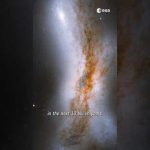
    For years, astronomers believed the Milky Way and Andromeda were on a direct collision course in about 4.5 billion years. But new research using data from our Gaia mission and Hubble Space Telescope suggests the story isn’t so simple.

    After running 100 000 simulations with the most precise data available, scientists now say there’s only a 50% chance the two galaxies will collide in the next 10 billion years.

    The Large Magellanic Cloud, one of our satellite galaxies, could be tugging the Milky Way just enough to steer it away from Andromeda. Instead of crashing, the two galaxies might simply orbit each other in a slow cosmic dance.

    So the fate of the Milky Way remains uncertain. And with the Sun expected to make Earth uninhabitable in about a billion years, a galaxy collision is low on our list of concerns.

    📹 European Space Agency (ESA)
    📸 NASA, ESA, STScI, Till Sawala (University of Helsinki), DSS, J. DePasquale (STScI)

    #ESA #Space #Science
  • Have we been wrong about why Mars is red? 🔴

    Have we been wrong about why Mars is red? 🔴

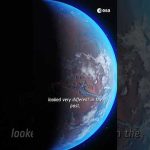
    For years, scientists believed Mars got its red color from hematite, a type of rust that forms in dry conditions. But a new study suggests something surprising—ferrihydrite, a different kind of rust that forms in cool liquid water!

    This discovery could mean Mars was once much wetter than we thought—maybe even habitable. And the best part? Our Rosalind Franklin rover will soon analyse Martian soil up close to uncover even more secrets.

    🎥 ESA – European Space Agency

    #ESA #Mars #Space

  • Did you know hundreds of asteroids might have tiny moons? ☄️ #shorts

    Did you know hundreds of asteroids might have tiny moons? ☄️ #shorts

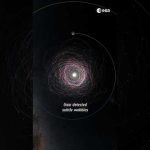
    Thanks to the incredible precision of our Gaia mission, scientists have discovered potential moons orbiting over 350 asteroids! This nearly doubles the known number of ‘binary asteroids,’ revealing a whole new layer of complexity in our Solar System.

    📹 ESA – European Space Agency
    📸 ESA/Gaia/DPAC

    #ESA #Gaia #Asteroid

  • Another first for Webb‼️ 🟣 #shorts

    Another first for Webb‼️ 🟣 #shorts

    While Webb and other space telescopes, including the NASA/ESA Hubble Space Telescope, have previously revealed isolated ingredients of this heated planet’s atmosphere, the new readings provide a full menu of atoms, molecules, and even signs of active chemistry and clouds. The latest data also give a hint of how these clouds might look up close: broken up rather than as a single, uniform blanket over the planet.

    📹 @EuropeanSpaceAgency

    📸 @NASA, ESA, @canadianspaceagency , J. Olmsted (STS)

    ★ Subscribe: http://bit.ly/ESAsubscribe and click twice on the bell button to receive our notifications.

    Check out our full video catalog: http://bit.ly/SpaceInVideos
    Follow us on Twitter: http://bit.ly/ESAonTwitter
    On Facebook: http://bit.ly/ESAonFacebook
    On Instagram: http://bit.ly/ESAonInstagram
    On LinkedIn: https://bit.ly/ESAonLinkedIn
    On Pinterest: https://bit.ly/ESAonPinterest
    On Flickr: http://bit.ly/ESAonFlickr

    We are Europe’s gateway to space. Our mission is to shape the development of Europe’s space capability and ensure that investment in space continues to deliver benefits to the citizens of Europe and the world. Check out https://www.esa.int/ to get up to speed on everything space related.

    Copyright information about our videos is available here: https://www.esa.int/ESA_Multimedia/Terms_and_Conditions

    #ESA
    #Webb
    #ExoPlanet