European Space Agency astronaut Samantha Cristoforetti shared this video on social media with the caption: How do you cross a module in space? 🙃
📹 ESA – S. Cristoforetti
#ESA #Floating #MissionMinerva

European Space Agency astronaut Samantha Cristoforetti shared this video on social media with the caption: How do you cross a module in space? 🙃
📹 ESA – S. Cristoforetti
#ESA #Floating #MissionMinerva

Scientists may have found the solution to creating oxygen in space with artificial photosynthesis!
They are creating devices that mimic plant photosynthesis, to turn sunlight and water into oxygen without the need for electricity.
These devices produce oxygen from water and sunlight using semiconductor materials coated with metallic catalysts.
Scientists believe artificial photosynthesis could even work on Mars, where sunlight is weaker, by using simple solar mirrors to concentrate sunlight and boost oxygen production.
These devices could not only help us explore space but could also bring us closer to meeting our green energy and sustainability goals here on Earth. 🌍💚
📹 ESA – European Space Agency
★ Subscribe: http://bit.ly/ESAsubscribe and click twice on the bell button to receive our notifications.
Check out our full video catalog: http://bit.ly/SpaceInVideos
Follow us on Twitter: http://bit.ly/ESAonTwitter
On Facebook: http://bit.ly/ESAonFacebook
On Instagram: http://bit.ly/ESAonInstagram
On LinkedIn: https://bit.ly/ESAonLinkedIn
On Pinterest: https://bit.ly/ESAonPinterest
On Flickr: http://bit.ly/ESAonFlickr
We are Europe’s gateway to space. Our mission is to shape the development of Europe’s space capability and ensure that investment in space continues to deliver benefits to the citizens of Europe and the world. Check out https://www.esa.int/ to get up to speed on everything space related.
Copyright information about our videos is available here: https://www.esa.int/ESA_Multimedia/Terms_and_Conditions
#ESA
#Space
#Oxygen

We Go: To the Moon and on to Mars. Our generation, the Artemis generation, will explore farther than we’ve ever gone before. The Artemis program will send the first woman and next man to walk on the surface of the Moon and build a sustainable base to prepare for missions to Mars and beyond.

The mission has ended for NASA’s Dawn spacecraft, but the science lives on. Dawn was an intrepid explorer of the asteroid belt and the first mission to orbit two worlds beyond Earth: https://go.nasa.gov/2zl1Y5T. For more info on the mission, visit https://dawn.jpl.nasa.gov
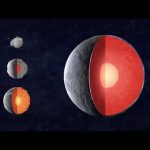
Psyche is both the name of an asteroid orbiting the Sun between Mars and Jupiter — and the name of a NASA space mission to visit that asteroid, led by Arizona State University. Join the Psyche team to explore why this mission was selected for NASA’s Discovery Program, how we’ll get to the asteroid, what we hope to learn from Psyche, and the importance of scientific discovery.
Credits: NASA/JPL-Caltech/Arizona State Univ./Peter Rubin/SSL